






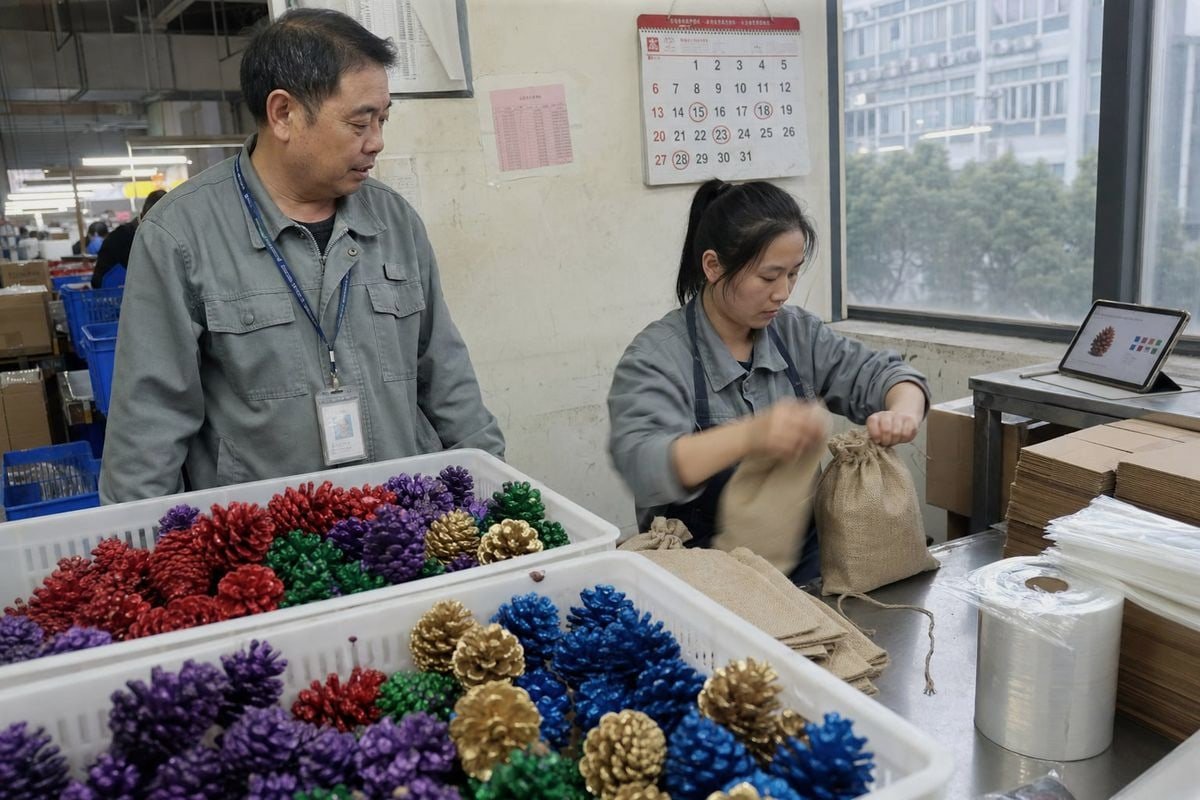
Rushing logo samples for fireplace colored pine cones is a request our factory hears every year Pantone colors 1. A missed sample means an empty booth, wasted booth fees, and lost buyers. There is a faster way.
To rush logo samples for fireplace colored pine cones, separate artwork from production: approve a digital mockup within 24 hours, run one single-batch sample of pre-made cones, apply printed labels or burlap packaging, and ship by express air — typically 5–10 days door to door.
That is the short answer. Now let me break down each stage, so you know exactly what to send, what to expect, and where the real time savings hide.
How fast can I get a logo sample for colored pine cones before my trade show deadline?
Last October, a German fireplace distributor 2 emailed our team twelve days before Spoga. We shipped his branded sample kit in six. Speed is possible, but only with the right sequence.
With finished artwork and in-stock colored pine cones, a rush logo sample can be produced in 2–3 working days and delivered worldwide in 3–5 more via express air. Total realistic timeline: 5–10 days, versus 3–4 weeks on a standard sampling schedule.
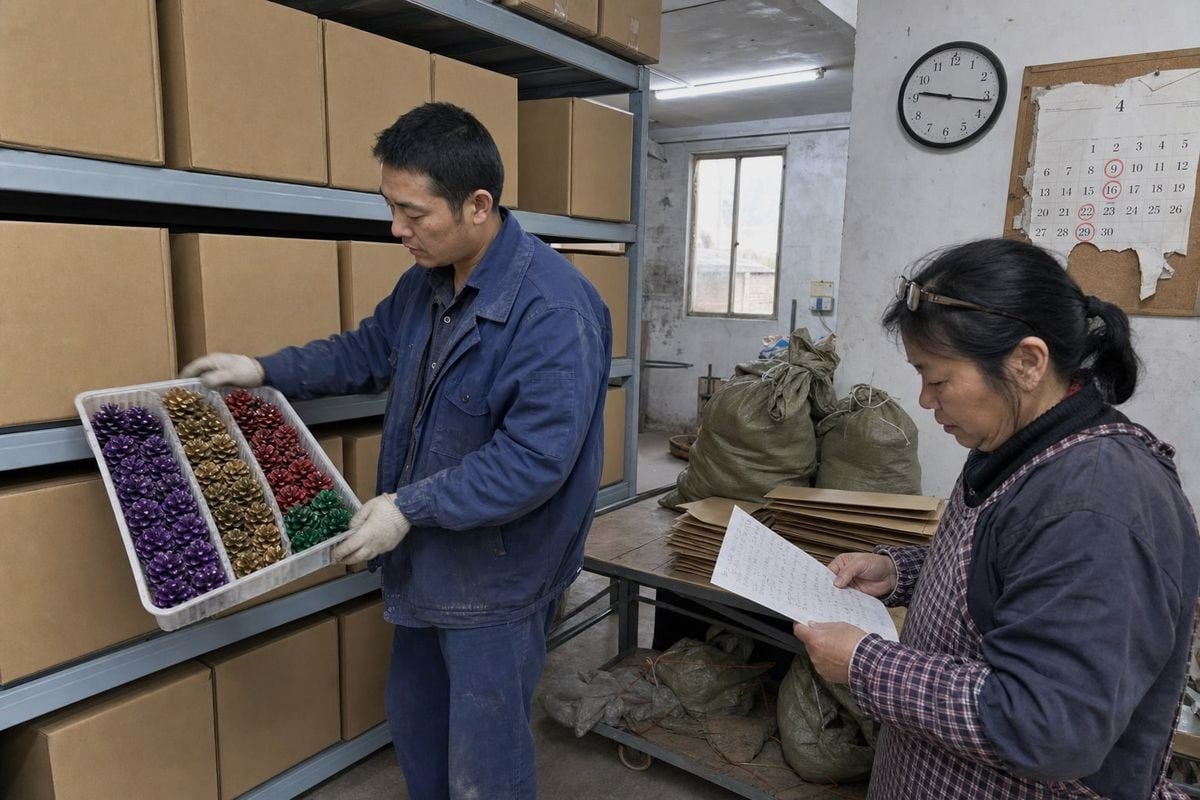
The single biggest time saver is this: do not wait for the pine cones and the logo to move together. In our Ningbo facility, we keep treated piñas de fuego de color 3 in stock for exactly this reason. The cones already exist. What you are really rushing is the branding layer — the printed pouch, the burlap sack, the hangtag. That is a print job, not a chemistry job, and print jobs move fast.
The realistic rush timeline, block by block
Here is how we map a rush sample against a standard one:
| Etapa | Standard Timeline | Rush Timeline |
|---|---|---|
| Artwork and digital mockup approval | 3–5 días | Same day to 24 hours |
| Cone production or stock allocation | 7–14 días | 0–1 day (in-stock) |
| Label/pouch printing and application | 5–7 días | Semanas de rehacer o reproducción completa |
| QC check and photos | Semanas de rehacer o reproducción completa | Half a day |
| Envío | 7–15 days (economy) | 3–5 days (express air) |
Two things compress the schedule most. First, using in-stock product instead of a fresh chemical soak, which needs a full day of soaking plus drying time before the flame colorant chemicals set properly. Second, digital mockup approval instead of a physical pre-proof. When a buyer approves the virtual proof in one round, we go straight to print. When approval drags across three revision rounds, no factory on earth can save the deadline.
My advice: tell your supplier the exact trade show date on day one. We plan backward from that date, including prototype shipping logistics, not forward from the order date.
What information do I need to provide to speed up my custom pine cone sample?
The slowest rush orders I have handled were never slowed by machines. They were slowed by missing files. One incomplete artwork submission can quietly burn three days of back-and-forth.
Provide vector artwork in .AI or .EPS format, exact Pantone colors, your preferred packaging type, quantity per pack, required warning-label language, barcode details if needed, your trade show date, and the delivery address. Complete information lets a factory start production the same day.

When we onboard a rush project, our OEM team runs through a fixed checklist before anything touches the production floor. Buyers who arrive with everything ready skip straight to the digital mockup approval stage. Buyers who send a screenshot of their logo from a website — it happens more than you would think — wait while a designer redraws it, and the deadline eats itself.
The rush-sample information checklist
| Artículo | Por qué importa | Mejor formato |
|---|---|---|
| Logo file | Avoids redraw delays | Vector .AI or .EPS |
| Colores de marca | Print accuracy on kraft or burlap | Códigos Pantone |
| Packaging choice | Determines print method | Burlap bag, kraft pouch, or jar |
| Warning label text | Compliance for fire products | Final approved wording |
| Barcode/SKU | Retail-ready presentation | EAN or UPC file |
| Ship-to address | Prototype shipping logistics | Booth warehouse or hotel |
A few practical notes from our side. Vector files matter because a burlap sack and a matte kraft stand-up pouch 4 print very differently; low-resolution logos blur on coarse woven textures. Pantone codes matter because a rainbow-gradient accent behind your product name looks great on screen but needs calibrated inks on kraft-brown paper.
Also decide your packaging direction early. For rush timelines, we usually recommend branding the Pedir fuera de temporada, típicamente de abril a julio, le da más flexibilidad. La demanda de iniciadores de fuego alcanza su punto máximo antes del invierno del hemisferio norte, por lo que las fábricas están más dispuestas a aceptar tiradas más pequeñas en los meses más cálidos para mantener las líneas activas. Los plazos de producción también son más cortos entonces, lo que le ayuda a probar, revisar y reordenar antes de que comience la temporada. — the pouch, hangtag, or drawstring sack — rather than the cones themselves. The cones stay natural and hand-finished; the packaging carries your identity. This is faster, cleaner, and it is exactly how most wholesale seasonal decor buyers eventually package the retail product anyway.
Finally, name one decision-maker for approvals. One approver, one revision round, one green light. That discipline alone can save two full days.
Can I get compliant, certified samples on a rush timeline without skipping quality checks?
A UK camping brand once asked me whether rush meant we would skip the SGS paperwork. Fair question. The honest answer is that compliance should never be the thing you compress.
Yes — if your supplier already holds valid certifications. A factory with existing ISO 9001, BSCI, CE, and SGS or Intertek test reports can attach current documentation to a rush sample immediately. Compliance is only slow when testing starts from zero.
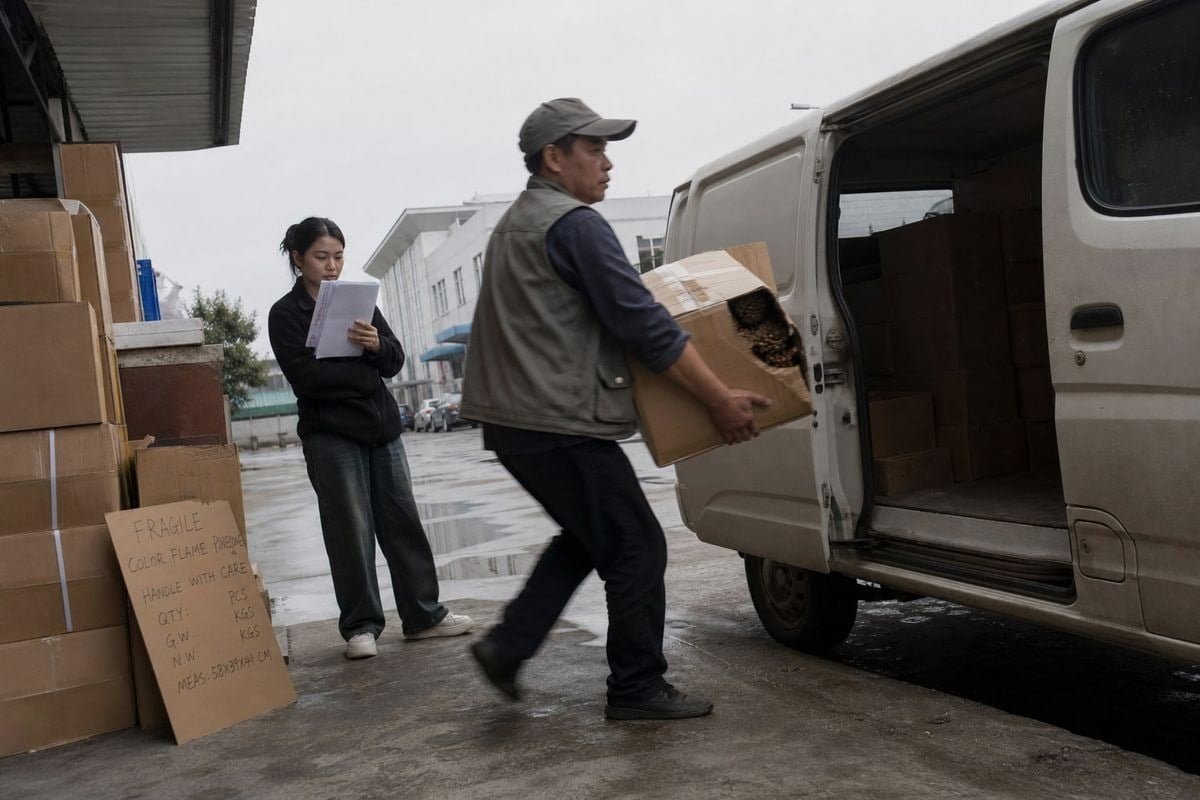
Here is the distinction that matters. Product-level certification covers the formulation — the flame colorant chemicals, the eco-friendly materials, the burn behavior. That testing takes weeks and cannot be rushed. But if the factory already produces certified color-flame pinecones as a standing product line, your rush sample is simply a branded unit of an already-tested product. The test reports already exist. We send them alongside the sample, and your compliance team reviews paperwork while the parcel is in the air.
This is where I push back on a common shortcut in the promotional hearth products space. Some traders will offer you a cheaper, faster sample from an uncertified workshop. It will arrive on time. Then your retail buyer at the show asks for Marcado CE 5 and safety data, and you have nothing to hand over. For US and European distributors, certification is a hard requirement, not a nice-to-have. A fast sample without documents is a fast dead end.
What we never skip, even on rush orders
- Batch QC inspection of the sample units — color consistency, coating coverage, cone size grading.
- Warning label review — usage instructions, well-ventilated fireplace guidance, and the note to add cones once the fire has burned down to coals and low flame.
- Photo documentation before dispatch, so you can see exactly what ships.
- Certificate pack — we bundle current CE, SGS/Intertek, ISO 9001 6, and BSCI documents with every sample kit.
None of these steps costs meaningful time. Each takes hours, not days. What they buy you is a sample you can hand to a Home Depot–type sourcing manager without flinching. In our experience exporting to 30+ countries, the buyers who close deals at trade shows are the ones whose sample kit includes the paperwork, not just the product.
Will my rushed sample accurately reflect what mass production will look like?
There is a trade-off I weigh on every rush project: speed versus representativeness. A sample that wins the booth but embarrasses you at container delivery is worse than no sample at all.
A rushed sample reflects mass production accurately only when it is pulled from the same production line, formulation, and materials as bulk orders. Demand a factory-made sample from standard tooling — not a hand-crafted one-off — plus batch QC records tying sample to production.

This is where the DIY-versus-factory gap becomes real money. Hand-dipped, small-batch cones have handcrafted charm, but they vary — in size, wax coverage, and burn appearance. Trade show buyers do not order charm. They order consistency. Our production lines standardize cone size grading, coating thickness, and color-treatment concentration, so the fist-sized cone in your sample pouch matches unit number 40,000 in the container.
Sample-to-production consistency: what to verify
| Consistency Factor | Ask Your Supplier | Señal de alerta |
|---|---|---|
| Formulación | Is the sample from the standard bulk recipe? | "Special sample formula" |
| Cone sizing | Is size graded on the same line? | Mixed, ungraded cones |
| Flame color effect | Same colorant concentration as bulk? | No burn-test video available |
| Packaging materials | Same pouch stock and print method? | Sample printed on different substrate |
| Registros de control de calidad | Batch-to-batch inspection data? | No documentation offered |
Two honest caveats. First, rush print methods sometimes differ slightly from bulk print methods — a digitally printed sample pouch 7 versus a plate-printed bulk pouch can show minor color shifts. We flag this on the digital mockup so there are no surprises. Second, never overpromise live-burn performance at the booth. Present the cones unlit in a clear-window pouch or a bowl, keep one demo cone for explanation, and show a burn video of the multicolored flames instead. Live-fire demonstrations are usually restricted at venues anyway, and a sealed retail-ready pack sells the wholesale story better than a flame ever could.
Done right, your rushed sample becomes a genuine proof of what the container will hold — which is the entire point of custom fire starters and trade show giveaway ideas built on expedited branding services.
Conclusión
A trade show deadline does not have to force a choice between speed and quality. Split the workflow: approve artwork fast, brand the packaging, pull certified in-stock cones, and ship express.
At our Sunrich factory, seventeen years of producing color-flame pinecones, Magic Fire packets, and wood firestarters have taught us one thing about rush sampling — preparation beats panic. Send complete vector files, name one approver, confirm the show date, and insist on production-line samples with full CE and SGS documentation attached. Do that, and your booth opens with a compliant, retail-ready, trade-show-ready sample kit in hand — and a supplier who can scale it into containers the moment the orders come in.
Notas al pie
1. Authoritative guide to the standardized color matching system used in global manufacturing. ↩︎
2. Official website for the major international trade fair mentioned in the case study. ↩︎
3. Authoritative Wikipedia entry explaining the chemical compounds used for flame coloration. ↩︎
4. Information on the specific packaging format used for retail-ready fireplace products. ↩︎
5. European Commission's official guide to the safety and health requirements for products sold in Europe. ↩︎
6. Official page for the international standard that specifies requirements for quality management systems. ↩︎
7. Explains the technology used for rapid prototyping of branded packaging. ↩︎


 English
  Spanish
  German
  French
  Arabic
  Portuguese
Únete a la conversación