







El embalaje interior personalizado para piñas de pino de colores para chimeneas es donde muchos acuerdos de importación salen mal. He desempaquetado cajas de piñas trituradas en el suelo de nuestra fábrica, y duele cada vez.
Para solicitar embalaje interior personalizado en caja para piñas de pino coloreadas para chimenea, envíe a su proveedor las dimensiones de la piña, la cantidad por caja, el estilo de la caja, el grado del material, los archivos de arte, el texto de advertencia de seguridad, el MOQ objetivo y la fecha límite. Luego confirme una muestra física antes de aprobar la producción en masa.
Esa es la respuesta corta. Pero cada uno de esos elementos oculta detalles que deciden si su producto llega listo para el estante o dañado. Permítame guiarlo a través de todo el proceso, paso a paso.
¿Qué información necesito proporcionar al solicitar diseños de cajas interiores personalizadas?
Un comprador de Alemania nos envió una vez una sola frase: "Necesitamos una caja bonita". Nuestro equipo en la planta de Ningbo necesitó tres semanas de correos electrónicos para completar lo que un buen resumen podría haber cubierto en un día.
Proporcione al proveedor las dimensiones y el peso exactos del cono, los conos por caja interior, el estilo y material de caja preferidos, los archivos de arte o logotipo, el texto de seguridad requerido, el mercado objetivo, la cantidad del pedido, el rango de presupuesto y su fecha límite de entrega. Un brief completo reduce el tiempo de cotización de semanas a días.
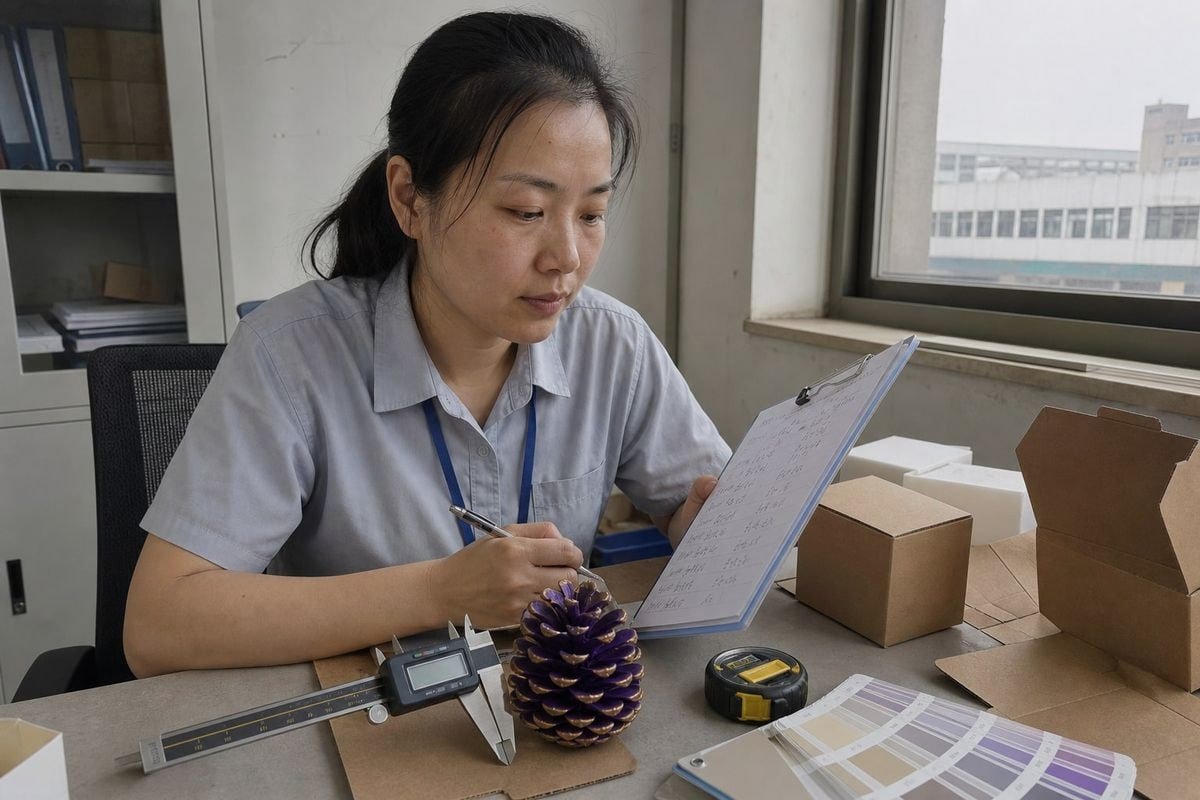
Cuanto más preciso sea su resumen, más rápida y precisa será la cotización. En nuestros más de 17 años de exportación de productos para encender fuego a más de 30 países, los proyectos más fluidos siempre comenzaron con una hoja de especificaciones completa. Así que permítame desglosar exactamente qué pertenece a ella.
Empiece con el producto, no con la caja
Las piñas de pino de colores son irregulares. Las escamas son frágiles. El acabado pintado o tratado con sal puede astillarse si las piñas se rozan entre sí. Por lo tanto, su proveedor necesita primero los datos del producto:
- Altura máxima y diámetro más ancho de la piña
- Peso por piña y por paquete
- Si las piñas se envían sueltas, envueltas o embolsadas dentro de la caja
- Si el acabado es recubierto de cera, pintado o tratado con minerales
Estos datos determinan las dimensiones internas. Demasiado espacio vacío 1 permite que las piñas reboten y se rompan. Demasiado apretado, y las escamas se aplastan al cerrar. Normalmente, apuntamos a un ajuste ceñido con 3–5 mm de espacio libre, a veces con insertos de cartón protectores para juegos premium.
La lista de verificación completa del resumen
Aquí está la tabla de especificaciones que pedimos a nuestros clientes OEM que completen antes de abrir una plantilla de troquelado de embalaje:
| Elemento del resumen | Qué especificar | Por qué importa |
|---|---|---|
| Dimensiones de la piña | Altura, diámetro, peso | Tamaño interno de la caja por juego |
| Cantidad por caja | por ejemplo, 6, 10 o 12 piñas | Determina la estructura y los divisores |
| Estilo de la caja | Cartón plegable, rígido, kraft, bandeja + manga | Afecta el costo y el atractivo del estante |
| Grado del material | por ejemplo, SBS de 350 g/m², corrugado B-flauta | Equilibra la protección y la calidad de impresión |
| Archivos de arte | Logotipo vectorial, colores de marca, códigos de barras | Permite un diseño de troquelado preciso |
| Texto de seguridad | Advertencias, instrucciones de uso | Cumplimiento en su mercado |
| Temporada objetivo | Navidad, invierno, temporada de camping | Da forma al diseño y al plazo |
| MOQ y presupuesto | Prueba o ejecución de producción completa | Determina las herramientas y el precio unitario |
| Fecha de entrega | Fecha de llegada al puerto o almacén | Bloquea el calendario de producción |
Aclare qué significa "caja interior" para usted
Un punto más. Indique al proveedor si desea solo una caja de producto interior, una caja de exhibición lista para la venta 2, o un sistema anidado con un embalaje exterior. Estos son tres proyectos estructurales diferentes. Cuando desarrollamos productos de marca privada para chimeneas para distribuidores, siempre confirmamos esto primero, porque el troquelado, el material y el precio cambian completamente dependiendo de la respuesta.
¿Cuál es la cantidad mínima de pedido para empaques personalizados en piñas teñidas?
Las órdenes de prueba son un punto constante de negociación en nuestras reuniones de ventas. Una marca de camping de EE. UU. recientemente quería solo 500 juegos en caja para probar el mercado, y tuvimos que explicar honestamente lo que eso significa para los costos de herramientas.
Las cantidades mínimas de pedido (MOQ) para cajas interiores personalizadas suelen oscilar entre 500 y 1.000 unidades para estuches plegables estándar, y entre 1.000 y 3.000 unidades para cajas rígidas o troqueladas. Los troqueles y las planchas de impresión personalizados conllevan tarifas de configuración únicas, por lo que tiradas más pequeñas aumentan el precio por unidad.

El MOQ no es un número arbitrario que inventa un proveedor. Refleja la economía real de producción. Comprender esa economía te ayuda a negociar mejor, así que déjame explicártela.
Por qué existen los MOQ para cajas personalizadas
Cada caja personalizada necesita una matriz de corte, y las cajas impresas 3 necesitan planchas o configuración digital. Esos son costos únicos. Repartidos en 10,000 cajas, son triviales. Repartidos en 300 cajas, pueden duplicar tu precio unitario. Las estructuras irregulares — recortes de ventana 4, fondos de cierre automático, divisores perforados — a menudo requieren trabajo adicional de matriz, lo que eleva la cantidad mínima de pedido práctica.
Así es como el MOQ generalmente se escala por tipo de caja según nuestra experiencia suministrando iniciadores de fuego al por mayor y piñas de llama de color:
| Tipo de caja | MOQ Típico | Configuración única | Mejor para |
|---|---|---|---|
| Cartón plegable kraft liso | 500–1,000 unidades | Bajo | Órdenes de prueba, marca rústica |
| Cartón plegable impreso | 1,000–2,000 unidades | Moderado | Diseño de empaque minorista estándar |
| Caja con ventana e inserto | 1,000–3,000 unidades | Moderado–Alto | Exhibición en estante, posicionamiento de regalo |
| Caja de regalo rígida | 2,000+ unidades | Alto | Juegos de temporada premium |
Cómo reducir tu MOQ efectivo
Tienes opciones. Primero, pregunta sobre soluciones semipersonalizadas: una línea de troquelado existente con tu manga o etiqueta impresa. Eso elimina por completo el costo del troquel. Segundo, combina SKUs. Si tu línea de chimeneas y tu línea de fogatas comparten una estructura de caja con diferentes mangas, ambas tiradas cuentan para un troquel. Tercero, negocia un acuerdo de orden de prueba. En nuestra fábrica, ofrecemos MOQs flexibles para los primeros pedidos de distribuidores serios, porque preferimos construir un socio a largo plazo que ganar un solo pedido grande a ciegas. Un comprador que prueba 800 unidades esta temporada y vuelve a pedir 10,000 la próxima temporada es nuestro cliente ideal, y la mayoría de los servicios de fabricación OEM profesionales piensan lo mismo.
Una advertencia por experiencia: no persigas el MOQ absoluto más bajo de una empresa comercial desconocida. La consistencia entre el lote de prueba y el lote de producción en masa es más importante. Nuestro control de calidad lote a lote existe precisamente para que la primera muestra refleje de manera confiable lo que llega en tu contenedor.
¿Cómo garantizo que mi embalaje personalizado cumpla con las normas internacionales de seguridad y etiquetado?
El cumplimiento es el tema en el que me niego a ceder. Hace años, vimos cómo el envío de un competidor se quedó congelado en un puerto de la UE por falta de etiquetas de advertencia 5, y esa lección moldeó cómo manejamos cada exportación desde entonces.
Confirma que tu proveedor tiene las certificaciones relevantes, luego especifica todo el texto de advertencia obligatorio en tu resumen: instrucciones de uso, precauciones "no para chimeneas de gas" cuando corresponda, y etiquetas específicas de la región como la Proposición 65 de California. Solicita pruebas impresas e informes de prueba antes de la producción en masa.

Las piñas de colores para chimenea se usan cerca de llamas abiertas. Eso hace que los requisitos de etiquetado de seguridad del producto sean centrales para tu empaque, no una ocurrencia tardía. Así es como manejarlo sistemáticamente.
Verifica primero al proveedor, luego la obra de arte
Antes de debatir el texto de la etiqueta, revisa la fábrica en sí. Nuestra operación cuenta con ISO 9001 6, BSCI, CE y certificación SGS/Intertek con informes de prueba disponibles, porque para nuestros compradores de EE. UU. y Europa este es un requisito indispensable, no algo deseable. Un proveedor que no pueda mostrar certificados actuales también tendrá dificultades con el etiquetado correcto. Solicita:
- Certificación de gestión de calidad (ISO 9001 o equivalente)
- Auditoría de cumplimiento social (BSCI o similar)
- Informes de prueba de terceros para el producto en sí (SGS, Intertek)
- Confirmación de que las tintas y recubrimientos del embalaje no son tóxicos — las tintas a base de soja o vegetales son una solicitud segura, ya que los clientes a veces tiran la caja al fuego
Qué debe aparecer en la caja
Los requisitos varían según el mercado, pero para productos de chimenea de llama de color, esta es la base práctica que imprimimos para los clientes:
| Panel | Contenido | Notas |
|---|---|---|
| Frente | Nombre del producto, cantidad de conos, beneficio clave | Mantén las afirmaciones precisas — "llamas de colores", no promesas mágicas vagas |
| Lado | Instrucciones de uso paso a paso | Un cono a la vez; chimeneas de leña y fogatas |
| Lado/Trasero | Advertencias | "No apto para chimeneas de gas" si corresponde; mantener alejado de los niños; supervisión de un adulto |
| Trasero | Historia de la marca, notas sobre materiales, consejos de almacenamiento | Almacenar en un lugar fresco y seco para proteger el acabado tratado |
| Inferior/Trasero | Código de barras, código de lote, país de origen, dirección del importador | Requerido para venta minorista y trazabilidad |
Para la venta minorista en EE. UU., analice la redacción de la Proposición 65 de California con su asesor de cumplimiento y confirme que su proveedor puede imprimirla directamente en la caja. Para la UE, confirme los requisitos de idioma para cada país de destino; producimos regularmente paneles multilingües para compradores que cubren Alemania, Francia, los Países Bajos y Polonia en una sola tirada de impresión.
No enterrar las advertencias
Aquí hay una disyuntiva real que los compradores nos plantean: el embalaje de regalo minimalista luce elegante, pero los productos adyacentes al calor necesitan instrucciones visibles. Nuestra respuesta es un compromiso que funciona: mantenga el panel frontal limpio y apto para regalo, coloque las instrucciones completas en un panel lateral e incluya una tarjeta de instrucciones impresa dentro de la caja. Obtiene el aspecto premium sin el riesgo de incumplimiento. El embalaje sellado también protege mejor que la exhibición abierta; una caja con ventana puede exhibir los conos, pero debe estar sellada con película para protegerla de la humedad, el polvo y los daños en el acabado.
¿Cuánto tiempo se tarda en obtener muestras de mi embalaje interior de caja personalizado?
Las preguntas sobre plazos llegan a mi bandeja de entrada semanalmente, generalmente en agosto, cuando los compradores se dan cuenta de repente de que el stock navideño debe salir del puerto en octubre. La respuesta honesta depende del tipo de muestra que necesite.
Espere 3–5 días para una maqueta digital, 7–14 días para una muestra física en blanco o un prototipo impreso, más tiempo de envío. Después de la aprobación de la muestra, la producción en masa de cajas interiores personalizadas suele tardar entre 15 y 30 días, dependiendo de la cantidad y la complejidad de la caja.
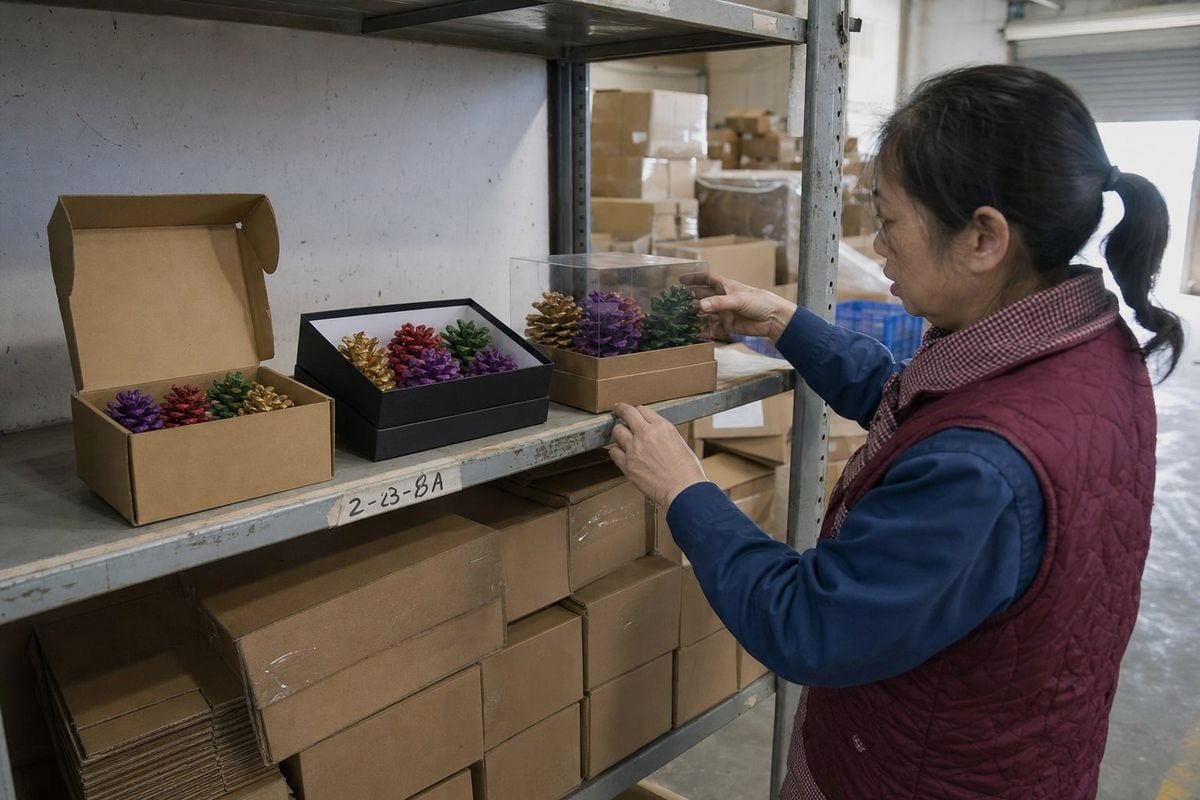
El muestreo no es un solo paso. Es una secuencia, y cada etapa responde a una pregunta diferente. Omitir etapas ahorra días ahora, pero arriesga un contenedor de cajas incorrectas más adelante. Aquí está la secuencia que seguimos para nuestros clientes OEM.
El Proceso de Muestreo en Cuatro Etapas
- Diseño digital y maqueta 3D (3–5 días). El proveedor aplica su obra de arte a la plantilla de diseño de empaque. Esto verifica la disposición, la ubicación del código de barras y la posición del texto de advertencia. Cuesta poco o nada.
- Muestra estructural en blanco (5–7 días). Una caja sin imprimir en el material real, digamos cartulina SBS de 350 g/m² o cartón corrugado B-flute según las especificaciones de su caja corrugada. Prueba el ajuste con conos reales. Aquí es donde detectas espacio vacío, solapas débiles o un inserto que no inmoviliza los conos.
- Prueba de impresión (7–14 días). Una muestra impresa física, no solo una representación en pantalla. Solicite una prueba de impresión real para que pueda verificar que los colores de la tinta coincidan realmente con los tonos púrpura, rojo y dorado de sus conos tratados. Las pantallas mienten; el cartón impreso no.
- Muestra de confirmación de preproducción. La unidad final aprobada con la que la producción en masa debe coincidir. Quédese con una; haga que su proveedor se quede con una.
Plazo Total Realista
Para la planificación de temporada, cuente hacia atrás desde la fecha de su almacén. Un proyecto típico dura: una semana para la información y cotización, dos a tres semanas para el muestreo y las revisiones, tres a cuatro semanas para la producción, luego el transporte marítimo. Desde nuestra base de producción en Ningbo, eso significa que un lanzamiento navideño debería comenzar a muestrear a fines de la primavera o principios del verano. Los plazos urgentes son posibles; hemos comprimido el muestreo para clientes habituales porque sus obras de arte y estructuras 7 ya estaban archivadas, pero los proyectos por primera vez merecen la secuencia completa.
Un consejo práctico: solicite materiales de embalaje ecológicos 8 al principio de la información, no en la etapa de prueba. Cambiar de cartulina estucada a kraft reciclable al final del proceso restablece la calibración de impresión y agrega una semana. Y si sus conos usan sales minerales para el efecto de color, menciónelo: un revestimiento de barrera contra la humedad en el interior protege el cartón de cualquier lixiviación durante el almacenamiento prolongado.


 English
  Spanish
  German
  French
  Arabic
  Portuguese
Únete a la conversación