







Age and safety warnings on fireplace colored pine cones trip up more importers than the product itself. I have watched shipments from our Ningbo line stall over one missing phrase.
Label fireplace colored pine cones with a bold WARNING signal word, an "Adult use only" age statement, "Keep out of reach of children and pets," "Wood-burning fireplaces only — not for gas fireplaces, grills, or cooking fires," first-aid and Poison Control information, and full manufacturer use instructions.
That is the short answer. The details matter just as much. Below, I walk through US and EU rules, templates, customization, and the mistakes that cause real losses.
What safety warning symbols and age restrictions must I include for compliance in the US and EU?
A German distributor once returned a sample carton to us because the pictogram was two millimeters too small. That lesson shaped how our factory builds every warning panel today.
For the US, follow the Federal Hazardous Substances Act: a bold WARNING signal word, hazard statements, first-aid text, and "Keep out of reach of children." For the EU, add CLP pictograms, EN 15494-style flame warnings, "Adult use only," and local-language translations for each destination market.

Fireplace colored pine cones sit in an awkward legal category. They look like festive décor, but regulators treat them as a consumer fire product 1 with chemical additives. That means your label is a compliance document, not a design element. In our seventeen-plus years exporting color-flame products to the US, Germany, the UK, France, and beyond, we have learned to build labels around three layers: age language, hazard language, and use-limit language.
The US layer: FHSA and CPSC expectations
La Ley Federal de Sustancias Peligrosas 2 requires a signal word — WARNING or DANGER — in bold, contrasting type. CPSC compliance guidelines then expect a statement of the principal hazard, precautionary text, and first-aid instructions. For color-changing fire starters, that means covering toxicidad del sulfato de cobre 3 or similar metal-salt risks with lines like "Toxic if swallowed" and "May cause skin irritation." Include the Poison Control Center information (1-800-222-1222 in the US) so a parent can act fast after accidental ingestion. If your formulation includes strontium or copper salts and the product may reach California shelves, a Proposition 65 warning protects you from downstream liability.
The EU layer: CLP, CE, and language rules
The EU adds structured requirements. Here is how the two markets compare:
| Elemento | Requisito de EE. UU. | Requisito de la UE |
|---|---|---|
| Palabra de señalización | WARNING or DANGER (FHSA) | Warning/Danger per CLP |
| Pictogramas | Not mandatory, recommended | CLP hazard pictograms, minimum size rules |
| Age statement | "Mantener fuera del alcance de los niños" | "Adult use only" plus child-safety phrasing |
| Idioma | Inglés | Official language of each member state sold in |
| Primeros auxilios | Requerido para sustancias peligrosas | Required, with P-statements |
Age language that actually works
The safest default is "Adult use only." Some buyers prefer "Adult supervision required," but that wording implies children may participate. For a gift-shop product with bright, toy-like colors, we always recommend the stricter phrase. Child safety warnings should appear on the front panel, not buried on the back.
Can Sunrich provide pre-approved warning label templates that meet CE and SGS requirements?
Every private-label project we quote from Liuyang starts with the same buyer question: "Do you have compliant label artwork ready?" The honest answer is yes — and here is exactly what that covers.
Yes. Sunrich supplies pre-approved warning label templates backed by CE certification and SGS/Intertek test reports, covering signal words, hazard statements, age restrictions, first-aid text, pictograms, and multilingual versions, so buyers can go to print without rebuilding compliance content from scratch.

Nuestras archivo de cumplimiento did not appear overnight. We built it across 30+ export markets, revision by revision, as our color-flame packets and pinecones passed CE evaluation 5 and SGS and Intertek testing. Each template we hand to a buyer maps directly to a test report, so when a customs officer or a retailer's quality team asks for evidence, the paper trail is already there. Our ISO 9001 and BSCI certifications sit behind that file, which matters to large retail sourcing channels that audit suppliers before listing a single SKU.
What the template package includes
- Front-panel warning block: signal word, "Adult use only," "Keep out of reach of children and pets."
- Back-panel hazard text: toxic fumes warning, ventilation instructions, "Wood-burning fireplaces only," "Not for cooking fires, grills, or gas fireplaces."
- First-aid section: ingestion, skin contact, and eye contact steps, plus space for the local Poison Control number.
- Use instructions: quantity per fire, "Do not open packets," "Burn only one color-treated cone at a time."
- Traceability elements: batch/lot number field and an optional QR code linking to the digital Safety Data Sheet (SDS).
- Language variants: English, German, French, Dutch, and Polish, matching our main EU destinations.
Why pre-approved beats DIY
A buyer building labels alone must commission testing, interpret regulations, and translate hazard text. That typically adds weeks and real cost before the first purchase order. Because we run the production lines ourselves — not as a trading company — our label content matches the actual chemistry in the batch. That alignment is what test labs verify, and it is why a first sample from us reliably reflects mass-production quality, label included.
How do I customize label wording and design while keeping certified safety information intact?
One trade-off comes up in nearly every OEM project 6 we run: the buyer's designer wants a clean, festive front panel, and our compliance team needs a warning block that cannot legally shrink. Balancing both is a solvable design problem.
Treat certified safety content as a locked zone: keep signal words, hazard statements, age warnings, first-aid text, and pictograms at mandated sizes and wording. Customize freely around it — brand name, colors, fonts, imagery, taglines, and layout — without editing, paraphrasing, or resizing the locked compliance elements.
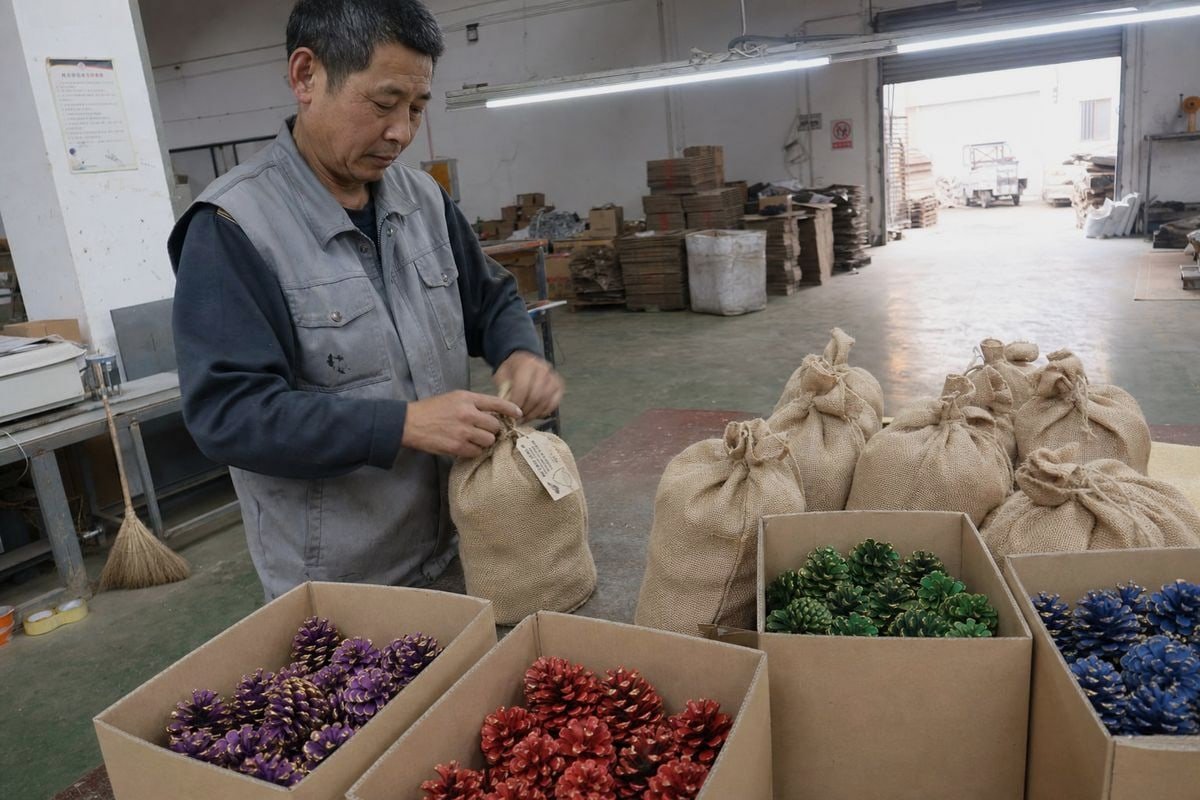
Our one-stop OEM/ODM service exists precisely for this tension. We handle full customization of packaging — kraft stand-up pouches, burlap gift sacks, plastic jars, custom boxes, and retail display packaging — while our compliance file keeps the safety content untouched. The rule we teach every buyer's design team is simple: separate the label into a locked zone and a free zone.
Locked zone vs. free zone
| Zone | Elements | Can you change it? |
|---|---|---|
| Locked | Signal word, hazard statements, age restriction, first-aid text, Poison Control Center information, pictograms, batch number field | No — wording, size, and contrast are regulated |
| Semi-locked | Language versions, SDS QR code placement, "Not for Food Use" statement | Position flexible; content fixed |
| Gratis | Brand name, logo, colors, photography, taglines, gift messaging, back-story copy | Yes — full creative freedom |
Design tactics that keep both sides happy
A festive aesthetic does not have to fight the warning panel. We often place the locked block inside a bordered box at the base of the back panel, using the required contrast without disrupting the front design. Some buyers integrate a QR code that links to the comprehensive Safety Data Sheet, which shortens on-pack text while adding transparency for health-conscious consumers and emergency responders.
Material choice matters too. Metal salts can leach and blur ink over time, so we print safety text on moisture-resistant BOPP 7 or laminated stock rather than uncoated kraft. The rustic kraft look stays on the free zone; the compliance text stays legible for the product's whole shelf life. When a buyer requests a wording tweak inside the locked zone — even a friendlier phrase like "best enjoyed by grown-ups" — we decline and explain why. Softened hazard language is the fastest way to void a test report.
What labeling mistakes should I avoid to prevent customs delays or retailer rejections?
Years ago, a festival gift trader we supply shipped a container with shelf-ready pouches that said "Safe, magical fire fun for the whole family." US customs flagged the batch, and relabeling in a bonded warehouse cost more than the original packaging run.
Avoid five critical mistakes: hazard-minimizing marketing language, missing or undersized signal words, no batch or lot numbers for recall traceability, absent fireplace-compatibility warnings, and untranslated text for EU destinations. Any one of these can trigger customs holds, retailer delisting, or forced relabeling.

Retail product labeling requirements are enforced at two gates: the border and the retailer's receiving dock. In our experience shipping to Home Depot–type sourcing channels, the retailer's quality team is often stricter than customs. Here are the failure points we see most, and how to close each one.
The five costly mistakes
| Error. | Consequence | El calor corporal derrite la cera superficial |
|---|---|---|
| "Family fun" or "completely safe" phrasing | FHSA violation; customs hold | Use neutral copy; keep hazards explicit |
| No batch/lot number | Retailer rejection; recall impossible | Print lot codes on every unit |
| Missing "not for gas fireplaces / grills / cooking fires" | Liability exposure; delisting | Add use-limit block to back panel |
| English-only labels for Germany or France | EU border refusal | Add destination-language panels |
| Omitting toxic fumes warning and ventilation text | Failed retailer audit | State "Use in well-ventilated area; do not inhale smoke" |
Warnings buyers often forget entirely
Two lines get skipped most. First, "Not for Food Use — do not cook or roast food over treated flames." Consumers genuinely try to roast marshmallows over rainbow fires, and metal salts do not belong in food. Second, guidance about residue: colored embers still contain the additive, so "Keep children and pets away from the fireplace and ashes" belongs on the pack. Some buyers also raise chimney creosote buildup concerns; adding "Use in a properly maintained and vented fireplace" addresses that objection without overstating the risk.
I hear one pushback often: "These cones are harmless if used correctly, so heavy warnings will hurt gift-shop sales." Our data across 30+ markets says the opposite. Buyers for established importers reject under-labeled goods precisely because their retailers demand full hazard communication. A complete label is a selling point, not a deterrent.
Conclusión
Compliant age and safety warnings on fireplace colored pine cones protect your margins, not just your customers. Get the label right once, with a certified partner, and every shipment clears clean.
Notas al pie
1. NFPA safety guidelines for fireplaces and wood-burning products to prevent home fires. ↩︎
2. Official CPSC guidance on FHSA labeling requirements for hazardous consumer products. ↩︎
3. Detailed chemical and safety profile of copper sulfate from the National Institutes of Health. ↩︎
4. Scientific reference explaining the chemical nature of salts used to produce colored flames. ↩︎
5. Wikipedia overview of the CE marking process required for European market access. ↩︎
6. Definition and business context of Original Equipment Manufacturing for private-label products. ↩︎
7. Technical overview of BOPP film properties, including its moisture-resistant characteristics. ↩︎



 English
  Spanish
  German
  French
  Arabic
  Portuguese
Únete a la conversación