







Las precauciones de uso de las piñas de pino coloreadas para chimeneas se omiten en la mayoría de los manuales de seguridad: una laguna que veo constantemente al revisar los borradores de embalaje de los compradores en nuestras instalaciones de producción de llamas de color. Una advertencia faltante puede generar devoluciones, quejas o algo peor: una reclamación de responsabilidad. La solución es un formato de manual estructurado y probado.
Precauciones de uso para piñas de pino coloreadas para chimenea deben cubrir requisitos de ventilación, límites de cantidad (máximo 8-10 piñas), restricciones de no cocinar, quema de un solo color a la vez, seguridad para niños y mascotas, manipulación con guantes, almacenamiento en seco y advertencias de compatibilidad con electrodomésticos — escritas como declaraciones cortas, en negrita y con información principal que hacen referencia a su SDS y certificaciones.
A continuación, detallo exactamente qué incluir, sección por sección. Obtendrá un ejemplo de redacción, listas de verificación de certificación y una imagen clara de lo que su proveedor debe proporcionar junto con el producto en sí.
¿Qué advertencias de seguridad debo incluir para el uso de chimeneas interiores versus exteriores?
El invierno pasado, un distribuidor alemán nos envió su borrador de manual para su revisión. Tenía una advertencia genérica que cubría todos los tipos de fuego. Lo reescribimos en dos secciones distintas —interiores y exteriores— porque los riesgos realmente difieren.
Las advertencias interiores deben cubrir la posición del registro, los requisitos de ventilación, el estado de la chimenea, las pantallas contra incendios y un estricto límite de 8 a 10 conos. Las advertencias exteriores deben abordar la dirección del viento, la exposición al humo, la distancia de las tiendas de campaña y las personas, y la extinción completa. Ambas deben prohibir cocinar sobre conos tratados.
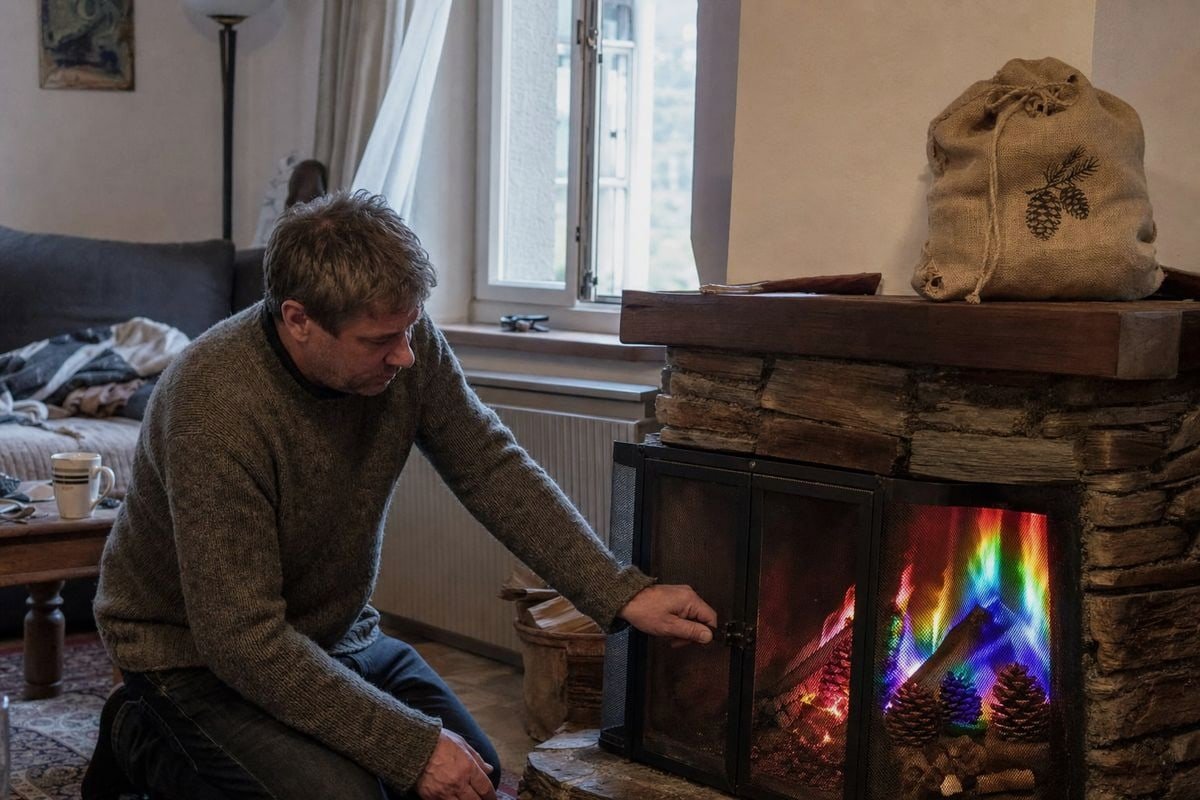
Las piñas de pino coloreadas se comportan de la misma manera químicamente en interiores y exteriores, pero el entorno de exposición lo cambia todo. En interiores, los subproductos de la combustión 1 se acumulan en un espacio confinado. Una chimenea elimina la mayor parte del humo, pero no puede eliminarlo todo. Es por eso que la calidad del aire interior 2 las advertencias deben ir primero en cualquier sección interior. En exteriores, la preocupación se traslada al viento, las chispas y la proximidad: una instrucción práctica que siempre recomendamos es decirle a los usuarios que se sienten a favor del viento del fuego.
Advertencias interiores que su manual necesita
La sección interior debe tratar el producto como un aditivo químico para el fuego, no como decoración. Ese encuadre cambia el tono de cada advertencia. Aconsejamos a nuestros clientes OEM que incluyan, como mínimo: abra el registro completamente antes de encenderlo, mantenga una ventana entreabierta para el flujo de aire, use una pantalla para chimenea 3, y nunca exceda el límite de conos. Demasiados conos ardiendo a la vez crean un calor intenso que puede provocar un choque térmico en la mampostería o los revestimientos del conducto. Las piñas de pino también tienen un alto contenido de resina, lo que acelera la acumulación de creosota, por lo que una instrucción de inspección de chimenea previa a la temporada también pertenece aquí.
Advertencias exteriores que su manual necesita
El uso en exteriores es más indulgente en cuanto a ventilación pero más difícil de controlar. Los vientos cambian. Las personas se mueven alrededor del fuego. Los niños asan malvaviscos sin preguntar. Su sección exterior debe prohibir explícitamente la preparación de alimentos sobre conos tratados porque los residuos de sales metálicas pueden contaminar los alimentos.
| Tema de advertencia | Chimenea interior / estufa de leña | Hoguera exterior / fogata |
|---|---|---|
| Ventilación | Registro completamente abierto; abra una ventana | Siéntese a favor del viento; solo al aire libre |
| Límite de cantidad | Máximo 8–10 conos por fuego | Un puñado pequeño; añadir gradualmente |
| Llamas establecidas, no brasas humeantes | Estrictamente prohibido | Estrictamente prohibido |
| Chispas | Se requiere pantalla para chimenea | Radio de 3 m despejado; anillo de fuego estable |
| Riesgo de chimenea | Inspeccionar primero en busca de creosota | No aplicable |
| Extinción | Dejar quemar; registro abierto hasta que esté frío | Ahogar completamente; remover cenizas; ahogar de nuevo |
| Límites del aparato | Nunca en unidades de gas o propano | Nunca en mesas de fuego de gas portátiles |
Otra distinción importa: seguridad de las estufas de leña. Las estufas con catalizadores 4 deben excluirse por completo, ya que los vapores químicos pueden obstruir o corroer el catalizador. Su manual debe nombrar esta exclusión, no implicarla.
¿Qué certificaciones e informes de prueba necesito referenciar en mi manual de seguridad?
La documentación de cumplimiento es lo primero que nos piden los compradores serios, generalmente antes de preguntar por el precio. En nuestros más de 17 años exportando productos de llama de color a EE. UU., Alemania, Reino Unido y más de 30 mercados, nunca hemos cerrado un trato en el canal minorista sin tener informes de prueba sobre la mesa.
Consulte la Hoja de Datos de Seguridad (SDS) del producto, los informes de pruebas de laboratorio de terceros de SGS o Intertek, la documentación de marcado CE para la UE y los certificados ISO 9001 y BSCI del fabricante. Incluya el método de acceso a la SDS, idealmente un código QR escaneable, directamente en el manual.

Un manual de seguridad sin documentación que lo respalde es solo texto deseado. Los minoristas lo saben. Si una queja de un cliente escala, la primera pregunta de un equipo de cumplimiento minorista es: ¿dónde está la SDS? La Hoja de datos de seguridad 5 (SDS) cubre los colorantes químicos utilizados en el producto, su clasificación de peligros y los protocolos de primeros auxilios en caso de ingestión, contacto con la piel o riesgos de inhalación. Su manual no debe reproducir toda la SDS, pero debe indicar a los usuarios exactamente cómo acceder a ella. Ahora imprimimos un código QR que enlaza a la SDS en la mayoría de los embalajes de marca blanca que producimos, porque una URL impresa se ignora y un código QR se escanea.
La pila de documentos central
Aquí está el conjunto de documentación que preparamos para los compradores y lo que hace cada pieza en su manual:
| Documento | Lo que prueba | Cómo referenciarlo en el manual |
|---|---|---|
| Hoja de Datos de Seguridad (SDS) | Composición química, peligros, primeros auxilios | Código QR más instrucciones de acceso escritas |
| Informe de prueba SGS / Intertek | Verificación independiente de emisiones y composición | "Probado por [laboratorio], informe n.º disponible bajo pedido" |
| Documentación CE | Conformidad del mercado de la UE | Marca CE en el embalaje; declaración citada en el manual |
| ISO 9001 6 certificado | Sistema de calidad de producción consistente | Página de declaración del fabricante |
| Auditoría BSCI | Condiciones de fábrica éticas y auditadas | Opcional; fortalece las listas minoristas |
Expectativas específicas del mercado
Los requisitos cambian según el destino. Nuestros compradores de la UE necesitan conformidad relacionada con la CE y a menudo solicitan declaraciones químicas alineadas con REACH. Los compradores de EE. UU. se centran en la SDS y los informes de laboratorio que abordan los límites de exposición a metales pesados. Si su proveedor no puede producir informes de pruebas de terceros 7 — no los autodeclarados — considérelo un obstáculo insuperable. Mantenemos documentación ISO 9001, BSCI, CE y SGS/Intertek precisamente porque nuestros compradores no pueden acceder a los principales canales minoristas sin ellos. Su manual también debe llevar una declaración clara de que las cenizas de los conos tratados no deben usarse como fertilizante de jardín, ya que residues can accumulate in soil and reach edible plants — a point that ties directly back to what the test reports verify.
¿Cómo escribo instrucciones de uso claras que reduzcan la responsabilidad y las quejas de los clientes?
There is a trade-off we weigh on every packaging project: more warnings mean more legal cover, but a wall of text means nobody reads any of it. The instructions that actually get followed are short, bold, and ranked by risk.
Escribe frases imperativas cortas, pon las advertencias de mayor riesgo primero, usa etiquetas en negrita como NO PARA FUEGOS DE COCINA y SE REQUIERE VENTILACIÓN, limita cada advertencia a una idea, añade una lista de verificación previa al uso y cubre el almacenamiento y la eliminación. Una estructura clara reduce el mal uso, las quejas y la exposición a la responsabilidad.

Liability follows foreseeability. If a reasonable person could foreseeably roast a hot dog over pretty colored flames, and your manual never told them not to, that gap is your problem — or your retail buyer's problem, which quickly becomes yours. So the writing method matters as much as the content. We learned this the practical way: an early buyer of our color-flame pinecones came back with a batch of customer questions that all traced to one ambiguous sentence in their insert. We rewrote it into numbered steps and the questions stopped.
A structure that works
Use this order, because readers drop off fast:
- Critical prohibitions first. Not for cooking fires. Not for gas or propane appliances. Keep out of reach of children and pets — the colored coating can be mistaken for candy, and the metal salts are toxic if ingested.
- Pre-use checklist. Chimney inspected and cleaned. Damper open. Screen in place. Fire established and burning normally on proper fuel.
- Usage steps. Add one cone at a time with tongs or gloves. Use one color treatment per fire; never mix chemical colorants. Stay under the 8–10 cone limit.
- During-use rules. Stop use if smoke accumulates indoors. Never leave the fire unattended.
- After-use rules. Wash hands after handling. Do not spread ash on gardens. Let ashes cool fully before disposal.
- Almacenamiento. Keep cones dry and sealed in original packaging. Humidity can cause chemicals to leach out and create concentrated liquid runoff. Store away from heat, children, and pets.
Language rules that hold up
Every warning gets one verb and one idea. "Use only dry cones" beats "Cones that have become damp, green, or have not fully opened may produce excessive smoke and should be avoided." Bold the trigger words. Repeat the top three prohibitions on both the outer packaging and the inner insert, because customers throw one of them away. Also position the product honestly: these cones supplement an established fire; they are never the primary fuel, and routine heavy use raises creosote buildup and toxic fumes concerns that occasional use does not.
¿Puede mi proveedor proporcionar etiquetas de advertencia conformes y documentación de seguridad multilingüe?
A Dutch importer once asked us for warning labels in five languages, three days before their print deadline. We could turn it around because our packaging team maintains translated warning templates for our main export markets — but that request taught me most buyers wait far too long to ask this question.
Sí — un proveedor OEM capaz debe proporcionar etiquetas de advertencia que cumplan con el mercado,.
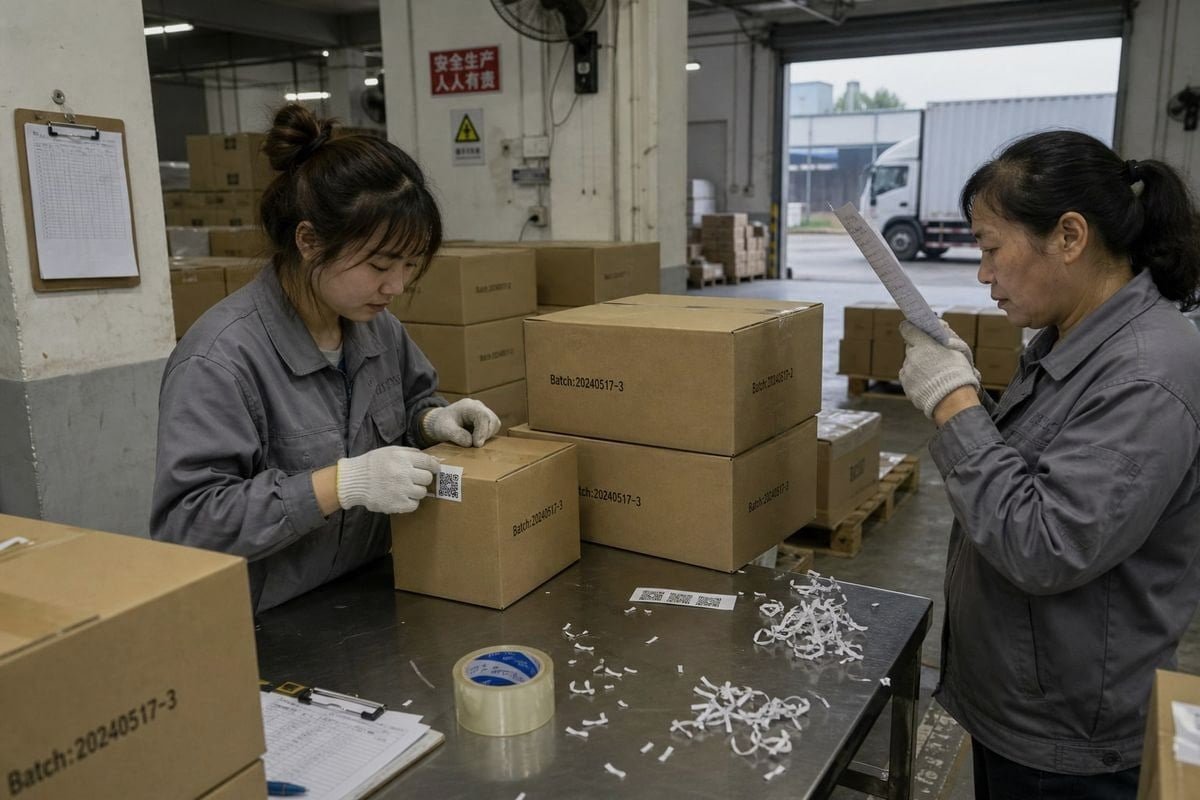
This is where the difference between a factory and a empresa comercial 8 becomes concrete. A trading company forwards your artwork to a printer and hopes. A factory with real OEM/ODM depth builds compliance into the packaging process. At our facilities in Ningbo, with headquarters in Liuyang, we handle custom boxes, display packaging, warning labels, barcodes, and full private-label branding as one workflow — because our buyers in the US, Germany, France, Poland, and Australia each face different labeling rules, and piecing that together across three vendors invites errors.
Qué exigir a su proveedor
Ask these questions before you place a trial order, no después:
| Las preguntas que separan a los socios OEM reales de los impresores de etiquetas | Acceptable answer | Señal de alerta |
|---|---|---|
| Can you supply the SDS in my market's language? | Yes, with translated first-aid sections | "The English one is fine" |
| Who translates warning text? | Professional translation, buyer-approved proofs | Machine translation, no proof stage |
| Can warnings print directly on packaging? | Yes — kraft bags, jars, pouches, inserts | Stickers applied by hand after production |
| Do labels match the test reports? | Yes, claims traceable to SGS/Intertek data | Marketing claims with no report behind them |
| Can you add a QR code to the SDS? | Yes, standard option | Never done it |
Multilingual doesn't mean multiplied risk
Translation errors in safety text are a real liability vector. A warning that says "avoid smoke" instead of "stop use if smoke accumulates" changes the legal meaning. We route translated safety copy through buyer approval before print, and we keep the source English text locked to the tested product specification. That way the first sample's labeling reflects mass-production labeling — the same batch-to-batch discipline we apply to the cones themselves. For buyers testing a new market, we also support flexible MOQs on trial orders, so you can validate both the product and the documentation package before committing to a full container.
Conclusión
Weak manuals turn colorful products into costly claims. Cover ventilation, quantity limits, cooking bans, and SDS access — and partner with a certified factory that ships compliant documentation with every order.
Notas al pie
1. Authoritative EPA guide on indoor pollutants and combustion byproducts. ↩︎
2. Official EPA version of the joint CPSC/EPA indoor air guide. ↩︎
3. NFPA's primary resource for home heating and fireplace safety. ↩︎
4. EPA guide explaining catalytic vs non-catalytic wood stove technology. ↩︎
5. OSHA's central hub for Hazard Communication and SDS requirements. ↩︎
6. Comprehensive and accessible overview of the ISO 9001 standard. ↩︎
7. Authoritative testing laboratory for product safety and compliance verification. ↩︎
8. Definition of intermediary business entities in international trade. ↩︎



 English
  Spanish
  German
  French
  Arabic
  Portuguese
Únete a la conversación