







Las cantidades de muestra de polvo Magic Fire son la forma más segura de probar la demanda minorista, y en nuestra línea de producción de Ningbo, las solicitudes de prueba son lo primero que la mayoría de los nuevos compradores preguntan.
Puede obtener cantidades de muestra del polvo Magic Fire solicitando sobres de evaluación directamente al fabricante, típicamente 5–20 sobres de un solo uso enviados dentro de 3–7 días, con el flete pagado por el comprador. Las fábricas que cumplen proporcionan informes de prueba SGS y documentos MSDS junto con las muestras antes de cualquier compromiso a granel.
El proceso es más simple de lo que la mayoría de los compradores esperan. A continuación, detallo los tamaños de muestra, la verificación de seguridad, los plazos de entrega y las opciones de marca privada paso a paso.
¿Qué tamaños de muestra y MOQ puedo solicitar para las pruebas de polvo Magic Fire?
Un distribuidor alemán de chimeneas nos pidió exactamente tres sobres antes de realizar un pedido de 40.000 unidades. Esa única conversación dio forma a cómo nuestra fábrica estructura cada programa de muestras hoy en día.
La mayoría de los fabricantes ofrecen muestras de polvo Magic Fire en sobres individuales de papel de aluminio de 10 g a 30 g, generalmente de 5 a 20 unidades por solicitud. Los MOQ de pedidos de prueba varían entonces de 500 a 2.000 bolsas, mientras que el precio real al por mayor generalmente comienza en 5.000-10.000 unidades por SKU.

Los compradores a menudo confunden tres cosas muy diferentes: muestras de evaluación, pedidos de prueba y pedidos al por mayor. Acertar en esta distinción ahorra semanas de idas y venidas. Las muestras de evaluación existen para que pueda ver el efecto de llama 1, comprobar la calidad del embalaje y entregar algunas unidades a clientes de confianza. Los pedidos de prueba son tiradas de producción pequeñas destinadas a una prueba real en estantería. Los pedidos al por mayor desbloquean el precio completo de colorantes de fuego al por mayor.
Niveles típicos de muestras y pedidos
| Nivel | Cantidad | Propósito | Base de costes típica |
|---|---|---|---|
| Muestras de evaluación | 5–20 sobres (10g–30g cada uno) | Pruebas de producto, revisión interna | A menudo gratuito; el comprador paga el transporte |
| Pedido de prueba | 500–2.000 bolsas | Prueba de estantería minorista, datos de venta | Precio unitario de tirada pequeña |
| MOQ estándar | 000–10.000 bolsas | Primera compra real al por mayor | Precio mayorista estándar |
| Al por mayor / contenedor | 000+ bolsas | Programas continuos | Mejor precio por unidad |
Algunos compradores objetan que las muestras nunca reflejan el rendimiento minorista real. Esa preocupación es válida, pero apunta a un problema del proveedor, no a un problema de muestreo. En nuestra experiencia, cuando una fábrica realiza un estricto control lote a lote control de calidad 2, la muestra que recibe coincide exactamente con la producción en masa. Por eso insistimos en que los compradores prueben nuestros paquetes de llama que cambian de color en formato minorista real, no polvo suelto de laboratorio.
Paquetes de muestras frente a inventario del primer lote
Otra objeción práctica: a veces comprar el paquete de consumo más pequeño disponible es más barato que negociar muestras. Eso funciona para una mirada rápida. Pero los paquetes minoristas comprados en mercados no llevarán su código de barras, su lenguaje de advertencia o los documentos de cumplimiento de su mercado. Si su objetivo final es un programa de marca privada 3, comience con muestras reales de fábrica. Si solo quiere ver llamas de colores este fin de semana, un paquete de consumo pequeño está bien.
¿Cómo verifico la seguridad y el cumplimiento del producto antes de pedir muestras?
El cumplimiento es el primer filtro que aplicamos en nuestra propia línea de producción, antes de la intensidad del color, antes del embalaje, antes del precio. Nuestros compradores en EE. UU. y la UE lo tratan de la misma manera.
Verifique la seguridad solicitando la MSDS, los informes de prueba SGS o Intertek y la documentación CE antes de que se envíen las muestras. Confirme que la fábrica tiene la certificación ISO 9001 y BSCI, verifique que las bolsitas lleven las etiquetas de advertencia adecuadas y confirme que el producto es solo para uso en paquetes sin abrir en incendios de madera.

Los productos de novedad para chimeneas se encuentran en una zona gris para muchos importadores primerizos. Son bienes de consumo 4, pero también son productos relacionados con el fuego. Aduanas, minoristas y aseguradoras se preocupan por la documentación. Cuando incorporamos un nuevo distribuidor, enviamos el archivo de cumplimiento antes de enviar el polvo, porque una muestra sin documentos es inútil para un comprador minorista serio.
La lista de verificación de documentos
Pida a cada proveedor estos artículos en la etapa de consulta:
- Hoja de cumplimiento de seguridad MSDS — confirma la composición, manipulación y clasificación de transporte.
- Informes de pruebas de terceros — informes SGS o Intertek que cubren metales pesados y rendimiento de seguridad.
- Documentación CE — requerido para la mayoría de los canales minoristas europeos.
- Certificaciones de fábrica — ISO 9001 para sistemas de calidad, BSCI para cumplimiento social; los grandes canales de abastecimiento minorista los tratan como requisitos estrictos.
- Arte de etiqueta — lenguaje de advertencia, guía de edad e instrucciones de uso en el idioma de su mercado.
Restricciones de uso que debe confirmar
Las instrucciones dirigidas al consumidor son tan importantes como los informes de laboratorio. Los paquetes de llama que cambian de color están diseñados para tirarse al fuego sin abrir. Las dos advertencias que deben aparecer en embalaje minorista 5 son simples: no abra el paquete y no cocine alimentos sobre llamas de colores. Si el sobre de muestra de un proveedor llega sin este texto impreso, considérelo una señal de alerta para toda la relación. Imprimimos advertencias, instrucciones y códigos de barras directamente en cada unidad minorista, porque un distribuidor nunca debería tener que pegar etiquetas sobre el embalaje de fábrica para que sea legal.
Un punto más sobre la ecología. Los compradores preguntan cada vez más si los cristales contienen productos químicos nocivos. Nuestras formulaciones utilizan materiales ecológicos 6 sin productos químicos nocivos, y los informes de prueba lo respaldan. Pida a su proveedor que lo demuestre, afirmar verbalmente que es "no tóxico" no es una verificación.
¿Cuál es el tiempo de entrega típico para recibir muestras de polvo de fuego mágico?
La velocidad es un compromiso que sopesamos constantemente. Enviar sobres de stock desde nuestro almacén lleva días; producir prototipos con marca personalizada lleva semanas. Saber cuál necesita decide su cronograma.
Muestras en stock de polvo Magic Fire generalmente se envían dentro de 1-3 días y llegan en 3-7 días por mensajería exprés. Las muestras prototipo personalizadas o OEM tardan de 7 a 15 días en producirse más el envío. Los compradores generalmente pagan el flete, incluso cuando las muestras en sí son gratuitas.
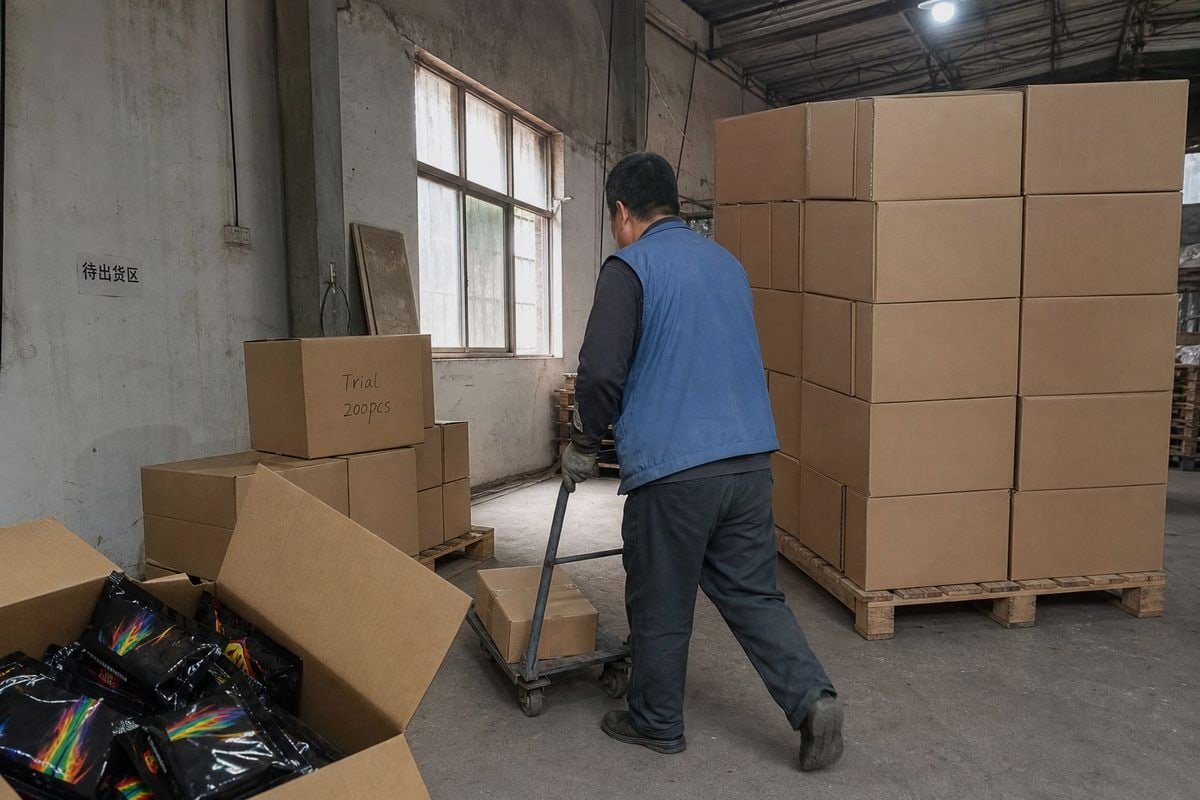
El tiempo de entrega depende de tres variables: qué tipo de muestra necesita, dónde se encuentra y cómo se clasifica el envío. Después de más de 17 años exportando a más de 30 países, puedo decir que los mayores retrasos nunca provienen de la producción. Provienen de información de envío incompleta y detalles faltantes del consignatario. Proporcione a su proveedor una dirección completa, número de teléfono y nombre de la empresa desde el primer día.
Tiempo de entrega por tipo de muestra y destino
| Tipo de muestra | Tiempo de producción | Envío exprés (EE. UU./UE) | Estimación total |
|---|---|---|---|
| Sobres de venta al por menor en stock | 1-3 días | 3–7 días | 4–10 días |
| Unidades de exhibición de venta al por menor en stock | 2–4 días | 4–8 días | 6–12 días |
| Prototipos con etiqueta personalizada | 7–15 días | 3–7 días | 10–22 días |
| Maquetas de embalaje OEM completas | 10–20 días | 3–7 días | 13–27 días |
Qué puede ralentizar las muestras
Algunos puntos de fricción realistas merecen honestidad. Primero, algunos mensajeros aplican verificaciones adicionales a los productos de consumo relacionados con el fuego, especialmente a través de fronteras o para compradores no verificados. Una fábrica con la documentación MSDS adecuada supera estas verificaciones de forma rutinaria; un comerciante sin papeles no lo hace. Segundo, la temporada alta importa. Las solicitudes del tercer trimestre se mueven más lentamente porque todos están muestreando para la temporada de productos novedosos para fogatas de invierno y festividades. Si desea tener espacio en los estantes para octubre, solicite muestras en junio o julio, no en septiembre.
Tercero, planifique su calendario de pruebas minoristas a la inversa. Si su prueba con el cliente dura cuatro semanas y su pedido de prueba necesita de tres a cuatro semanas adicionales para producirse y enviarse, la solicitud de muestra debe llegar aproximadamente tres meses antes de su lanzamiento objetivo. Guiamos a cada nuevo comprador a través de este cronograma para que la estrategia de muestreo del producto realmente se conecte con una fecha de lanzamiento, no solo con una compra por curiosidad.
¿Puedo obtener empaques de marca privada en pedidos de prueba pequeños antes de comprometerme a comprar al por mayor?
La lección que nuestro equipo aprendió temprano: los compradores no prueban realmente un polvo, prueban un paquete. Un sobre genérico en un estante no le dice nada sobre cómo funcionará su marca.
Sí. Los fabricantes con capacidad de fabricación genuina de marca blanca pueden aplicar su marca, códigos de barras y etiquetas de advertencia en tiradas de prueba tan pequeñas como de 500 a 1000 unidades. La impresión digital mantiene viables los costos de lotes pequeños, y muchas fábricas acreditan los costos de muestras o pruebas en su primer pedido a granel.

Aquí es donde la profundidad de la fábrica separa a los fabricantes reales de las empresas comerciales. Una empresa comercial revende cualquier embalaje en stock existente. Una fábrica con líneas de producción completas puede ajustar el tamaño del sobre, el tiempo de combustión, el formato de la caja y las ilustraciones, incluso a volumen de prueba. En nuestra sede de Liuyang, el equipo de OEM se encarga de bolsas de plástico, bolsas de papel kraft, frascos, cajas de exhibición abatibles y unidades de exhibición minorista de mostrador, todas las cuales pueden llevar su marca desde la primera prueba.
Opciones de marca privada a volumen de prueba
| Personalización | ¿Disponible en 500–1,000 unidades? | Notas |
|---|---|---|
| Ilustraciones de sobres impresos | Sí | La impresión digital evita los costos de planchas |
| Etiquetas de código de barras y SKU | Sí | Aplicadas según su sistema minorista |
| Texto de advertencia e instrucciones | Sí | Localizado para su mercado |
| Caja de exhibición personalizada (20–35 sobres) | Sí | Ideal para pruebas de compra impulsiva en el mostrador |
| Tamaño de sobre / tiempo de combustión personalizado | Generalmente | Puede agregar 5–10 días de tiempo de entrega |
| Estructura de bolsa completamente personalizada | A veces | A menudo requiere un mayor volumen |
Estructuración de la prueba para reducir el riesgo
Dos mecanismos comerciales hacen que las pequeñas tiradas de marca sean asequibles. Primero, pregunte sobre el crédito de muestra a stock: muchas fábricas, incluida la nuestra, acreditarán los costos de prueba contra su primer pedido al por mayor una vez que se comprometa. Segundo, use una unidad de exhibición de mostrador como su vehículo de prueba. Una sola exhibición de 20–35 sobres prueba la velocidad de compra impulsiva honestamente, sin una caja maestra completa en su almacén.
También puede estirar las muestras físicas con soporte digital. Los códigos QR en los expositores de estantería que enlazan a videos de llamas a cámara lenta reducen la cantidad de sobres físicos que quema en las demostraciones. Y si vende en el canal de accesorios para la vida al aire libre 7 , sembrar algunos sobres con campamentos locales o microinfluencers genera comentarios reales sobre la intención de compra antes del lanzamiento. Para los compradores que planean una gama más amplia, la misma lógica de prueba se aplica a las piñas de llama de color y a los iniciadores de fuego de cera: probar cristales de fuego a granel junto con SKUs adyacentes a menudo revela qué formato prefieren realmente sus clientes.
Conclusión
Las cantidades de muestra de polvo Magic Fire le permiten probar la demanda, verificar el cumplimiento y probar el embalaje de marca privada antes de comprometerse con el MOQ, convirtiendo una apuesta mayorista arriesgada en un lanzamiento minorista medido.
Notas al pie
Entrada de Wikipedia que explica la ciencia y los efectos de los colorantes pirotécnicos y los efectos de llama. ↩︎
ISO 9001 es la norma internacional para sistemas de gestión de calidad mencionada en el artículo. ↩︎
Resumen de Wikipedia de estrategias de marca blanca para productos minoristas y fabricación. ↩︎
El sitio web oficial de la Comisión de Seguridad de Productos del Consumidor de EE. UU., que regula la seguridad de los bienes de consumo. ↩︎
Guía completa sobre normas de embalaje y etiquetado para la seguridad del consumidor y el marketing. ↩︎
Recurso actualizado de la EPA para identificar y seleccionar productos y materiales ambientalmente preferibles. ↩︎
La Hearth, Patio & Barbecue Association es el principal organismo de la industria para productos de vida al aire libre. ↩︎



 English
  Spanish
  German
  French
  Arabic
  Portuguese
Únete a la conversación