







Color de chimenea piñas 1 confunden a muchos compradores. En nuestra línea de producción, escucho la misma pregunta semanalmente: ¿realmente encienden fuego o solo lo decoran? Equivocarse en esto significa devoluciones, quejas y espacio en estantería desperdiciado en un producto mal posicionado. Permítanme aclararlo desde la fábrica.
Piñas de color chimenea son productos decorativos de color llama, no ignitores primarios. Los iniciadores de fuego ordinarios como rollos de madera sumergidos en cera se encienden más rápido y arden más caliente porque transportan combustible de cera o resina concentrada. Las piñas de color llama deben añadirse a un fuego establecido para un efecto visual multicolor de 30 a 90 segundos.
Esa es la respuesta corta. Pero si importa o distribuye productos para chimeneas, necesita los detalles detrás de esto. A continuación, desgloso el rendimiento de ignición, la consistencia de los lotes, las certificaciones y la seguridad minorista, basándome en lo que vemos al ejecutar ambas líneas de productos una al lado de la otra.
¿Cómo se comparan las piñas de llama de color con los iniciadores de fuego estándar en el tiempo de ignición real?
Un distribuidor alemán nos pidió una vez que ejecutáramos ambos productos en la misma chimenea de prueba antes de firmar su primer pedido. Esa quema comparativa le enseñó más que cualquier hoja de especificaciones, y todavía se la recomiendo a cada nuevo comprador que incorporamos.
Los iniciadores de fuego estándar se encienden en segundos y mantienen la llama durante 8-15 minutos, encendiendo de manera confiable la yesca. Las piñas de llama de color se encienden más lentamente, aportan poco calor y producen aproximadamente 30-90 segundos de llama de color. Para iniciar fuego real, los iniciadores a base de cera superan a los conos decorativos en todo momento.

La confusión proviene de agrupar tres productos diferentes en una sola categoría. Las piñas naturales sin tratar, los iniciadores de fuego de piñas enceradas y las piñas de llama de color se comportan de manera muy diferente en una caja de fuego. Así es como se comparan en la práctica:
| Producto | Velocidad de ignición | Duración de la combustión | Salida de calor | Propósito principal |
|---|---|---|---|---|
| Piñas secas sin tratar | Moderada, varía según el contenido de resina | Corto a moderado | Decente pero inconsistente | Ayuda gratuita para encender leña natural |
| Iniciadores de fuego con cera | Rápida, se enciende en segundos | 8–15 minutos | Alta y constante | Encender leña y troncos |
| Piñas de llama de colores | Más lenta, necesita llama existente | 30–90 segundos de color | Insignificante | Efecto visual de llama |
Por qué el iniciador de cera gana en ignición
A rollo de madera bañado en cera 2 es combustible diseñado. La cera satura la fibra, por lo que una sola cerilla la enciende y mantiene una llama estable el tiempo suficiente para encender la leña y luego los troncos. Esa previsibilidad es el propósito principal del producto.
Por qué la piña de color no intenta competir
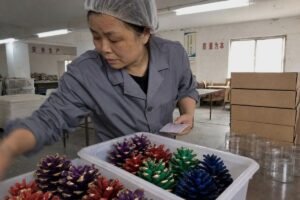
Una piña de llama de color se trata con compuestos minerales 3 que cambian el color de la llama. Ese recubrimiento no hace nada para la ignición. De hecho, el tratamiento puede ralentizar ligeramente el encendido inicial en comparación con una piña resinosa cruda. Diseñamos las nuestras para arrojarlas a un fuego ya encendido, donde liberan ondas de llama azul, verde, púrpura y roja. Son los fuegos artificiales de la chimenea, no el motor.
Así que la comparación honesta no es "cuál enciende mejor". Es "qué trabajo hace cada producto". Los importadores inteligentes almacenan ambos: el iniciador se vende por su función, la piña de color se vende por su deleite. Juntos aumentan el tamaño de la cesta, que es exactamente cómo nuestros compradores minoristas de mejor rendimiento los comercializan.
¿Puedo esperar una calidad de quemado constante en cada lote que importo?
La consistencia del lote es el compromiso que evalúo todos los días, porque las piñas son material natural. Dos piñas del mismo árbol pueden diferir en densidad, humedad y tamaño, y esa variación es exactamente lo que nuestro proceso de producción existe para controlar.
Sí, pero solo con un fabricante que estandarice los insumos y pruebe cada lote. Los conos naturales varían en tamaño, humedad y resina, por lo que la intensidad de color constante y el comportamiento de combustión dependen de fórmulas de recubrimiento controladas, controles de humedad y pruebas de combustión lote por lote antes del envío.

La naturaleza cruda es inconsistente. La disciplina de fabricación es lo que la convierte en un producto minorista repetible. Después de más de 17 años dirigiendo líneas de productos para chimeneas, hemos aprendido que la consistencia proviene del control de cuatro variables, en orden:
- Selección de piñas. Clasificamos las piñas entrantes por tamaño y estructura. Las piñas de tamaño insuficiente o dañadas se rechazan antes del tratamiento, porque las piñas pequeñas llevan menos recubrimiento y producen un color más débil.
- Control de humedad. Las piñas húmedas absorben el recubrimiento de manera desigual y humean en lugar de arder. Secamos las piñas a un rango de humedad controlado antes de que comience cualquier tratamiento.
- Fórmula y dosificación del recubrimiento. Los compuestos de color se mezclan según una receta fija y se aplican a una carga constante por piña. Muy poco recubrimiento significa un color pálido; demasiado desperdicia material y puede afectar el comportamiento de la combustión.
- Pruebas de combustión por lotes. Antes de que un contenedor salga de Ningbo, tomamos muestras de cada lote y las quemamos. Verificamos el comportamiento de ignición, la viveza del color, duración del color, y el humo. Si un lote se desvía, no se envía.
La pregunta que hay que hacer a cualquier proveedor
Pregunte esto directamente: ¿refleja su primera muestra la calidad de producción en masa? Muchas empresas comerciales obtienen piñas de forma oportunista, por lo que el lote uno y el lote cinco provienen de diferentes talleres. Debido a que operamos nuestras propias líneas de producción completas, la muestra que le enviamos se extrae del mismo proceso que utilizará su pedido a granel. Varios de nuestros compradores a largo plazo en EE. UU. y los Países Bajos vuelven a pedir con un programa permanente precisamente porque dejaron de necesitar volver a inspeccionar cada envío. Esa confianza tardó años de lotes consistentes en ganarse, y es la verdadera respuesta a esta pregunta: la consistencia es una capacidad del proveedor, no una característica del producto.
¿Qué certificaciones debo verificar antes de obtener piñas Color-Flame para mi mercado?
El papeleo de cumplimiento una vez salvó a uno de nuestros compradores del Reino Unido un contenedor entero. La aduana solicitó documentación de prueba a la llegada, y como nuestros informes SGS y archivos CE estaban completos, el envío se despachó en días en lugar de permanecer en un almacén fiscal.
Verificar ISO 9001 para gestión de calidad, BSCI para cumplimiento social, marcado CE para mercados europeos e informes de pruebas de terceros de SGS o Intertek que cubran seguridad química y comportamiento de combustión. Confirmar también etiquetas de advertencia conformes, ya que los minoristas y las aduanas rechazan cada vez más los productos contra incendios sin ellas.

Para los bienes de consumo relacionados con el fuego, la certificación no es un "agradable tener". Es la puerta que decide si su producto llega o no al estante. Los grandes canales de abastecimiento minorista ni siquiera abrirán una conversación con un proveedor sin documentación. Aquí se explica qué cubre cada credencial y por qué es importante para usted como importador:
| Certificación / Documento | Confirma que el proceso de dosificación de fragancias está controlado y es repetible | Por qué es importante para usted |
|---|---|---|
| ISO 9001 4 | Sistema de gestión de calidad de fábrica | Indica procesos repetibles, no suerte única |
| BSCI 5 | Auditoría social y ética de la fábrica | Requerido por muchas cadenas minoristas de la UE y EE. UU. |
| Marcado CE | Conformidad europea de seguridad del producto | Requisito legal para el acceso al mercado de la UE |
| Informes de prueba SGS / Intertek | Pruebas químicas y de rendimiento independientes | Prueba de que el recubrimiento es seguro y las afirmaciones son reales |
| Etiquetas de advertencia y códigos de barras | Información de seguridad para el consumidor, preparación para la venta minorista | Evita retenciones aduaneras y rechazos de minoristas |
Documentos a solicitar antes de realizar el pedido
Solicite certificados actuales, no escaneos caducados. Pregunte si informes de pruebas cubren el producto exacto que está comprando, no un artículo similar. Y pregunte quién tiene la certificación: la fábrica o un intermediario comercial. Nosotros tenemos ISO 9001, BSCI, CE y Informes de SGS/Intertek 6 bajo nuestro propio nombre, porque somos la fábrica real en Liuyang y Ningbo, no un intermediario que revende el papeleo de otra persona.
El ángulo ecológico
Los productos baratos de llama de color de talleres no certificados a veces utilizan compuestos que fallarían un análisis químico. Nuestras fórmulas se basan en materiales ecológicos 7 sin químicos dañinos, y los informes de prueba existen para probarlo. En mercados como Alemania y Francia, donde los compradores examinan de cerca el contenido químico, esa documentación es a menudo el factor decisivo entre dos cotizaciones por lo demás similares.
¿Son las piñas Color-Flame más seguras y fiables que los iniciadores de fuego tradicionales para clientes minoristas?
Un comprador canadiense me dijo una vez que su mayor temor no era un mal producto, sino uno mal utilizado. Esa conversación remodeló cómo escribimos nuestras instrucciones de uso, porque la seguridad minorista comienza con establecer las expectativas correctas del cliente en el empaque.
Ambos son seguros cuando se usan según las indicaciones, pero cumplen funciones diferentes. Los iniciadores de fuego son más confiables para encender fuegos. Las piñas de llama de color son seguras como adiciones decorativas a chimeneas de leña, fogatas y hogueras, pero nunca deben usarse para fuegos de cocina o en aparatos de gas.

La fiabilidad y la seguridad son dos cuestiones separadas, y los clientes minoristas las confunden constantemente. Permítanme separarlas como lo hacemos en nuestra propia documentación de producto.
Fiabilidad: igualar el producto con el trabajo
Un iniciador encerado es la opción fiable para encender un fuego, especialmente en condiciones húmedas o ventosas donde los materiales naturales fallan. Una piña de llama de color es fiable en su propio trabajo: producir un color vivo una vez que el fuego está encendido. Los problemas solo surgen cuando un cliente espera que un producto haga el trabajo del otro. Un embalaje claro resuelve la mayor parte de esto, por lo que nuestro servicio OEM incluye etiquetas de advertencia personalizadas e instrucciones de uso en el idioma local del comprador.
Seguridad: las reglas que deben estar en cada paquete
| Caso de uso | Iniciadores de fuego | Piñas de llama de colores |
|---|---|---|
| Chimenea de leña | Recomendado | Recomendado |
| Hoguera exterior / fogata | Recomendado | Recomendado |
| Fuegos de cocina o barbacoa | Solo con productos aptos para alimentos | Nunca |
| Chimeneas de troncos de gas | No recomendado | Nunca |
| Estufas cerradas sin ventilación | Con ventilación | No recomendado |
Tres puntos más son importantes para la venta minorista. Primero, las piñas de colores deben almacenarse lejos de niños y mascotas, y el empaque debe decirlo. Segundo, las fórmulas genéricas de sal mineral en el mercado pueden dejar residuos en los conductos con un uso repetido y prolongado, por lo que una guía de uso honesta protege su marca; nuestra formulación ecológica está diseñada para quemar limpiamente, y nuestros informes de prueba lo respaldan. Tercero, la estrategia minorista más segura es la híbrida: venda un iniciador de fuego genuino para encender el fuego, luego piñas de colores para el espectáculo. Combinados correctamente, los dos productos se hacen mutuamente más seguros, más satisfactorios y más rentables.
Conclusión
La mala colocación de estos productos cuesta dinero a los importadores. Los iniciadores de fuego ganan en ignición; las piñas de colores para chimenea ganan en ambiente. Abastézcase de ambos en una fábrica certificada, etiquételos honestamente y véndalos juntos.
Notas al pie
Antecedentes sobre el material natural utilizado antes del recubrimiento y tratamiento. ↩︎
Referencia general sobre productos comerciales para encender fuego para comparación. ↩︎
Explica la química detrás de los compuestos minerales que producen llamas de colores. ↩︎
Página oficial de la ISO que define el estándar de gestión de calidad referenciado. ↩︎
Página oficial de amfori BSCI que explica el programa de auditoría de cumplimiento social. ↩︎
Sitio oficial de SGS que describe los servicios de pruebas y certificación independientes. ↩︎
Recurso de la EPA sobre química verde que apoya las afirmaciones de materiales ecológicos. ↩︎
 English
  Spanish
  German
  French
  Arabic
  Portuguese
Únete a la conversación