






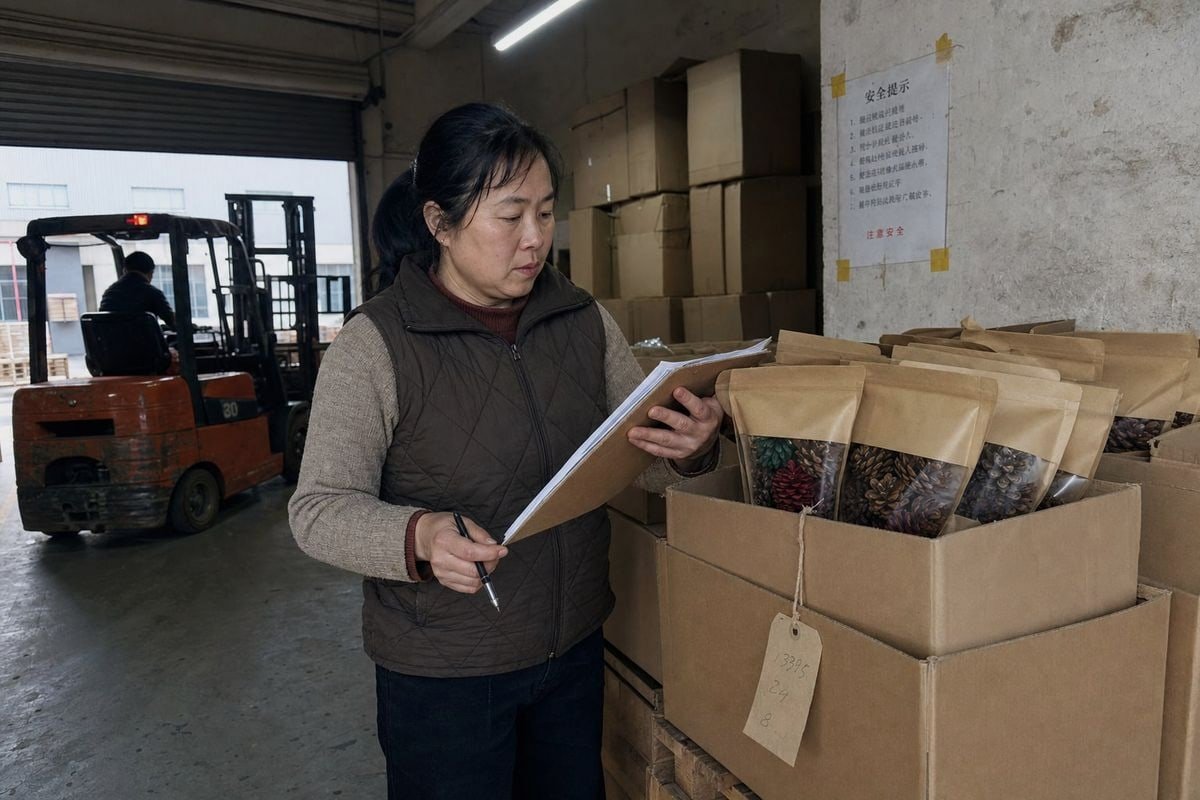
Finding the right HS code and AIRS quarantine requirements for pine cones from China to Canada confused even our first Canadian buyer. One wrong code held their shipment for weeks. We fixed the paperwork, and now our color-flame pinecones clear smoothly.
To find the HS code and AIRS quarantine requirements for pine cones from China to Canada, describe your product's exact condition, search the CBSA Customs Tariff (often heading 0604.90 for decorative cones), then enter that code into CFIA's AIRS tool to confirm phytosanitary and treatment conditions.
That sounds simple, but pine cones are tricky. The code and the quarantine rules both change with processing and use. Let me walk you through the full process step by step.
What HS Code Should I Use for Pine Cone Products Imported from China?
A buyer in Toronto once asked us why our painted pinecones were not "wood products" on our export documents. That question comes up in almost every first order we ship to Canada.
Decorative pine cones from China are usually classified under HS heading 0604 as ornamental plant material, often 0604.90 for dried or treated cones, not under Chapter 44 wood codes. The correct code depends on whether the cones are natural, dried, painted, lacquered, or intended for propagation.
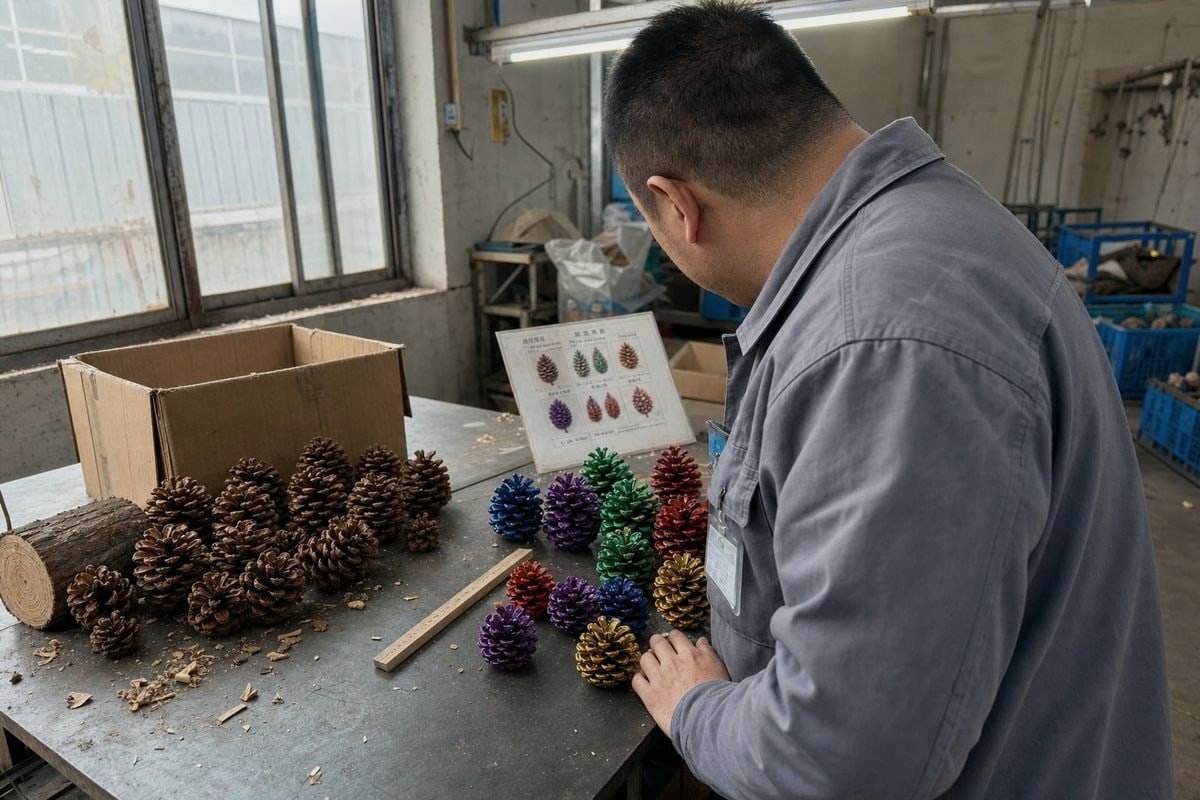
La Harmonized System 1 starts with an internationally recognized 6-digit code. Canada then extends it to a full 10-digit tariff classification. Your first job is to match your product description to the right 6-digit heading. Your second job is to confirm the Canadian extension using the CBSA Customs Tariff or the Canada Tariff Finder 2.
Why Pine Cones Are Not Pine Wood
Here is the most common mistake we see. Chapter 44 covers wood. It includes pine-related codes like 4403.21 and 4403.22. But those codes cover pine logs and rough wood. A pine cone is not a log. Classifying cones under Chapter 44 is wrong, and it can trigger the wrong inspection regime at the border.
Classification Depends on Condition and Use
Customs officers classify goods by their actual commercial character. Ask yourself these questions before you pick a code:
- Are the cones natural, dried, bleached, dyed, painted, lacquered, or glittered?
- Are they sold as raw decorative material, wreath components, or fire-starting products?
- Are they for planting or propagation?
- Are they imported alone or inside a larger craft or festive kit?
| Product Form | Likely Classification Path | Notas |
|---|---|---|
| Natural dried cones, decorative | Heading 0604 (ornamental plant material) | Common path for craft-supply cones |
| Painted or lacquered cones for wreaths | Heading 0604, treated subheading | Coating changes CFIA rules too |
| Cones for propagation (seed use) | Seed/propagation provisions | Different program entirely |
| Color-flame pinecones (treated fire product) | Classified by function, verify with CBSA | Chemical treatment may shift the heading |
One caution from our export experience: some U.S. rulings place dried decorative pine cones under 0604.99. Those rulings are useful reasoning tools, but they are not binding in Canada. Likewise, online trade databases suggest codes that are country-specific or commercially inferred. Do not copy them blindly. For our color-flame pinecones, we always recommend buyers request a CBSA Advance Ruling. It locks in the classification before the shipment sails, and it protects you from reclassification penalties later.
How Do I Check AIRS Requirements Before Importing Pine Cones into Canada?
During a factory audit last year, a Canadian distributor pulled up AIRS on his laptop right in our Ningbo meeting room. We went through the lookup together before he signed the order. That is exactly the right habit.
Open CFIA's Automated Import Reference System, enter your HS code, select China as the country of origin, and choose the intended end use. AIRS then displays the exact import conditions, including permit, phytosanitary certificate, and treatment requirements for that specific pine cone product.

AIRS is the practical front-end tool. Behind it sits CFIA Directive D-02-12 3, which regulates conifer cones entering Canada. The directive is condition-specific. The same words "pine cones" can trigger three different requirement sets depending on how the cones are processed and what they are for.
The Three Main Conifer Cone Categories
| Product Category | Import Permit | Certificado Fitosanitario 4 | Key Entry Conditions |
|---|---|---|---|
| Conifer cones, dried | No | Sí | Moisture content below 20%; methyl bromide fumigation details on the certificate |
| Conifer cones, dried and painted/lacquered (wreath components) | No | No | Moisture content below 8% |
| Conifer cones for propagation | Sí | Varies by program | Pre-approval required before shipment |
Notice the pattern. Heavier processing generally means lighter documentation, but stricter moisture limits. Propagation use flips everything, because it moves the product into a different regulatory program.
A Practical AIRS Search Workflow
- Describe your product precisely: dried, dyed, painted, lacquered, glittered, or chemically treated.
- Confirm your HS code first, because AIRS maps requirements to commodity codes.
- Search AIRS with broad keyword variants like "cone," "coniferous," or "dried plant material," not just "pine." Narrow searches miss applicable entries.
- Select China as origin. CFIA maintains bilateral phytosanitary protocols with China, so treatment codes for Chinese-origin cones can differ from cones sourced elsewhere under the same HS code.
- Record the results and share them with your supplier before production starts.
We do step five with every Canadian buyer. It takes twenty minutes and prevents weeks of border delays.
What Quarantine and Treatment Certificates Will My Supplier Need to Provide?
Our QC team dries every batch of cones in controlled ovens and logs moisture readings before painting begins. We learned to document this rigorously after 17 years of exporting to 30+ countries, because paperwork gaps hurt buyers, not just factories.
Depending on product form, your Chinese supplier must provide a phytosanitary certificate with fumigation details for dried natural cones, moisture-content evidence for all cones, and an import permit arranged in advance for propagation cones. Painted or lacquered wreath cones need only moisture proof below 8%.
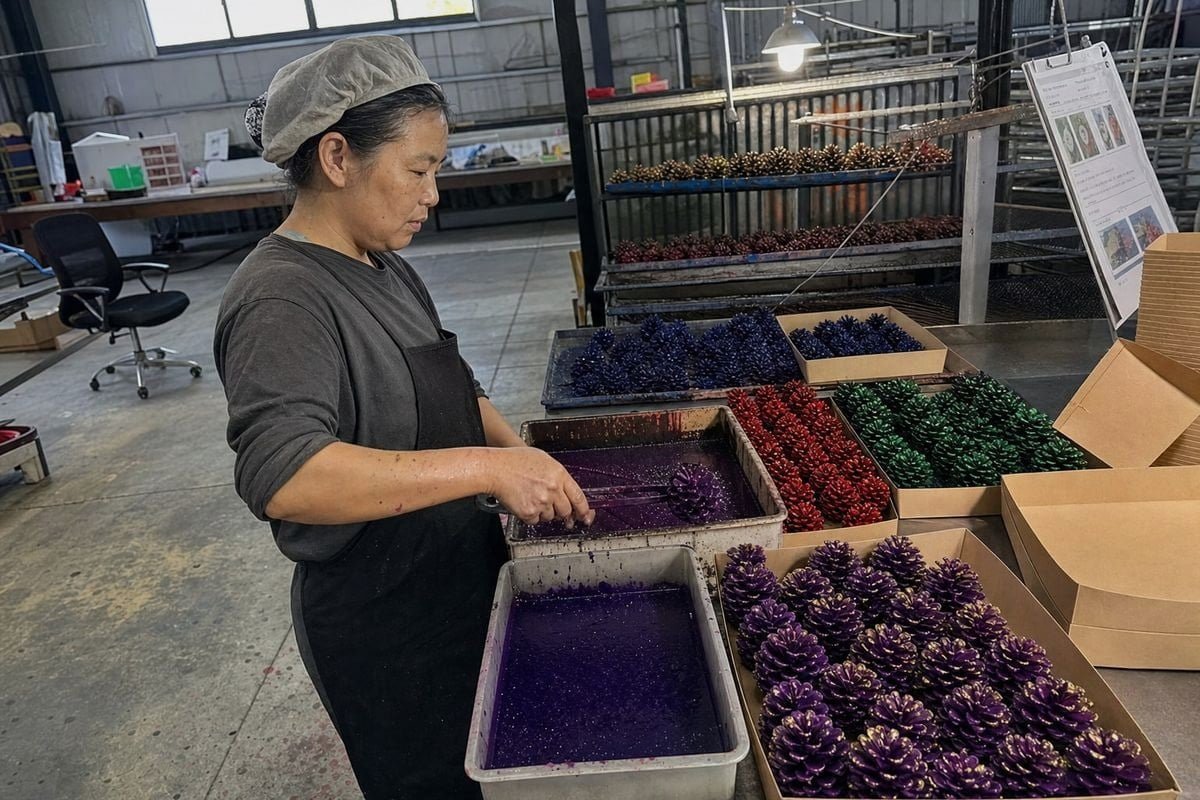
Documents are where most first-time importers stumble. Canada does not just want the right code. It wants proof that the pest risk has been handled. Plant products from China are frequently flagged for wood-boring insects and invasive forest pests 5, so border officers check treatment evidence closely.
The Core Documentation Checklist
- Certificado fitosanitario issued by China's plant quarantine authority 6, when required for dried natural cones.
- Fumigation statement on the certificate itself, including methyl bromide treatment details where applicable.
- Moisture-content evidence showing under 20% for dried cones, or under 8% for painted/lacquered cones.
- Import permit obtained by the Canadian importer before shipment, if the cones are for propagation.
- Factura comercial y lista de empaque with a product description that matches the HS code exactly.
- Test reports and safety documentation for chemically treated products like color-flame cones.
Why Wording Consistency Matters
Here is a lesson from our own shipping records. If your invoice says "natural pine cones" but your certificate describes "painted decorative cones," you invite an inspection hold. Every document should use identical wording. When we prepare export files for our color-flame pinecones, our compliance team cross-checks the invoice, packing list, certificate, and carton labels line by line. Our ISO 9001 7 and BSCI systems make this a standard step, not an afterthought. Also remember that heat treatment or fumigation is often mandatory for raw or untreated cones before they even qualify for entry. Confirm the treatment plan with your supplier before production, not after the container is loaded.
How Can I Avoid Customs Delays When Importing Color-Flame Pine Cones from China?
The trade-off we weigh on every Canadian order is speed versus certainty. Rushing a shipment without an Advance Ruling saves two weeks up front. But one border hold can cost a buyer their entire holiday selling season.
Avoid delays by securing a CBSA Advance Ruling on classification, verifying AIRS conditions before production, matching all document wording exactly, using a supplier with certified treatment and moisture-control processes, and confirming special handling since color-flame cones are chemically treated products, not plain botanicals.
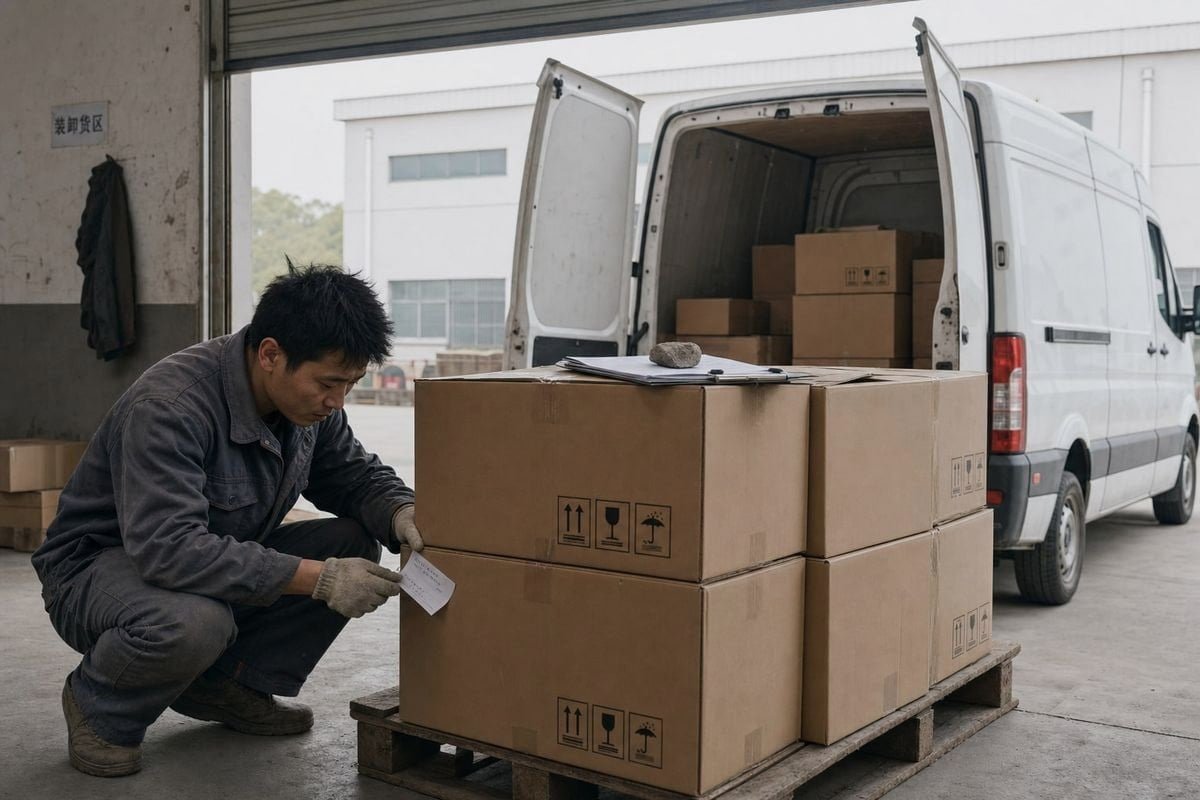
Color-flame pinecones add one extra layer to everything above. The cones are coated with mineral salts that produce blue, green, purple, and orange flames. That treatment can change the classification analysis, because the product's commercial character shifts from "ornamental plant material" to "fire-effect consumer product." It can also change safety-documentation expectations at retail.
A Pre-Shipment Timeline That Works
| Temporización | Acción | Who Handles It |
|---|---|---|
| 8–10 weeks before shipping | Confirm HS code; request CBSA Advance Ruling if unsure | Importer + broker |
| 6–8 weeks before | Run AIRS lookup with final code, China origin, end use | Importador |
| 4–6 weeks before | Supplier completes drying, treatment, and QC documentation | Factory |
| 2–4 weeks before | Cross-check invoice, certificates, labels for identical wording | Ambas partes |
| Al reservar | Send full document set to your customs broker for pre-review | Importador |
Common Mistakes That Trigger Holds
From what we have seen across 30+ export markets, four errors cause most delays. First, choosing a wood code from Chapter 44. Second, ignoring the treatment status and shipping raw cones without fumigation. Third, assuming decorative items skip inspection entirely. Fourth, using a trading company that cannot produce factory-level moisture logs or treatment records. Because we run our own production lines with batch-to-batch quality control, we can hand buyers the exact evidence CFIA conditions call for. Our SGS and Intertek test reports also give Canadian retailers the safety documentation they need for shelf-ready packaging, private labels, and warning text. That is the difference between a container that clears in days and one that sits in a bonded warehouse.
Conclusión
Wrong codes and missing certificates stall pine cone shipments at Canada's border. The fix is a clear workflow: precise product description, correct HS code, AIRS verification, matched documents, and a compliance-focused factory partner.
Notas al pie
1. Background on the international coding system underlying customs classification of goods. ↩︎
2. Official Canadian government tool for verifying tariff classifications mentioned in the text. ↩︎
3. CFIA is the regulatory body governing the directive that controls conifer cone imports. ↩︎
4. IPPC defines international phytosanitary certification standards referenced in CFIA import requirements. ↩︎
5. Background on why customs screens imported plant material for harmful invasive species. ↩︎
6. IPPC oversees the phytosanitary certification framework issued by national plant quarantine authorities. ↩︎
7. Official ISO page for the quality management standard referenced as the factory's compliance system. ↩︎



 English
  Spanish
  German
  French
  Arabic
  Portuguese
Únete a la conversación