






Getting color and size mix ratios for fireplace pine cones wrong ties up cash in slow sellers. I have watched buyers guess, overstock one color, and lose a season. Our factory data offers a better way.
There is no universal ratio. Determine color and size mix ratios for fireplace pine cones in bulk by matching your market's use case: 70/20/10 color weighting toward your best seller, and a 60/30/10 size split of medium, small, and large cones for balanced burn and display.
That is the short answer. The longer answer depends on your customers, your fireplace types, and your packaging plan. Let me walk you through how we help buyers decide, step by step.
What Color and Size Ratios Sell Best in My Target Market?
Last winter, a German distributor asked us to split one container across five flame colors equally. Our shipping records from similar orders suggested a different split, and I shared why.
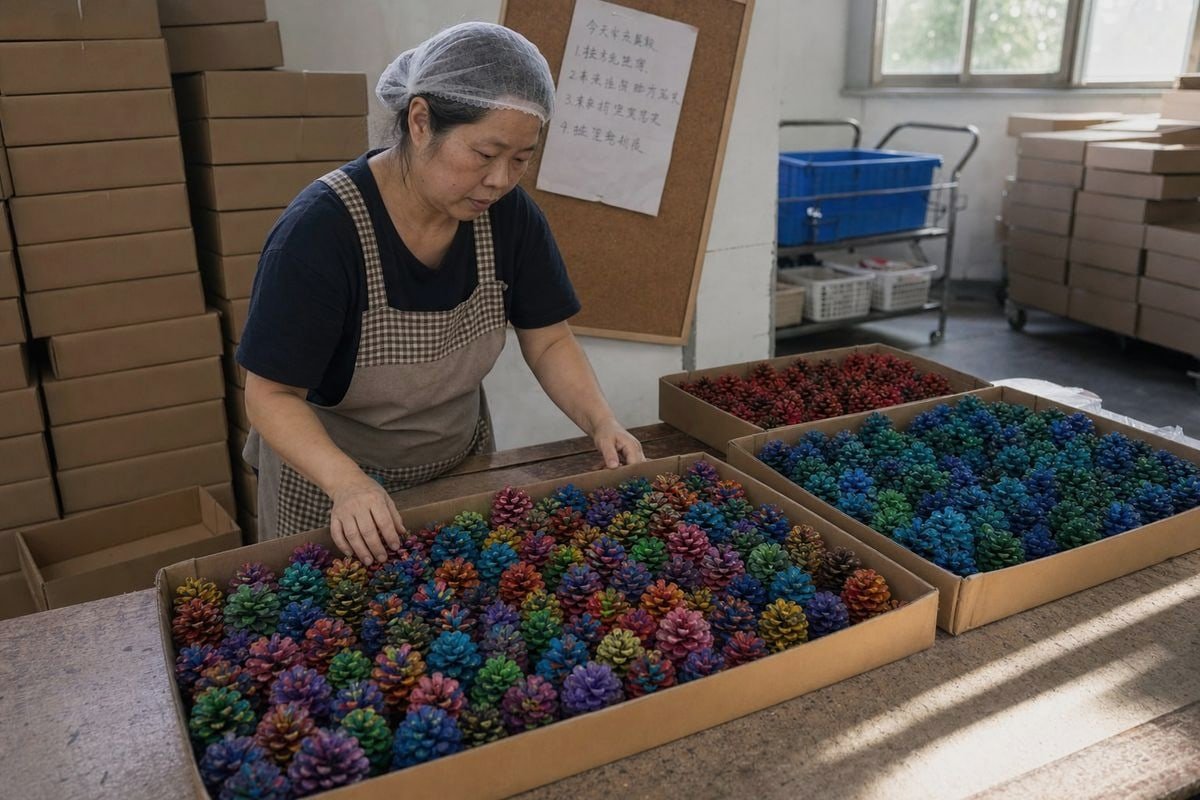
Retail markets favor a 70/20/10 color ratio: 70% multicolor or rainbow-effect cones, 20% blue-green, 10% red accents. For sizes, a 60/30/10 mix of medium, small, and large cones sells best, balancing ignition speed, burn time, and shelf presentation.
Ratios are really three separate decisions. First, the color ratio: how many cones of each flame color you order. Second, the size ratio: how many small, medium, and large cones go into each unit. Third, the usage ratio: how many cones a customer burns per fire, which drives repeat purchase speed. Most buyers only think about the first one. That is a mistake.
Color Ratios by Market Segment
Different channels pull different colors. In our export experience across the US, Germany, and the UK, campfire and outdoor channels lean heavily toward dramatic multicolor effects. Fireplace and hearth channels lean toward calmer blue-green flames. Gift and festival channels want visual variety in one pack.
| Segmento de mercado | Suggested Color Ratio | Por qué funciona |
|---|---|---|
| Outdoor / camping retail | 70% multicolor, 30% blue-green | Campers want the full rainbow spectacle |
| Distribuidores de chimeneas / hogares | 60% blue-green, 40% multicolor | Calming tones suit indoor evening use |
| Comerciantes de regalos y festivales | Equal split across colors | Variety drives gifting appeal |
| Household repeat buyers | One dominant color plus small test lots | Simpler inventory, faster reorders |
Size Ratios and Burn Behavior
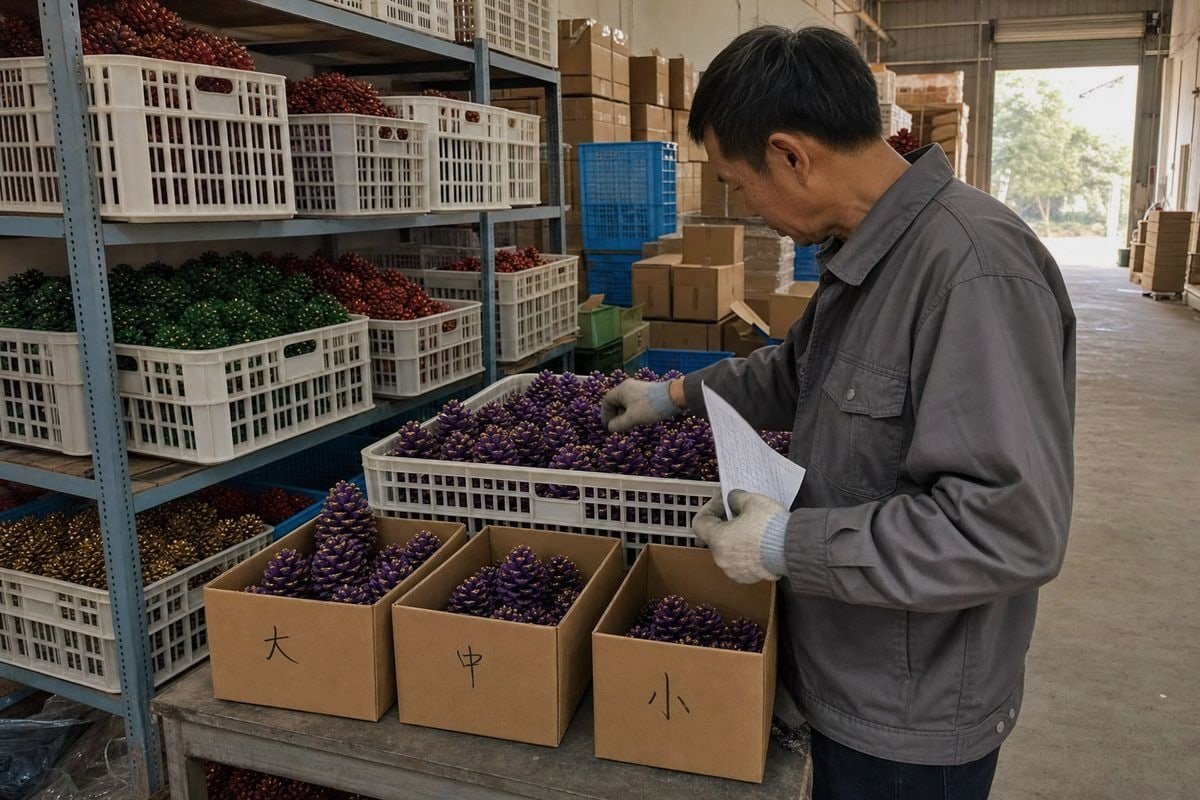
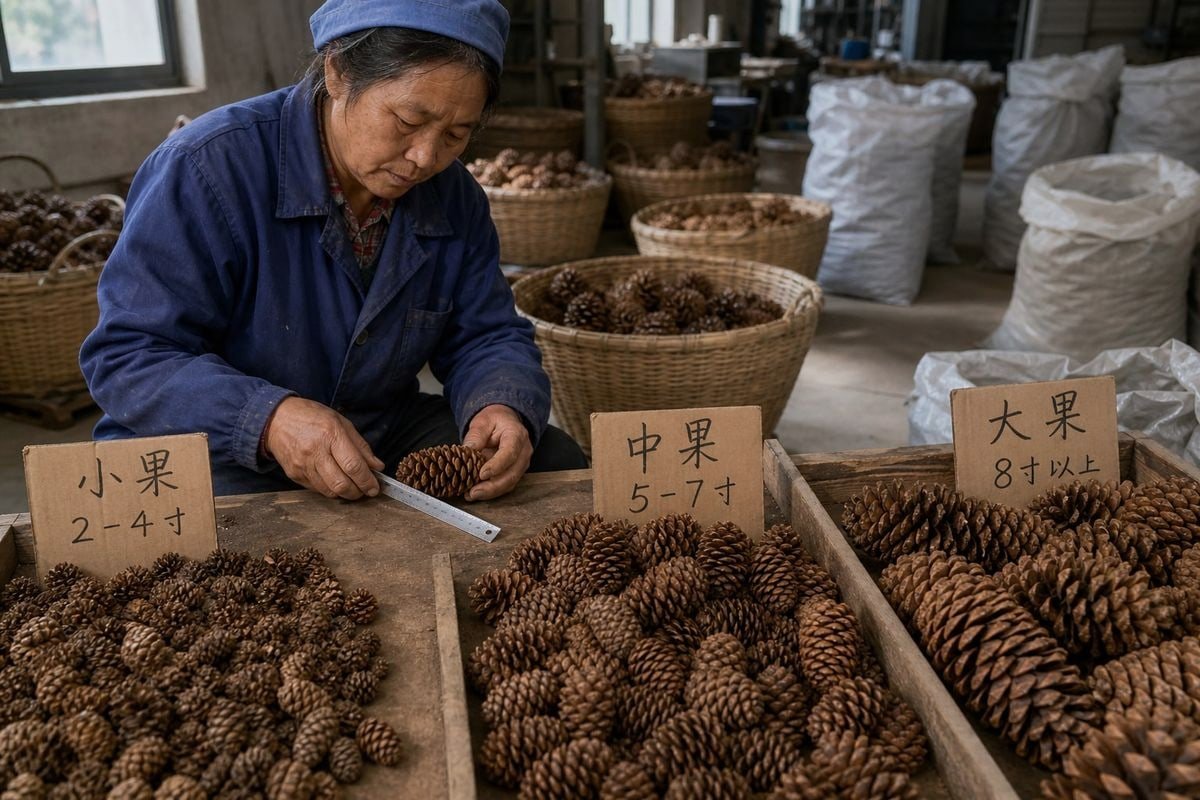
Size affects performance, not just looks. Small cones ignite fast and act as color-changing fire starters. Medium cones are the all-purpose core of any assortment. Large Ponderosa pine cones 1 burn slower and hold visual presence longer. Bulk size grading matters here: we sort into small (2–4 inches), medium (5–7 inches), and large (8 inches and up) before treatment, so every carton matches spec. A 60/30/10 medium-small-large split gives customers a bag that lights easily, burns evenly, and looks full on the shelf.
Start conservative. Order your first mix weighted toward the proven seller, then adjust the ratio on reorder using actual sell-through data.
How Do I Balance MOQ Requirements With a Custom Mix Assortment?
A trade-off comes up in almost every quote we prepare: buyers want five colors and three sizes, but each treatment batch has a minimum run. Here is how we structure it.
Balance MOQ with a custom mix by ordering mono-color treatment batches at factory minimums, then combining colors at the packaging stage. Negotiate assortment MOQs by total unit count, not per color, so a single order covers your full color and size spread.
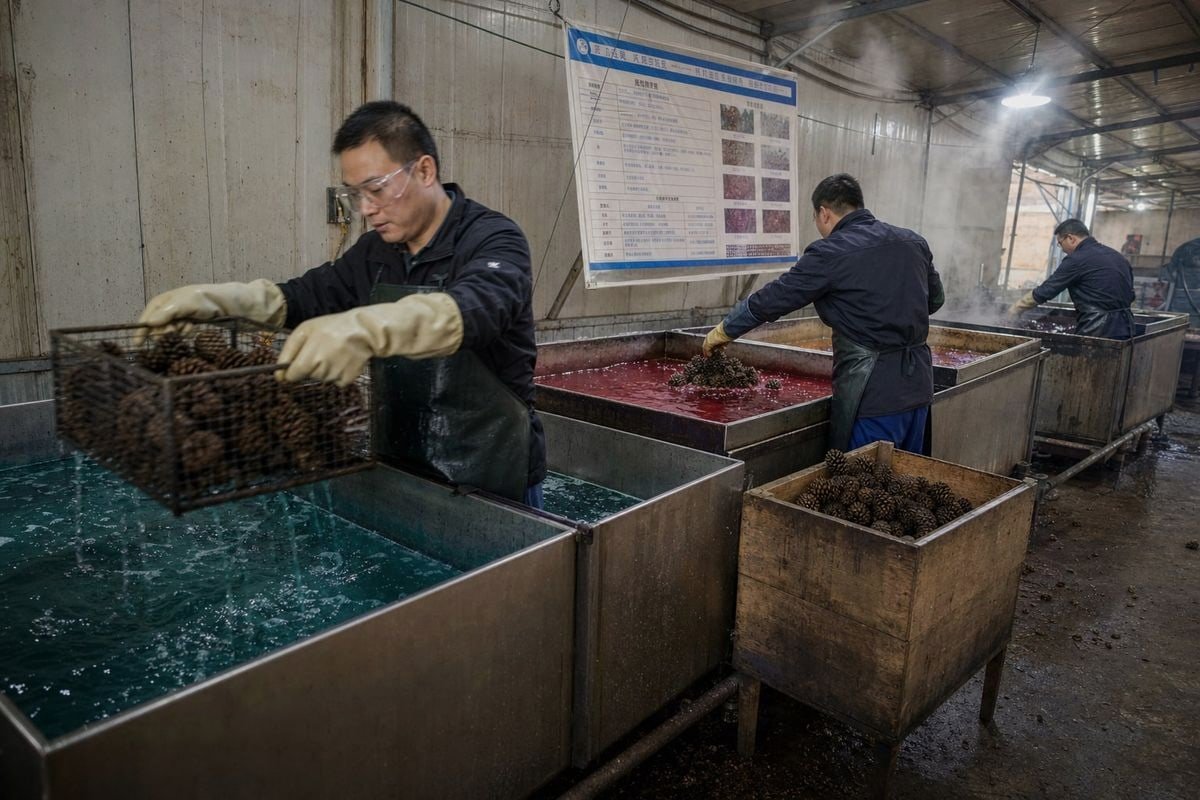
The key principle is this: mix at the inventory level, never at the treatment level. Flame color comes from specific flame colorant chemicals absorbed into each cone. Cristales de sulfato de cobre 2 produce blue-green tones. Strontium chloride produces red. Because the chemistry defines the color, each batch must stay separate through treatment, drying, and quality control normas de gestión de calidad 3. Mixing chemistries in one bath produces muddy, unpredictable flames and inconsistent chemical saturation levels from cone to cone. We learned this early in our 17-plus years of production, and our lines are physically separated by color for that reason.
A Practical MOQ Structure
So how does this affect your order math? Treatment batches set the floor per color. Packaging sets the flexibility. Here is the model we use with importers:
| Order Element | Where the Minimum Applies | Buyer Flexibility |
|---|---|---|
| Color treatment batch | Per color, at the treatment stage | Low — chemistry requires batch minimums |
| Size grading | Per size tier, at sorting | Medium — sorted before treatment |
| Assortment packing | At the packaging line | High — any ratio from treated stock |
| Embalaje de marca blanca | Per SKU design | Medium — plate and print minimums |
In practice, this means a buyer who wants a 70/20/10 color mix does not need three full-container commitments. They need one combined order where the smallest color share still meets the batch minimum. We often advise buyers to round their accent colors up slightly to hit that floor, then use the extra units in gift assortments or promotional packs. Because our batch-to-batch quality control keeps each color consistent, the assortment you receive in month one will match the assortment you reorder in month six.
Can Sunrich Help Me Test Different Ratios Before a Full Bulk Order?
A Canadian buyer once told me his biggest fear was committing a container to an untested mix. We built a sampling program largely because of conversations like that one.
Yes. Sunrich supplies trial-quantity sample lots in multiple color and size ratios before full bulk orders. Buyers can burn-test flame color, timing, and residue, run small retail pilots with provisional packaging, then lock the winning ratio into a production contract.
Testing before committing is not a courtesy in this category. It is risk control. Flame products face fireplace safety standards 5, retail compliance checks, and real-world performance judgment from end customers. A ratio that looks good on paper can underperform in an actual hearth. That is why we structure trials as a process, not a one-off sample shipment.
Our Four-Step Ratio Testing Process
- Definir la hipótesis. You tell us your target channel and proposed ratios. We suggest adjustments based on similar markets we already export to across our 30-plus destination countries.
- Ship graded sample lots. We send mono-color lots plus two or three pre-mixed assortments. Each cone is treated with the wax dipping method, so the coating color signals the flame color and doubles as fuel for reliable ignition.
- Burn-test and pilot. Usted verify flame color intensity, burn duration by size tier, and ash residue. Some buyers run a small in-store pilot to measure which mix actually sells.
- Lock the specification. The winning ratio, size grading, and treatment recipe become your production spec. Because we run complete production lines with strict batch control, your bulk order matches the approved sample.
One point I always stress: the sample must reflect mass production, or the test is worthless. Our first-sample-equals-bulk-quality standard exists precisely so your trial data stays valid at scale. All test lots ship with SGS or Intertek test reports, so your compliance review can run in parallel with your market pilot instead of after it.
What Packaging and Labeling Options Fit a Mixed-Color Pine Cone Assortment?
Packaging decisions taught me a hard lesson years ago: a beautiful mixed assortment failed at retail because customers could not tell which cone burned which color. We redesigned everything after that.
Mixed-color assortments work best in resealable kraft stand-up pouches with clear windows, drawstring burlap sacks for gift channels, or divided display boxes. Every option needs color-coded cone identification, fireplace-type compatibility statements, warning labels, and barcodes for retail scanning.
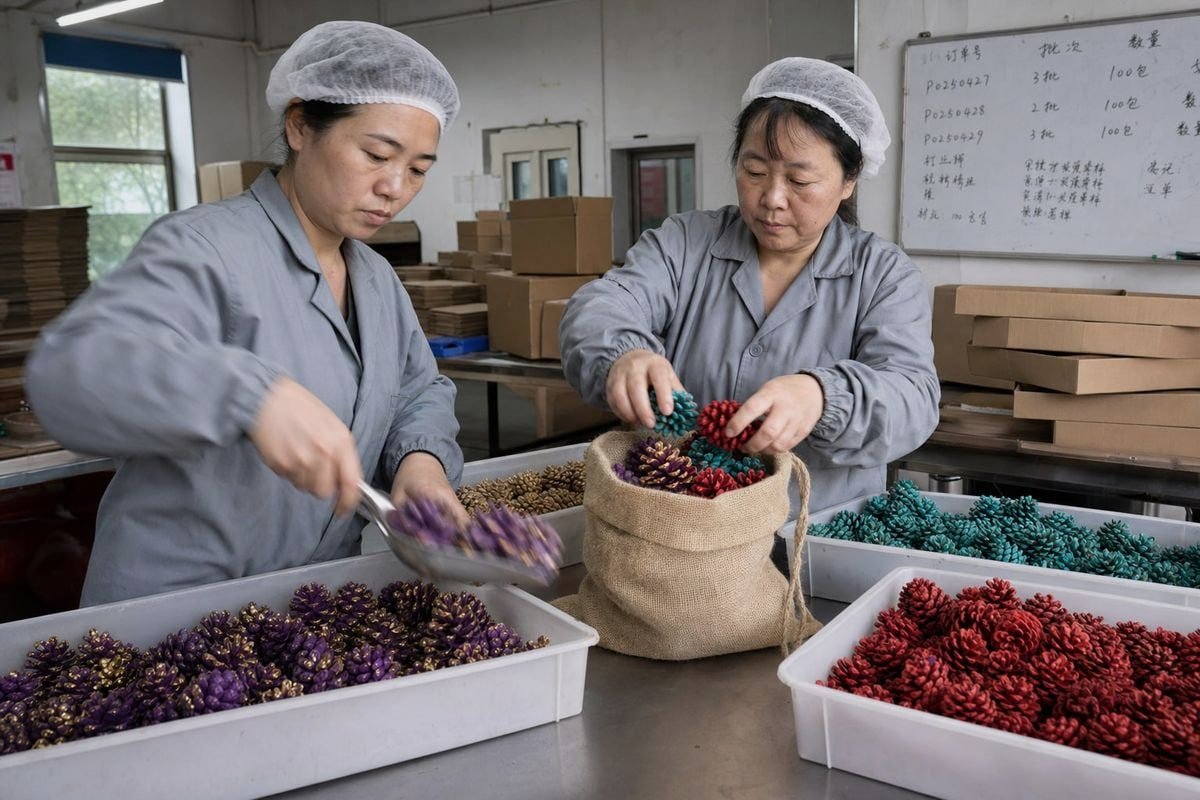
Packaging does three jobs for a mixed assortment: it protects treated cones, it communicates the color effect, and it carries the compliance information your retail channel demands. Because we handle full OEM/ODM packaging in-house, buyers choose the format that fits their channel rather than accepting a standard box.
Adaptación del formato al canal
| Formato de embalaje | Canal ideal | Key Features |
|---|---|---|
| Bolsa vertical de kraft con ventana | Camping y venta minorista al aire libre | Resealable, shows natural cones, rainbow accent print |
| Saco de arpillera con cordón | Fireplace, gift, and festival | Rustic look, custom logo print, hearth-side appeal |
| Divided display box | Premium retail and e-commerce | Separates colors, protects painted or gold-tipped decorative cones |
| Bulk carton with inner poly bags | Wholesale and repack buyers | Lowest cost per unit, buyer repackages locally |
Labeling a Mixed Assortment Correctly
Mixed packs need more label discipline than mono-color packs. We recommend four elements as standard. First, a color key: the wax coating color on each cone should match a printed legend, so customers know what flame to expect. Second, a compatibility statement: wood-burning fireplaces, fire pits, and campfires yes; gas fireplaces and cooking fires no, since residue can clog gas components and treated cones should never touch food flames. Third, market-specific warning labels: CE-aligned wording 6 for the EU, plus the language versions your market requires. Fourth, barcodes and batch codes, which let retailers scan and let you trace any unit back to its treatment batch. Since our products use formulaciones ecológicas 7 with no harmful chemicals, the labeling story also becomes a selling point, not just a legal obligation. For wholesale decorative cones that are painted rather than burned, we add crush-resistant inserts so gold-tipped finishes arrive intact.
Conclusión
Guessing ratios wastes containers and seasons. Match color splits to your channel, size splits to burn behavior, test small with us first, then scale a proven mix confidently.
Notas al pie
1. Provides botanical background on the large pine species used for slow-burning cones.



 English
  Spanish
  German
  French
  Arabic
  Portuguese
Únete a la conversación