






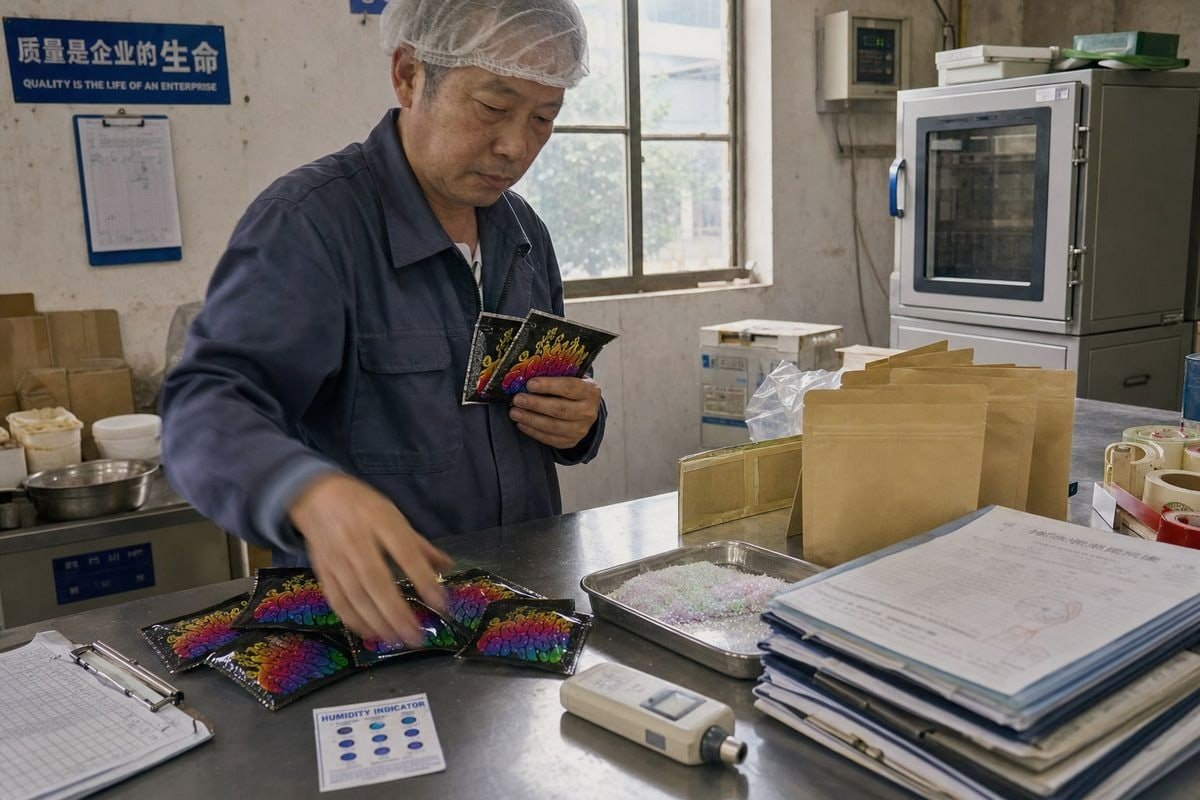
Confirmar que una bolsa interior de Polvo Mágico de Fuego sea realmente a prueba de humedad me quita el sueño más que cualquier otra pregunta de embalaje que nuestra fábrica maneje para compradores de exportación.
Para confirmar que una bolsa interior de Polvo Mágico de Fuego es a prueba de humedad, solicite informes de prueba de MVTR (ASTM E96/F1249), verifique la estructura de la película barrera, realice pruebas de integridad de sellado y de cámara de humedad en muestras llenas, agregue tarjetas indicadoras de humedad y requiera inspección de terceros más documentación de control de calidad a nivel de lote antes del envío.
Esa respuesta cubre lo esencial. Pero cada paso tiene trampas que pueden costarte un contenedor completo transmisión de vapor de agua 1. Permítanme guiarlos a través de cómo manejamos esto en nuestra línea de producción y qué deben exigir de cualquier proveedor.
¿Qué certificaciones debería solicitar para verificar el rendimiento del embalaje a prueba de humedad?
Un comprador de Rotterdam me dijo una vez que había recibido paquetes "a prueba de humedad" de otro proveedor, sin nada más que una promesa verbal detrás de la afirmación. laminados de lámina de aluminio 2. En cambio, le mostramos nuestros archivos de prueba.
Solicite un informe de prueba MVTR que haga referencia a ASTM E96 o ASTM F1249, una hoja de especificaciones de estructura de material, datos de prueba de resistencia al sellado térmico, verificación de terceros de SGS o Intertek y certificación del sistema de calidad ISO 9001. Juntos, estos documentos demuestran que la bolsa interior bloquea la humedad en lugar de simplemente afirmarlo.

Los documentos son la primera línea de defensa. Una bolsa brillante de aluminio puede parecer idéntica a una bolsa monocapa barata SGS o Intertek 3. El papel te dice la diferencia antes que el contenedor.
Los documentos centrales y lo que cada uno demuestra
Aquí está el conjunto exacto de documentos que preparamos para nuestros compradores de paquetes de llama de color, y lo que cada artículo verifica realmente:
| Documento | Lo Que Demuestra | Señal de alerta si falta |
|---|---|---|
| Informe MVTR (ASTM E96 4/F1249) | Cuánto vapor de agua atraviesa la película por día | El proveedor está adivinando el rendimiento de la barrera |
| Hoja de estructura del material | Composición de la capa (por ejemplo, laminado PET/AL/PE) y grosor | Es posible que reciba PE de una sola capa en su lugar |
| Prueba de resistencia al sellado térmico | El cierre se mantiene bajo presión y manipulación | Los sellos pueden reventar durante los cambios de presión del aire |
| Inspección SGS/Intertek | Una parte independiente verificó las afirmaciones | Solo tiene la palabra del vendedor |
| Certificado ISO 9001 | Existe un sistema para repetir la calidad en cada lote | La primera muestra puede no coincidir con la producción |
En nuestra experiencia exportando a más de 30 países, los compradores en Alemania y EE. UU. ahora tratan este paquete de documentos como un requisito estricto, no como una cortesía. Cuando enviamos paquetes de Polvo Mágico de Fuego en bolsas de plástico o bolsas de papel kraft, adjuntamos los datos de barrera al archivo de pre-envío. Un detalle importante: solicite datos MVTR 5 sobre el laminado terminado, no sobre una sola capa de película. Un proveedor puede mostrarle excelentes datos de lámina de aluminio mientras que la bolsa real utiliza una estructura más delgada y barata. Confirme también la fecha del informe. Las películas de barrera envejecen en almacenamiento, y un informe de tres años sobre un proveedor de películas descontinuado no le dice nada sobre la bolsa que está comprando hoy. Si un proveedor duda en alguno de estos cinco documentos, considere esa duda como su respuesta.
¿Cómo puedo probar bolsas de muestra antes de comprometerme a un pedido de envío a granel?
Antes de aprobar cualquier nuevo laminado en nuestras líneas en Ningbo, torturamos primero las muestras, y animo a cada gerente de compras a hacer lo mismo de su lado.
Pruebe bolsas de muestra llenas, no film vacío: realice una prueba de fugas al vacío para detectar agujeros de alfiler, almacene las muestras selladas a aproximadamente 40 °C y 90 % de HR durante 24 a 72 horas con tarjetas indicadoras de humedad en el interior, luego ábralas y verifique el polvo en busca de apelmazamiento, aglomeración o cambio de color en comparación con una muestra de control.
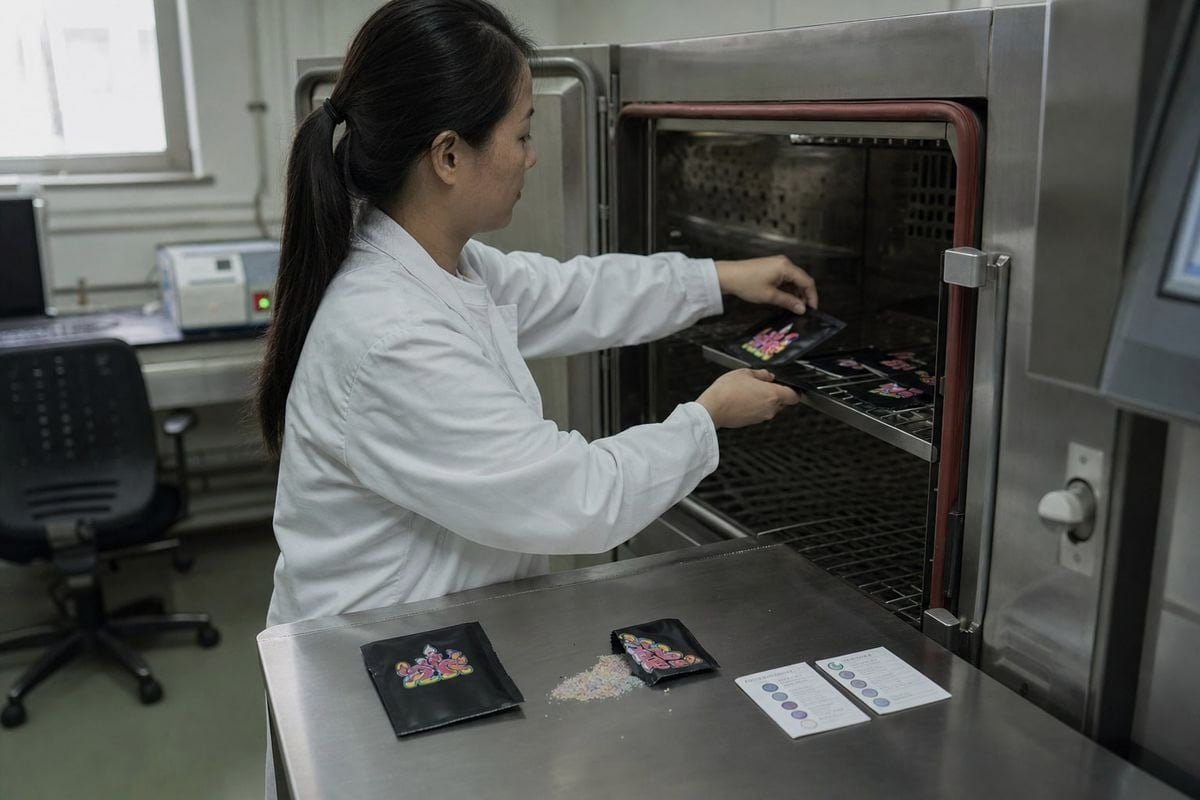
No necesita un laboratorio completo para realizar pruebas significativas. La mayoría de estas verificaciones se pueden realizar en su oficina o en una casa de pruebas local a bajo costo.
Un flujo de trabajo de prueba de muestras de seis pasos
- Inspeccione primero la especificación. Compare la bolsa física con la hoja de estructura del material. Pese una muestra y mida el grosor de la película si puede.
- Ejecute una prueba de integridad del sellado. Sumerja una bolsa sellada en agua dentro de una cámara de vacío. Las burbujas significan agujeros de alfiler o costuras débiles. Una simple prueba de apretón bajo el agua también detecta fallas graves.
- Haga un remojo por humedad. Coloque muestras llenas en una cámara (o una caja sellada con una solución salina saturada) a alta humedad y temperatura elevada durante uno a tres días.
- Use tarjetas indicadoras de humedad. Selle una HIC dentro de algunas bolsas de muestra antes del remojo. Cuando las abra, la tarjeta mostrará si la humedad interna aumentó.
- Simule el estrés del tránsito. Deje caer las muestras, agítelas y cíclelas entre condiciones cálidas y frías. Los pequeños defectos de sellado a menudo solo se abren bajo estrés mecánico.
- Abra y compare. Verifique si hay humedad, apelmazamiento, cambio de olor o color opaco en comparación con una muestra de control sin probar almacenada en condiciones secas.
¿Por qué bolsas llenas? Porque el polvo cerca de la zona de sellado cambia la forma en que se forma y se comporta el sellado térmico. Lo aprendimos hace años durante una prueba piloto: las bolsas vacías pasaron todas las comprobaciones, pero las bolsas llenas del mismo rollo mostraron esquinas débiles donde los gránulos habían contaminado el área de sellado. Desde entonces, nuestro equipo de control de calidad solo aprueba las pruebas realizadas con el producto dentro. Un consejo más de nuestro trabajo de exportación: pida a su proveedor que envíe las muestras por la misma ruta que el futuro pedido a granel cuando sea posible. Una bolsa que sobrevive a tres semanas de humedad oceánica le dice mucho más que una que voló en cuatro días.
¿Qué materiales de embalaje funcionan mejor para climas húmedos y largos tránsitos marítimos?
El envío de nuestros paquetes de color-llama a Brasil y Oriente Medio enseñó a nuestro equipo una dura lección al principio: la película que funciona para el transporte nacional no es la película que sobrevive seis semanas en el mar.
Laminados de papel de aluminio (PET/AL/PE) ofrecen la mejor barrera contra la humedad para climas húmedos y largos tránsitos oceánicos, seguidos por películas multicapa metalizadas. Las bolsas de PE simples solo son adecuadas para rutas cortas y secas. Para el transporte marítimo de larga distancia, combine un laminado de alta barrera con sellos térmicos fuertes y desecante opcional.
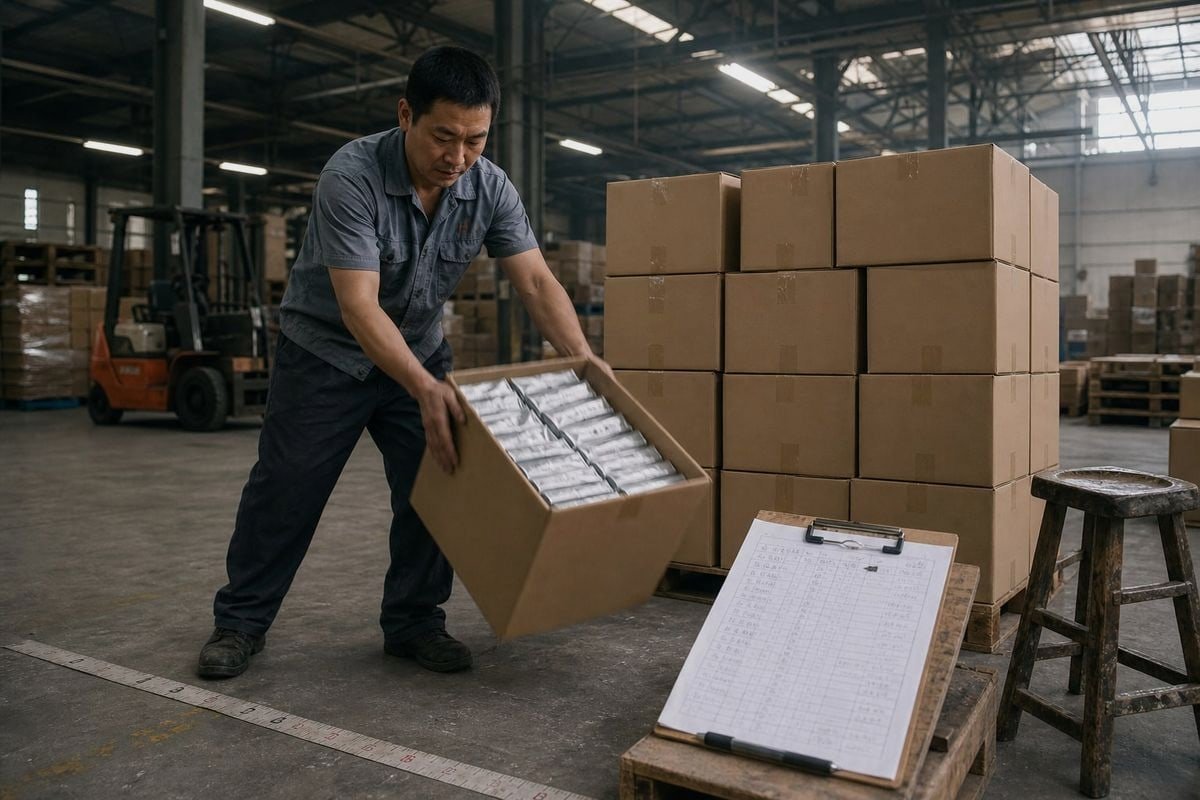
La elección del material es un compromiso entre el rendimiento de la barrera, el costo y la apariencia. Aquí se comparan las opciones comunes para un polvo sensible a la humedad como el nuestro:
| Material | Barrera contra la humedad | Mejor caso de uso | Costo relativo | Debilidad |
|---|---|---|---|---|
| Laminado de lámina de PET/AL/PE | Excelente | Transporte marítimo tropical, tránsito de 4+ semanas | Más alto | La capa de lámina puede agrietarse si se flexiona con fuerza |
| PET/PE metalizado | Bueno | Rutas marítimas estándar, climas mixtos | Medio | La barrera cae en los puntos de flexión |
| PE/EVOH multicapa | Moderado-bueno | Transporte aéreo, destinos templados | Medio | Más débil contra la humedad relativa sostenida y alta |
| Revestimiento de PE liso | Pobre | Solo transporte nacional corto | Bajo | El vapor de agua pasa con el tiempo |
Empareje el material con la ruta, no solo con el presupuesto
El riesgo real en rutas largas no es un solo salpicadura de agua. Es la entrada acumulativa de vapor impulsada por los cambios de temperatura dentro del contenedor. Un contenedor que cruza el ecuador puede pasar de días calurosos a noches frescas, y la condensación se forma con cada ciclo. Es por eso que especificamos laminados de lámina para nuestros paquetes Magic Fire que se dirigen a puertos tropicales, mientras que la película metalizada puede ser aceptable para rutas europeas más cortas y frescas. Nuestro polvo de fuego también contiene gránulos cristalinos finos, por lo que consideramos una doble protección: un laminado que resiste tanto la humedad como la acumulación de estática mantiene el polvo libre de flujo y seguro de manipular. Una advertencia de nuestro departamento de producción: una bolsa más gruesa no es automáticamente una bolsa mejor. El rendimiento de la barrera proviene de la estructura de la capa, no del calibre. Y sea cual sea la película, el sellado sigue siendo el eslabón más débil: un laminado de lámina perfecto con un sellado térmico descuidado falla más rápido que una película modesta sellada correctamente. Pregunte a su proveedor qué material le recomiendan para su ruta y tiempo de tránsito específicos. Una buena fábrica responderá con una especificación de laminado, no con un encogimiento de hombros.
¿Cómo confirmo una calidad constante a prueba de humedad en cada lote de producción?
Una marca de camping de EE. UU. una vez me hizo una pregunta directa: "Tu muestra fue perfecta, ¿cómo sé que la unidad cincuenta mil también lo será?" Es la pregunta correcta y merece una respuesta sistemática.
Confirmar la consistencia del lote exigiendo control de calidad documentado en línea: controles de resistencia del sellado a intervalos establecidos, trazabilidad del lote de película, muestreo de fugas por lote según un plan AQL, muestras retenidas de cada ejecución, inspección de terceros antes del envío y registradores de datos de humedad opcionales en tránsito para verificar el rendimiento en el mundo real.
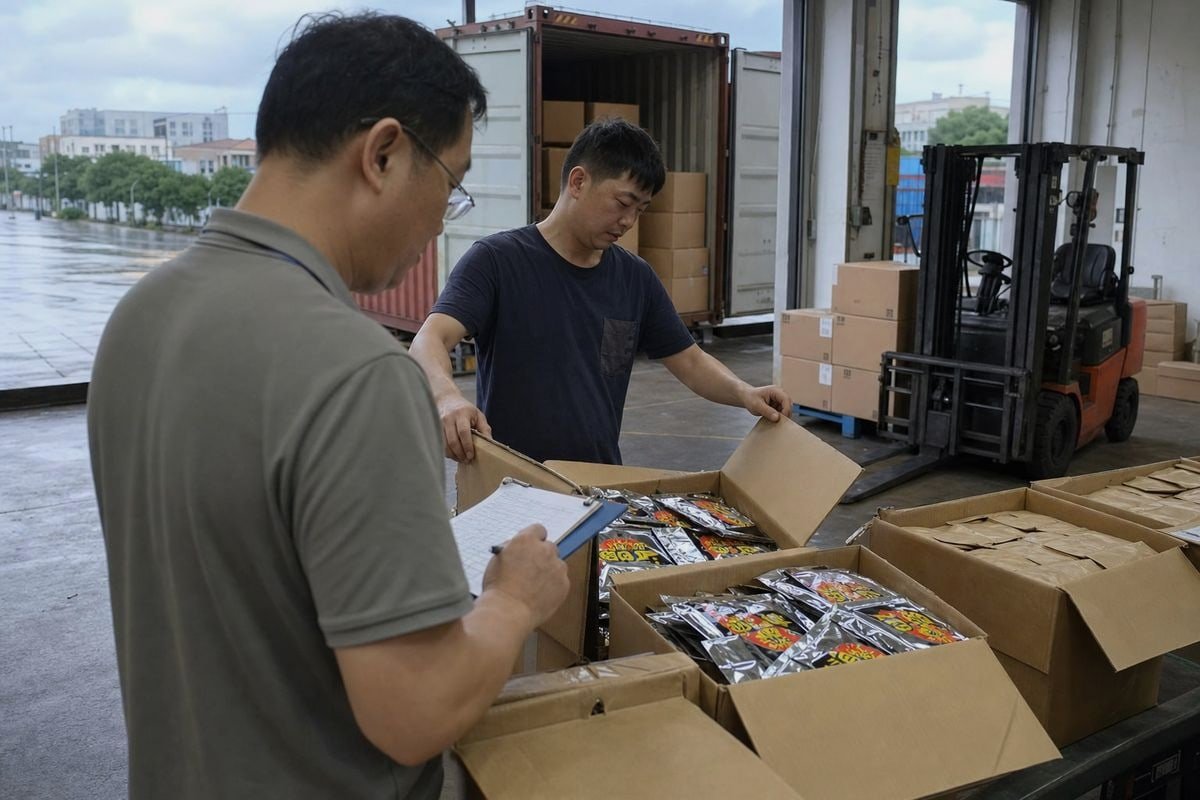
La consistencia es un sistema, no una promesa. Después de más de 17 años dirigiendo líneas de producción, puedo decirles de dónde proviene realmente la deriva entre lotes y cómo bloquearla.
Dónde se produce la variación de lotes
Tres cosas varían silenciosamente entre lotes: el rollo de película (un nuevo lote del proveedor de película puede variar), la máquina de sellado (la temperatura y el tiempo de permanencia varían a medida que los calentadores envejecen) y los operadores (los cambios de turno afectan la colocación del sello). Una fábrica disciplinada controla los tres con controles escritos.
| Punto de Control | Qué exigir | Con qué frecuencia |
|---|---|---|
| Trazabilidad del lote de película | Cada lote se vincula a un rollo de película específico y sus datos de MVTR | Cada rollo entrante |
| Calibración de la máquina de sellado | Configuración registrada de temperatura, presión y permanencia | Cada inicio de turno |
| Prueba de tracción de la fuerza del sello | Resultados documentados dentro de la tolerancia | Cada hora o por intervalo establecido |
| Muestreo de fugas | Prueba de vacío en bolsas llenas aleatorias por Plan AQL 6 | Cada lote |
| Muestras retenidas | Unidades selladas conservadas de cada lote de producción | Cada lote, almacenado en seco |
| Inspección de terceros | Verificación previa al envío de SGS/Intertek antes de la carga | Por envío |
Verificar el rendimiento, no solo el papeleo
Bajo nuestros sistemas ISO 9001 y BSCI 7, mantenemos estos registros para cada lote de producción de Magic Fire, por lo que la muestra que un comprador aprueba refleja genuinamente los productos de producción en masa. Pero también recomiendo dos controles del lado del comprador. Primero, coloque un registrador de datos de humedad IoT dentro de uno o dos cartones por contenedor. Cuando los productos lleguen, obtendrá un historial de humedad hora por hora de todo el viaje, prueba objetiva de lo que enfrentó y sobrevivió el embalaje. Segundo, redacte una cláusula de responsabilidad por daños por humedad en su contrato, vinculada a certificados de inspección en origen y destino. Esto alinea los incentivos: la fábrica que sabe que posee el riesgo invierte en los sellos. Finalmente, verifique los envíos de llegada con su muestra retenida. Si el polvo enviado fluye y brilla exactamente como su unidad de referencia, su sistema está funcionando.
Conclusión
Un polvo apelmazado y opaco significa una temporada perdida para su marca. Verifique la bolsa interior de Magic Fire Powder con datos de MVTR, pruebas de muestras llenas, laminados adaptados a la ruta y control de calidad por lote, y luego envíe con confianza.
Notas al pie
Explicación de fondo del concepto MVTR central en las pruebas de embalaje a prueba de humedad. ↩︎
Antecedentes de Wikipedia sobre materiales laminados utilizados para películas de embalaje de alta barrera. ↩︎
Antecedentes sobre SGS, una importante empresa de inspección de terceros citada por verificar las afirmaciones de embalaje. ↩︎
Organismo de normalización que publica el método de prueba de transmisión de vapor de humedad ASTM E96. ↩︎
Explica la norma técnica detrás de las mediciones de MVTR a las que se hace referencia para la verificación de barreras. ↩︎
Define la norma de muestreo utilizada para las pruebas de fugas por lotes bajo un plan AQL. ↩︎
Enlaces al organismo oficial detrás de BSCI, el sistema de cumplimiento social mencionado para las tiradas de producción. ↩︎

 English
  Spanish
  German
  French
  Arabic
  Portuguese
Únete a la conversación