







La exclusividad del embalaje de regalo de fábrica preocupa a todos los importadores con los que trabajamos. En nuestras líneas de piñas de llama de color, los compradores hacen una pregunta primero: ¿es el diseño de mi caja realmente mío? Perderlo significa perder la diferenciación en el estante de la noche a la mañana.
Para confirmar que el embalaje de regalo de fábrica no se vende a otros importadores, combine un acuerdo de exclusividad NNN firmado o un acuerdo de exclusividad, propiedad documentada de moldes y obras de arte, auditorías de fábrica de terceros, marcas de trazabilidad codificadas por lotes e inspecciones previas al envío. Los contratos escritos por sí solos no son suficientes; verifique con los registros de producción y la evidencia física.
Las promesas de un representante de ventas no prueban nada. Lo que prueba la exclusividad es una cadena de evidencia. A continuación, detallo los contratos, los pasos de verificación, las señales de alerta y los acuerdos que construyen esa cadena.
¿Qué protecciones contractuales debo solicitar para garantizar que mi diseño de empaque permanezca exclusivo para mi marca?
Un distribuidor alemán de chimeneas nos envió un borrador de contrato antes de compartir una sola línea de troquel para su caja de regalo de piñas. Buena jugada. Nuestro equipo lo firmó sin dudarlo, porque las fábricas reales esperan este paso.
Solicite un acuerdo NNN específico para el país, un acuerdo de fabricación exclusivo que cubra SKU definidos, cláusulas explícitas de propiedad de moldes personalizados y propiedad de obras de arte, una cláusula de no competencia para el diseño de marca, requisitos de notificación de subcontratación, derechos de auditoría y sanciones definidas. Los contratos deben nombrar a la entidad fabril real, no a una empresa comercial.
La protección contractual es el piso legal de su estrategia de exclusividad. Pero la mayoría de los importadores se equivocan en los detalles. Firman un genérico Acuerdo de confidencialidad al estilo occidental 1, traducido libremente, con una entidad proveedora que resulta ser un intermediario. Ese papel es casi inaplicable. En nuestros más de diecisiete años exportando productos para encender fuego a EE. UU., Alemania y el Reino Unido, los compradores que se protegen mejor siguen una pila de contratos clara.
Las cláusulas centrales que realmente se mantienen
Un acuerdo NNN va más allá de un acuerdo de confidencialidad estándar. Prohíbe la divulgación, el uso y la elusión. Ese tercer elemento es el más importante en China: evita que la fábrica venda su diseño a otro importador o , le rodee para llegar a sus clientes. El acuerdo debe regirse por la jurisdicción local de la fábrica y redactarse en el idioma local, para que un tribunal local pueda hacerlo cumplir rápidamente.
| Elemento del contrato | Lo que debe especificar | Por qué importa |
|---|---|---|
| Acuerdo NNN | No divulgación, no uso, no elusión | Bloquea la reutilización de su diseño para otros clientes |
| Acuerdo de fabricación exclusivo | SKUs exactos, territorios, duración | Define legalmente qué significa "exclusivo" |
| Propiedad del molde personalizado | El comprador posee troqueles, planchas, herramientas; derechos de auditoría | Evita que sus herramientas sirvan a otros |
| Propiedad de la obra de arte | Derechos de diseño de propiedad sobre archivos y líneas de troquelado | Detiene la reutilización de la obra de arte en cajas de catálogo |
| Cláusula de penalización | Daños y perjuicios liquidados en moneda local | Crea una palanca de ejecución real |
Un punto más de nuestro lado. Cuando los compradores nos piden que confirmemos nuestro alcance comercial registrado, la dirección de la fábrica en Ningbo y la sede en Liuyang, lo proporcionamos de inmediato. Si un proveedor se resiste a la verificación de identidad, ningún lenguaje contractual le salvará, porque puede que esté firmando con una empresa fantasma que no posee nada.
¿Cómo puedo verificar que mi proveedor no reutiliza mis moldes de embalaje personalizados o mi arte para otros clientes?
Durante una demostración en video en vivo que realizamos para una marca canadiense de camping, nos pidieron que filmáramos los troqueles de relieve para su bolsa de kraft, etiquetados con su número de orden de compra. Esa solicitud nos llevó cinco minutos en cumplirla, y les dijo todo.
Verificar auditando los moldes físicos y las planchas de impresión in situ o mediante vídeo en directo, requiriendo embalajes con código de lote o serializados, revisando los registros de producción y pedidos, cotejando los datos de envío de aduanas y utilizando inspecciones previas al envío por terceros para comparar cada lote con su muestra de referencia aprobada.

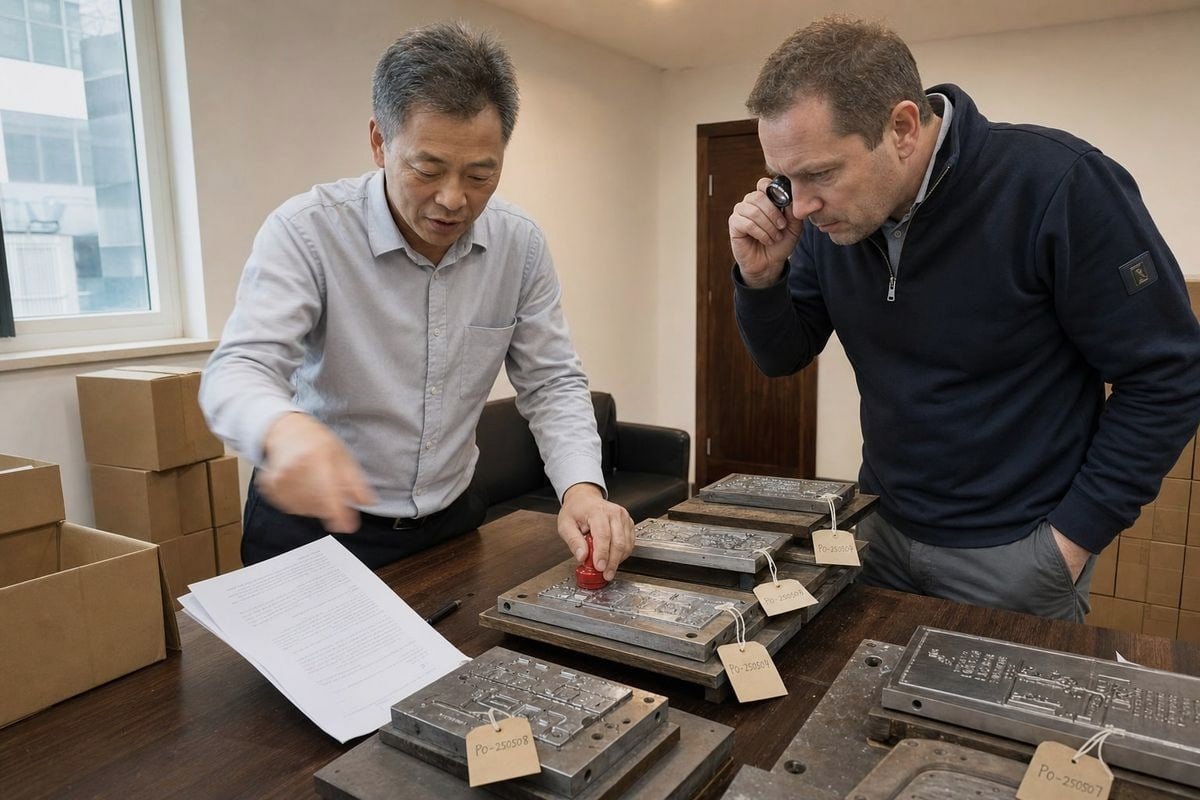
La verificación funciona mejor como un proceso escalonado, no como una única comprobación. Según nuestra experiencia organizando auditorías de compradores en nuestro sitio de producción de Ningbo, la cadena de evidencia más sólida cubre cuatro capas: identidad, herramientas, trazabilidad y registros de envío.
Una secuencia de verificación escalonada
- Confirme el fabricante real. Compare la licencia comercial, el alcance registrado y la dirección de la fábrica. Una empresa comercial no puede controlar lo que sucede con su obra de arte, porque nunca posee las planchas.
- Audite las herramientas. Sus troqueles de relieve, sellos de lámina y planchas de impresión deben estar físicamente etiquetados con su nombre o número de orden de compra. Reserve contractualmente el derecho de inspeccionar su ubicación y condición en cualquier momento; una auditoría adecuada de la fábrica incluye la sala de herramientas, no solo la sala de exposición.
- Exija personalización rastreable. Los cartones serializados, las marcas de lotes o los códigos de lote convierten cada tirada de producción en una huella dactilar. Si su diseño de caja aparece con otro importador, los códigos revelan qué tirada se filtró. Algunos compradores van más allá con marcadores forenses en la tinta o gemelos digitales vinculados a NFC; para la mayoría de los programas de embalaje de regalo, la codificación de lotes ofrece la mejor relación costo-protección.
- Verifique el rastro de papel. Muestras de conocimiento de embarque 2 y datos aduaneros muestran si la fábrica envía la descripción de su SKU a otros consignatarios. Detalles consistentes del exportador más informes de inspección de control de calidad vinculados a su lote específico cierran el ciclo.
La transparencia de la cadena de suministro 3 es el tema que recorre las cuatro capas. Una fábrica que no tiene nada que ocultar —con auditoría ISO 9001 y BSCI, en nuestro caso— abrirá su planta de producción, almacenamiento de materias primas, líneas de conversión y estaciones de control de calidad a su inspector sin dudarlo.
¿Qué señales de alerta debo tener en cuenta cuando una fábrica ofrece el mismo diseño de embalaje de regalo a varios importadores?
We once lost a quote to a competitor offering our buyer's "exclusive" rigid box at half our MOQ. Three months later, that buyer found the identical box on two marketplace listings — and came back to us to rebuild the program properly.
Esté atento a fotos de embalaje idénticas en varias páginas de proveedores, negativa de video en vivo de la línea de producción, licencias comerciales que muestran un alcance de solo comercialización, cantidades mínimas de pedido sospechosamente bajas con afirmaciones de precios de fábrica y falta de voluntad para revelar fuentes de materiales, propiedad de placas o detalles de lotes de producción. Estas señales indican reventa de catálogo, no producción dedicada.

Here is an uncomfortable truth many sourcing guides skip: total exclusivity is often unrealistic in packaging. Factories legitimately reuse base structures, paper stocks, and standard box formats across clients, changing only graphics and finishing. That is normal and efficient. The real question is where the line sits between shared platform and stolen brand presentation.
Distinguishing Custom From Truly Exclusive
| o Tipo de embalaje | Exclusivity Level | Risk If Only Artwork Differs |
|---|---|---|
| Plain paper gift bag with custom logo | El más débil | High — anyone can reorder the base bag |
| Kraft pouch with custom window and printed graphics | Moderado | Medium — structure is shared, print is yours |
| Rigid box with proprietary insert layout and branded ribbon | Fuerte | Low — tooling and materials are traceable |
| Luxury box with custom embossing dies and foil stamps | El más fuerte | Low — replication needs your owned tooling |
Some buyers object here: "If the base box is shared anyway, why bother with all this?" Because you are not protecting the cardboard — you are protecting the exact brand presentation. Your trademarked artwork 4, custom insert layout, and private tooling are what customers recognize on the shelf. Secure those, and a shared base structure becomes harmless.
The most dangerous red flag combines two signals: a supplier who claims full exclusivity while also advertising your design category with very low MOQs and "factory price" language. Real dedicated production has setup costs. When we quote a private-label pinecone gift box program, the MOQ reflects plate-making, die-cutting setup, and dedicated print runs. A price that skips those costs usually means the design already exists in a catalog — and is already being sold to someone else.
¿Debo exigir un acuerdo de exclusividad o un acuerdo de confidencialidad (NDA) firmado antes de compartir mis archivos de empaque de marca blanca?
Before we ever open a buyer's dieline files in our design department, our standard practice is to have the confidentiality paperwork signed first. Buyers who skip this step are the ones who later find their artwork circulating.
Sí, siempre. Firme un acuerdo de confidencialidad o exclusividad antes de compartir cualquier archivo de empaque de marca blanca, plantillas o arte. Una vez que los archivos se transfieren sin protección legal, pierde toda influencia. Combine el acuerdo con la liberación escalonada de archivos, borradores con marcas de agua y un pedido de prueba documentado antes de escalar.

The timing question matters more than most importers realize. Intellectual property protection 5 is strongest before disclosure and weakest after. Once your files sit on a supplier's server, you cannot un-share them. So the sequence of engagement should protect you at every stage.
A Staged File-Sharing Protocol
| Etapa | What You Share | Protection In Place |
|---|---|---|
| Initial inquiry | Product category, rough specs only | No se necesita |
| Quoting | Dimensions, material grade, finish type | Basic NDA signed |
| Muestreo | Watermarked artwork, low-res dieline | Full NNN agreement executed |
| Pedido de prueba | Final print files, color specs | Exclusivity clause plus tooling ownership terms |
| Producción en masa | Complete asset package | Audit rights, lot coding, inspection protocol active |
Beyond the agreement itself, consider registering design patents 6 or trade dress in the factory's jurisdiction. That registration gives local customs a legal basis to seize look-alike shipments — a remedy no private contract can provide. For high-value programs, some importers also fragment production, sourcing the outer box, inner lining, and hardware from separate vendors so no single factory holds the complete design.
One honest caveat from our side. A factory that genuinely runs OEM/ODM programs 7 — custom sizes, burn times, warning labels, barcodes, and display packaging, as we do for private label branding clients across thirty-plus countries — will treat your NDA as routine. We sign them weekly. Hesitation, stalling, or requests to "just email the files first so we can quote faster" tells you the supplier's business model depends on reusing what you send.
Conclusión
Exclusive gift packaging is never assumed — it is proven. Combine NNN contracts, custom mold ownership, factory audits, lot traceability, and inspections, and your design stays yours alone.
Notas al pie
1. Explains standard NDA concept importers wrongly rely on instead of NNN protection. ↩︎
2. Background on shipping documents used to verify consignee and shipment trails. ↩︎
3. Background concept underpinning the four-layer verification approach described. ↩︎
4. Authoritative overview of trademark protection relevant to proprietary packaging artwork. ↩︎
5. WIPO resource on IP protection principles relevant to file-sharing timing risks. ↩︎
6. Official USPTO explanation of design patents referenced for packaging IP protection. ↩︎
7. Industry marketplace reference for understanding standard OEM/ODM manufacturing practices. ↩︎


 English
  Spanish
  German
  French
  Arabic
  Portuguese
Únete a la conversación