






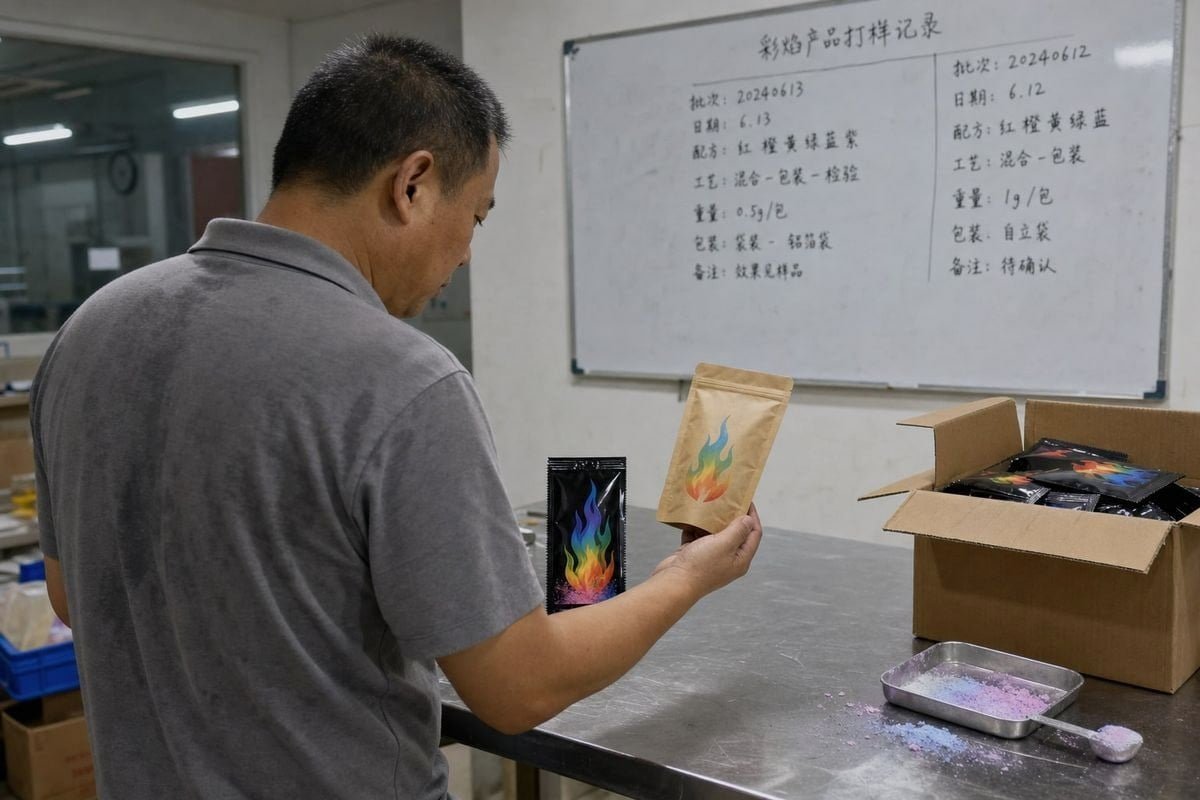
Elegir entre el embalaje promocional y el doméstico para el polvo mágico de fuego confunde a más compradores que el precio. He visto pedidos detenidos en aduanas, en estanterías y en revisiones de cumplimiento 1 por esta misma decisión.
Elija empaques promocionales para existencias de polvo mágico de fuego cuando su objetivo sea la visibilidad minorista, las ventas impulsivas y los regalos; elija empaques para el hogar cuando su objetivo sea el uso doméstico repetido, la claridad de seguridad y el valor a granel. Muchos compradores piden ambos formatos para servir a diferentes canales simultáneamente.
La respuesta correcta depende de su canal, sus obligaciones de cumplimiento y sus objetivos de margen. Le guiaré a través de cada factor, una pregunta a la vez.
¿Qué formato de embalaje se adapta mejor a mi canal minorista y cliente objetivo?
Un distribuidor alemán nos pidió que cotizáramos el mismo paquete de llama de color en tres formatos a la vez. Su razón era simple: sus clientes de fogatas y sus clientes de tiendas de regalos compran de manera completamente diferente.
Empaques promocionales (sobres de papel de aluminio, cajas expositoras) son adecuados para tiendas de regalos, tiendas de camping y minoristas de temporada donde predominan las compras impulsivas. Empaques para el hogar (bolsas de kraft, frascos resellables) son adecuados para comercio electrónico, cadenas de ferreterías y compradores recurrentes que usan polvo de color para llamas regularmente en fogatas domésticas.

Su canal decide su embalaje más que su marca. En nuestros más de 17 años suministrando marcas de exterior, distribuidores de barbacoa y comerciantes de regalos de festivales en más de 30 países, hemos visto el mismo producto tener éxito o fracasar puramente en función del ajuste formato-canal.
Adapte el formato al momento de la compra
Un comprador en una tienda de campamento compra por impulso. Quieren un sobre pequeño, colorido y del tamaño de la palma de la mano que puedan tirar en una cesta. Un propietario de una chimenea compra con intención. Quieren una bolsa resellable 2 o un frasco que se almacene limpiamente durante meses y ofrezca muchos usos.
Así es como solemos mapear formatos a canales para nuestros compradores B2B:
| Canal | Mejor formato | Tamaño de unidad típico | Por qué funciona |
|---|---|---|---|
| Tiendas de regalos, tiendas de souvenirs | Sobre de papel de aluminio + caja expositora de mostrador | 10–25 g de un solo uso | Compra impulsiva, precio bajo |
| Venta minorista de camping / aire libre | Paquete múltiple de sobres | 3–6 sobres | Tamaño de viaje, fácil de llevar |
| Cadenas de ferretería / chimeneas | Bolsa de pie de papel kraft | 100–250 g | Uso doméstico repetido, estable en estantería |
| Comercio electrónico / DTC | Frasco de plástico o bolsa resellable | 250–500 g | Se envía bien, fomenta nuevos pedidos |
| Festivales y eventos | Sobres a granel, marca blanca | El momento puede jugar a su favor | Venta rápida, momentos de marca |
Piense en la segunda compra
El embalaje promocional gana la primera venta. El embalaje doméstico gana la quinta. Si su modelo de negocio depende del valor de vida del cliente 3, un formato resellable con instrucciones de dosificación claras crea el hábito de recompra. Si vende a través de canales estacionales o turísticos, el sobre brillante con gráficos de llama arcoíris hace el trabajo pesado en el estante. Ninguno está mal. Simplemente responden a diferentes preguntas comerciales.
¿Cómo difieren los requisitos de etiquetado de cumplimiento y advertencia entre el embalaje promocional y el doméstico?
El cumplimiento es la primera pregunta que hacen nuestros compradores europeos, antes del precio y antes del plazo de entrega. Un importador del Reino Unido nos dijo sin rodeos: un panel de advertencia faltante cuesta más que todo el envío.
El embalaje doméstico exige el etiquetado más estricto: advertencias visibles de "no ingerir" y "no abrir el sobre", instrucciones de uso y declaraciones de peligro en el panel de visualización principal. El embalaje promocional debe llevar las mismas advertencias básicas, pero se enfrenta a un riesgo adicional cuando los diseños lúdicos se parecen a caramelos.

El mayor peligro en esta categoría no es el fuego. Es la confusión. El polvo cristalino brillante dentro de un sobre negro brillante puede parecerse notablemente a caramelos de novedad. El control de envenenamientos 4 ha advertido que los paquetes de coloración de llama han sido confundidos con dulces tipo Pop Rocks, y la ingestión puede causar graves quemaduras químicas 5 o algo peor. Ese único hecho debería dar forma a cada decisión de embalaje que tome.
Lo que cada formato debe comunicar
Un sobre de llama de color está diseñado para ser arrojado al fuego sin abrir. Por lo tanto, el embalaje debe decir dos cosas a la vez: esto no es comida y esto está destinado a permanecer sellado. Los formatos domésticos añaden un tercer mensaje: cómo almacenarlo de forma segura entre usos, lejos de los niños.
En nuestra línea de producción, incorporamos estos elementos en cada pedido de marca blanca:
- Una banda de advertencia de alto contraste, generalmente amarilla, en el panel de visualización principal.
- Declaraciones de "mantener alejado de niños" y "no ingerir" con un tamaño para que sean legibles, no ocultas en letra pequeña.
- Requisitos de idioma específicos del mercado para el país de destino, que confirmamos antes de imprimir.
- Cierres a prueba de niños o.
- a prueba de manipulaciones en frascos para el hogar donde el mercado del comprador los espera. 6 Por qué la certificación es más importante para los SKU domésticos.
Los productos de uso doméstico permanecen en los hogares durante meses. Las cadenas minoristas que los almacenan, especialmente los canales de abastecimiento tipo Home Depot, requieren cumplimiento documentado. Nuestros compradores confían en nuestras
certificaciones ISO 9001, BSCI, CE y SGS/Intertek con informes de prueba precisamente porque los SKU domésticos se enfrentan a un escrutinio más prolongado. Los SKU promocionales se mueven rápido, pero las advertencias aún no pueden reducirse para dar espacio a los gráficos. Si el diseño hace que el producto parezca comestible, las advertencias deben ser ineludibles. Eso no es opcional. Es la línea entre un producto novedoso y una responsabilidad. El empaque similar a caramelos en polvo para colorear llamas se ha relacionado con advertencias reales de ingestión por parte de las autoridades de control de intoxicaciones.
¿Qué opción de empaque me da mejores márgenes y atractivo en el estante para mi mercado?
Permítanme desglosar la economía de la manera en que lo hacemos con los distribuidores durante las llamadas de cotización. Un sobre pequeño de papel de aluminio cuesta muy poco de producir y puede venderse a un múltiplo alto. Una bolsa de kraft de 250 g cuesta más por unidad, pero mueve más gramos por venta y asegura un cliente recurrente. Ambos caminos matemáticos pueden funcionar. La pregunta es cuál recompensa su mercado.
Los sobres promocionales ofrecen márgenes porcentuales más altos y un mayor atractivo en el estante por unidad, ideales para compras impulsivas. Las bolsas y frascos para el hogar ofrecen un mayor margen absoluto por transacción y una mejor economía de compra repetida. La mejor estrategia de margen depende de su velocidad de venta y tasa de reposición.

La imagen del margen, simplificada.
Sobre Promocional
| Factor | Bolsa/Frasco para el Hogar | Potencial de margen minorista |
|---|---|---|
| Costo por unidad. | Bajo | Moderado |
| Alto (precios por impulso) | Moderado (precios de valor) | Baja (impulsado por regalos) |
| Alta (impulsado por hábitos) | Bajo | Alto |
| Atractivo en estantería | Funcional, impulsado por la confianza | Soporte de exhibición necesario |
| Caja de exhibición de mostrador | Muy fuerte | Ubicación estándar en estantería |
| Eficiencia de envío | Etiquetado individual por unidad | Consolidado, menos etiquetas |
| El atractivo en estantería no son solo los gráficos | Las letras de burbujas y los degradados de llamas de arcoíris atraen la atención. Pero el atractivo en estantería para los compradores domésticos se ve diferente: una bolsa de kraft limpia, una guía de uso clara, una | marca de certificación visible |
. La confianza es la estética. En nuestro trabajo OEM, diseñamos cajas de exhibición con tapas abatibles para el formato de sobre, de modo que el minorista obtenga una unidad de mostrador lista para usar, mientras que las bolsas para el hogar obtienen una construcción resistente a la humedad y resellable para que el polvo conserve su potencia de cambio de color durante una temporada completa de incendios.
Considere también la venta cruzada. Las latas y cajas promocionales de marca se agrupan de forma natural con nuestros iniciadores de fuego, piñas de llama de colores y antorchas de cera. Los formatos domésticos se agrupan menos, pero anclan los reordenamientos. Muchos de nuestros compradores a largo plazo más fuertes operan SKU promocionales para ráfagas de margen y SKU domésticos para ingresos base. La pregunta más común en las primeras llamadas con nuevos importadores no es sobre el precio. Es sobre si pueden probar ambos formatos sin comprometerse con dos tiradas de producción completas.. Debido a que operamos.
líneas de producción completas en Ningbo.
¿Puedo pedir tanto embalaje promocional como doméstico bajo un MOQ para pruebas de prueba?
, dividir un pedido entre formatos es un cambio de empaque, no un cambio de formulación. El polvo mágico para el fuego en sí mismo permanece idéntico lote a lote. Eso es lo que hace que una prueba de doble formato sea práctica y de bajo riesgo para un comprador primerizo.
Sí — con un socio de fábrica genuino, normalmente puedes dividir un MOQ entre sobres promocionales y bolsas o frascos para el hogar utilizando la misma fórmula en polvo, ya que la línea de llenado se mantiene constante y solo cambia el embalaje. Confirma los términos de división, los costos de diseño y los plazos de entrega por adelantado.
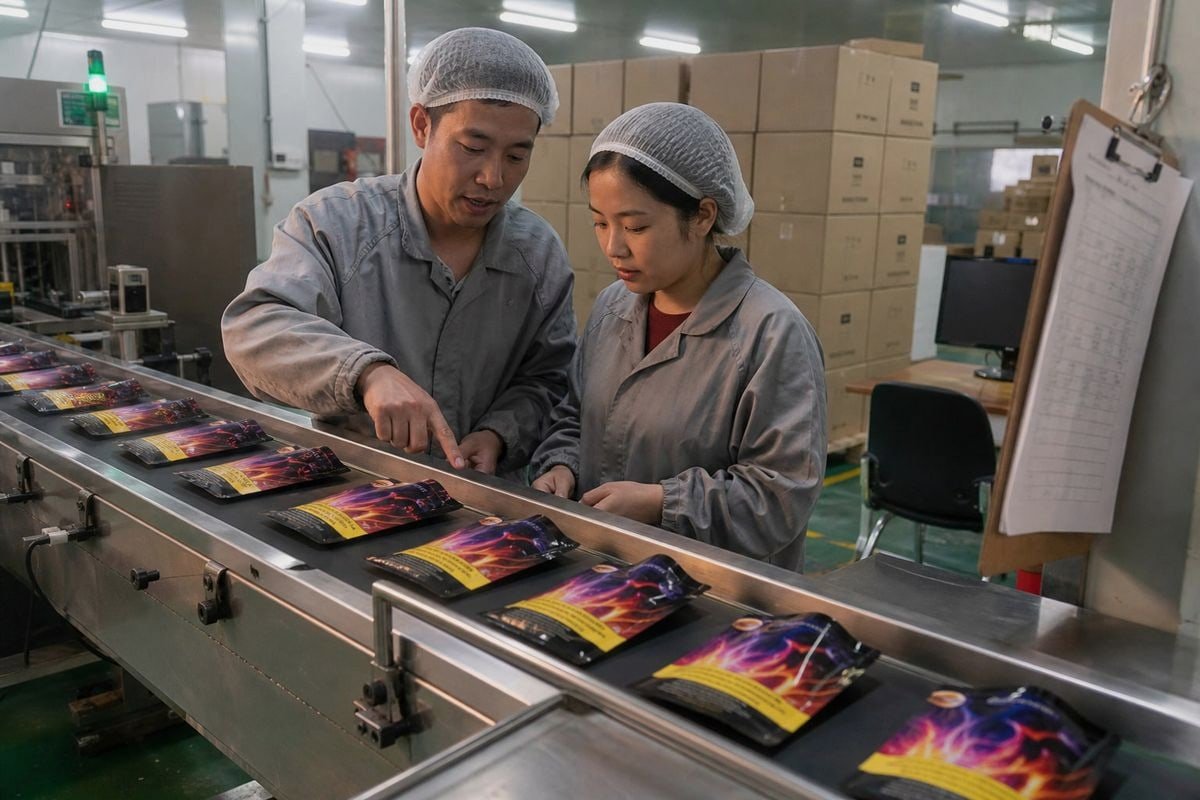
Cómo funciona generalmente una prueba de pedido dividida Este es el proceso que seguimos con los compradores que prueban un nuevo mercado: 7, Confirmar la fórmula una vez.
Una especificación de polvo, verificada con muestras e informes de prueba, alimenta ambos formatos.
Dividir el MOQ por formato.
- Por ejemplo, 60% en sobres de papel de aluminio con una caja de exhibición y 40% en bolsas verticales de kraft. Finalizar las ilustraciones para cada formato.
- Dividir el MOQ por formato. Por ejemplo, 60% en sobres de papel de aluminio con una caja expositora y 40% en bolsas de pie de kraft.
- Finalizar el arte para cada formato. Las etiquetas de marca blanca, las etiquetas de advertencia, los códigos de barras y los paneles de cumplimiento de idiomas del mercado se establecen por SKU.
- Ejecute la producción bajo un ciclo de control de calidad. Nuestros controles de lote a lote significan que el polvo del sobre y el polvo de la bolsa son el mismo producto, por lo que los resultados de su prueba comparan el empaque, no la variación del producto.
- Rastree las ventas por canal durante una temporada. Luego escale el ganador, o conserve ambos si cada canal funciona.
Qué aclarar antes de dividir
Pregunte a su proveedor tres cosas. Primero, si los costos de arte y plancha se aplican por formato. Segundo, si la división afecta el tiempo de entrega; en nuestras líneas, generalmente solo agrega unos pocos días. Tercero, si los MOQ de reposición por formato individual son más bajos una vez que la prueba valida la demanda. Un proveedor con una profundidad de fabricación real responderá las tres por escrito. Una empresa comercial a menudo no puede, porque no controla la línea de llenado. El enfoque de prueba protege su efectivo y le brinda datos reales del mercado en lugar de conjeturas.
Conclusión
Elegir el formato incorrecto desperdicia una temporada y un envío. Las apuestas son reales: fallas de cumplimiento, estantes lentos, stock muerto. La solución es sencilla: adapte el empaque al canal, no al sabor.
Los sobres promocionales ganan en ventas minoristas impulsivas y regalos. Las bolsas y frascos para el hogar ganan en uso repetido en el hogar y comercio electrónico. Las advertencias deben permanecer visibles en ambos, porque el polvo brillante en un empaque divertido conlleva un riesgo real de ingestión. Y no tiene que elegir a ciegas: una prueba de MOQ dividida con una fábrica certificada le permite probar ambos formatos con una fórmula, un ciclo de control de calidad y una orden de compra. Después de más de 17 años enviando productos de color llama a más de 30 países, nuestra lección más clara es esta: el mejor empaque no es el más bonito. Es el que su cliente entiende al instante y no puede usar mal. Comience con su canal, asegure su cumplimiento y deje que los datos reales de ventas decidan el resto.
Notas al pie
Aclara los procesos de revisión de aduanas y cumplimiento internacionales que afectan los envíos transfronterizos de empaques. ↩︎
Proporciona información general sobre los tipos de empaques flexibles utilizados para productos de polvo de fuego para uso doméstico repetido. ↩︎
Define la métrica comercial utilizada para justificar la estrategia de empaque para el hogar. ↩︎
Información general sobre las autoridades de control de intoxicaciones mencionadas en relación con las advertencias de ingestión. ↩︎
Recurso de seguridad del consumidor de la FDA relevante para los riesgos de quemaduras químicas por ingestión. ↩︎
Explica el concepto de empaque a prueba de manipulaciones al que se hace referencia para la seguridad de los frascos para el hogar. ↩︎
Proporciona contexto sobre Ningbo como un importante centro de fabricación chino mencionado por su capacidad de producción. ↩︎



 English
  Spanish
  German
  French
  Arabic
  Portuguese
Únete a la conversación