






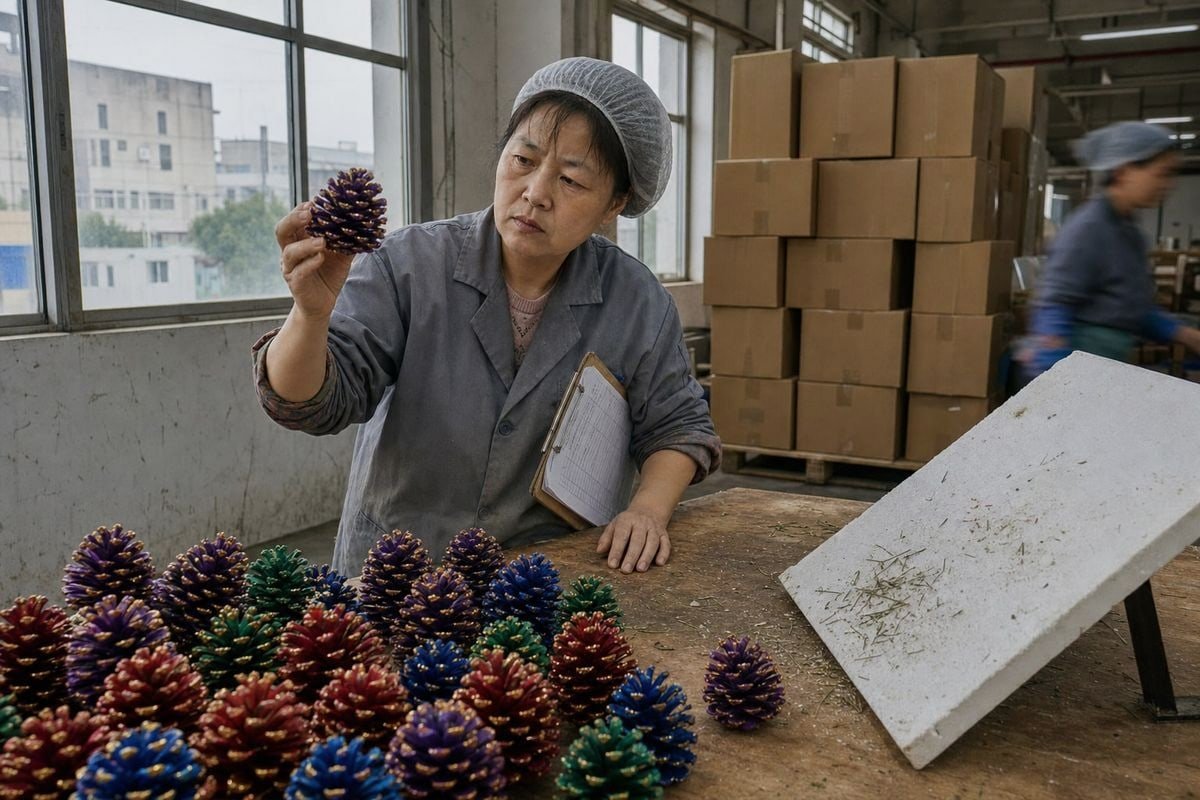
Las piñas de pino coloreadas para chimenea pueden llegar mohosas, con insectos, descoloridas o sucias, y un solo contenedor en mal estado puede arruinar una temporada de venta. olor a humedad 1. En nuestra línea de producción, inspeccionamos estos cuatro riesgos exactamente a diario.
Para revisar piñas de pino coloreadas para chimenea, inspeccione las escamas y grietas en busca de moho velloso y olor a humedad, sacuda las piñas sobre una superficie blanca para revelar insectos y excrementos, compare la saturación del color con una muestra retenida y cepille las agujas, el polvo y las escamas de resina antes de empacar.
A continuación, desgloso cada una de las cuatro comprobaciones en pasos prácticos excremento de insecto 2. Estos son los mismos procedimientos que realizamos antes de que cada envío salga de nuestra fábrica, por lo que también puede utilizarlos para [inspección de entrada](https://sunrichfire.com/how-verify-species-dryness-size-grading-fireplace-colored-pine-cones/).
¿Qué debo buscar al inspeccionar piñas de colores en busca de moho antes de enviarlas?
Hace unos años, un lote de prueba de un nuevo proveedor de piñas crudas llegó a nuestras instalaciones de Ningbo con tenues manchas blancas. Nuestro equipo de control de calidad lo puso en cuarentena inmediatamente 3 — y esa decisión salvó el programa navideño de un cliente.
**Inspeccione las piñas de pino coloreadas en busca de crecimiento blanco, gris, verde o negro, algodonoso o polvoriento en las escamas, tallos y grietas internas, además de cualquier olor a humedad. Rechace las piñas con moho o humedad generalizada; las manchas superficiales menores solo pueden pasar después de secarlas y volver a introducirlas.
Notas al pie
Proporciona antecedentes sobre las condiciones de crecimiento del moho relevantes para los criterios de inspección descritos. ↩︎
Define el excremento de insecto, un indicador clave mencionado para la detección de plagas en las piñas. ↩︎
El recurso de la EPA explica los peligros del moho que respaldan la decisión de cuarentena descrita en el caso. ↩︎
 English
  Spanish
  German
  French
  Arabic
  Portuguese
Únete a la conversación