







Los compradores me preguntan sobre iniciadores de fuego de madera para mochileros casi todas las semanas Certificación ISO 9001 1. Elige uno demasiado pesado, los excursionistas lo rechazan. Elige uno demasiado ligero, falla bajo la lluvia. Nuestra línea de producción resuelve ambos problemas.
Equilibre el peso y el tiempo de combustión eligiendo el iniciador de fuego de madera más ligero que aún ofrezca de 6 a 10 minutos de llama. Los viajes en clima seco solo necesitan iniciadores de 5 minutos de menos de 0.5 oz cada uno; las condiciones húmedas o frías justifican 10 minutos o más y un poco más de peso por pieza.
Ese número único —minutos de llama utilizable por onza— impulsa cada decisión de compra inteligente en esta categoría. Auditorías de cumplimiento social BSCI 2. Permítame guiarlo sobre cómo aplicarlo, desde las hojas de especificaciones hasta los pedidos al por mayor.
¿Qué tiempo de combustión necesito realmente para los iniciadores de fuego de madera para mochileros en comparación con el campamento en coche?
Durante una prueba de combustión la primavera pasada en nuestras instalaciones de Ningbo, una marca británica de camping nos observó cronometrando el mismo rollo de madera encerada contra yesca húmeda y yesca seca. La diferencia cambió toda su especificación.
Los iniciadores de fuego de madera para mochileros solo necesitan de 5 a 8 minutos de tiempo de combustión para condiciones secas y de 8 a 10 minutos para madera húmeda, ya que el objetivo es encender yesca, no mantener un fuego. Los iniciadores para acampar en coche pueden durar de 10 a 15 minutos porque el peso del paquete es irrelevante.

El malentendido fundamental que veo en los nuevos compradores es tratar el tiempo de combustión como una especificación destacada donde más grande siempre es mejor. No lo es. Un iniciador de fuego tiene un trabajo: debe permanecer encendido el tiempo suficiente para llevar la primera capa de yesca más allá de su punto de ignición. Después de eso, el fuego se alimenta solo. Cada minuto adicional de tiempo de combustión más allá de esa ventana es cera desperdiciada y peso desperdiciado en la mochila de un excursionista.
El tiempo de combustión no es la producción de calor
Dos iniciadores pueden arder durante ocho minutos y funcionar de manera muy diferente. Uno puede lanzar una llama alta y caliente que seca las ramitas húmedas mientras arde. Otro puede arder a baja intensidad y nunca transferir suficiente calor. Cuando formulamos nuestra fibra de madera y parafina 3 mezclas, ajustamos la altura e intensidad de la llama, no solo la duración de la combustión. Pregunte a su proveedor sobre ambos.
Emparejar minutos con el tipo de viaje
Este es el marco que recomendamos a nuestros clientes distribuidores cuando crean una línea de productos:
| Caso de uso | Tiempo de combustión objetivo | Peso objetivo por pieza | Por qué |
|---|---|---|---|
| Viajes ultraligeros en clima seco | 4–6 minutos | 1–0.4 oz | La yesca seca se enciende rápido; el peso manda |
| Mochileros de tres estaciones | Sello completo de cera contra la humedad | 4–0.8 oz | Reserva para madera moderadamente húmeda |
| Kits para clima húmedo, frío o de emergencia | 10–15 minutos | 8 oz+ | La ignición de fuego en clima húmedo necesita una ventana de ignición larga |
| Acampada en coche / fogatas | 10–15+ minutos | El peso es irrelevante | La conveniencia, no los gramos, impulsa la venta |
El viento y la altitud también cambian la ecuación. El aire frío y las ráfagas roban calor de la llama, por lo que los excursionistas en terrenos expuestos necesitan el extremo superior de cada rango. Muchos mochileros experimentados también combinan un iniciador pequeño con un varilla de ferrocio 4 para redundancia, lo que significa que el iniciador en sí no necesita ser sobredimensionado. Solo necesita funcionar siempre.
¿Cómo evalúo la relación peso-tiempo de combustión de un proveedor antes de realizar un pedido al por mayor?
Un importador alemán nos envió una vez tres muestras de la competencia y nos hizo una pregunta directa: ¿cuál arde más por gramo? Pusimos los tres en la báscula y el cronómetro esa tarde.
Calcule la duración de la combustión por gramo dividiendo los minutos de combustión probados por el peso unitario en gramos. Solicite muestras de tres lotes de producción, pruébelas usted mismo en condiciones idénticas y compare los resultados con la hoja de especificaciones del proveedor. Las proporciones consistentes entre lotes indican un control de calidad real.

La relación peso-tiempo de combustión es la métrica más útil para comparar iniciadores de fuego de madera entre proveedores, porque elimina el lenguaje de marketing y obliga a una comparación directa. En nuestros más de 17 años suministrando marcas de exteriores y camping en EE. UU. y Europa, los compradores que prueban esta relación antes de realizar un pedido casi nunca tienen disputas de calidad después. Los compradores que confían solo en una hoja de especificaciones a veces sí las tienen.
Un proceso de evaluación simple de cuatro pasos
- Solicite muestras de varios lotes. Una muestra perfecta no prueba nada. Tres muestras de tres series de producción separadas demuestran que el proceso está controlado. Dado que nuestra primera muestra refleja de manera confiable la producción en masa, alentamos esta prueba en lugar de temerla.
- Pese cada pieza individualmente. La absorción de cera varía si el encerado no se controla bien. Una tolerancia superior a aproximadamente ±10% por pieza sugiere una disciplina débil entre lotes.
- Queme en condiciones idénticas. Misma superficie, misma temperatura ambiente, sin viento. Mida desde la ignición completa hasta la extinción de la llama.
- Calcule minutos por gramo y compare. Los rollos de madera encerada bien hechos suelen caer en un rango predecible; los valores atípicos en cualquier dirección merecen preguntas.
Puntos de referencia para el contexto
| Tipo de iniciador | Peso Típico | Tiempo de combustión típico | Notas de eficiencia |
|---|---|---|---|
| Bolas de algodón con vaselina | Menos de 0.1 oz | 3–5 minutos | Máxima eficiencia, pero desordenado y de grado DIY |
| Pestañas / cubos de yesca química | 1–0.5 oz | 8–12 minutos | Relación fuerte, mayor costo, olor químico |
| Rollos de madera sumergidos en cera | 4–0.8 oz | 6–12 minutos | Relación equilibrada, materiales naturales, rendimiento de yesca impermeable |
| Palos de Fatwood 5 | Varía | Larga, impulsada por resina | Se enciende mojado, pero necesita ser raspado y habilidad |
| Bloques grandes de serrín y cera | 5 lb+ | 10–30 minutos | Ideal para acampar en coche, mal valor por gramo |
Un ángulo de evaluación más: peso del embalaje. Un iniciador que puntúa bien por pieza puede perder su ventaja si se envía en un embalaje minorista pesado y no resellable. Diseñamos el embalaje de equipo de mochilero ultraligero de manera diferente a cajas de exhibición de chimenea por esta misma razón. Pida a su proveedor el peso total enviado por SKU, no solo el peso por unidad.
¿Puedo solicitar tamaños personalizados o formulaciones de cera para alcanzar un peso objetivo específico para mi línea de productos?
La compensación que sopesamos con más frecuencia en la planta de producción es la carga de cera frente a la densidad de fibra. Si cambia alguna de ellas, tanto el peso como la curva de combustión del iniciador terminado se moverán con él.
Sí. Las fábricas OEM establecidas pueden ajustar el diámetro del rollo, la longitud del rollo, la densidad de la fibra y la relación cera-fibra para alcanzar un peso específico por pieza y un objetivo de tiempo de combustión. Los rangos de personalización típicos cubren piezas ultraligeras de 0.2 oz hasta formatos de combustión extendida de 1 oz o más para condiciones húmedas.

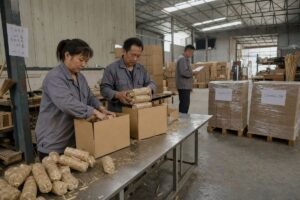
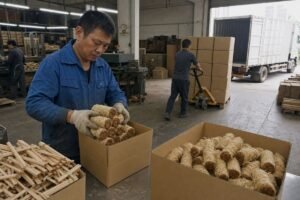
La personalización es donde una fábrica real se diferencia de una empresa comercial. Cuando un comprador se acerca a nosotros con un objetivo, digamos, un iniciador de 0.4 oz que arde ocho minutos para una línea de mochilero de tres estaciones, no elegimos de un catálogo. Prototipamos. Nuestras líneas de producción en Ningbo nos permiten ajustar cuatro variables independientes hasta que la muestra cumpla con las especificaciones.
Las cuatro palancas que podemos ajustar
- Dimensiones del rollo. Un rollo de madera más corto y delgado reduce el peso rápidamente pero acorta el tiempo de combustión. Los cambios de diámetro afectan el tiempo de combustión más que la longitud, porque la llama consume el rollo de afuera hacia adentro.
- Densidad de fibra. La lana de madera enrollada flojamente se enciende más rápido y funciona mejor con una varilla de ferrocerio o cerillas a prueba de tormentas. La fibra enrollada apretadamente arde más lenta y constantemente con el viento.
- Relación cera-fibra. Nuestras mezclas estándar rondan una división 50/50 de fibra de madera y parafina. Aumentar el contenido de cera extiende el tiempo de combustión y mejora el rendimiento de yesca impermeable con lluvia. Reducirlo reduce el peso y el costo.
- Tipo de cera. La parafina es el caballo de batalla. Para las marcas dirigidas a excursionistas conscientes del medio ambiente, las formulaciones de cera a base de plantas son una solicitud cada vez más común, y la tendencia de los iniciadores ecológicos en los mercados de EE. UU. y la UE es una demanda real en los estantes, no una moda pasajera.
Cómo se ve un proceso de desarrollo realista
Normalmente realizamos dos o tres rondas de muestras. La ronda uno alcanza el objetivo de peso. La ronda dos ajusta la curva de combustión según su protocolo de prueba. La ronda tres, si es necesario, bloquea el peso del embalaje: bolsas resellables para uso en senderos o cajas de exhibición para venta minorista. Dado que también nos encargamos de la marca de etiqueta privada, las etiquetas de advertencia y los códigos de barras internamente, la muestra que aprueba es el mismo producto que llega a su estante. Esa continuidad importa más que cualquier especificación individual. Para los compradores que construyen líneas escalonadas (una SKU ultraligera, una SKU estándar y una SKU para iniciar fuego en clima húmedo), una plataforma de formulación con tres variantes de tamaño mantiene las MOQ manejables y la calidad uniforme.
¿Qué certificaciones e informes de prueba debo solicitar para verificar que las afirmaciones de tiempo de combustión son precisas?
Una lección que aprendí al principio de nuestro negocio de exportación: el tiempo de combustión impreso en una caja no significa nada para un comprador minorista de EE. UU. sin un informe de prueba detrás. Perdimos un trato una vez antes de estandarizar nuestra documentación. Nunca más.
Solicitar certificación ISO 9001, informes de pruebas de tiempo de combustión de terceros de laboratorios como SGS o Intertek, auditorías de cumplimiento social BSCI y documentación CE para la UE. Los informes verificados deben indicar las condiciones de prueba, el tamaño de la muestra y la duración de la combustión medida, no solo un resultado de aprobado/fallido.

El cumplimiento no es un "agradable tener" en esta categoría. Los iniciadores de fuego son, por definición, productos diseñados para encenderse. Los minoristas, las aseguradoras y las autoridades aduaneras los tratan en consecuencia. En nuestra experiencia exportando a más de 30 países, los compradores que verifican la documentación por adelantado pasan por la aduana más rápido, se integran con los grandes minoristas más fácilmente y evitan el riesgo de retirada que hunde a los pequeños importadores.
La lista de verificación de documentos que entregamos a los nuevos compradores
| Documento | Lo Que Demuestra | Señal de alerta si falta |
|---|---|---|
| Certificado ISO 9001 | La fábrica opera un sistema de calidad controlado | Los tiempos de combustión pueden variar entre lotes |
| Informe de prueba SGS o Intertek | Verificación independiente del tiempo de combustión y composición | Las afirmaciones son marketing autodeclarado |
| Informe de auditoría BSCI | Estándares de producción éticos | Los canales de abastecimiento minorista pueden rechazar al proveedor |
| Documentación CE 6 | Conformidad del mercado de la UE | El producto no puede enviarse legalmente a Europa |
| Registros de control de calidad del lote | Consistencia entre la muestra y la producción en masa | La muestra aprobada puede no coincidir con el contenedor |
Cómo leer un informe de prueba de tiempo de combustión
No se detenga en el número principal. Verifique tres cosas. Primero, las condiciones de prueba: temperatura, exposición al viento y la superficie utilizada. Un iniciador probado en interiores a temperatura ambiente superará sus números de campo, y el uso en altitudes elevadas o en climas fríos reducirá minutos de cualquier resultado de laboratorio. Segundo, el tamaño de la muestra: un informe basado en una pieza es una anécdota, no datos. Tercero, el método de ignición: los resultados encendidos con una llama abierta difieren de los resultados obtenidos con un iniciador de fuego de magnesio 7 o una varilla de ferrocerio, y su cliente final puede usar cualquiera de los dos. Cuando realizamos control de calidad interno en nuestra fábrica, probamos deliberadamente contra el método de ignición más difícil, porque así es como el producto falla o tiene éxito en un sendero mojado, no en un laboratorio. Si un proveedor duda en compartir informes completos u ofrece solo un número de certificado sin el documento, considérelo su respuesta.
Conclusión
Compre el iniciador de fuego de madera más ligero que aún cubra las peores condiciones realistas de sus clientes. Verifique la relación usted mismo, personalice para alcanzarla y exija informes de prueba. Construimos exactamente de esa manera.
Notas al pie
Entrada autorizada de Wikipedia para la norma de gestión de calidad ISO 9001. ↩︎
BSCI es el programa de auditoría ética al que se hace referencia para la verificación de proveedores. ↩︎
La cera de parafina es el material central discutido en las formulaciones de iniciadores de fuego. ↩︎
Antecedentes de las herramientas de iniciación de fuego de ferrocio mencionadas como alternativas de ignición. ↩︎
La madera resinosa es un tipo específico de iniciador de fuego comparado en la tabla de referencia del artículo. ↩︎
Explica los requisitos de marcado CE a los que se hace referencia para la documentación de conformidad del mercado de la UE. ↩︎
Página de Wikipedia para herramientas de iniciación de fuego, que cubre iniciadores de magnesio y ferrocio. ↩︎

 English
  Spanish
  German
  French
  Arabic
  Portuguese
Únete a la conversación