







Equilibrar el costo de muestreo frente a la inspección completa de piñas teñidas es una pregunta que nuestro equipo de producción en Ningbo escucha constantemente. ANSI/ASQ Z1.4 Nivel II 1. Si te equivocas, gastas demasiado en control de calidad o envías defectos visibles que provocan devoluciones y malas críticas.
Equilibre los costos de muestreo vs. inspección completa haciendo coincidir la intensidad de la inspección con la visibilidad y el costo del defecto. Utilice el muestreo AQL para lotes grandes y estables, la inspección completa para tiradas pequeñas o premium, y un modelo híbrido: comprobaciones del 100% en defectos críticos, muestreo en variaciones cosméticas menores.
Esa es la respuesta corta. El resto de esta guía desglosa los números reales del presupuesto, la confiabilidad de las muestras, los informes de terceros y cuándo el control de procesos de una fábrica le permite reducir la inspección de manera segura.
¿Cuánto debería presupuestar para la inspección de muestras frente al control de calidad de un contenedor completo en piñas de colores?
Un comprador de Alemania nos pidió una cotización para ambas opciones en un pedido de 20,000 piñas. La diferencia de costo lo sorprendió, y eso cambió la forma en que planeó todos los pedidos posteriores.
Presupuesto aproximado de 100–500 USD por lote para inspección de muestras AQL, típicamente un inspector-día a unos 299 USD. La inspección de contenedores completos varía según el tamaño del lote y puede requerir varios días-hombre, a menudo costando de tres a cinco veces más para pedidos grandes de piñas de pino de colores.

El principal impulsor del costo es el tiempo. La inspección se factura por día-hombre, por lo que cualquier cosa que alargue las horas del inspector alarga su factura. Una inspección de muestra bajo ANSI/ASQ Z1.4 2 Nivel II con un PCC de 2.5 generalmente se completa en unas pocas horas. Una revisión completa de cada piña en un contenedor de 40 pies puede llevar de dos a cuatro días.
Estructura de costos típica comparada
| Elemento de costo | Inspección de muestra (PCC) | Inspección completa |
|---|---|---|
| Tiempo del inspector | Unas pocas horas a 1 día-hombre | 2–4+ días-hombre para cargas de contenedores |
| Rango de tarifas típico | USD 100–500 por lote | Escala directamente con el recuento de unidades |
| Costo fijo de configuración / viaje | ~USD 100 fijos | Mismo piso fijo, más mano de obra diaria |
| Mejor ajuste | Lotes grandes, estables | Lotes pequeños, premium o de alto riesgo |
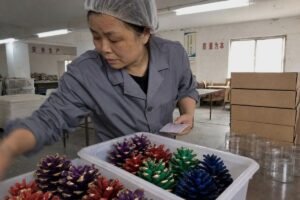
Observe el costo fijo. Ya sea que tome una muestra o inspeccione completamente, alguien todavía viaja a la fábrica y se prepara. Es por eso que, en las pequeñas tiradas de temporada de colores de edición limitada, la inspección completa puede terminar costando casi lo mismo que el muestreo, un punto que señalamos a los compradores que piden cantidades de prueba de nuestras piñas teñidas con llama de color.
No olvide el costo de escape
La ecuación presupuestaria real es el costo de inspección más el costo esperado de los defectos que se escapan. Las piñas teñidas son artículos de decoración para el consumidor sensibles a la apariencia. Una piña con tinte irregular o un cuerpo agrietado es barata de fabricar pero cara de vender: reembolsos, flete de reemplazo y críticas negativas cuestan más que la unidad en sí. En nuestra experiencia exportando a EE. UU. y Europa, el plan de inspección "más barato" rara vez es el resultado total más barato. También presupueste por separado las pruebas de laboratorio de cumplimiento: las verificaciones de toxicidad de tintes para metales pesados según CPSC o EN71 3 requieren muestreo de laboratorio independientemente del método de inspección visual que elija.
¿Puede una primera muestra sólida predecir realmente la calidad de la producción en masa y reducir mis costos de inspección posteriores?
Aquí hay un compromiso que evalúo con cada nuevo cliente: ¿cuánto des-riesga realmente una muestra dorada aprobada el pedido a granel? La respuesta honesta depende completamente de la fábrica detrás de la muestra.
Sí, pero solo si la fábrica utiliza la misma línea de producción, receta de tinte y materiales para las muestras y la producción en masa. Con controles documentados de lote a lote, una muestra inicial sólida predice bien la calidad a granel y justifica la reducción de las inspecciones posteriores de verificaciones completas a muestreo AQL.

Las muestras fallan como predictores cuando son hechas por un técnico de muestras hábil mientras que los productos a granel provienen de una línea apresurada, o peor aún, cuando una empresa comercial obtiene la muestra de un taller y el contenedor de otro. Esa brecha es exactamente la razón por la que ejecutamos muestras en nuestras líneas de producción regulares en Ningbo, utilizando los mismos lotes de tinte y proceso de recubrimiento que los pedidos completos. Después de más de 17 años fabricando productos teñidos con llama de color, tratamos la primera muestra como un contrato, no como una pieza de exhibición.
¿Qué hace que una muestra sea predictiva?
- Misma línea, mismo proceso. La muestra debe pasar por los mismos pasos de teñido, secado y recubrimiento que la producción en masa.
- Estándares de color bloqueados. Se deben registrar las virutas de color aprobadas o las lecturas del espectrofotómetro 4 , para que los productos a granel se midan contra números, no contra la memoria.
- Tolerancias documentadas. Acordar por escrito qué cuenta como variación de tono aceptable antes de que comience la producción.
- Contra-muestras retenidas. Ambas partes conservan muestras selladas para la resolución de disputas.
Los materiales naturales añaden un giro. Las piñas varían en tamaño, densidad de escamas y porosidad, por lo que la absorción del tinte nunca es perfectamente uniforme. Las tablas estándar de PCC se crearon para productos manufacturados uniformes y pueden subestimar el riesgo en productos orgánicos. Por lo tanto, una muestra predictiva no debe prometer piñas idénticas, debe demostrar el rango de variación aceptable. Cuando desarrollamos un nuevo color para un cliente de marca blanca, enviamos un pequeño conjunto que muestra los extremos claro y oscuro del espectro esperado. Esa honestidad por adelantado evita disputas posteriores y permite a los compradores reducir con confianza de la inspección completa al muestreo en el segundo o tercer pedido, reduciendo significativamente sus gastos de control de calidad sin aumentar su riesgo.
¿Qué informes de inspección de terceros debería solicitar para evitar pagar inspecciones completas cada vez?
Un comprador de una marca de camping de EE. UU. me dijo una vez su regla: sin informe, sin transferencia bancaria. Justo, pero estaba solicitando los informes incorrectos y aún pagando por inspecciones completas que no necesitaba.
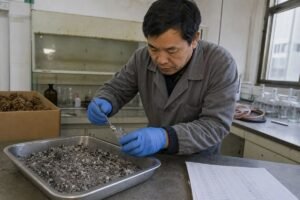
Solicite un informe de inspección previa al envío AQL con clasificación de defectos, registros de control de procesos de fábrica, un informe de prueba de laboratorio para la seguridad de los tintes según CPSC o EN71, y los certificados de auditoría ISO 9001 o BSCI del proveedor. Juntos, estos reemplazan la mayoría de las inspecciones completas de rutina.

El truco es apilar documentos para que cada uno cubra un riesgo diferente. Un informe nunca lo hace todo. Aquí está la pila que recomendamos a los compradores de nuestras piñas de llama de color, basándonos en lo que SGS e Intertek 5 emitimos rutinariamente para nuestros propios envíos.
La pila de informes que reemplaza la inspección completa rutinaria
| Tipo de informe | Confirma que el proceso de dosificación de fragancias está controlado y es repetible | Con qué frecuencia solicitar |
|---|---|---|
| Informe de pre-envío AQL (Nivel II, 2.5 AQL) | Defectos visuales, consistencia del color, embalaje, etiquetas, códigos de barras | Cada envío |
| Hoja de clasificación de defectos | Críticos (moho, daño por plagas), mayores (sangrado de color, conos agrietados), menores (ligera variación de tono) | Adjunto a cada informe AQL |
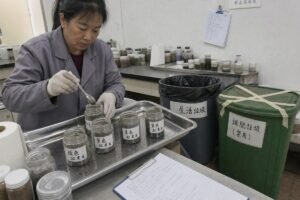
| Informe de prueba de laboratorio (SGS 6/Intertek) | Toxicidad del tinte, metales pesados, contenido de plomo según CPSC/EN71 | Por cambio de fórmula o anualmente |
| Auditoría de fábrica (ISO 9001 / BSCI 7) | Estabilidad del proceso, cumplimiento social, sistema de control de calidad | Anualmente |
| Registros de verificación en proceso | Verificaciones por etapas antes de teñir, después de secar, antes de empacar | Por lote de producción |
Por qué las verificaciones por etapas son lo más importante
Los registros en proceso merecen especial atención. Detectar un problema de tinte después del secado cuesta una reelaboración. Detectarlo después del empaque cuesta un reempaque completo. Detectarlo en el cliente cuesta la relación. Las fábricas que inspeccionan en tres etapas — clasificación de material pre-tiñido, verificación de color post-secado, verificación final pre-empaque — eliminan la mayor parte de la razón para una inspección final exhaustiva. En nuestras líneas, también verificamos la precisión del color contra estándares registrados, lo que es más rápido y objetivo que una verificación completa puramente visual. Cuando un comprador ve estos registros por etapas envío tras envío, pasar a la inspección de muestras deja de sentirse como una apuesta y comienza a sentirse como matemáticas simples. Insista en que la clasificación de defectos se acuerde antes de la producción, para que "mayor" y "menor" signifiquen lo mismo para usted, la fábrica y el inspector externo.
¿Cómo decido cuándo el control de calidad lote a lote de una fábrica me permite omitir la inspección completa de forma segura?
La lección más difícil de mis primeros años en este oficio: la consistencia, no un gran primer envío, es lo que otorga una inspección reducida. Un buen contenedor te dice poco. Cinco consecutivos te dicen mucho.
Omitir la inspección completa solo después de que tres a cinco envíos consecutivos pasen el muestreo AQL sin defectos críticos, la fábrica comparta los registros de control de calidad en proceso y la fórmula del producto permanezca sin cambios. Escalar de nuevo a inspección completa siempre que el rendimiento del proveedor disminuya o aumenten las quejas.

Piense en esto como una escalera de confianza graduada, no un interruptor de encendido/apagado. Los compradores que saltan directamente de la inspección completa a ninguna inspección generalmente se queman; los compradores que nunca reducen la inspección desperdician presupuesto en un proveedor estable. El camino intermedio es un plan escrito de escalada y desescalada.
Una escalera de decisión práctica
| Etapa | Disparador | Nivel de inspección |
|---|---|---|
| Nuevo proveedor o color nuevo | Primeros 1-2 pedidos | Inspección completa, más prueba de laboratorio |
| Construyendo confianza | 3-5 resultados limpios de AQL seguidos | Híbrido: 100% en defectos críticos, muestreo del resto |
| Asociación estable | Historial consistente, registros de control de calidad compartidos | Solo muestreo AQL, auditorías periódicas |
| Señales de advertencia | Lote fallido, pico de quejas, cambio de fórmula o temporada | Escalar de nuevo a completo o híbrido |
Señales que justifican permanecer en el muestreo
La fábrica debe mostrar, no solo afirmar, estabilidad. Busque fórmulas de tinte bloqueadas, muestras de lotes retenidas, verificaciones en proceso por etapas y certificaciones que se re-auditan — nuestras propias auditorías ISO 9001 y BSCI ocurren en un ciclo fijo precisamente porque los compradores confían en ellas para reducir su gasto en inspección. La estacionalidad también importa. La decoración navideña se basa en ventanas de venta ajustadas; un color premium de edición limitada sin posibilidad de reabastecimiento merece una inspección más estricta que un lote a granel de color mixto donde la variación menor se mezcla.
Señales que obligan a la escalada
Re-escalar inmediatamente si un envío falla el AQL, si la fábrica cambia de proveedores de tinte o mueve la producción, o si las quejas de los clientes finales aumentan. Un modelo híbrido maneja la mayoría de las zonas grises: mantenga verificaciones 100% en moho, roturas, color faltante, precisión de etiquetas y advertencias de seguridad contra incendios — los defectos que más duelen — mientras muestrea diferencias menores de tono. Para un producto de uso contra incendios como las piñas de llama de color, precisión de la etiqueta de advertencia nunca debe delegarse al muestreo, porque un error de etiquetado conlleva un riesgo regulatorio, no solo un riesgo cosmético.
Conclusión
El gasto excesivo en control de calidad agota el margen; el gasto insuficiente envía defectos a los clientes. La solución es igualar la intensidad de la inspección al riesgo: muestrear lotes a granel estables, inspeccionar completamente los lotes premium y proteger siempre las verificaciones críticas de seguridad.
Notas al pie
Explica el estándar de muestreo AQL al que se hace referencia para las decisiones de inspección de aprobación/rechazo. ↩︎
Antecedentes sobre el estándar de muestreo AQL al que se hace referencia para los niveles de inspección. ↩︎
Estándar europeo de seguridad de juguetes/productos al que se hace referencia para los requisitos de pruebas de laboratorio. ↩︎
Explica el instrumento de medición de color utilizado para los estándares de color bloqueados. ↩︎
Enlaces a un importante organismo de inspección de terceros que emite los informes AQL y de laboratorio discutidos. ↩︎
Sitio oficial de la empresa de inspección y pruebas de terceros mencionada por su nombre. ↩︎
Antecedentes sobre el esquema de auditoría de cumplimiento social al que se hace referencia junto con la ISO 9001. ↩︎
 English
  Spanish
  German
  French
  Arabic
  Portuguese
Únete a la conversación