






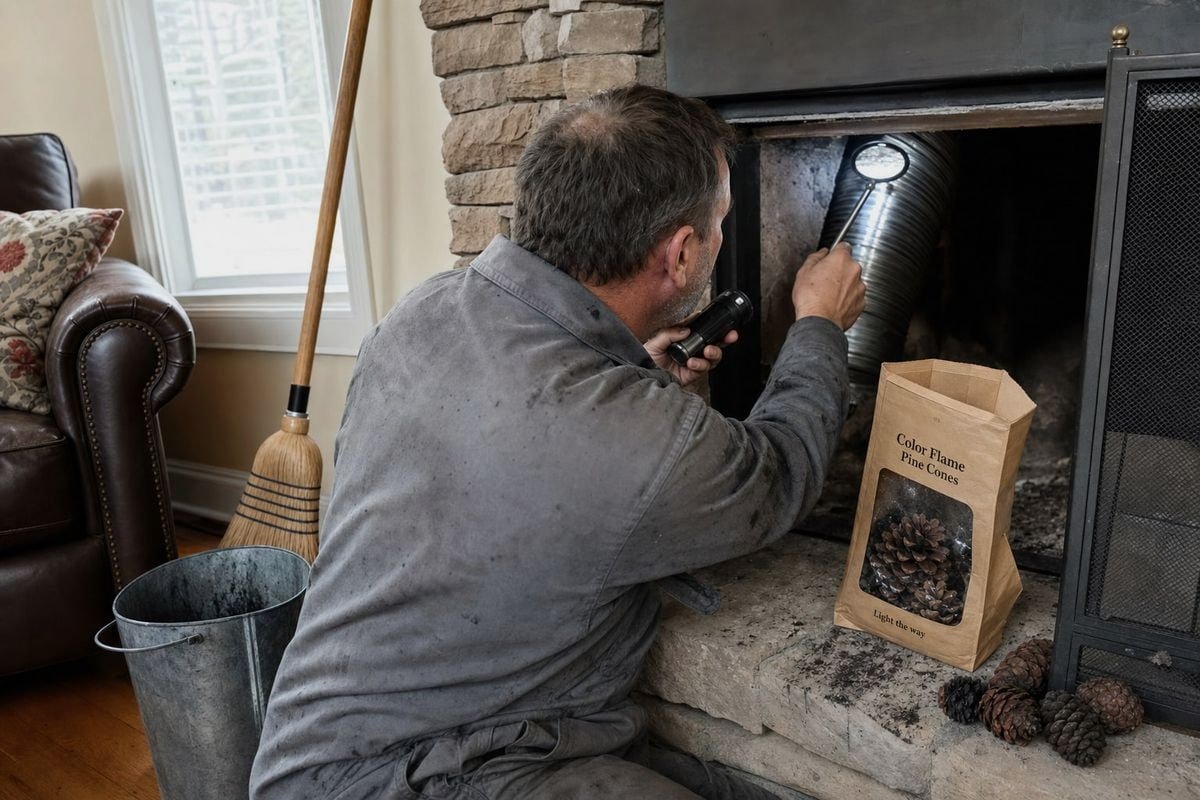
El riesgo de corrosión de las piñas de pino de chimenea de colores preocupa a muchos compradores que conozco. Una mala formulación puede dañar la chimenea de un cliente, generar devoluciones y destruir una marca. Nuestra línea de producción se construyó para evitar exactamente eso.
El riesgo de corrosión de las piñas de pino coloreadas para chimeneas depende de la formulación de la sal metálica, la frecuencia de uso y el estado de la chimenea. Los productos que utilizan sulfato de cobre o cloruros dejan residuos ácidos que corroen los revestimientos de la chimenea; las formulaciones ecológicas, el uso ocasional y la inspección anual de la chimenea mantienen el riesgo bajo.
Esta guía divide la pregunta en cuatro partes. Primero, la química. Luego, cómo verificar informes de pruebas 1. A continuación, las pautas de uso para sus clientes. Finalmente, las certificaciones que lo protegen como importador.
¿Qué compuestos químicos en las piñas de llama de color podrían afectar el revestimiento de mi chimenea con el tiempo?
Durante una revisión de formulación en nuestras instalaciones de Ningbo hace años, nuestro equipo rechazó una mezcla de colorante más barata de plano. La razón era simple: su contenido de cloruro representaba una amenaza real para los revestimientos de las chimeneas.
Sulfato de cobre, cloruro de estroncio y otras sales metálicas crean llamas de colores, pero dejan residuos que forman ácidos corrosivos cuando se combinan con la humedad. Los cloruros y sulfatos atacan los revestimientos de chimeneas de acero inoxidable mediante picaduras, mientras que los condensados ácidos aceleran las tasas de oxidación de los metales y el daño del mortero de mampostería con el tiempo.

La piña de pino en sí no es dañina. Es solo biomasa seca. El riesgo reside completamente en el tratamiento químico que se le aplica. Por lo tanto, el primer paso en cualquier evaluación es identificar qué compuestos utiliza un proveedor.
Los colorantes comunes y sus subproductos
Los productos tradicionales de llama de colores se basan en sales metálicas. Cada sal produce un color de llama específico. Cada una también deja un residuo específico.
| Compuesto | Color de llama | Preocupación por la corrosión |
|---|---|---|
| El sulfato de cobre | Verde/azul | Los residuos de sulfato forman ácido sulfúrico con la humedad; agresivo con el metal |
| Cloruro de estroncio | Rojo | Los cloruros causan picaduras localizadas en revestimiento de chimenea de acero inoxidable 2s |
| Cloruro de cobre | Azul | Alta carga de cloruro; una de las opciones más corrosivas |
| Borax / ácido bórico | Verde | Relativamente suave; menor reactividad de los residuos |
| Sal de Epsom (sulfato de magnesio) | Blanco | Suave, pero aún agrega sulfato a los depósitos |
Aquí está el mecanismo que importa. La combustión nunca consume el 100% de estas sales. Las partículas finas suben con el humo y se asientan dentro de la chimenea como depósitos químicos en la chimenea. Durante los meses húmedos, esos residuos de sales metálicas 3 extraen humedad del aire porque son higroscópicos. El resultado es una pasta ácida que se asienta directamente sobre su revestimiento, corroyéndolo incluso cuando la chimenea está fría.
La combustión de sulfato de cobre merece especial precaución. Produce subproductos que contienen azufre que se combinan con la condensación de gases de combustión 4 para formar ácido sulfúrico diluido. En un revestimiento de chimenea de acero inoxidable, los cloruros son aún peores. El acero inoxidable resiste bien la corrosión uniforme, pero los cloruros concentrados derrotan su capa de óxido protector 5 y causan picaduras profundas y localizadas. Los componentes galvanizados —amortiguadores, tapas de chimenea, soportes— se degradan aún más rápido. Donde se unen dos metales diferentes, las cenizas y los residuos de sal pueden crear un electrolito que impulsa la corrosión galvánica en la unión.
Es por eso que nuestras propias piñas de pino de llama de colores utilizan formulaciones ecológicas sin productos químicos nocivos. Cuando las desarrollamos, tratamos la química de los residuos como un problema de seguridad del producto, no como una nota al pie de marketing.
¿Cómo verifico los informes de prueba SGS o Intertek de un proveedor antes de realizar un pedido al por mayor?
Un distribuidor alemán me envió una vez un "informe SGS" de un competidor para una segunda opinión. A nuestro equipo de cumplimiento nos tomó diez minutos detectar el problema: el informe cubría un producto completamente diferente.
Verifique los informes de prueba comprobando el número de informe directamente en el portal de verificación oficial de SGS o Intertek, confirmando que el producto probado coincide con su SKU y formulación exactos, comprobando que la fecha de emisión es reciente y solicitando el informe completo de varias páginas en lugar de un certificado resumen.

Los informes de prueba falsos y reciclados son comunes en esta categoría. He visto informes prestados de otras fábricas, informes para un lote de colorante diferente e informes tan antiguos que la formulación ha cambiado dos veces desde la prueba. En nuestra experiencia exportando a más de 30 países, los compradores serios verifican todo. Aquí está el proceso que recomiendo.
Un proceso de verificación de cinco pasos
- Solicite el informe completo, no el certificado. Un certificado de una página es fácil de falsificar. El informe completo enumera los métodos de prueba, las descripciones de las muestras y los datos de contacto del laboratorio.
- Verifique el número de informe con el laboratorio. Tanto SGS como Intertek operan sistemas de verificación en línea. Ingrese el número de informe y confirme que la oficina emisora, la fecha y el nombre del solicitante coincidan con lo que afirma su proveedor.
- Haga coincidir la descripción de la muestra con su producto. Verifique que el artículo probado sea la misma formulación de colorante, tipo de empaque y nombre del producto que tiene la intención de pedir. Un informe para paquetes de llama de colores no cubre automáticamente las piñas de pino de llama de colores.
- Verifique el alcance de la prueba. Confirme qué estándares se probaron: los metales pesados, las sustancias restringidas y las emisiones de combustión son las áreas relevantes para las afirmaciones de seguridad de la chimenea y la seguridad del consumidor.
- Confirme que el solicitante es la fábrica. Si el informe fue emitido a una empresa comercial que nunca ha oído hablar, pregunte por qué. Emitimos informes bajo el nombre de nuestra propia fábrica, y cualquier fabricante legítimo debería hacer lo mismo.
Señales de alerta por las que vale la pena alejarse
Esté atento a informes de más de dos años, escaneos borrosos con fuentes desalineadas, negativa a compartir el número de informe o un proveedor que "no puede" organizar pruebas de terceros en su lote de pedido específico. Una fábrica real con líneas de producción completas puede enviar un lote actual a un laboratorio SGS o Intertek en cuestión de días. Hacemos esto de forma rutinaria para compradores de marca blanca que desean informes actuales bajo la documentación de su propia marca. Las pruebas a nivel de lote también confirman que la producción en masa coincide con la muestra, que es donde las empresas comerciales fallan con mayor frecuencia.
¿Debo recomendar pautas de uso o frecuencia para proteger las chimeneas de mis clientes?
Hay una compensación que discuto con casi todos los compradores de canales de chimeneas: una guía de uso más estricta puede parecer que frena las ventas, pero reduce drásticamente las tasas de quejas y protege la marca a largo plazo.
Sí. Recomendar directrices claras: usar uno o dos conos por fuego, no mezclar lotes de color, nunca usarlos para fuegos de cocina o parrillas, asegurar un buen tiro y ventilación, y programar una inspección anual de la chimenea. La orientación clara reduce la acumulación de residuos, la exposición a la responsabilidad y las quejas de los clientes.

Algunos compradores se oponen aquí. Argumentan que estos productos son seguros cuando se usan según las indicaciones, por lo que las advertencias adicionales son innecesarias. Esa visión es medio correcta. El uso decorativo ocasional en una chimenea limpia y bien construida presenta muy poco riesgo. Pero el mismo producto utilizado todas las noches durante todo el invierno, en una chimenea más antigua con acumulación de hollín ácido existente, es una situación completamente diferente. Sus pautas deben abordar a ambos usuarios.
Los impulsores establecidos del deterioro del conducto de la chimenea son la humedad, la condensación de los gases de combustión, la mala tiro, las bajas temperaturas del conducto y el mantenimiento descuidado. Las piñas de colores añaden una carga de residuos químicos 6 encima de esa línea de base. En un sistema bien mantenido, la adición es menor. En un sistema descuidado, agrava los problemas existentes. Los depósitos químicos pueden incluso interactuar con el creosota existente, y el creosota pesado más los residuos reactivos aumentan el riesgo de incendio en la chimenea.
Una matriz de riesgo práctica para sus insertos de embalaje
| Condición de la chimenea | Uso ocasional (pocas veces/temporada) | Uso frecuente (semanal o más) |
|---|---|---|
| Inspeccionado recientemente, buen tiro, conducto limpio | Bajo riesgo | Bajo-moderado; inspeccionar anualmente |
| Mampostería antigua, condición desconocida del revestimiento | Moderado; inspeccionar primero | Alto; evitar hasta inspeccionar |
| Óxido visible, manchas o daños en el mortero de mampostería | Evitar hasta reparar | No usar |
Lo que sus pautas deben decir a los usuarios finales
Mantenga el lenguaje simple. Dígales a los clientes que quemen solo leña seca sazonada junto con las piñas, ya que la leña húmeda reduce las temperaturas del conducto y empeora la condensación. Dígales que estén atentos a las señales de advertencia: una floración blanca o una costra polvorienta azul verdosa en el registro o en la repisa de humo, manchas inusuales alrededor de la caja de fuego, óxido en las partes metálicas o tiro reducido. Cualquiera de estos significa detener e inspeccionar. Recomiende una inspección certificada por CSIA anualmente, o con más frecuencia con un uso intensivo de la chimenea. Para nuestros compradores OEM, imprimimos estas etiquetas de uso y advertencia directamente en el embalaje personalizado, en el idioma del mercado de destino, para que la guía se envíe con cada unidad.
¿Qué certificaciones debería exigir para minimizar el riesgo de responsabilidad al importar estos productos?
Al principio de nuestra historia de exportación, aprendimos una dura lección: el papeleo de un envío es tan importante como el producto que contiene. Un documento faltante puede retener los contenedores en la aduana durante semanas.
Requerir ISO 9001 para gestión de calidad, BSCI para cumplimiento social, marcado CE para mercados europeos e informes de prueba SGS o Intertek actuales que cubran metales pesados y sustancias restringidas. Añadir etiquetas de advertencia conformes, hojas de datos de seguridad y trazabilidad de lotes para completar su protección de responsabilidad.

La certificación no es un solo documento. Es una pila de documentos, y cada uno lo protege contra un modo de falla diferente. Nuestro archivo de cumplimiento para un pedido típico de EE. UU. o UE se ve así.
| Documento | Lo Que Demuestra | Riesgo de responsabilidad que reduce |
|---|---|---|
| Certificado ISO 9001 | Sistema de gestión de calidad consistente | Variación lote a lote, reclamaciones de productos defectuosos |
| Auditoría BSCI | Condiciones éticas de fábrica | Descatalogación por parte del minorista, daño reputacional |
| Documentación CE | Conformidad del mercado de la UE | Incautación aduanera, prohibiciones en el mercado de la UE |
| Informes de SGS/Intertek | Seguridad del producto, metales pesados, sustancias restringidas | Reclamaciones por lesiones al consumidor, demandas por exposición química |
| Hoja de datos de seguridad | Divulgación de ingredientes y manipulación | Reclamaciones por falta de advertencia |
| Registros de lotes | Trazabilidad de cada lote de producción | Alcance y costo del retiro |
Por qué la trazabilidad del lote importa más de lo que esperan los compradores
Los certificados prueban el sistema. Los registros de lotes prueban el envío. Si un cliente alega alguna vez que los residuos de su producto dañaron el revestimiento de su chimenea de acero inoxidable o aceleraron las tasas de oxidación del metal en el hardware de su chimenea, debe demostrar exactamente qué lote de colorante se incluyó en esa corrida de producción y que coincidía con la formulación probada. En nuestra fábrica, cada lote de material de llama de color se registra y retiene, y un estricto control de calidad lote a lote significa que la primera muestra que un comprador aprueba refleja de manera confiable la producción en masa. Esa consistencia es en sí misma un escudo de responsabilidad: la mayoría de las reclamaciones relacionadas con productos químicos se remontan a la deriva de la formulación entre la muestra probada y los productos enviados.
Adiciones específicas del mercado
Para EE. UU., alinee las etiquetas de advertencia con la guía del consumidor estilo CPSC y considere las reglas de divulgación química a nivel estatal. Para Alemania, Francia y los Países Bajos, la documentación CE y la conciencia de REACH cribado de sustancias 7 son la base que nuestros distribuidores de la UE requieren antes de siquiera revisar las muestras. Los grandes canales minoristas suelen añadir sus propias auditorías de proveedores. Una fábrica que ya posee ISO 9001 y BSCI pasa esas auditorías mucho más rápido que una empresa comercial que tiene que pedir prestadas credenciales.
Conclusión
El riesgo de corrosión de las piñas de chimenea de colores es manejable cuando se controlan tres cosas: formulación, guía de uso y documentación. Elija un socio de fábrica certificado y el riesgo se mantiene pequeño.
Notas al pie
Servicio oficial de verificación para confirmar la autenticidad de los informes de pruebas de laboratorio de terceros. ↩︎
Guía autorizada sobre revestimientos de chimeneas y su función en la evacuación segura de subproductos de la combustión. ↩︎
Explica por qué los residuos de sales metálicas atraen la humedad, lo que provoca corrosión ácida en las chimeneas. ↩︎
Datos técnicos sobre cómo se forma la condensación en los conductos, lo que contribuye al daño y deterioro ácido. ↩︎
Explicación científica de la capa pasiva de óxido de cromo que previene la corrosión del acero inoxidable. ↩︎
Información sobre la composición química del humo de la madera y los residuos que quedan después de la combustión. ↩︎
Resumen estable y autorizado de la regulación REACH y los procesos de cribado de sustancias químicas. ↩︎

 English
  Spanish
  German
  French
  Arabic
  Portuguese
Únete a la conversación