






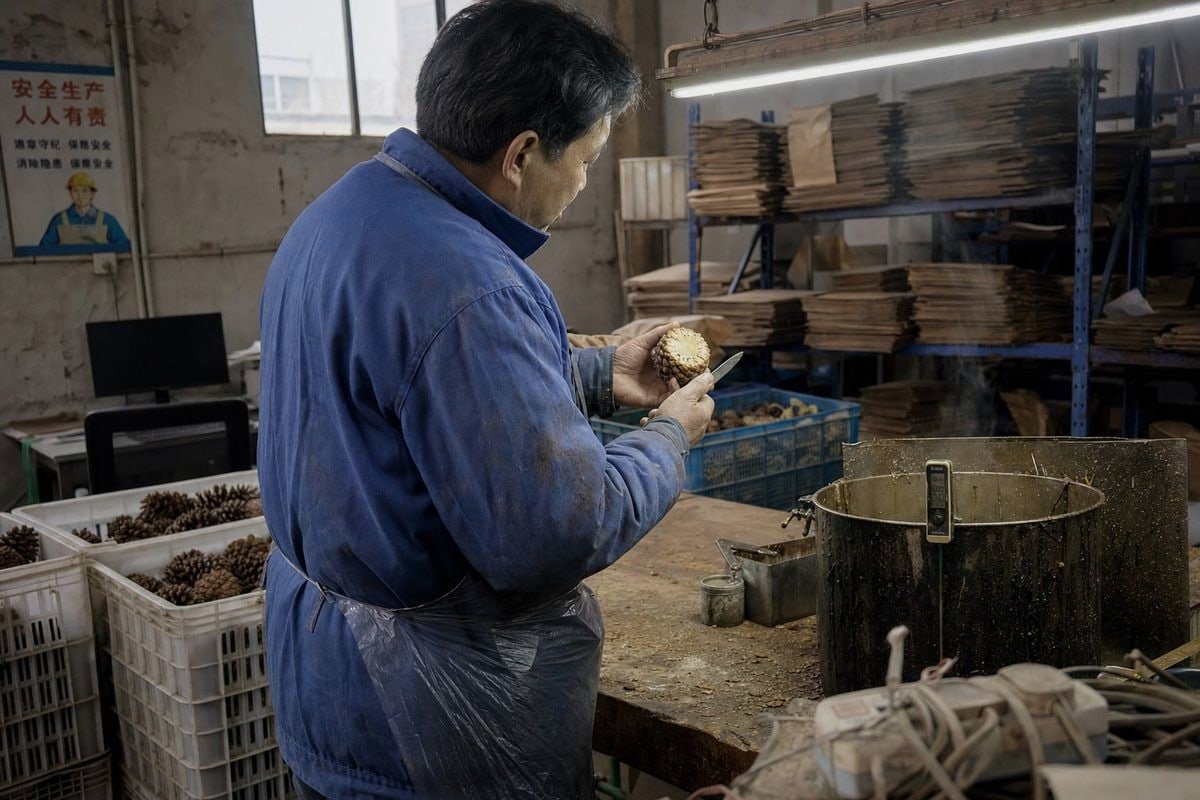
Farbige Kiefernzapfen, die sich weigern zu leuchten, frustrieren Käufer und Endkunden gleichermaßen. Ich habe zurückgegebene Behälter wegen genau dieses Problems gesehen, und in unserer Produktionslinie haben wir gelernt, warum es passiert.
Gefärbte Kiefernzapfen entzünden sich langsam, da der chemische Einweichprozess Feuchtigkeit hinzufügt, Metallsalze die harzige Oberfläche bedecken und eine unvollständige Wachssättigung den Zapfen ohne leicht brennende Brennstoffschicht zurücklässt. Richtiges Trocknen, vollständige Wachsabdeckung und strenge Qualitätskontrolle stellen eine schnelle, zuverlässige Zündung wieder her.
Diese kurze Antwort deckt die Wissenschaft ab. Aber wenn Sie diese Produkte für den Einzelhandel beziehen, benötigen Sie mehr Details. Ich führe Sie durch jede Ursache und was Sie von Ihrem Lieferanten verlangen müssen.
Könnte eine schlechte Wachssättigung während der Herstellung dazu führen, dass meine Kiefernzapfen langsam entzündet werden?
Während einer Testphase vor Jahren schnitt unser Team eine Charge langsam brennender Zapfen auf. Das Wachs hatte nur die Schuppenspitzen bedeckt. Der Kern war nacktes, dichtes Holz.
Ja. Eine schlechte Wachssättigung ist die führende herstellungsbedingte Ursache für langsame Entzündung. Wachs dient als primäre Brennstoffschicht, die die Flamme über den Zapfen trägt. Wenn Wachs nur die äußeren Schuppenspitzen bedeckt, hat die Flamme nichts Nachhaltiges, wovon sie zehren kann, und stirbt, bevor das Holz Feuer fängt.

Hier ist das Kernproblem. Ein Kiefernzapfen ist für sich allein kein einfacher Brennstoff. Sein dichter Holzkern benötigt anhaltende Hitze, um die Zündtemperatur zu erreichen. Unbehandelte Zapfen kompensieren dies mit Koniferenharz 1, das verdampft und leicht verbrennt. Aber die Farbbehandlung ändert diese Gleichung. Wenn Metallsalze 2 wie Kupfersulfat 3 oder Strontiumchlorid in den Zapfen aufgenommen werden, können sie die Harzkanäle bedecken. Einige dieser Verbindungen haben sogar milde flammhemmende Eigenschaften. Borsäure 4, das in einigen Grünflammenformulierungen verwendet wird, wird in anderen Industrien buchstäblich als Flammschutzmittel verkauft.
Deshalb ist Wachs so wichtig. Die Wachsschicht ersetzt den Brennstoff, den die Farbchemie maskiert. Es schmilzt bei niedriger Temperatur, zieht entlang der Schuppen und hält eine Flamme lange genug, damit das darunter liegende Holz Feuer fängt.
Wo die Wachsanwendung schiefgeht
Nach unserer Erfahrung mit vollen Produktionslinien in Ningbo treten immer wieder drei Fehlerpunkte auf:
| Fehlerpunkt | 5–6 Monate | Auswirkung auf die Zündung |
|---|---|---|
| Tauchzeit zu kurz | Wachs bedeckt nur die Schuppenspitzen | Flamme lodert auf, erlischt dann in Sekunden |
| Wachstemperatur zu niedrig | Dicke, ungleichmäßige Oberflächenschicht | Wachs wirkt als Isolator, nicht als Brennstoff |
| Kein Vortrocknen vor dem Tauchen | Eingeschlossene Feuchtigkeit blockiert die Absorption | Dampftaschen ersticken frühe Flammen |
Ein richtig gesättigter Zapfen sollte eine Wachsdurchdringung zwischen den Schuppen aufweisen, nicht nur eine glänzende Hülle. Als wir unsere farbige Flammen-Kiefernkegel 5, entwickelten, standardisierten wir Tauchzeit, Wachstemperatur und Abwinkelung. Chargenkonstanz ist der Unterschied zwischen einer Neuheit, die in zehn Sekunden leuchtet, und einer, die ein Beschleunigungsmittel benötigt.
Bitten Sie Ihren Lieferanten um ein Querschnittsfoto eines geschnittenen Zapfens. Wenn er Ihnen kein Wachs im Inneren der Schuppenstruktur zeigen kann, wird die Verbrennungsrate Ihre Kunden enttäuschen.
Wie wirkt sich Feuchtigkeit aus Lagerung oder Versand auf die Brennleistung meiner farbigen Kiefernzapfen aus?
Ein Käufer in den Niederlanden fragte uns einmal, warum sein zweiter Container schlechter brannte als der erste. Die Antwort lag in seinem Lager: ein unbeheizter Raum durch einen feuchten Küstenwinter.
Feuchtigkeit ist der größte Nachbearbeitungs-Killer für die Brennleistung. Wasser muss verdunsten, bevor die Verbrennung beginnt, daher absorbieren feuchte Kegel Wärme, anstatt sich zu entzünden. Flammenfärbesalze sind ebenfalls hygroskopisch, was bedeutet, dass sie während der Lagerung und des Versands Feuchtigkeit aus der Luft ziehen und selbst ofengetrocknete Kegel wieder befeuchten.
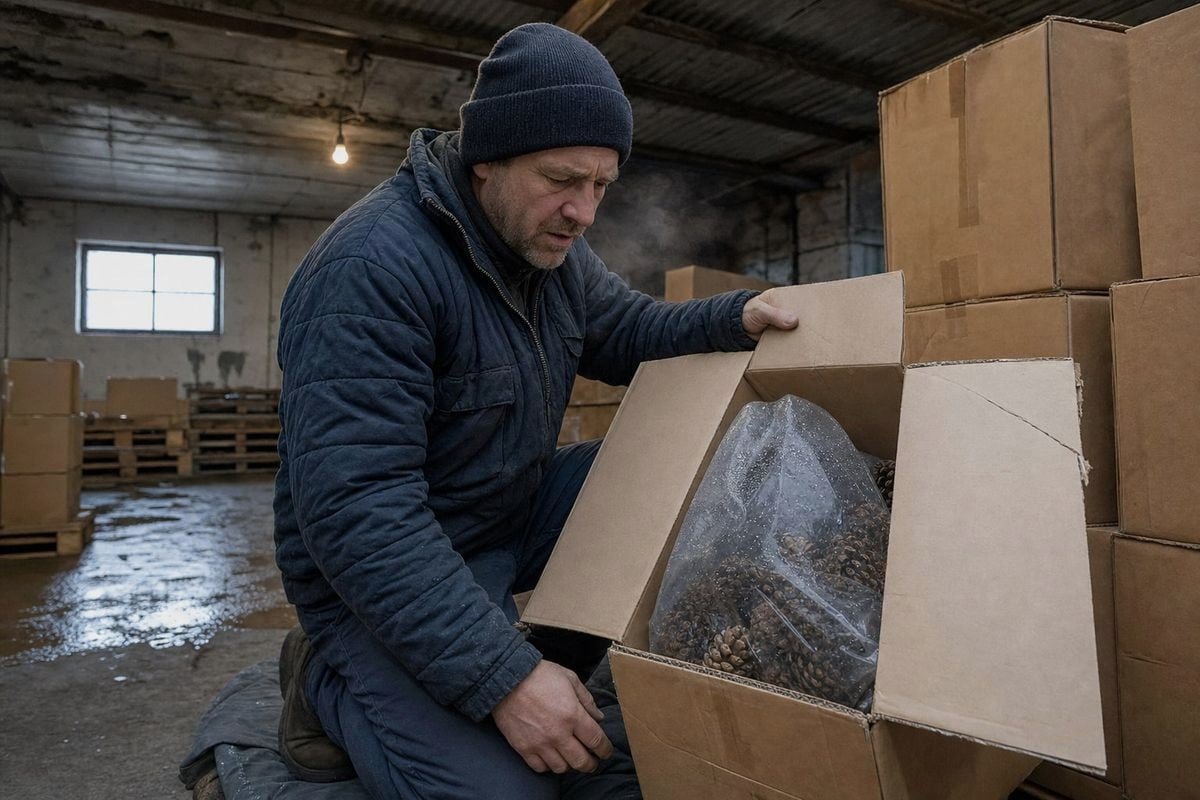
Der Feuchtigkeitsgehalt ist bei diesem Produkt doppelt wichtig. Erstens führt der chemische Einweichprozess selbst Wasser tief in den Zapfen ein. Die Zapfen werden typischerweise stunden- oder über Nacht eingeweicht, und der dichte Holzkern gibt dieses Wasser langsam ab. Einige kupferbasierte Behandlungen können ohne Zwangslufttrocknung Wochen zum vollständigen Trocknen benötigen. Wenn eine Fabrik diesen Schritt überstürzt, um ein Versanddatum einzuhalten, wird Restfeuchtigkeit in jedem Zapfen versendet.
Zweitens ziehen viele Metallsalze aktiv Wasser an. Dieses hygroskopische Verhalten bedeutet, dass ein Zapfen, der in der Fabrik perfekt getestet wurde, nach vier Wochen in einem feuchten Versandcontainer feucht ankommen kann. Es gibt auch eine strukturelle Auswirkung. Kiefernzapfenschuppen öffnen und schließen sich in Reaktion auf die Luftfeuchtigkeit – bei etwa 20 % Luftfeuchtigkeit kann selbst eine 1 %ige Änderung ein Schließen auslösen. Ein geschlossener Zapfen schränkt den Luftstrom zwischen seinen Schuppen ein und reduziert den Sauerstoffkontakt, den die Verbrennung benötigt.
Wie wir Feuchtigkeit in der gesamten Lieferkette kontrollieren
- Wir trocknen behandelte Zapfen vor dem Wachstauchen auf einen nachgewiesenen Feuchtigkeitszielwert, damit kein Wasser eingeschlossen wird.
- Die Wachsschicht selbst wirkt dann als Feuchtigkeitsbarriere und verlangsamt die Wiederaufnahme während des Transports.
- Wir verpacken in versiegelten, wiederverschließbaren Beuteln oder Gläsern mit Trockenmitteloptionen für feuchte Zielmärkte.
- Wir beraten Käufer zur Lagerung: Kartons von Betonböden fernhalten und von unbeheizten Küstenlagern.
Halten Sie auf Ihrer Seite der Kette die Einzelhandelskunden an, geöffnete Beutel wieder zu verschließen und drinnen zu lagern. Ein Zapfen, der an einem regnerischen Tag neben einem Kamin offen liegt, brennt langsamer als einer direkt aus der Tüte. Kleine Handhabungsdetails schützen die Zündleistung, für die Sie bezahlt haben.
Welche Qualitätskontrollstandards sollte ich von meinem Lieferanten verlangen, um eine gleichbleibende Zündung zu gewährleisten?
Die härteste Lektion aus unseren über 17 Jahren in diesem Geschäft: eine schöne Probe bedeutet nichts, wenn Charge fünfzig sich anders verhält. Konstanz wird im Prozess aufgebaut, nicht im Showroom.
Fordern Sie dokumentierte Chargentests für Zündzeitpunkt, Feuchtigkeitsgehalt und Brenndauer an; Wachssättigungsprüfungen im Querschnitt; versiegelte feuchtigkeitsdichte Verpackung; und Überprüfung durch Dritte, wie z. B. SGS- oder Intertek-Berichte. Ein zuverlässiger Lieferant sollte garantieren, dass die Massenproduktion der genehmigten Probe entspricht.
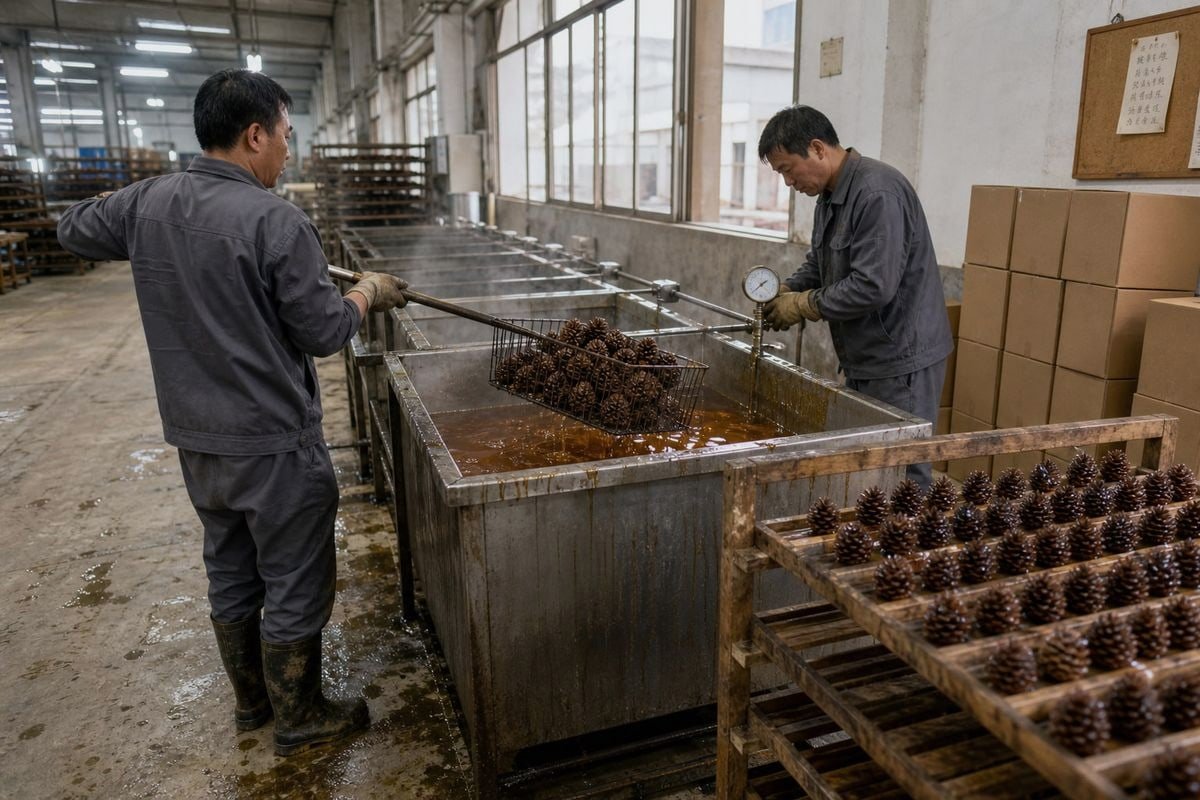
Farbige Kiefernzapfen befinden sich an einer unbequemen Schnittstelle. Sie sind teilweise dekoratives Handwerk, teilweise Brennstoffprodukt. Viele Lieferanten behandeln sie rein als Dekor, sodass ihre Qualitätskontrolle Farbe und Aussehen prüft, aber niemals die Zündung. So gelangen langsam brennende Produkte in die Regale. Sie müssen auf brennstofftaugliche Qualitätskontrolle bestehen, nicht auf handwerkliche.
Unten ist die Checkliste, die wir in unseren eigenen Linien anwenden, und sie ist ein fairer Maßstab, an dem Sie jeden Lieferanten messen können:
| Qualitätskontrollpunkt | Was zu testen ist | Akzeptabler Standard |
|---|---|---|
| Zündzeit | Zeit vom Streichholzkontakt bis zur anhaltenden Flamme | Konsistent bei beprobten Zapfen, kein Beschleuniger erforderlich |
| Feuchtigkeitsgehalt | Kernfeuchtigkeit vor dem Verpacken | Verifizierter Trockenwert für jede Charge, nicht stichprobenartig |
| Wachssättigung | Querschnittsprüfung | Wachs zwischen den Schuppen sichtbar, nicht nur an der Spitze |
| Flammenfarbe | Live-Brenntest pro Charge | Korrekter Farbton ohne dominierende gelbe Natriumwäsche |
| Chemische Sicherheit | Labore Berichte von Drittanbietern | SGS- oder Intertek-Tests 6, keine schädlichen Chemikalien |
| Verpackungssiegel | Prüfung der Barriereintegrität | Wiederverschließbarer, feuchtigkeitsbeständiger Verschluss |
Zwei davon verdienen eine Hervorhebung. Erstens, Live-Brenntests pro Charge. Die Salzkonzentration schwankt zwischen den Tauchbädern, und eine Charge, die zu stark mit Metallsalzen beladen ist, kann die effektive Zündtemperatur des gesamten Kegels erhöhen. Nur ein echter Brand erfasst das. Zweitens, Berichte von Drittanbietern. Eine Fabrik kann intern alles behaupten. Unabhängige SGS- oder Intertek-Tests, die wir standardmäßig anbieten, beweisen, dass die Formulierung sowohl sicher als auch konsistent ist.
Fragen Sie auch nach der Rückverfolgbarkeit. Jede Charge, die wir versenden, enthält Aufzeichnungen, die sie auf die Tauchkonzentration, die Trocknungszeit und die Wachsparameter zurückführen. Wenn ein Käufer jemals ein Problem meldet, können wir die genauen Produktionsvariablen innerhalb eines Tages zurückverfolgen. Diese Rückverfolgbarkeit ist das, was einen Produktionspartner von einem Handelsunternehmen unterscheidet, das gemischte Bestände weiterverkauft.
Arbeite ich mit einem Hersteller zusammen, dessen Formulierung und Zertifizierungen zuverlässige, schnell brennende Kiefernzapfen gewährleisten?
Es gibt einen Kompromiss, den wir bei jeder Formulierung abwägen: Farbintensität gegenüber Zündgeschwindigkeit. Mehr Salze hinzufügen und die Flamme wird lebendig – aber der Kegel wird schwerer zu entzünden. Balance ist alles.
Wahrscheinlich nicht, wenn Ihre Kegel ein Beschleunigungsmittel oder ein Bett aus glühenden Kohlen zum Entzünden benötigen. Ein fähiger Hersteller gleicht die Metallbeladung mit der Zündgeschwindigkeit aus, trocknet und wachsgetränkt jeden Kegel und untermauert dies mit ISO 9001, BSCI, CE und SGS/Intertek-Zertifizierung.

Die Formulierung ist der Ort, an dem langsam brennende Kegel normalerweise entstehen. Die Salze, die Farbe erzeugen – Kupferverbindungen für Grün und Blau, Strontiumchlorid 7 für Rot – sind nicht brennbare Mineralien. Sie tragen keinen Brennstoff bei. Einige, wie Borsäure, können sogar die sauren Terpene im Nadelharz stabilisieren und den Flammpunkt der natürlichen flüchtigen Öle des Kegels effektiv erhöhen. Wenn die Tauchlösung trocknet, kann sie auch eine mikroskopische Mineralrinde bilden, die verhindert, dass Sauerstoff das darunter liegende Holz erreicht. Ein Formulierer, der nur die Farbintensität verfolgt, wird Salze anhäufen, bis der Kegel kaum noch brennt.
Hier ist ein häufiger Einwand, den ich von Käufern höre: farbige Kegel sind nur Dekoration, daher ist langsames Anzünden akzeptabel, und Kunden sollten sie als Flammenverstärker behandeln, die auf ein bestehendes Feuer geworfen werden. Hier ist teilweise Wahrheit dran – dies sind Farbprodukte, keine Feuerstarter. Aber in unserer Exporterfahrung in den USA, Deutschland, Großbritannien und über 30 weiteren Märkten lesen Endkunden diese Nuance nicht. Sie zünden ein Streichholz an, der Kegel versagt, und der Einzelhändler erhält eine schlechte Bewertung. Daher lehnen wir diese Darstellung ab. Ein gut gemachter farbiger Kiefernkegel sollte mit einem einzigen Streichholz angezündet werden und immer noch starke Farbe liefern.
Fragen, die echte Fabriken von Wiederverkäufern trennen
- Können Sie ISO 9001- und BSCI-Fabrikaudits sowie CE-Kennzeichnung und SGS/Intertek-Testberichte vorlegen? Für unsere europäischen und nordamerikanischen Käufer ist dies eine harte Anforderung, kein Nice-to-have.
- Kontrollieren Sie die Formulierung intern? Eine Fabrik, die ihre eigenen Salzlösungen mischt, kann das Gleichgewicht zwischen Farbe und Zündung für Ihren Markt anpassen. Ein Wiederverkäufer kann das nicht.
- Stimmt die erste Probe mit der Massenproduktion überein? Fragen Sie, wie die Chargenkonsistenz durchgesetzt wird. Unsere Antwort sind dokumentierte Prozessparameter und Brenntests pro Charge, verfeinert über 17 Jahre.
- Können Sie Brenndauer, Verpackung und private Kennzeichnung anpassen? OEM/ODM-Tiefe – kundenspezifische Beutel, Gläser, Warnetiketten, Barcodes – signalisiert echte Fertigungskapazität.
Ein Lieferant, der alle vier Fragen selbstbewusst beantwortet, ist ein Partner. Einer, der bei einer davon ausweicht, ist ein Risiko, für das Sie auf der Stufe der Kundenbewertungen bezahlen werden.
Schlussfolgerung
Langsam brennende farbige Kiefernkegel sind auf Feuchtigkeit, Salzüberladung und schlechte Wachsimprägnierung zurückzuführen. Fordern Sie zertifizierte, chargengeprüfte Fertigung, und Ihre Kegel werden schnell brennen und sich gut verkaufen.
Fußnoten
Maßgebliche enzyklopädische Darstellung der chemischen Zusammensetzung und hohen Entflammbarkeit natürlicher Nadelharze. ↩︎
Maßgebliche Definition von Salzen als ionische Verbindungen, die die chemischen Eigenschaften von Metallsalzen abdeckt. ↩︎
Maßgebliche Datenbankeintragung für chemische Substanzen, die technische Eigenschaften und Sicherheitsdaten für Kupfersulfat liefert. ↩︎
Detaillierte chemische Informationen über Borsäure, einschließlich ihrer Rolle als Flammschutzmittel. ↩︎
Referenz für die chemischen Verbindungen, die zur Erzeugung spezifischer Farbeffekte in pyrotechnischen Produkten verwendet werden. ↩︎
Offizielle Website eines weltweit führenden Anbieters von Produktsicherheitsprüfungen und Qualitätszertifizierungsdiensten. ↩︎
Umfassendes chemisches Profil für Strontiumchlorid, das zur Erzeugung roter Flammen in Dekorationsprodukten verwendet wird. ↩︎



 English
  Spanish
  German
  French
  Arabic
  Portuguese
Diskutieren Sie mit