






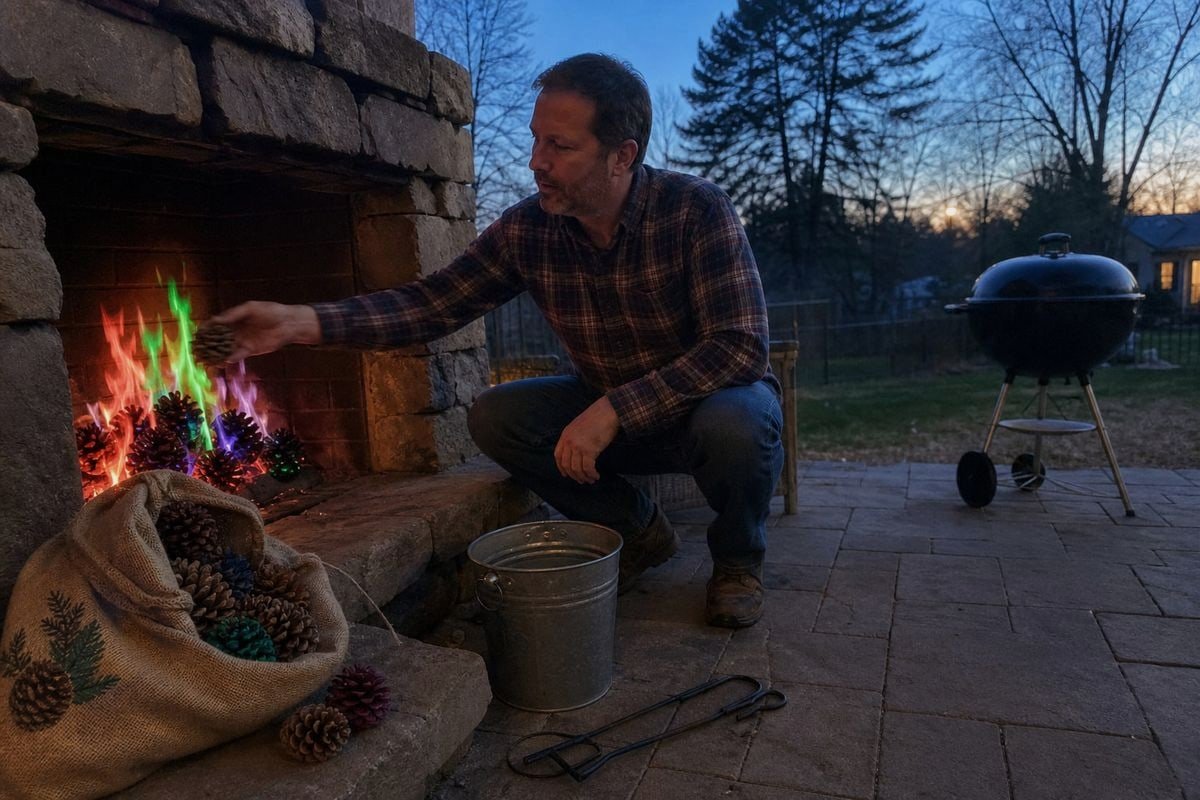
Gefärbte Kiefernzapfen sehen in einem Kamin magisch aus, und unser Produktionsteam in Ningbo hat Millionen davon verschickt. Dennoch stellen Käufer immer wieder eine riskante Frage: Können Kunden sie in einen Grill werfen?
Gefärbte Kiefernzapfen dürfen nicht in BBQ-Grills oder bei Lagerfeuern verwendet werden, da sie Metallsalze, Wachse und Farbstoffe enthalten, die beim Verbrennen giftige Dämpfe und Rückstände freisetzen. Diese Verbrennungsprodukte können Lebensmittel verunreinigen, Grillroste beschädigen und eine Gefahr durch Einatmen darstellen. Es handelt sich ausschließlich um Dekorationsprodukte.
Die Antwort klingt einfach, aber die Gründe dafür sind wichtig für jeden, der diese Produkte verkauft. Ich führe Sie durch die Chemie, die Kennzeichnungspflicht, die Zertifizierungen und die sicheren Alternativen.
Welche Chemikalien in farbflammenden Kiefernzapfen machen sie für Kochfeuer unsicher?
Während einer Formulierungsprüfung in unserem F&E-Büro in Liuyang vor Jahren beobachtete ich, wie unser Chemiker erklärte, warum unsere Farbpackungen niemals eine Lebensmittel-Brand-Behauptung tragen könnten. Die Lektion blieb mir im Gedächtnis und prägt heute jedes Etikett, das wir drucken.
Farbenzapfen werden mit Metallsalzen wie Kupfersulfat und Strontiumchlorid sowie Wachsen und Bindemitteln behandelt. Beim Verbrennen setzen diese Metallpartikel, giftige Dämpfe und Verbrennungsprodukte frei, die sich auf Lebensmitteln ablagern und Gefahren durch Verschlucken und Einatmen verursachen, die kein Kochfeuer jemals enthalten sollte.
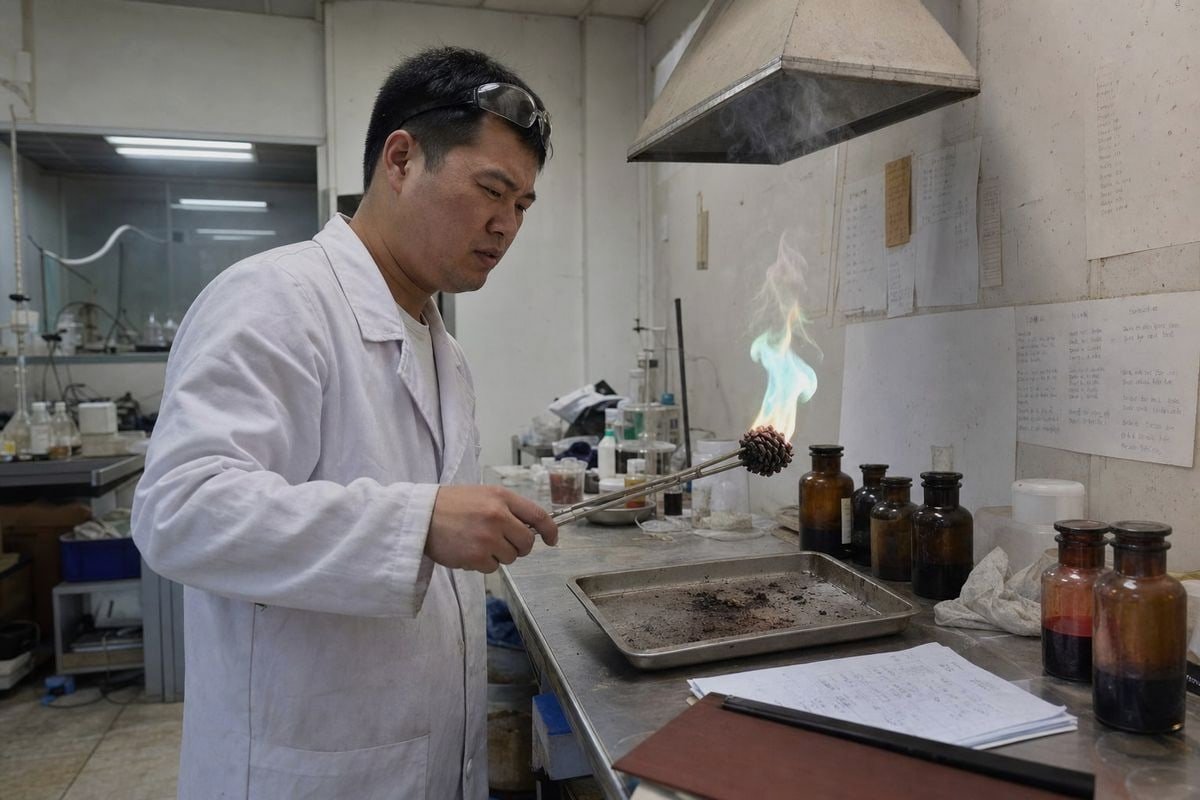
Die bunten Flammen, die die Menschen lieben, sind keine Illusion. Sie sind Chemie in Aktion. Chemische Behandlungen 1 auf den Schuppen der Kiefernzapfen aufgetragen enthalten Metallverbindungen 2 die beim Erhitzen spezifische Wellenlängen des Lichts emittieren. Kupferverbindungen erzeugen Blau und Grün. Strontium ergibt Rot. Kalium erzeugt Lila. Diese Metallsalze sind der gesamte Sinn des Produkts und auch das gesamte Problem für Lebensmittelbrände.
Was passiert mit diesen Metallen in einem Grill?
Standard-Grilltemperaturen können oft keine vollständige Verbrennung dieser Metallsalze erreichen. Anstatt sauber abzubrennen, werden die Metalle aerosolisiert. Diese winzigen Partikel steigen mit dem Rauch auf und setzen sich direkt auf der Oberfläche Ihres Steaks oder Gemüses ab. Das ist ein direkter Aufnahmeweg. Bei wiederholter Exposition werden einige dieser Verbindungen mit Schwermetallvergiftung 3 in Verbindung gebracht, weshalb kein verantwortungsbewusster Lieferant Lebensmittelkontaktansprüche zulässt.
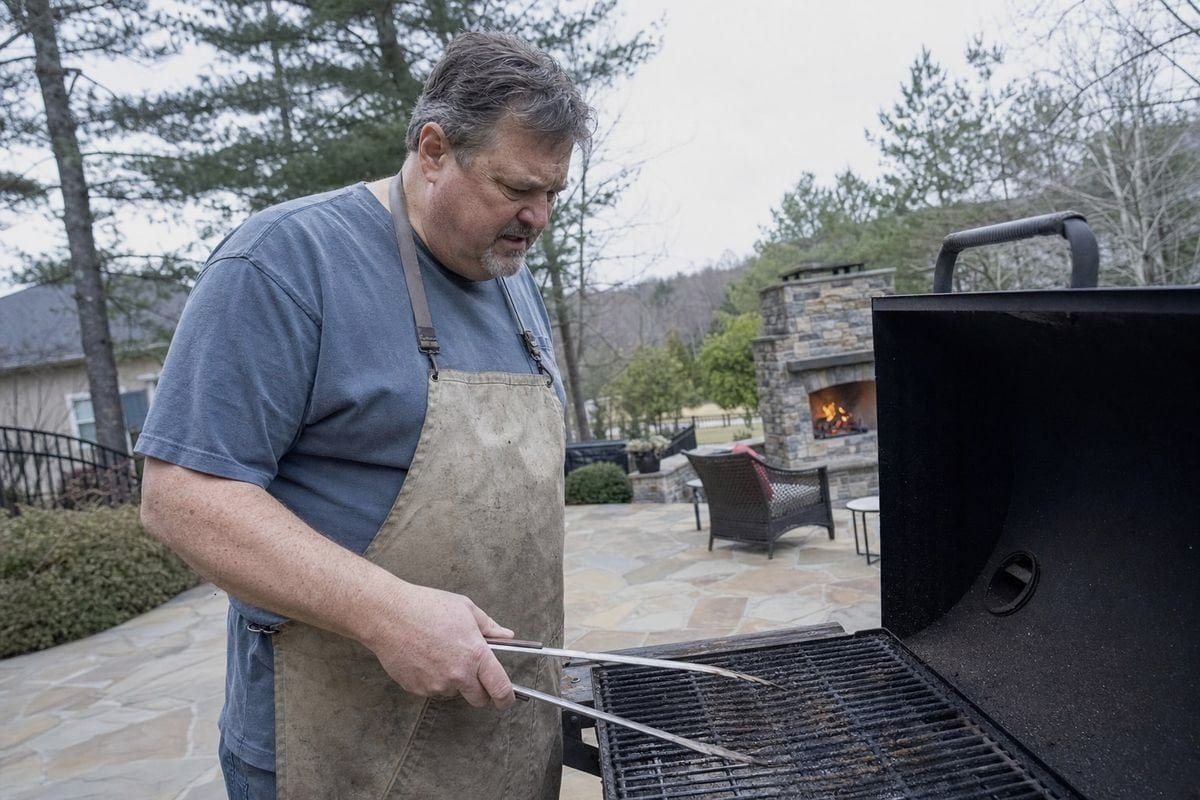
Es gibt eine zweite Risikoschicht. Einige preiswerte oder DIY-Farbstoffe verwenden Industriechemikalien, wie z. B. Wurzelvernichter, die sekundäre toxische Verunreinigungen enthalten, die in lebensmitteltauglichen Materialien niemals vorkommen. Und selbst der Kiefernzapfen selbst arbeitet gegen Sie. Kiefer ist ein harzreiches Holz. Sein Harz erzeugt dichten, stechenden Rauch 4 und einen bitteren, terpentinartigen Geschmack, plus kreosotartige Ablagerungen auf Rosten und Kochgeschirr.
| Komponente | Zweck im Produkt | Risiko bei einem Lebensmittelbrand |
|---|---|---|
| Kupfersulfat / Kupferchlorid | Blaue und grüne Flammen | Aerosolisierte Metalle auf Lebensmitteln; ätzend für Roste |
| Strontiumchlorid | Rote Flammen | Chloridrückstände; keine lebensmittelechte Verbrennung |
| Kaliumverbindungen | Lila Flammen | Chemischer Film bei niedrigen Grilltemperaturen |
| Wachsbeschichtungen und Bindemittel | Halten Farbstoff; verlängern die Brenndauer | Ruß, Rückstände, klebrige Ablagerungen auf Kochgeschirr |
| Natürliches Kiefernharz | Keine (inhärent) | Stechender Rauch, Nebengeschmäcker, Kreosotbildung |
Eine weitere praktische Gefahr: harzreiche Zapfen können platzen und knistern und chemikalienbeladene Glut in Richtung des Essens oder des Kochs spritzen. In einem offenen Grill ist das inakzeptabel.
Wie stelle ich sicher, dass meine Kunden verstehen, dass diese Produkte nur für dekorative Zwecke bestimmt sind?
Ein deutscher Händler schickte uns einmal eine Mustercharge zurück, weil der Warnhinweis für die Standards seiner Einzelhandelskette zu klein war. Er hatte Recht, und wir haben unsere Etikettenvorlage innerhalb einer Woche überarbeitet. Klare Kommunikation ist in dieser Kategorie nicht optional.
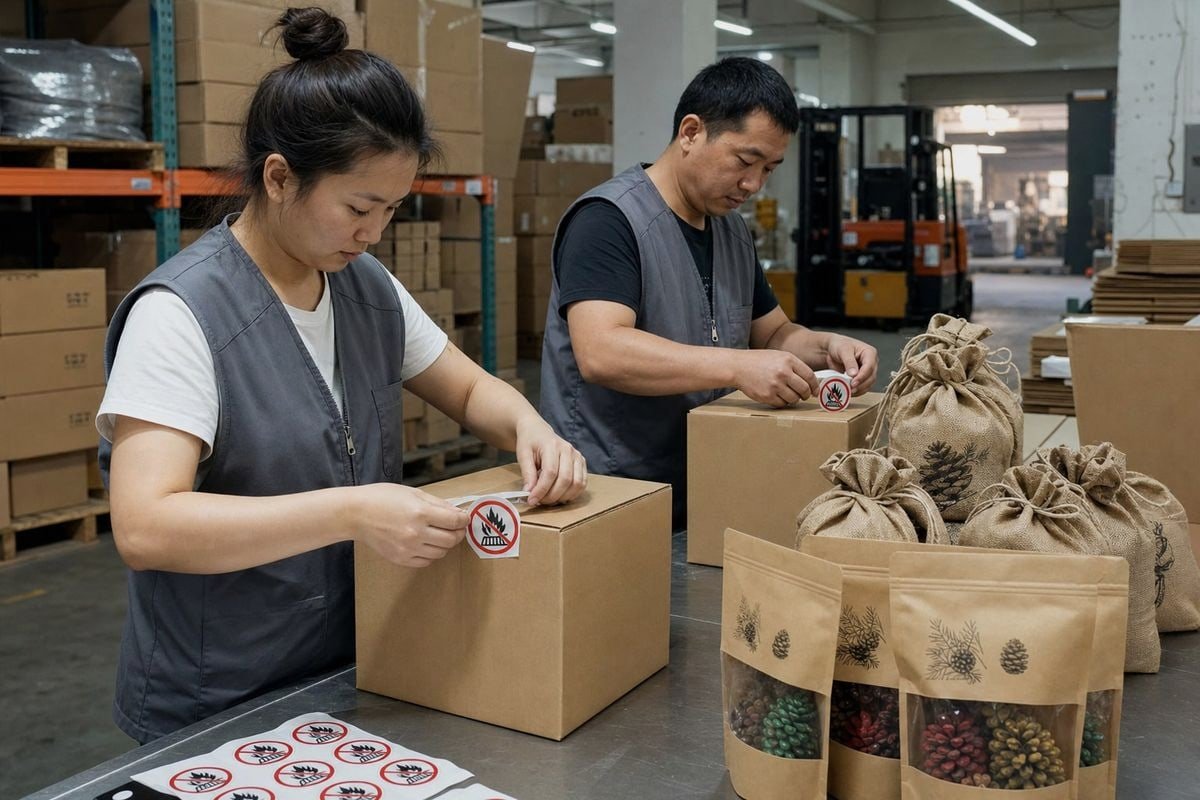
Machen Sie die rein dekorative Verwendung unmissverständlich, indem Sie Warnhinweise "Nicht für Kochfeuer" auf die Vorderseite der Verpackung drucken, Anwendungssymbole hinzufügen, Einlegekarten beifügen, das Verkaufspersonal schulen und die Einschränkung in Produktangeboten wiederholen. Mehrschichtige, wiederholte Botschaften an jedem Kundenkontaktpunkt verhindern gefährliche Fehlverwendung und schützen Ihre Marke.
Die meiste Fehlverwendung kommt nicht von rücksichtslosen Kunden. Sie kommt von unklarer Verpackung. Ein Käufer sieht einen natürlichen Kiefernzapfen, denkt "Feuerstarter" und geht davon aus, dass er überall dort hingehört, wo ein Feuer brennt. Ihre Aufgabe als Marke oder Händler ist es, diese Annahme zu brechen, bevor das Produkt jemals einen Grill erreicht. Bei unserer OEM-Arbeit in über 30 Ländern haben wir gelernt, dass eine einzige Warnzeile nie ausreicht. Sie brauchen Schichten.
Bauen Sie ein mehrschichtiges Warnsystem auf
- Front-of-Pack-Erklärung. Platzieren Sie "Nur für dekorative Feuer – nicht zum Kochen oder Grillen verwenden" dort, wo das Auge zuerst hinsieht, nicht versteckt in Kleingedrucktem auf der Rückseite.
- Piktogramm-Symbole. Ein durchgestrichenes Grill-Symbol überwindet Sprachbarrieren sofort. Das ist wichtig, wenn eine SKU in die USA, nach Frankreich und Polen versendet wird.
- Einlegekarte. Erklären Sie, wohin das Produkt gehört: Holzfeuer, Außenfeuerstellen und Lagerfeuer für Ambiente genutzt. Erklären Sie, wohin es nicht gehört: Grills, Smoker, Pizzaöfen oder jede Flamme, die Lebensmittel berührt.
- Digitale Wiederholung. Spiegeln Sie die gleichen Warnungen in Ihren Amazon-Angeboten, Website-Texten und Verkaufsregal-Aufstellern. Ansprüche wegen Lebensmittelkontamination können eine Marke über Nacht zerstören; Wiederholung ist eine günstige Versicherung.
- Schulung des Verkaufspersonals. Für Big-Box-Kanäle stellen Sie ein einseitiges Schulungsblatt zur Verfügung, damit die Mitarbeiter vor Ort die Frage "Kann ich es in meinem Grill verwenden?" richtig beantworten können.
Wir liefern kundenspezifische Warnetiketten, Barcodes und mehrsprachige Beilagen als Teil unseres Private-Label-Services, gerade weil die Rechtsteams unserer Käufer dies verlangen. Ein gut gewarntes Kunden ist ein wiederkehrender Kunde, keine Haftung.
Welche Zertifizierungen sollte ich anfordern, um zu bestätigen, dass die Produkte meines Lieferanten mit Farbflammen die Sicherheitsstandards erfüllen?
Bei Beschaffungsgesprächen kommt es ständig zu Kompromissen. Ein Käufer kann ein paar Cent pro Einheit bei einem nicht zertifizierten Lieferanten sparen oder etwas mehr für eine dokumentierte Konformität bezahlen. Nach über 17 Jahren Export von Feuerprodukten kann ich Ihnen sagen, welche Wahl überlebt Zollkontrolle 5 oder ein Produktrückruf.
Fordern Sie ISO 9001 für Qualitätsmanagement, BSCI für ethische Produktion, CE-Kennzeichnung für den EU-Marktzugang und SGS- oder Intertek-Prüfberichte von Drittanbietern an, die Schwermetallgrenzwerte und Emissionssicherheit bestätigen. Fordern Sie immer aktuelle, chargengebundene Dokumentationen an – keine abgelaufenen Zertifikate oder generischen Scans.
Farbige Kiefernzapfen werden häufig als Neuheitenartikel vermarktet, was es einigen Fabriken ermöglicht, die Sicherheitskennzeichnung und die Toxizitätstests zu umgehen, die für lebensmittelechte Holzkohle erforderlich sind. Diese regulatorische Grauzone ist genau der Grund, warum Ihre eigene Sorgfaltspflicht wichtig ist. Wenn Ihr Lieferant nicht zeigen kann, was in den chemischen Behandlungen enthalten ist, können Sie das Produkt nicht vor dem Händler verteidigen. Compliance-Team 6 oder eine Grenzbehörde.
Hier ist die Checkliste für die Zertifizierung, die wir neuen Käufern aushändigen, da sie dieselbe ist, die wir selbst pflegen:
| Zertifizierung / Bericht | Was es verifiziert | Warum es für Produkte mit Farbflammen wichtig ist |
|---|---|---|
| ISO 9001 | Qualitätsmanagementsystem | Gewährleistet Chargenkonsistenz; die erste Probe spiegelt die Massenproduktion wider. |
| BSCI | Soziale und ethische Compliance | Erforderlich für die meisten großen EU- und US-Einzelhandelsbeschaffungskanäle |
| CE-Kennzeichnung | EU-Sicherheitskonformität | Gesetzliche Anforderung für die Platzierung von Produkten auf dem europäischen Markt |
| SGS / Intertek Prüfberichte | Chemische Zusammensetzung, Schwermetallgehalt, Emissionen | Bestätigt, dass die Formulierungen verbotene Substanzen und giftige Dämpfe über die angegebenen Grenzen hinaus vermeiden. |
| Sicherheitsdatenblatt (SDB) | Offenlegung von Inhaltsstoffen und Handhabungsrichtlinien | Ermöglicht die korrekte Versandklassifizierung und die Überprüfung der Einzelhandelskonformität. |
Warnsignale, auf die Sie achten sollten
Seien Sie vorsichtig, wenn ein Lieferant nur eine Fotokopie eines Zertifikats ohne überprüfbare Nummer anbietet, sich weigert, die verwendeten Metallsalze zu nennen, oder behauptet, das Produkt sei "völlig ungiftig" ohne Testbericht. Ehrliche Lieferanten beschreiben ihre Produkte genau: umweltfreundlich im Rahmen der dekorativen Verwendung, getestet auf Emissionen, und klar gegen die Verwendung in Lebensmitteln gekennzeichnet. In unserer Fabrik stellen wir Testberichte zur Verfügung, die mit den Produktionschargen verknüpft sind, da ein Zertifikat von vor drei Jahren nichts über die Palette aussagt, die nächsten Monat in Ihrem Lager ankommt.
Welche Anzündprodukte kann ich stattdessen für lebensmittelechte Grillanwendungen beziehen?
Eine Käuferinteraktion hat unsere Produkt-Roadmap neu gestaltet: Ein US-amerikanischer Grillhändler liebte unsere farbigen Kiefernzapfen für seine Kaminlinie, benötigte aber eine separate, sauber brennende SKU für seinen Grillkatalog. Aus diesem Gespräch heraus haben wir sein Programm für mit Wachs getauchte Holzanzünder entwickelt.
Bezugsquelle für natürliche, mit Wachs getauchte Holzanzünder, unbehandeltes Hartholz-Anzündholz, Stückkohle und lebensmittelechte Brennstoffprodukte ohne Farbstoffe, Metallsalze oder Duftstoffe. Diese entzünden Holzkohle sauber, verbrennen, bevor das Kochen beginnt, und hinterlassen keine chemischen Rückstände, die Lebensmittel verunreinigen könnten.
Die gute Nachricht für Händler: Die Dekorationslinie und die Grilllinie sind zwei gesunde Produktkategorien. Sie müssen kein Produkt für beide Aufgaben verwenden. Sie benötigen die richtige SKU für jedes Regal.
Für Feuer zum Kochen gilt die einfache Regel. Der Brennstoff und der Anzünder dürfen nichts enthalten, was Sie nicht verdampfen möchten, um es auf das Abendessen zu übertragen. Das bedeutet keine Farbstoffe, keine Metallsalze, keine synthetischen Duftstoffe und keine unbekannten chemischen Behandlungen. Natürliches Wachs (Paraffin oder pflanzlich) in Kombination mit unbehandeltem Holz 7 ist der Industriestandard, da es zuverlässig entzündet und vollständig verbrennt, bevor das Essen darauf kommt.
| Produkt | Eignung für Feuer zum Kochen | Hinweise für Käufer |
|---|---|---|
| Natürlich mit Wachs getauchte Holzanzünder | Ausgezeichnet | Saubere Zündung; vollständig verbraucht vor dem Kochen; einfach zu kennzeichnendes Produkt |
| Unbehandeltes Hartholz-Anzündholz | Ausgezeichnet | Keine Zusatzstoffe; fügt keinen Beigeschmack hinzu |
| Stückholzkohle / Hartholzbriketts | Ausgezeichnet | Der eigentliche Kochbrennstoff; von getesteten Quellen kaufen |
| Einfache, trockene natürliche Kiefernzapfen | Nur Anzünder | Am Boden eines Holzkohlefeuers akzeptabel, wenn es vollständig zu Asche verbrannt ist, bevor Essen hinzugefügt wird; harziger Holzrauch darf niemals das Essen erreichen. |
| Farbige / duftende Kiefernzapfen | Niemals | Nur zur Dekoration; chemische Behandlungen machen sie in der Nähe von Lebensmitteln unsicher. |
Positionieren Sie beide Linien korrekt
In unserem eigenen Katalog ist die Aufteilung bewusst. Magic Fire Farbpackungen und Farbflammen-Kiefernzapfen bedienen den Markt für Kamin-, Lagerfeuer- und Feuerstellen-Ambiente. Mit Wachs getauchte Holzanzünder und Wachsfackeln bedienen Zünd- und Outdoor-Kochbedürfnisse. Beide können in Größe, Brenndauer und Verpackung unter Ihrer Marke angepasst werden. Der Verkauf nebeneinander mit klaren Etiketten verstärkt das Vertrauen: Kunden sehen, dass Sie den Unterschied kennen, und Einzelhändler sehen einen Lieferanten, der die Konformität ernst nimmt.
Schlussfolgerung
Farbige Kiefernzapfen gehören in Kamine, nicht in Kochfeuer. Ihre Metallsalze und ihr harziger Rauch verunreinigen Lebensmittel. Verkaufen Sie sie als Dekorationsartikel, zertifizieren Sie Ihre Lieferkette und lagern Sie saubere Feueranzünder zum Grillen.
Fußnoten
Korrigierter offizieller OSHA-Link für Gefahrenkommunikation und chemische Sicherheit. ↩︎
Wissenschaftliche Daten zu den chemischen Eigenschaften und der Toxizität von kupferbasierten Farbstoffen, die in Feuerprodukten verwendet werden. ↩︎
Bietet medizinischen Kontext zu den Risiken der Einnahme von aerosolisierten Metallpartikeln von behandelten Kiefernzapfen. ↩︎
EPA-Ressource, die die Gesundheitsgefahren im Zusammenhang mit Holzrauch und chemischer Verbrennung erklärt. ↩︎
Maßgebliche Anleitung zu Importbestimmungen und Inspektionen für Konsumgüter. ↩︎
Zuverlässiger, zugänglicher Überblick über internationale Qualitätsmanagementstandards. ↩︎
Informationen zu natürlichen Holzarten, die für die Verbrennung und das Kochen sicher sind. ↩︎



 English
  Spanish
  German
  French
  Arabic
  Portuguese
Diskutieren Sie mit