






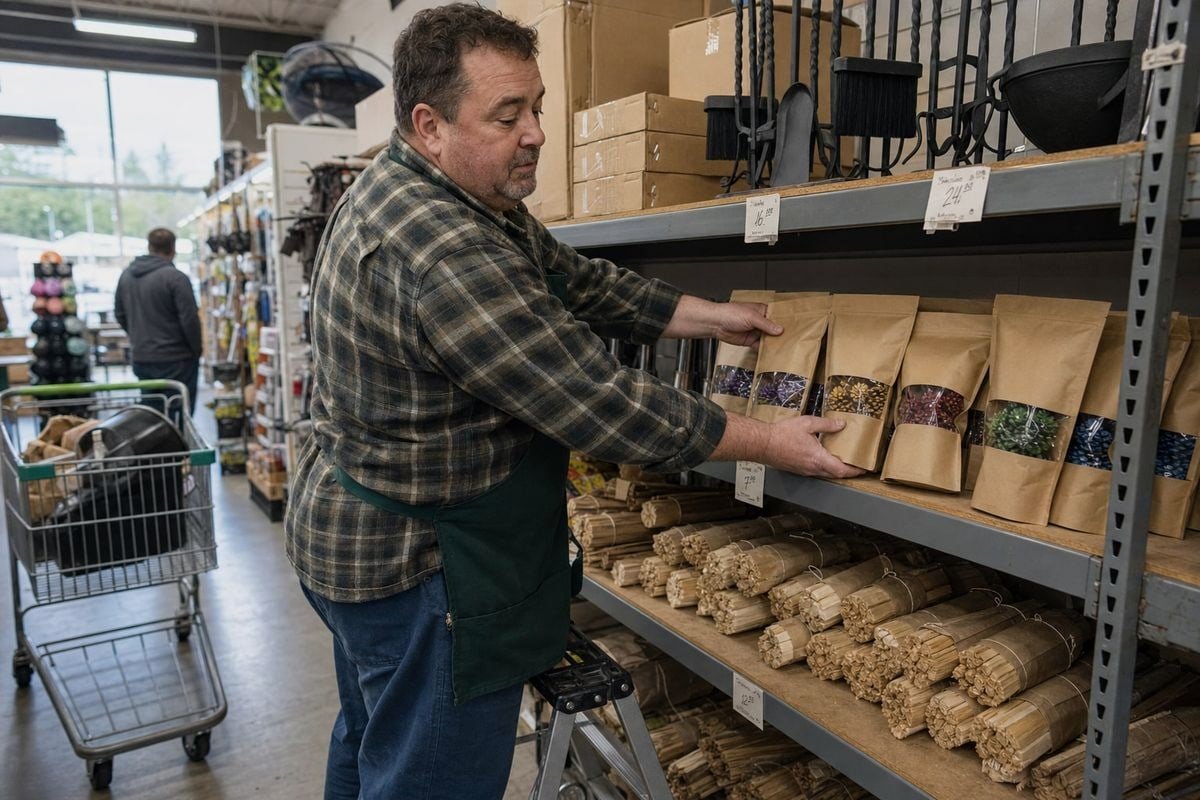
Farbige Kiefernzapfen verwirrten mich auch, als Käufer zum ersten Mal unsere Produktionslinie danach fragten Hausrezepte verwenden Kupfersulfat-Flammenfarbstoff oder Borax-Einweichungen. Diese funktionieren in einer Garage, aber sie erschweren die Einhaltung von Einzelhandelsvorschriften und Versanddeklarationen. Unsere Magic Fire-Formulierungen verwenden umweltfreundliche Materialien ohne schädliche Chemikalien, was die Zollabfertigung und die Akzeptanz im Einzelhandel reibungslos gestaltet. 1. Ihr Regal springt von billigen Feuerstartern zu teuren Feuerstellen – und diese Lücke lässt täglich Einnahmen entgehen.
Bunte Kiefernzapfen füllen die Lücke in der mittleren Preisklasse von $20–$40 bei Lagerfeuer-Accessoires und siedeln sich über handelsüblichen Feuerstartern, aber unter Feuerstellen-Hardware an. Sie monetarisieren die Zone für impulsive Geschenkkäufe und erzielen hohe Margen durch wahrgenommenen Neuheitswert – Regenbogenflammen – anstatt durch reinen Nutzen, den einfache Anzündhölzer nicht erzielen können.
Diese kurze Antwort deckt die Positionierung ab. Aber die eigentlichen Fragen drehen sich um Kosten, Marge, Eigenmarken und Probebestellungen BSCI 2. Lassen Sie mich jede einzelne mit echten Zahlen durchgehen.
Wie schneiden farbige Kiefernzapfen im Vergleich zu anderen Lagerfeuer-Accessoires, die ich bereits auf Lager habe, preislich ab?
Ein deutscher Händler schickte mir einmal seine gesamte Preisliste und fragte, wo unsere farbflammenden Kiefernzapfen landen würden SGS/Intertek 3. Wir haben es zusammen kartiert, und die Lücke war innerhalb von Minuten offensichtlich.
Bunte Kiefernzapfen werden pro Beutel für 20–40 € verkauft, etwa das Doppelte von einfachen Kiefernzapfen-Feuerstartern (10–20 €), aber weit unter den Kosten für Feuerstellen und Baumärkte (100 €+). Die angefallenen Großhandelskosten belaufen sich je nach Packungsgröße, Beschichtung und Verpackungsformat typischerweise auf 3–8 € pro Einheit.
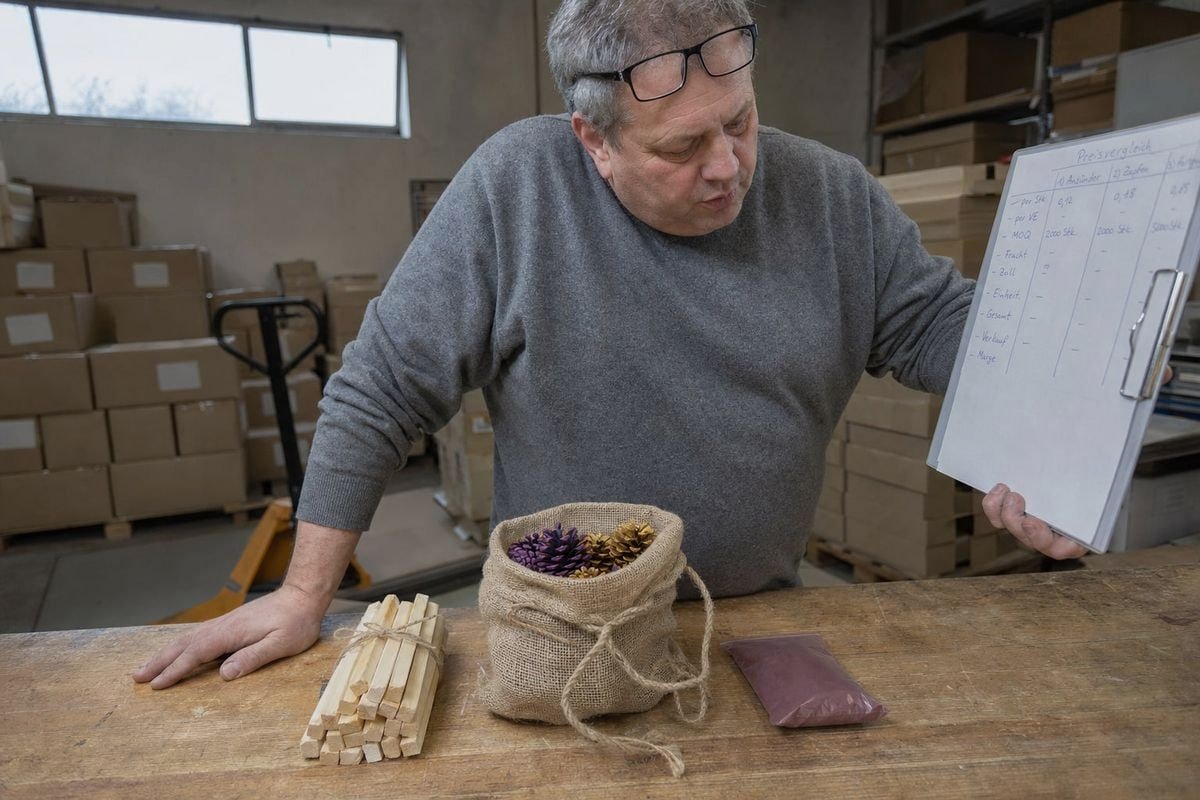
Die Leiter der Lagerfeuer-Accessoires ist leichter zu erkennen, wenn man sie nebeneinander legt. Die meisten Einzelhändler führen die unterste und die oberste Sprosse, lassen aber die Mitte leer. Diese Mitte ist genau dort, wo farbige Kiefernzapfen leben.
Die Preisleiter für Zubehör
| Produktkategorie | Typischer Einzelhandelspreis | Kaufgrund |
|---|---|---|
| Holzofenanzünder / Großhandel-Zunderholz | $8–$15 | Reiner Nutzen |
| Natürliche Feuerstarter (wachsgetauchte Kiefernzapfen, Holzrollen) | $10–$20 | Bequemlichkeit |
| Flammenfärbemittel 4 (Pulverpäckchen) | $12–$25 | Neuheit, geringer ästhetischer Wert |
| Farbige Kiefernzapfen (Tüten, Nachfüllpackungen) | $20–$40 | Neuheit + Schenken + Dekor |
| Gebündelte Lagerfeuer-Erlebnis-Kits | $40–$55 | Premium-Geschenk |
| Feuerstellen-Hardware und Werkzeugsets | $100+ | Langlebige Güter |
Beachten Sie etwas Wichtiges. Farbige Kiefernzapfen kosten mehr als Flammenfärbemittel, obwohl beides Regenbogenflammen erzeugt. Warum? Präsentation. Ein Kraftpapierbeutel oder eine Jutesack mit handveredelten Zapfen sieht auf Fotos wunderschön aus und wird als saisonale Kamin-Dekoration wahrgenommen. Ein Plastikpäckchen Pulver wirkt wie ein Chemieexperiment. Echte Marktdaten bestätigen dies: Einzelangebote auf Etsy liegen bei etwa $24,99, Nachfüllbeutel etablierter Kaminmarken kosten $29,95 und gebündelte Wochenend-Pakete mit Anzündhölzern erreichen $39,99.
Nun ein Einwand, den ich oft höre: Manche Verbraucher werden diese im Vergleich zu gewöhnlichen Feuerstartern als überteuert bezeichnen. Das stimmt – wenn der Käufer nur Zündung will. Aber dieser Käufer war nie Ihr Marge-Kunde. Der Käufer, der $30 bezahlt, zahlt für eine zweistündige Lichtshow bei einer Gartenparty, und pro Stunde Unterhaltung ist das billig. Unsere Exportdaten aus über 30 Ländern zeigen, dass diese Neuheits-Kategorie ihren Preis hält, selbst wenn die Rohstoff-Anzünder im Preis fallen.
Welche Marge kann ich erwarten, wenn ich farbige Kiefernzapfen zu meiner Produktlinie hinzufüge?
Die Margenberechnung ist das Erste, was ich mit jedem neuen B2B-Käufer durchgehe, da unsere Fabrik in Ningbo nach Packungsgewicht, Beschichtungsart und Verpackung kalkuliert – und jede Wahl verschiebt Ihren Aufspielraum.
Distributoren erzielen typischerweise 50–65% Bruttogewinnmargen auf gefärbte Kiefernzapfen, gegenüber 25–40% auf handelsübliche Feuerstarter. Eine Einheit, die im Großhandel $4–$7 kostet, unterstützt einen Einzelhandelspreis von $19.99–$29.99, und gebündelte oder saisonale Verpackungen können die Margen noch weiter erhöhen.
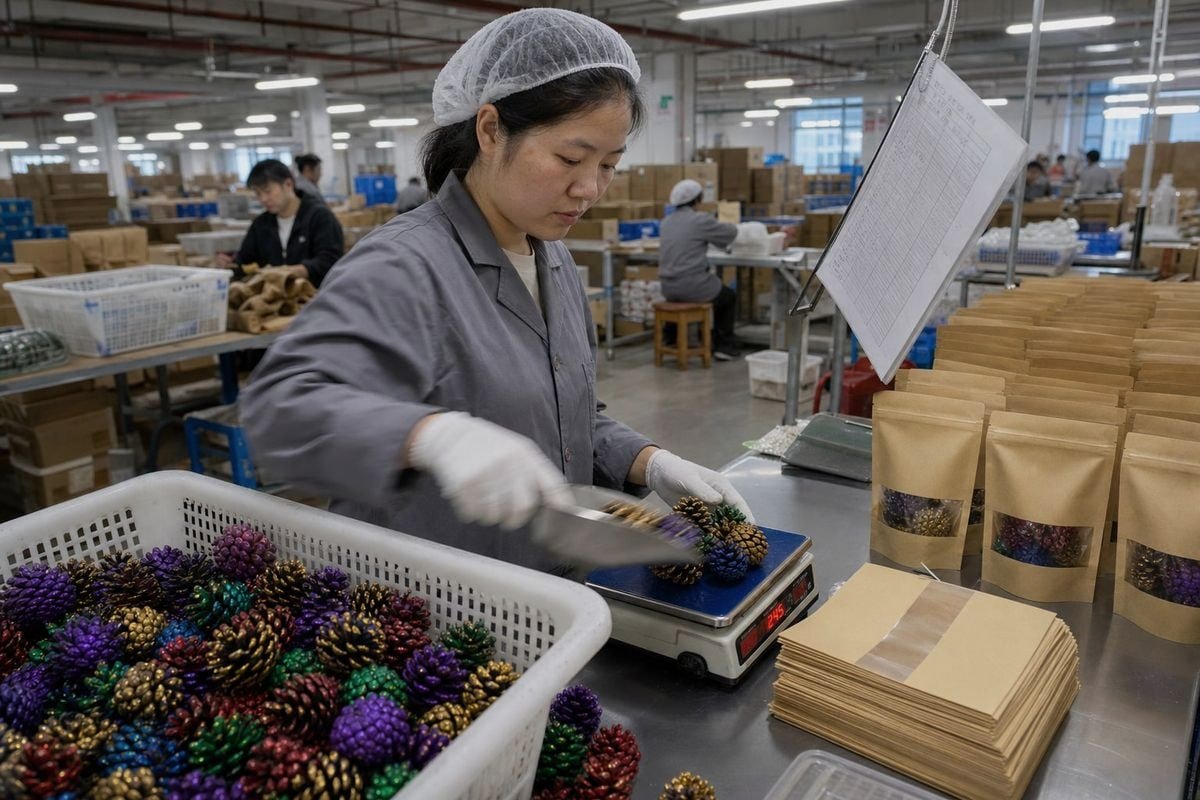
Die Margengeschichte hier ist strukturell, nicht zufällig. Farbige Kiefernzapfen sind Impulskauf 5 Artikel mit starkem Geschenkprofil, und diese beiden Merkmale lösen den Einzelhandelspreis vom Materialkostenpreis. Niemand vergleicht eine $24,99-Tüte mit Regenbogenflammen-Zapfen mit Großhandels-Anzündern nach Kosten pro Pfund.
Woher die Marge kommt
Hier ist eine vereinfachte Ansicht der Stückkosten, basierend auf typischen Exportangeboten, die wir erstellen:
| Kostenkomponente | Einfacher Feuerstarter | Farbige Kiefernzapfen (Markenbeutel) |
|---|---|---|
| Fabrik-Stückkosten | $1.20–$2.00 | $2.50–$4.50 |
| Fracht + Zölle (pro Einheit) | $0.40–$0.80 | $0.60–$1.20 |
| Landed Cost | ~$2.00–$2.80 | ~3,50–5,70 € |
| Typischer Einzelhandelspreis | $12.99 | 24,99–29,99 € |
| Bruttogewinnpotenzial | 25–40% Großhandelskette | 50–65% Großhandelskette |
Drei Faktoren schützen diese Marge im Laufe der Zeit. Erstens, Saisonalität: Die Nachfrage nach Feiertagen im 4. Quartal und die Campingsaison im Sommer bieten Ihnen zwei Spitzen pro Jahr, und farbige Zapfen dienen als Füllmaterial für Geschenkkörbe und als Dekoration für Kamine für Käufer, die niemals Campingausrüstung kaufen. Zweitens, niedrige Rücklaufquoten: Das Produkt funktioniert entweder dramatisch oder gar nicht, und eine gleichbleibende Chemie hält die Beschwerden nahe Null – hier zählt unsere Chargen-zu-Chargen-Qualitätskontrolle über 17 Jahre, denn eine schlechte Charge mit schwachen Farben zerstört die Bewertungen und damit die Marge. Drittens, sozialer Beweis: Regenbogenflammen erzeugen teilbare Inhalte, die statische Werkzeuge niemals erzeugen werden, was Ihre Marketingkosten pro Verkauf senkt.
Ein Spannungsverhältnis, das ehrlich gemanagt werden muss: die Jagd nach dem billigsten Lieferanten untergräbt genau die Qualitätskonsistenz, die das Premium aufrechterhält. Eine Ersparnis von $0.80 pro Einheit ist bedeutungslos, wenn die Farben während des Brennens verblassen.
Können private-label-farbige Kiefernzapfen mir helfen, einen mittleren Preispunkt anzubieten, ohne die Qualität zu beeinträchtigen?
Eine britische Kaminmarke wandte sich vor zwei Jahren mit genau diesem Dilemma an uns: Sie wollten ein Eigenmarkenprodukt zwischen ihrem Budget-Anzündholz und ihren Premium-Kamin- und Schornsteinzubehör, weigerten sich aber, auf Qualität zu setzen.
Ja. Private-Label-Kiefernzapfen in Farbe ermöglichen es Ihnen, einen mittleren Preis von 19,99–34,99 € unter Ihrer Marke zu besitzen. Mit einem zertifizierten OEM-Partner, der eine gleichbleibende Flammenchemie, kundenspezifische Verpackungen und Compliance-Dokumentation liefert, bleibt die Qualität einheitlich, während Ihre Marke die Neuheitsprämie erfasst.
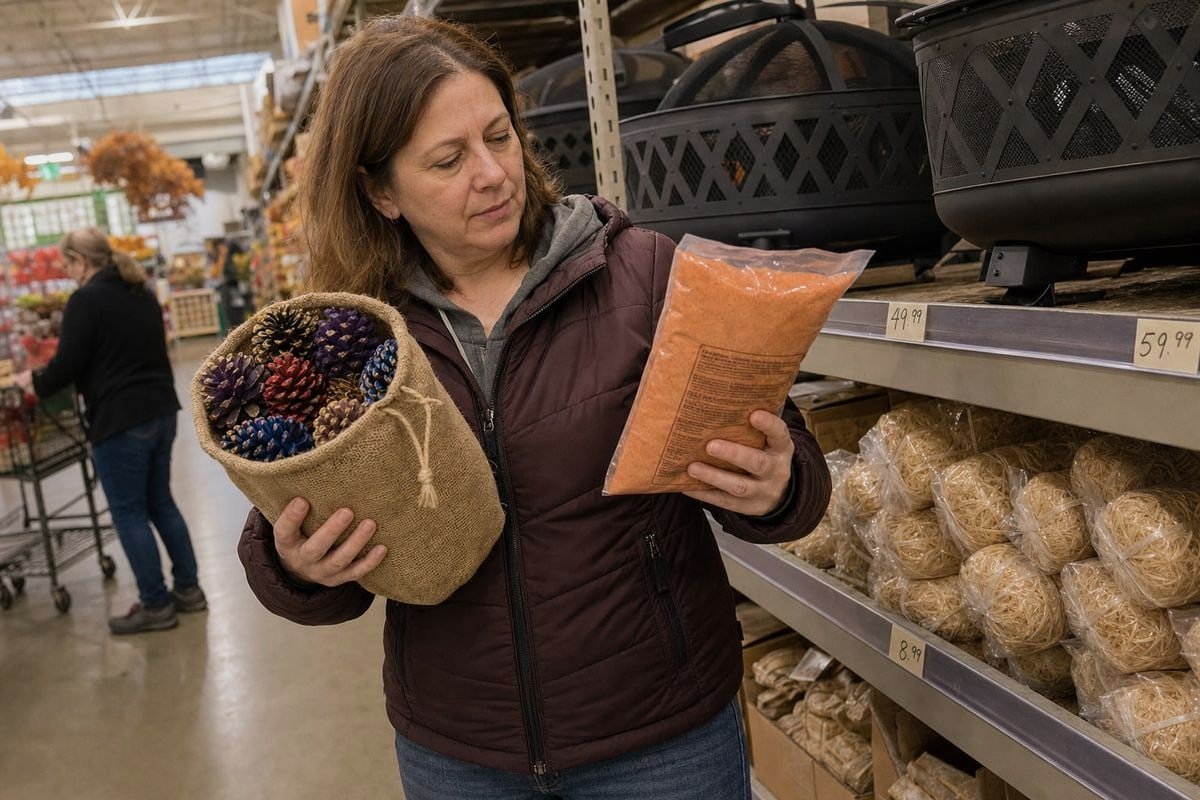
Private Labeling in dieser Kategorie gelingt oder scheitert an zwei Dingen: Verpackung, die den Preis rechtfertigt, und Chemie, die das Versprechen hält. Lassen Sie mich beides aufschlüsseln.
Verpackung ist die halbe Produkt
Die gleichen Zapfen verkaufen sich zu sehr unterschiedlichen Einzelhandelspreisen, je nach Präsentation. Ein loser Polybeutel wird als Ware betrachtet. Ein stehender Kraftbeutel mit Sichtfenster wird als handwerklich betrachtet. Ein Jutesack mit Kordelzug wird als Premium-Geschenk betrachtet. Unser One-Stop-OEM/ODM-Service deckt alle drei Formate ab, plus kundenspezifische Kartons, Display-Verpackungen, Warnhinweise und Barcodes – so dass Ihr Produkt verkaufsfertig ankommt, nicht nur versandfertig.
Qualität und Konformität sind nicht verhandelbar
Für US- und EU-Käufer ist die Konformität ein harter Faktor, kein nettes Extra. Wir halten ISO 9001 6, BSCI und CE-Zertifizierung mit SGS/Intertek-Prüfberichten, und jedes von uns verwendete Farbmittel ist umweltfreundlich und enthält keine schädlichen Chemikalien. Das ist wichtig, weil Ihre Kunden zunehmend synthetische Flammenfarbstoffe ablehnen und ein natürliches, holzbasiertes Produkt wünschen, dem sie im Umgang mit der Familie vertrauen.
Eine Vorsichtsmaßnahme, die wir immer deutlich aufdrucken: farbige Zapfen sind für Holz brennende Kamine 7, Lagerfeuer und Zubehör für Außenkamine – niemals für Gaskamine, wo Asche und Rückstände Komponenten verstopfen können. Ein verantwortungsvolles Private-Label-Programm bringt diese Warnung auf die Verpackung, und wir bauen sie für jeden Kunden in das Artwork ein.
Hier sehen Sie, wie die Präsentation Ihren erzielbaren Einzelhandelspreis verändert:
| Verpackungsformat | Wahrgenommene Stufe | Erzielbarer Einzelhandelspreis |
|---|---|---|
| Schlichter Polybeutel | Ware | 12,99–16,99 € |
| Kraft-wiederverschließbarer Beutel mit Fenster | Handwerklich für den Außenbereich | 19,99–27,99 € |
| Jutesack mit Juteschleife | Premium-Geschenk / Kamin | 29,99–39,99 € |
| Gebündeltes Set mit gewachsten Kiefernkegeln oder Feuerstartern | Kuratiertes Erlebnis | 39,99–54,99 € |
Lassen flexible MOQs mich farbige Kiefernzapfen zu diesem Preis testen, bevor ich mich zu einer Großbestellung verpflichte?
Die Lektion, die unsere MOQ-Richtlinie geprägt hat, kam von einem kanadischen Importeur, der vor Weihnachten eine Testpalette wollte. Wir sagten ja, er verkaufte sie in drei Wochen aus und bestellt seitdem per Container nach.
Ja. Flexible Mindestbestellmengen – typischerweise eine Probepalette oder eine geringe Startmenge anstelle eines vollen Containers – ermöglichen es Ihnen, farbige Kiefernzapfen zu Ihrem Zielverkaufspreis zu validieren, Verpackungsformate zu testen und den Abverkauf zu bestätigen, bevor Sie auf saisonale Großbestellungen skalieren.
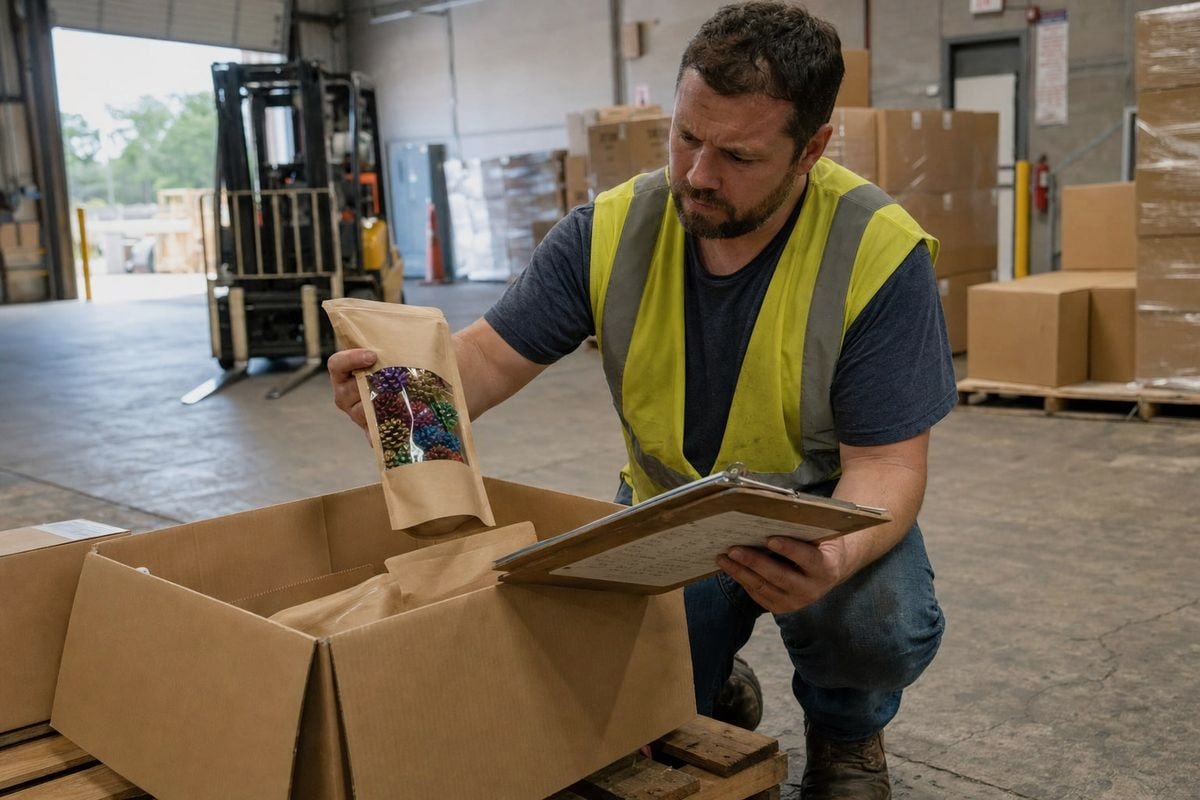
Das Testen eines neuartigen Produkts sollte niemals erfordern, einen ganzen Container zu riskieren. Die intelligente Vorgehensweise sieht so aus:
- Musterphase. Fordern Sie Muster jeder Farbstoffformel und jedes Verpackungsformats an. Brennen Sie sie selbst. Da unsere ersten Muster von denselben Produktionslinien wie Massenbestellungen stammen, ist das, was Sie testen, das, was Sie in großem Maßstab erhalten werden – dies ist der größte Vorteil der Zusammenarbeit mit einer echten Fabrik anstelle eines Handelsunternehmens.
- Testbestellung. Beginnen Sie mit einer geringen MOQ-Charge in ein oder zwei Verpackungsformaten. Platzieren Sie sie in der Nähe von Kassen, in Feiertagsdisplays oder neben Ihren bestehenden natürlichen Feuerstartern. Verfolgen Sie den Abverkauf wöchentlich.
- Preisgestaltungstest. Probieren Sie zwei Einzelhandelspreispunkte über Standorte oder Kanäle hinweg aus. Nach unserer Erfahrung im Export in die USA und nach Deutschland konvertiert das Band von $24.99–$29.99 normalerweise am besten für einen Standardbeutel.
- Skalierungsentscheidung. Wenn der Abverkauf Ihre Schwelle überschreitet, gehen Sie zu Großbestellungen über, die auf Ihre saisonalen Spitzen abgestimmt sind – buchen Sie den Lagerbestand für das 4. Quartal bis zum Spätsommer, den Lagerbestand für die Campingsaison bis zum frühen Frühling.
Der Testansatz reduziert auch das Risiko der Positionierung. Einige Käufer stellen fest, dass farbige Zapfen in ihrem Kanal besser als Füllmaterial für Geschenkkörbe funktionieren; andere finden, dass sie ein Lagerfeuer-Unterhaltungsdisplay dominieren. Eine kleine Erstbestellung sagt Ihnen, welche Geschichte zu Ihren Kunden passt, bevor Sie echtes Kapital binden. Und da wir die globale Logistik von Ningbo aus optimieren, werden selbst Testmengen mit realistischen Lieferzeiten versendet, anstatt hinter größeren Bestellungen zurückzubleiben.
Schlussfolgerung
Gefärbte Kiefernzapfen füllen Ihre leere $20–$40 Mittelklasse – margenstark, als Geschenk geeignet und über niedrige MOQs testbar. Arbeiten Sie mit einer zertifizierten Fabrik zusammen, und diese Lücke wird zu Gewinn.
Fußnoten
EU-offizielle Seite, die die Anforderungen an die CE-Kennzeichnung für die Exportkonformität erläutert. ↩︎
Offizielle Website von amfori BSCI, der Initiative für soziale Compliance, die im Artikel erwähnt wird. ↩︎
Links zur unabhängigen Prüf- und Zertifizierungsstelle, die für die Produktverifizierung zitiert wird. ↩︎
Hintergrund zur Chemie hinter farbigen Flammenprodukten, die als konkurrierende Kategorie diskutiert werden. ↩︎
Definiert das Konzept des Konsumverhaltens, das die Preis- und Margenstruktur des Produkts bestimmt. ↩︎
Maßgebliche .gov-Quelle des NIST mit einem umfassenden Überblick über die Qualitätsmanagementstandards nach ISO 9001. ↩︎
Allgemeine Referenz, die Holzöfen erklärt, relevant für den beabsichtigten Anwendungsfall des Produkts. ↩︎



 English
  Spanish
  German
  French
  Arabic
  Portuguese
Diskutieren Sie mit