







Verifying a supplier's production capacity for Magic Fire Powder orders sounds simple until a container arrives late. On our Ningbo lines, we've seen what inflated capacity claims cost buyers.
To verify a supplier's production capacity for Magic Fire Powder orders, request 6–12 months of production logs and shipment records, confirm in-house blending and packaging equipment, conduct a live video or on-site factory audit, check current utilization, and place a pilot order at 10–30% of your target volume.
Capacity is not a single number a salesperson quotes you. It is a chain of evidence. Below, I will walk you through how to collect that evidence step by step.
What documents should I request to confirm real production capacity before placing an order?
A few years back, a German distributor asked us for our brochure capacity figure. Instead, our team sent twelve months of production logs. That conversation shaped how I think buyers should vet every factory, including ours.
Request 6–12 months of production logs, recent shipment and export records, a complete machinery list, workforce numbers, quality certifications such as ISO 9001 and BSCI, SGS or Intertek test reports, MSDS documentation, and the business license showing the registered production address matches the actual factory site.

Documents are your first filter. A supplier who manufactures color-flame powder 1 at real scale will have paperwork that tells a consistent story. A trading company or an inflated factory will not. The trick is knowing which documents matter and how to cross-check them against each other.
Der Kern-Dokumentensatz
Here is the document package I recommend every purchasing manager request before wiring a deposit:
| Dokument | Was es beweist | Rotes Tuch, wenn fehlend |
|---|---|---|
| Gewerbeanmeldung | Legal entity and registered production address | Address does not match the factory location |
| 6–12 months of production logs | Sustained, real monthly output | Only one "best month" is shown |
| Shipment / export records 2 | Actual delivered volume, not theoretical output | Volumes far below claimed capacity |
| Machinery and equipment list | In-house blending, filling, and sealing capability | Key machines absent or leased |
| Workforce numbers | Enough labor to hit the stated throughput | Claimed output impossible for headcount |
| ISO 9001 3 / BSCI certificates | Working quality and social-compliance systems | Expired or unverifiable certificate numbers |
| SGS / Intertek Prüfberichte | Product safety and batch consistency | Reports for a different product or old formula |
| MSDS and hazard classification | Compliant handling and shipping of powder products | No documentation for destination-country customs |
How to cross-check the paperwork
Do not read documents in isolation. Compare them. If a supplier claims 500,000 sachets per month but export records show 40,000, ask why. If the machinery list shows two filling machines but the claimed output would require five, ask why. In our experience exporting to 30+ countries, honest factories can explain gaps instantly, because they live with those numbers every day. Evasive suppliers stall, change the subject, or promise to "check with the factory" — which usually means they are not the factory.
Also insist on records covering a full year. Seasonal demand for campfire and fireplace products swings hard. A supplier who only shows you their peak month is hiding their low months, and your order may land in one of them.
How can I tell if a supplier's factory can actually handle my order volume and deadlines?
There is a trade-off we weigh every quarter in Liuyang: accept every order during peak season, or protect lead times for committed partners. Factories that never say no should worry you.
Compare the supplier's claimed monthly capacity against their current order book, ask for their utilization rate, identify the bottleneck process and its daily throughput, and check whether their quoted lead time is mathematically consistent with your volume plus their existing workload.
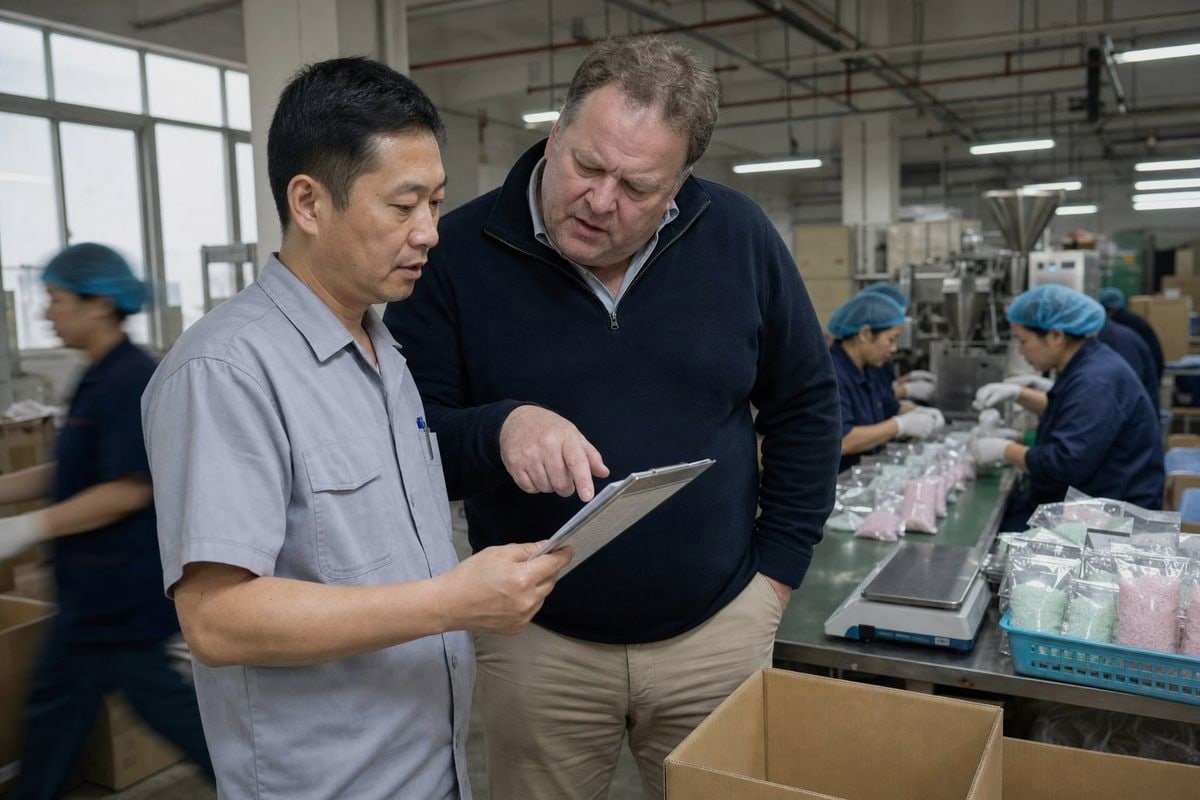
Stated capacity means the number printed in the brochure. Verified capacity means what the factory can actually deliver, this month, with your order added to what they already have. Those two numbers are rarely the same, and the gap between them is where late shipments are born.
Do the capacity math yourself
Start with a simple check. Ask three questions and see if the answers fit together:
- What is your maximum monthly output for products like mine?
- What is your current utilization rate?
- What lead time are you quoting for my volume?
Now test the logic. If they claim 400,000 sachets per month, admit they are running at 85% utilization, yet promise your 200,000-piece order in three weeks — the math fails. Available capacity is 60,000 sachets per month, not 200,000 in three weeks. Either the capacity claim is inflated, the utilization figure is false, or they plan to subcontract your order quietly.
Find the bottleneck
Every production line has one slowest step. For color-flame powder, it is often not the blending itself. In our own workflow, filling and sealing sachets, then packing them into printed display boxes, frequently sets the real pace. A credible supplier can name their bottleneck and quote its daily throughput 4 without hesitation. If they cannot identify their own bottleneck, they either do not run the factory or do not measure it — both are disqualifying for a deadline-critical order.
| Zu stellende Frage | Starke Antwort | Schwache Antwort |
|---|---|---|
| Which step limits your output? | Names one process with units per day | "We have no bottleneck" |
| Highest and lowest month last year? | Gives both figures and explains why | Only quotes the peak month |
| What happens if lines are full in peak season? | Describes prioritization or added shifts | "We always have capacity" |
| Can you commit this lead time in writing? | Yes, with penalty terms | Avoids written commitments |
Finally, validate with a pilot order 5 at 10–30% of your target volume. Real production pressure exposes what documents and promises cannot. Watch how they communicate when a batch runs behind — that behavior predicts your full-scale experience.
Should I request a virtual or in-person factory audit before signing a contract?
Last spring, a US camping brand joined a live video walk-through of our Ningbo facility before their first purchase order. Thirty minutes on camera answered questions three weeks of emails could not.
Yes — always audit before signing. Use a live video walk-through for smaller or trial orders, and commission an in-person or third-party audit (SGS, Bureau Veritas, TÜV) for large, recurring, or high-value orders, since documents alone can be polished or selectively presented.
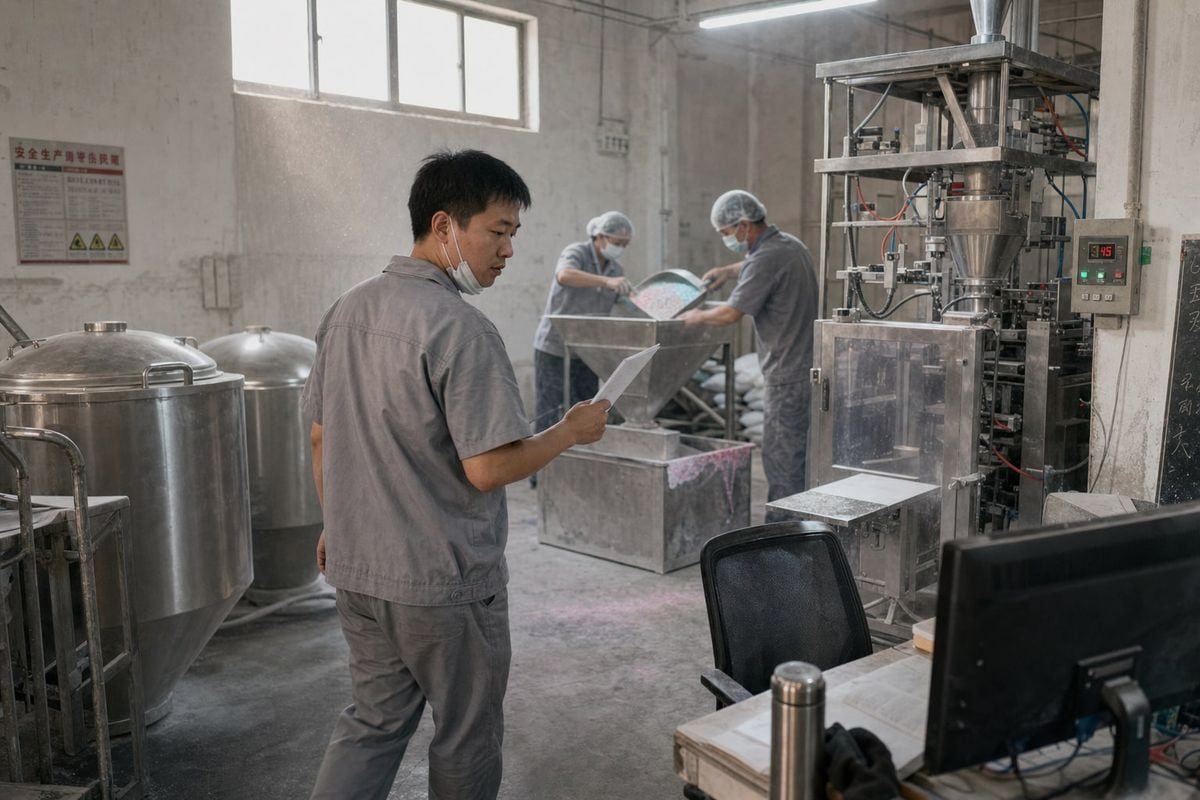
The right answer is risk-based, not one-size-fits-all. A $5,000 trial order does not justify flying to China. A $150,000 annual program absolutely justifies a third-party audit. Match the depth of verification to the money and reputation you are putting at risk.
Virtual audits: what to demand
A virtual audit only works if it is live and buyer-directed. Insist on these conditions:
- The walk-through happens on a live video call 6, never a pre-recorded file.
- You choose where the camera goes — production floor, blending area, filling lines, QC station, warehouse.
- You see raw material inventory and finished goods stock, with labels visible.
- You ask to view calibration records and batch QC sheets on camera.
- You observe actual workers on actual lines, not an empty showroom.
Pre-recorded videos are one of the oldest tricks in sourcing. Any factory can film someone else's line. A live call where you say "turn left, show me that machine" cannot be faked easily.
In-person and third-party audits: when they pay off
For significant spend, hire an inspection firm or visit yourself. Third-party auditors quantify what a video call only suggests: real headcount, equipment condition, process flow, safety practices for powder handling, and storage conditions. When we host BSCI and SGS audits 7 at our own site, auditors count machines, interview workers, and pull production records at random. That level of scrutiny is exactly what protects a buyer.
A balanced approach many of our long-term partners use: virtual audit plus pilot order for the first transaction, then a third-party audit before scaling to full program volume. Documents can lie. Live observation rarely does. Trial performance never does.
What red flags suggest a supplier is outsourcing production instead of manufacturing in-house?
Hard lesson from our early years: a competitor once quoted a client half our lead time, then quietly farmed the order out to three workshops. The client got three different powder colors in one shipment. That client found us afterward.
Key red flags include refusal to allow live floor access, a factory address that differs from the business license, no core blending or filling machinery on-site, vague answers about which processes are internal, inconsistent batch quality, and lead times that swing unpredictably between orders.

Outsourcing is not always evil — some factories legitimately subcontract minor steps like box printing. The danger is hidden outsourcing of critical stages: powder blending, filling, and sealing. For a color-flame product, those steps control batch consistency, moisture protection, and safety. When they leave the supplier's control, your quality leaves with them.
The tell-tale signs
| Rote Flagge | Nichtverwendung |
|---|---|
| No blending or filling machines visible on-site | Core production must be happening somewhere else |
| Factory address differs from license and export records | You may be dealing with a trading company front |
| Pre-recorded videos only, never live access | Live footage would expose the real (or absent) facility |
| Color intensity or granule size varies between batches | Multiple hidden workshops are producing your product |
| Cannot name the bottleneck process | Nobody who runs a real line lacks this answer |
| Lead times jump erratically order to order | They are waiting on subcontractors' availability |
| Sample quality far exceeds bulk quality | The sample came from a good workshop; the bulk did not |
| Reluctance to accept a pilot order | Small runs are unprofitable for middlemen who buy in bulk elsewhere |
Why this matters more for powder products
A combustible flame-coloring powder is not a phone case. Batch consistency determines whether flames burn vivid blue and green or muddy orange. Moisture control during filling determines shelf life. Contamination control determines safety. On our lines, we hold blending, filling, sealing, and labeling in-house precisely because handing any of those steps to a subcontractor breaks the chain of quality control. Ask your supplier to demonstrate — on camera, on their floor — each critical step for your product. If any step happens "at our partner facility," demand to audit that facility too, or walk away.
Schlussfolgerung
Never ask a supplier how much they can make. Ask them to prove what they have already made, show you how, and pass a pilot order. Documents, live observation, and trial performance together equal verified capacity.
Fußnoten
1. Background on the chemistry behind flame-coloring compounds referenced throughout the article. ↩︎
2. WTO trade facilitation guidance explains why export documentation verifies real shipped volumes. ↩︎
3. Official ISO standard page clarifying what ISO 9001 certification actually verifies. ↩︎
4. Explains the throughput concept underlying bottleneck analysis discussed in this section. ↩︎
5. Trade assurance programs support the trial-order verification strategy recommended here. ↩︎
6. Background concept on live video verification methods used for remote factory audits. ↩︎
7. SGS is a major third-party auditor cited as verifying factory conditions and compliance. ↩︎



 English
  Spanish
  German
  French
  Arabic
  Portuguese
Diskutieren Sie mit