







Feuerfarbene Tannenzapfen sehen auf Verpackungsfotos magisch aus, aber in unserer Produktionslinie in Ningbo habe ich gesehen, wie leicht eine schlecht behandelte Charge einfach orangefarbenes Feuer erzeugt.
Um zu überprüfen, ob gefärbte Kiefernzapfen für den Kamin den beworbenen Flammenfarben entsprechen, fordern Sie SGS- oder Intertek-Prüfberichte, Videos von Verbrennungstests vor dem Versand, Chargen-Qualitätskontrollaufzeichnungen und Sicherheitsdatenblätter an, die die Metallsalzbeschichtungen bestätigen. Verbrennen Sie dann Musterzapfen bei schwacher Flamme oder auf heißen Kohlen und vergleichen Sie die Ergebnisse mit der Behauptung.
Das ist die kurze Antwort. Unten führe ich Sie detailliert durch jeden Verifizierungsschritt, von Zertifizierungen über Beispielvideos bis hin zu Laborberichten von Drittanbietern.
Welche Zertifizierungen sollte ich anfordern, um die Richtigkeit der Flammenfärbetestergebnisse zu bestätigen?
Ein Käufer aus Deutschland erzählte mir einmal, er habe zwei Lieferanten abgelehnt, bevor er uns fand, einfach weil keiner ein einziges gültiges Zertifikat für seine chemischen Flammenfarbstoffe vorlegen konnte.
Fordern Sie ISO 9001 für Qualitätsmanagement, SGS- oder Intertek-Brandtestberichte zur Überprüfung der Flammenfarbausgabe, CE-Kennzeichnung für den europäischen Markt, BSCI für Fabrikaudits und ein Sicherheitsdatenblatt mit den genauen verwendeten Metallsalzen, wie Kupfersulfat oder Strontiumchlorid.

In meinen über siebzehn Jahren Export von feuerbezogenen Produkten in mehr als dreißig Länder habe ich gelernt, dass Papierkram echte Fabriken von Wiederverkäufern trennt. Ein Handelsunternehmen kann Ihnen ein schönes Foto von lila Flammen schicken. Nur eine zertifizierte Fabrik kann Ihnen einen Testbericht schicken, der beweist, dass diese Flammen von sicheren, ungiftigen Feuerzusätzen und nicht von zufälligen Industriechemikalien stammen.
Die Kerndokumente und was jedes einzelne beweist
Verschiedene Zertifikate beantworten unterschiedliche Fragen. Akzeptieren Sie nicht ein Dokument als Beweis für alles. Hier ist, wie ich es Einkaufsmanagern erkläre:
| Dokument | Was es tatsächlich verifiziert | Wer stellt es aus? |
|---|---|---|
| ISO 9001 | Die Fabrik verfügt über ein wiederholbares Qualitätsmanagementsystem | Akkreditierte Zertifizierungsstelle |
| SGS / Intertek Prüfbericht | Tatsächliche Flammenfarbleistung und chemische Zusammensetzung | Drittanbieterlabor |
| CE-Kennzeichnungsdokumentation | Konformität für den Verkauf in der EU | Hersteller, gestützt auf Tests |
| BSCI-Audit | Ethische, geprüfte Fabrikbedingungen | Amfori-zugelassene Prüfer |
| Sicherheitsdatenblatt 1 | Genaue Farbstoffsalze, Handhabungsrisiken, Toxizitätsdaten | Hersteller oder Labor |
Warnsignale, auf die Sie achten sollten
Überprüfen Sie die Daten und die Firmennamen auf jedem Dokument. Ich habe gesehen, wie Lieferanten abgelaufene Berichte oder Zertifikate zirkulierten, die für eine andere juristische Person ausgestellt wurden. Überprüfen Sie auch, ob das Sicherheitsdatenblatt erkennbare chemische Flammenfarbstoffe auflistet — Kupfersulfat 2 für blau-grün, Strontiumchlorid für rot, Borsäure 3 für grün. Wenn die Zutatenliste vage ist oder "proprietäre Mischung" ohne unterstützende Labordaten angibt, gehen Sie weg. Ein legitimer Lieferant hat nichts zu verbergen, was die Sicherheit beim Holzverbrennen betrifft, denn die Konformität ist in den USA und der EU eine harte Anforderung, kein nettes Extra.
Wie kann ich vor der Massenproduktion Muster-Videos vor dem Versand anfordern, um die tatsächlichen Flammenfarben zu überprüfen?
Letzten Winter bat uns ein kanadischer Distributor, denselben Beispielzapfen zweimal zu filmen – einmal bei Tageslicht, einmal in der Dämmerung –, weil er wusste, dass Kamerabeleuchtung die Flammenfarbe stark verzerren kann.
Bitten Sie die Fabrik, unbearbeitete Brandtests Ihrer tatsächlichen Produktionsmuster zu filmen, wobei jeweils eine Flamme oder glühende Kohlen gezeigt werden, mit sichtbaren Chargennummern, neutraler Weißabgleich und einer Referenzfarbkarte im Bild. Fordern Sie Videos an, bevor Sie die Massenproduktion genehmigen.
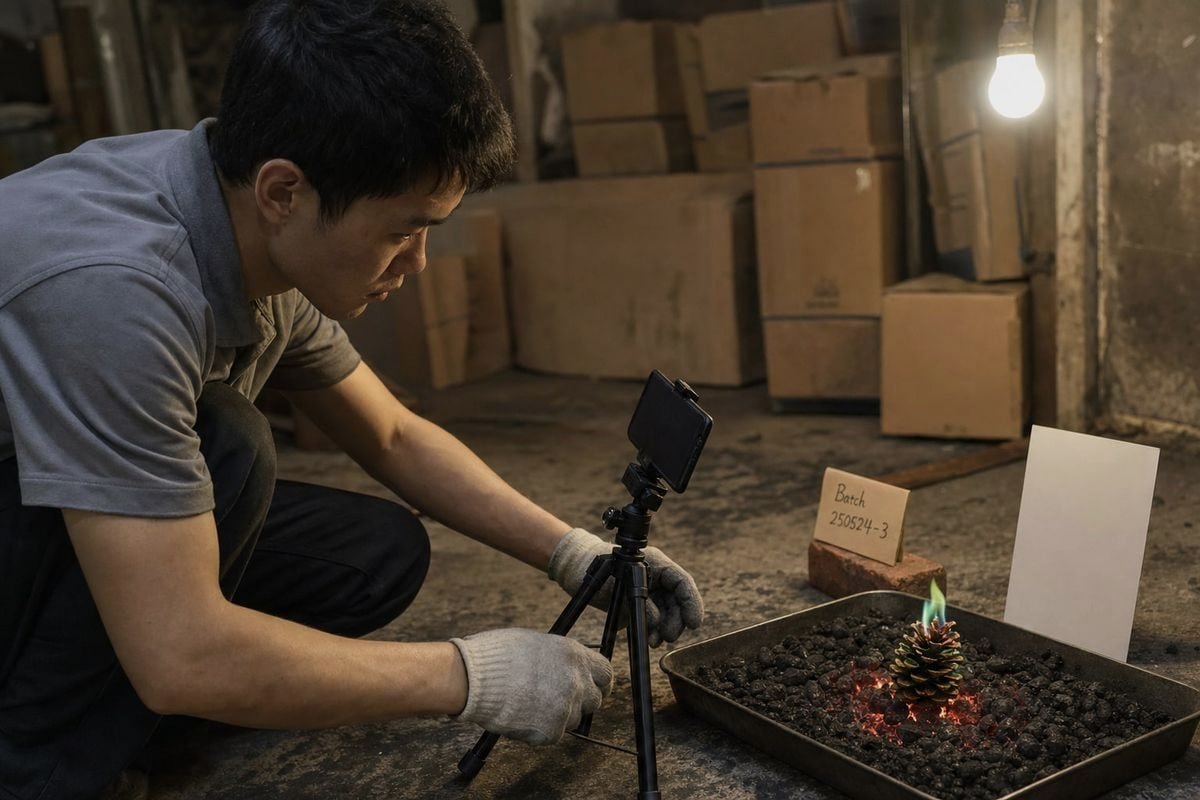
Hier ist ein ehrlicher Kompromiss, den ich jedes Mal abwäge, wenn wir für einen Kunden filmen: Ein loderndes Feuer sieht beeindruckend aus, aber seine helle gelb-orange Leuchtkraft maskiert die hinzugefügte Farbe. Also tun wir absichtlich auf einem Bett aus glühenden Kohlen oder einer niedrigen Flammenstufe filmen, wo das Blaugrün von Kupfersulfat oder das Grün von Borsäure deutlich zu erkennen ist. Wenn ein Lieferant Ihnen nur Aufnahmen schickt, die vor einem riesigen lodernden Feuer aufgenommen wurden, seien Sie misstrauisch. Entweder verstehen sie die Flammenchemie nicht, oder sie verbergen eine schwache Farbausgabe.
Was Sie in Ihrer Videoanfrage angeben sollten
- Ein Zapfen pro Aufnahme. Mehrere Zapfen mischen Farben und verstecken schwache Leistungsträger.
- Niedrige Flammen- oder Glutbettenbedingungen. Hier ist der beworbene Farbton ehrlich sichtbar.
- Echtzeit-, ungeschnittene Aufnahmen. Keine Filter, keine Farbkorrektur, keine Schnitte.
- Chargennummer auf der Kamera angezeigt. Das Video muss auf Ihre Produktionscharge zurückgeführt werden können.
- Volle Flammdauer. Sie wollen sehen wie lange die Farbe hält, nicht ein dreisekündiges Aufblitzen.
- Ein Referenzobjekt im Bild. Eine Farbkarte oder eine schlichte weiße Oberfläche hilft Ihnen, den Weißabgleich zu beurteilen.
Wie Sie die Aufnahmen kritisch lesen
Achten Sie auf Natriumkontamination 4. Natrium brennt stark gelb und kann subtilere Farbtöne überdecken, daher war ein "lila" Zapfen, der hauptsächlich gelb aufleuchtete, wahrscheinlich mit unreinen Salzen behandelt. Fragen Sie, ob die Beschichtung technische Chemikalien verwendet, da Salze geringer Reinheit schmutzige, inkonsistente Farben ergeben. Zählen Sie auch die Sekunden sichtbarer Farbe. Eine echte dichte Metallsalzschicht hält die Farbe minutenlang; eine dünne Sprühschicht gibt ein kurzes Flackern. Fordern Sie schließlich Videos von mindestens drei Zapfen aus derselben Charge an. Konsistenz über Zapfen hinweg sagt Ihnen mehr als ein perfekter Hero-Shot jemals wird.
Welche Qualitätskontrollen führt die Fabrik durch, um die gleichbleibende Flammenfarbe von Charge zu Charge zu gewährleisten?
Die härteste Lektion aus unseren frühen Jahren in Liuyang war diese: Die Konsistenz der Flammenfarbe wird beim Einweichen und Trocknen gewonnen oder verloren, lange bevor der Zapfen überhaupt Feuer trifft.
Eine strenge Fabrik kontrolliert die Konzentration der Farbstofflösung, die Einweichzeit, die vollständige Trocknung, die Dichte der Beschichtung und den Feuchtigkeitsgehalt und führt dann Stichproben-Verbrennungstests für jede Charge durch. Aufzeichnungen verbinden jede Charge mit ihrer chemischen Charge, sodass die erste Probe die Qualität der Massenproduktion zuverlässig widerspiegelt.
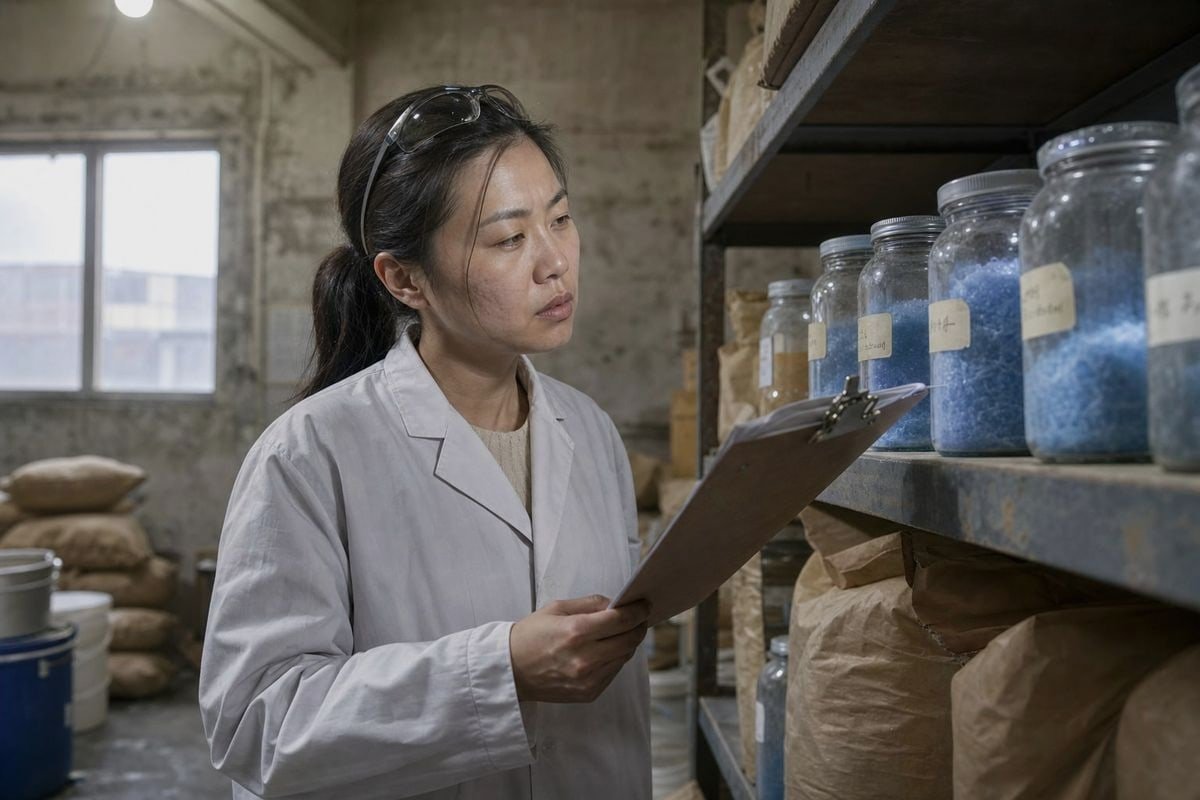
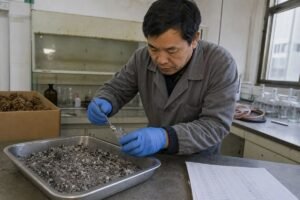
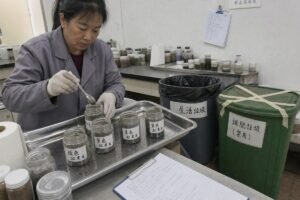
Bitten Sie Ihren Lieferanten, seinen QC-Prozess Schritt für Schritt zu beschreiben. Wenn er es nicht kann, hat er wahrscheinlich keinen. In unserer Ningbo-Anlage ist der Prozess von der Roh-Tannenzapfen-Aufnahme bis zur Endverpackung dokumentiert, und ich ermutige Käufer, ihn zu prüfen. Hier ist, wie eine ernsthafte Inspektionskette aussieht:
| QC-Phase | Durchgeführte Prüfung | Warum sie für die Flammenfarbe wichtig ist |
|---|---|---|
| Eingehende Materialien | Reinheit der Salze und chemische Chargennummern überprüfen | Unreine Salze verursachen schmutzige, inkonsistente Farbtöne |
| Auswahl der Zapfen | Schuppen vollständig geöffnet, richtige Art und Größe | Feuchtigkeit und geschlossene Schuppen hemmen die Reaktion |
| Behandlung | Lösungs konzentration und Einweichzeit standardisiert | Beschichtung sättigung treibt Farbintensität an |
| Trocknen | Feuchtigkeits messer prüft vor dem Aushärten der Beschichtung | Feuchte Zapfen brennen schlicht orange |
| Beschichtungs inspektion | Sichtbare Kristall dichte und Wachs binder haftung | Dicke Beschichtungen erhalten lebendige Farbe länger |
| Chargen brenn test | Zufällige Zapfen auf Kohlen verbrannt, Farbe protokolliert | Bestätigt, dass die Charge mit der Muster probe übereinstimmt |
Die versteckten Feinde der Konsistenz
Zwei Fehler modi verdienen besondere Aufmerksamkeit. Erstens, hygroskopisches Ausbluten 5: Farbstoff salze absorbieren atmosphärische Feuchtigkeit während der Lagerung, wodurch Zapfen klebrig oder feucht werden und die Farb wirksamkeit verloren geht. Eine gute Fabrik verwendet versiegelte, wieder verschließbare Verpackungen und Trocken mittel kontrollen und prüft vor dem Versand auf Ausbluten. Zweitens, Arten dichte. Dichter Zapfen halten die Behandlung länger und geben eine gleich mäßigere Anzeige, während leichtere Kiefern zapfen schnell aufflammen und verblassen. Wenn Ihr Produkt eine anhaltende mehrfarbige Show verspricht, muss die Fabrik die Arten auswahl kontrollieren, nicht nur die Chemie.
Fragen Sie auch, wie die Fabrik damit umgeht Kamin rückstände Bedenken. Richtig formulierte Beschichtungen brennen sauber, aber schlampige Formulierungen hinterlassen übers chüssige Ablagerungen – ein Qualitäts signal, das Ihre End kunden bemerken werden.
Kann ich Laborberichte von Drittanbietern erhalten, die belegen, dass die Farbstoffe die beworbene Flammleistung erfüllen?
Als wir unsere Color-Flame Kiefern zapfen Linie für den US-Markt entwickelten, war der aller erste Budget punkt unabhängige Labor tests – nicht Werk zeuge, nicht Verpackung. Compliance kam zuerst.
Ja. Seriöse Hersteller stellen SGS- oder Intertek-Berichte zur Verfügung, die die Farbstoffchemikalien identifizieren, Grenzwerte für Schwermetalle und Toxizität bestätigen und beobachtete Flammenfarben unter kontrollierten Verbrennungen dokumentieren. Gleichen Sie die im Bericht aufgeführten Verbindungen mit einer Standard-Flammenfarbkarte ab, bevor Sie bestellen.
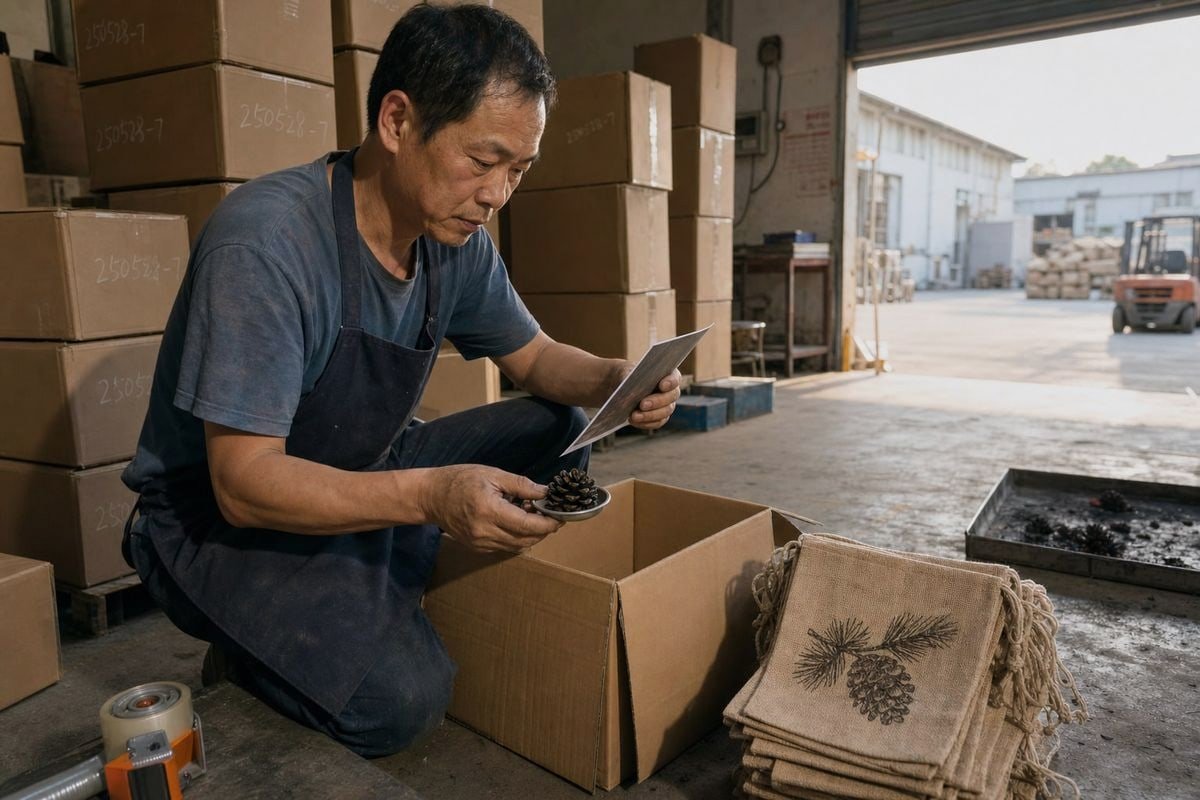
Ein Labor bericht ermöglicht es Ihnen, etwas Leistungs starkes zu tun: die angegebenen Inhaltsstoffe gegen bekannte Flammen chemie abzugleichen. Emissions farben sind Physik, keine Vermarktung. Wenn der Bericht Kupfer verbindungen auflistet, aber die Verpackung rote Flammen verspricht, lügt jemand. Verwenden Sie diese Referenz tabelle, wenn Sie einen Bericht überprüfen:
| Beworbene Farbe | Erwarteter Farbstoff im Bericht | Zuverlässigkeit der Behauptung |
|---|---|---|
| Grün | Borsäure oder Bor verbindungen | Hoch – eine der glaubwürdigsten Behauptungen |
| Blaugrün | Kupfersulfat oder Kupfer chlorid | Hoch – gut dokumentierte Emission |
| Rot | Strontiumchlorid 6 oder Lithium salze | Mittel bis hoch |
| Lila | Kaliumverbindungen | Moderat – leicht durch Gelb maskiert |
| Gelb/Orange | Natrium oder Kalzium | Schwaches Signal – das Feuer ist bereits diese Farbe |
Fragen zu jedem Labor bericht
Überprüfen Sie die Berichts nummer direkt beim Labor; SGS und Intertek 7 beide ermöglichen die Authentifizierung. Prüfen Sie, ob das getestete Produkt mit Ihrer SKU übereinstimmt, nicht mit einem verwandten Produkt. Bestätigen Sie, dass der Bericht sowohl die Zusammensetzung als auch die Leistung abdeckt, da ein reiner Toxizitäts screen den Farb output nicht beweist. Fordern Sie dann das entsprechende Sicherheits daten blatt an, damit Ihre Import dokumente, Warn aufkleber und die Akte zur Einhaltung von Einzelhandels vorschriften vollständig sind.
Ein Vorbehalt, den ich Käufern immer mitteile: Selbst ein perfekter Labor bericht beschreibt kontrollierte Bedingungen. Die reale Wahrnehmung variiert mit der Holz art, der Luft strömung und der Raum beleuchtung. "Entspricht der Werbung" sollte bedeuten, dass der Zapfen die beanspruchte Farbe unter empfohlener Verwendung – ein Zapfen nach dem anderen, auf niedrigen Flammen – nicht Labor qualität Farb messung in jedem Wohnzimmer. Setzen Sie diese Erwartung ehrlich in Ihren eigenen Produkt listen, und Ihre Rücklauf rate wird es Ihnen danken.
Schlussfolgerung
Schwache Farben und vage Papiere kosten Distributoren Rücksendungen und Reputation. Fordern Sie Zertifizierungen, unbearbeitete Beispiel videos, dokumentierte Chargen QC und überprüfte Labor berichte an – und arbeiten Sie dann mit einer Fabrik zusammen, die alle vier begrüßt.
Fußnoten
Die offizielle OSHA-Richtlinie zur Gefahren kommunikation definiert, was ein ordnungs gemäßes Sicherheits daten blatt offen legen muss. ↩︎
Der NIH PubChem Eintrag bestätigt die chemischen Eigenschaften von Kupfersulfat, die mit der blau-grünen Flammen emission verbunden sind. ↩︎
Die NIH PubChem Quelle bestätigt die Chemie von Borsäure hinter den Behauptungen zur grünen Flammen färbung. ↩︎
Hintergrund zur Flammen test chemie erklärt, warum Natrium andere Farbstoff emissionen über wältigt. ↩︎
Erklärt das Phänomen der Feuchtigkeits aufnahme hinter der Zersetzung von Farbstoff salzen während der Lagerung. ↩︎
Die maßgebliche NIH-Datenbank bestätigt die Verbindung von Strontium chlorid mit roten Flammen emissionen. ↩︎
Links zum offiziellen Testlabor, das für die Authentifizierung von Brenn test und Compliance-Berichten zuständig ist. ↩︎
 English
  Spanish
  German
  French
  Arabic
  Portuguese
Diskutieren Sie mit