







Das Testen von Magic Fire Pulver auf Klumpenbildung beunruhigt viele unserer Vertriebspartner Feuchtigkeitsdampfdurchlässigkeitsrate 1. Ein Lager voller verbackener Päckchen kann zu Lagerverlusten, Rückerstattungsansprüchen und enttäuschten Einzelhandelskunden führen, noch bevor die Saison überhaupt beginnt.
Um das Magic Fire-Pulver nach langer Lagerung auf Klumpenbildung zu testen, schütteln Sie den Beutel und lauschen Sie auf ein frei fließendes, sandartiges Geräusch, drücken Sie ihn vorsichtig, um harte Klumpen zu spüren, prüfen Sie auf Verfärbungen oder schlechten Geruch, und führen Sie dann einen kleinen Probelauf durch, um die Farbintensität zu bestätigen.
Klumpenbildung ist ein Symptom, keine Diagnose. Manche Klumpen zerfallen harmlos. Andere signalisieren eine echte Verschlechterung. Im Folgenden gehe ich jeden Testschritt, Verpackungslösungen, Sicherheitsfragen und Lagerbedingungen durch.
Wie kann ich feststellen, ob mein Magic Fire Pulver während der Lagerung Feuchtigkeit aufgenommen hat?
Ein deutscher Kaminvertrieb schickte uns einst Fotos von Päckchen, die sich nach zwei Sommern Lagerung "hart wie Kekse" anfühlten. Unser QC-Team führte ihn durch die gleiche Inspektionssequenz, die ich hier teile.
Prüfen Sie auf Feuchtigkeitsaufnahme, indem Sie den Beutel in der Nähe Ihres Ohrs schütteln, harte Knötchen fühlen, nach Aufblähungen oder äußerer Kristallisation suchen und Musterbeutel mit den Werksspezifikationen abwiegen. Ein dumpfes Geräusch, ein steifer Beutel oder ein blaugrüner Rückstand bestätigen, dass das Pulver Feuchtigkeit aufgenommen hat.
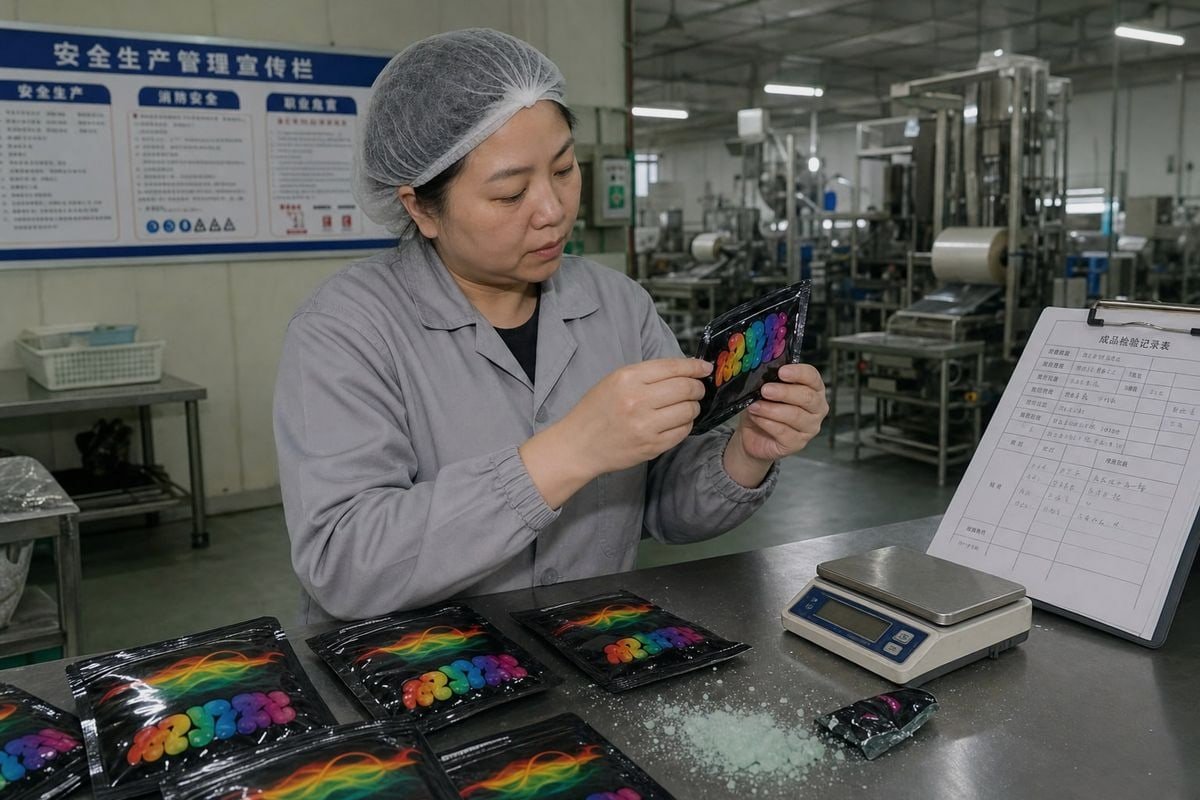
Die Metallsalzadditive, die Regenbogenflammeffekte erzeugen, haben hygroskopisch 2 Eigenschaften. Das bedeutet, dass sie auf natürliche Weise Wasserdampf aus der Umgebungsluft ziehen. Kupferbasierte Salze, die blaue und grüne Flammen erzeugen, sind am feuchtigkeitshungrigsten von allen. Wenn Ihre Produktlinie mehrere Flammenfarben enthält, testen Sie daher immer zuerst die blauen und grünen Varianten. Sie versagen am frühesten.
Die Fünf-Schritte-Inspektionssequenz
Hier ist die genaue Reihenfolge, die wir Käufern empfehlen, die alte Bestände erhalten:
| Schritt | Test | Was ein Bestehen ausmacht | Was ein Fehlschlag aussieht |
|---|---|---|---|
| 1 | Schütteln und hören | Lose, sandartige Rassel | Dumpfes Geräusch oder Stille |
| 2 | Drücken und fühlen | Weiche, körnige Textur im gesamten | Harte Knötchen oder eine feste Masse |
| 3 | Visuelle Aufblähungsprüfung | Flaches, straffes Folienpäckchen | Aufgeblähte, luftgefüllte Tasche |
| 4 | Prüfung auf äußere Rückstände | Saubere, trockene Verpackung | Ölige Flecken oder blau-grüne Kristallisation |
| 5 | Gewichtsvergleich | Entspricht den Werksspezifikationen | 1–2 Gramm schwerer als angegeben |
Der Gewichtstest überrascht die Leute, aber er funktioniert. Verwenden Sie eine Digitalwaage und vergleichen Sie gelagerte Päckchen mit dem aufgedruckten Nettogewicht. Selbst eine geringe Zunahme bestätigt verborgene Feuchtigkeitsaufnahme im Salzgefüge, da Wasser das Einzige ist, was in ein versiegeltes Päckchen eindringen kann.
Es gibt auch den Biegetest. Biegen Sie das Päckchen vorsichtig. Frisches Pulver biegt sich wie ein Sitzsack. Wenn das Päckchen widersteht und dann wie ein trockener Cracker bricht, haben sich die Salze deliquesziert und zu einem festen Block rekristallisiert. Dieser Block verteilt sich im Feuer nicht richtig.
Eine Warnung von unserer Produktionslinie: Nicht jede Klumpenbildung bedeutet einen Fehlschlag. Lose Cluster, die sich nach leichtem Schütteln wieder zu Granulat auflösen, sind normalerweise nur Oberflächenverbackungen durch Temperaturzyklen. Harte Massen, die das Schütteln überstehen, sind das eigentliche Problem.
Welche Verpackung sollte ich von meinem Lieferanten anfordern, um Verklumpungen bei langem Versand und Lagerung zu vermeiden?
Der Kompromiss, den wir bei jeder OEM-Bestellung abwägen, sind Verpackungskosten gegenüber Barriereleistung. Ein paar Cent pro Einheit für die Folienqualität können achtzehn Monate später einen ganzen Container Produkt retten.
Fordern Sie mehrschichtige Aluminiumfolienbeutel mit echten hermetischen Heißsiegeln, lebensmittelechte Trockenmittelpackungen in Versandkartons und wiederverschließbare äußere Beutel oder Gläser an. Geben Sie eine Wasserdampfdurchlässigkeitsrate in Ihrem Kaufvertrag an und bestätigen Sie die Barriereeigenschaften mit SGS- oder Intertek-Prüfberichten.

Standard-Verbraucherfolien sind über lange Zeiträume oft halbdurchlässig für Feuchtigkeit. Temperaturschwankungen erzeugen einen "Atemeffekt", der feuchte Luft durch mikroskopische Poren in billiger Folie zieht. Über ein Jahr Lagerung summiert sich diese langsame Wanderung zu sichtbarer Verbackung. Deshalb ist die Verpackungsspezifikation wichtiger als fast jeder andere Posten auf Ihrer Bestellung.
Verpackungsoptionen, geordnet nach Feuchtigkeitsschutz
In unserer Anlage in Ningbo bieten wir drei Hauptverpackungsformate für Magic Fire-Päckchen an, die jeweils eine andere Marktposition bedienen:
| Verpackungsformat | Feuchtigkeitsbarriere | Am besten für | Typische Haltbarkeit im Regal |
|---|---|---|---|
| Mehrschichtig Aluminiumfolie 3 Beutel | Ausgezeichnet | Lange Seereisen, feuchte Märkte | 3+ Jahre bei Versiegelung |
| Kunststoffdose mit Dichtungsdeckel | Sehr gut | Mehrweg-Einzelhandelsprodukte | 2–3 Jahre |
| Kraftpapiertüte mit Folienauskleidung und Reißverschluss | Gut | Öko-positionierte Campingmarken | 1–2 Jahre, abhängig vom Wiederverschluss |
Was Sie in Ihre Kaufvereinbarung aufnehmen sollten
Fragen Sie nicht nur nach "luftdichter Verpackung". Seien Sie spezifisch. Fordern Sie diese schriftlich an:
- Einzelne hermetische Versiegelung auf jedem Beutel, mit Dichtheitsprüfungen während der Produktion.
- Trockenmittelpackungen in jedem Versandkarton, nicht nur im Versandbehälter.
- Innere Poly-Liner für Kartons, die den Ozean überqueren, wo die Luftfeuchtigkeitsschwankungen im Container brutal sind.
- Chargencodes auf den Päckchen aufgedruckt, damit Sie jedes Feuchtigkeitsproblem einer bestimmten Produktionscharge zuordnen können.
- Dokumentation von Barriereprüfungen durch Dritte vor dem ersten Versand.
Nach unserer Erfahrung im Export in die USA, nach Deutschland und Australien reichen Käufer, die diese fünf Punkte spezifizieren, fast nie Feuchtigkeitsansprüche ein. Käufer, die generische Verpackungen akzeptieren, um einen Bruchteil eines Cents pro Einheit zu sparen, sind diejenigen, die uns zwei Saisons später Fotos von verbackenem Pulver schicken. Luftdichte Aufbewahrungsbehälter auf Einzelhandelsebene helfen auch, aber die Primärverpackung ist Ihre erste und beste Verteidigung.
Bietet verklumptes Farblöschpulver immer noch eine sichere Leistung und erzeugt konsistente Flammenfarben?
Lektionen aus unserem Brenntestlabor haben geprägt, wie ich diese Frage beantworte. Wir altern absichtlich Musterchargen in Feuchtekammern und verbrennen sie dann nebeneinander mit frischem Bestand, um genau zu sehen, wie sich die Leistung verändert.
Leicht verklumptes Pulver, das noch normal aussieht und riecht, brennt normalerweise sicher, aber Farbveränderungen können verzögert, fleckig oder weniger lebendig sein. Hart verkrustetes Pulver verteilt sich schlecht und leistet schlechtere Dienste. Verwerfen Sie jedes Pulver, das eine rötliche Verfärbung, einen üblen Geruch oder sichtbare Verunreinigungen aufweist, unabhängig vom Zustand der Verklumpung.

Sicherheit und Leistung sind zwei getrennte Fragen, und es ist hilfreich, sie getrennt zu halten. Mit Feuchtigkeit verbackenes Pulver aus stabilen Metallsalzadditiven ist nicht gefährlicher zu entzünden. Es ist einfach weniger wirksam. Der Wassergehalt verlangsamt die Entzündung, und verschmolzene Granulate können sich nicht gleichmäßig über das Feuer verteilen. Das Ergebnis ist eine verzögerte, fleckige Farbdarstellung anstelle der sanften Regenbogenflammeneffekte, die das Produkt verspricht.
Sicherer Pilotbrand
Wenn eine Charge die Sicht- und Geruchsprüfungen besteht, bestätigen Sie die Verbrennungsleistung mit einem Päckchen, bevor Sie den Rest zum Verkauf oder zur Verwendung freigeben:
- Wählen Sie ein etabliertes Außenfeuer mit einem festen Glutbett.
- Geben Sie ein einzelnes Päckchen aus der gelagerten Charge hinzu und befolgen Sie dabei genau die aufgedruckten Anweisungen.
- Messen Sie, wie lange es dauert, bis die Farbe im Vergleich zu einem frischen Päckchen erscheint.
- Achten Sie auf eine gleichmäßige Farbabdeckung im Gegensatz zu isolierten Blitzen.
- Notieren Sie, ob die Farbe ihre volle Leuchtkraft erreicht oder blass bleibt.
Frisches Pulver zeigt normalerweise schnell und gleichmäßig Farbe. Gealtertes, verklumptes Pulver verzögert sich oft und erzeugt dann ungleichmäßige Ausbrüche, wenn die verschmolzene Masse in der Hitze langsam zerfällt.
Die nicht verhandelbaren Entsorgungsregeln
Leistungsdrift ist ein Qualitätsproblem. Diese Anzeichen sind ein Entsorgungsproblem:
- Eine rötliche oder rostähnliche Tönung auf den Granulaten
- Ein saurer oder übler Geruch, der sich vom normalen schwachen chemischen Geruch des Pulvers unterscheidet
- Verklumpung so stark, dass sich Klumpen unter leichtem Fingerdruck nicht zerbröseln lassen
- Jegliches Ölaustreten, blaugrüne Kristallisation oder sichtbare Verunreinigung auf der Verpackung
Einige Kupferverbindungen, die in Farbfackelprodukten verwendet werden, ähnlich wie Kupfersulfat 4, verändern ihre Farbe sichtbar, wenn sie hydratisieren oder sich zersetzen. Diese sichtbare Veränderung ist Ihr Frühwarnsystem. Zerdrücken, mahlen oder erhitzen Sie verklumptes Pulver niemals, um es zu "rehabilitieren". Sanftes Schütteln und Rühren sind die einzigen physikalischen Eingriffe, die unser Labor unterstützt. Wenn die Charge fehlschlägt, ersetzen Sie sie. Die Kosten für einen Karton sind unerheblich im Vergleich zu einer Einzelhandelsbeschwerde oder einem Sicherheitsvorfall unter Ihrem Markennamen.
Welche Lagerbedingungen sollte ich in meinem Lager einhalten, um Magic Fire Pulver langfristig rieselfähig zu halten?
Ein niederländischer Importeur, den wir seit Jahren beliefern, hat seine saisonalen Abschreibungen auf fast Null reduziert, nachdem er eine Änderung vorgenommen hatte: Er verlagerte unsere Päckchen vom Lagerboden in der Nähe der Laderampe in eine klimastabile Innenzone.
Lagern Sie Magic Fire Pulver an einem kühlen, trockenen Ort bei stabilen Temperaturen, idealerweise unter 60 % relativer Luftfeuchtigkeit, fern von Außenwänden, Laderampen und direkter Sonneneinstrahlung. Halten Sie Kartons mit Trockenmittelpacks versiegelt, stellen Sie sie erhöht auf Betonböden und führen Sie monatliche Inspektionen durch.

Der Feind ist nicht nur die Luftfeuchtigkeit. Es ist die Veränderung der Luftfeuchtigkeit. Stabile Feuchtigkeit ist schlecht, aber wiederholte Schwankungen zwischen warmen, feuchten Tagen und kühlen Nächten pumpen aktiv Feuchtigkeit durch die Verpackung mittels Kondensation 5 und des Atem-Effekts. Deshalb ist der Standort in Ihrem Lager genauso wichtig wie die durchschnittlichen Bedingungen auf Ihrem Hygrometer.
Zielbedingungen im Überblick
| Faktor | Ziel | Warum es wichtig ist |
|---|---|---|
| Relative Luftfeuchtigkeit 6 | Unter 60°F, stabil | Begrenzt die Feuchtigkeitsaufnahme durch die Verpackung |
| Temperatur | Kühl und konstant | Verhindert Kondensationszyklen im Karton |
| Bodenkontakt | Paletten oder Regale, niemals roher Beton | Beton saugt Bodenfeuchtigkeit nach oben |
| Lichteinwirkung | Keine direkte Sonneneinstrahlung | Hitze-Spitzen beschleunigen den Atem-Effekt |
| Zustand des Kartons | Bis zum Verkauf versiegelt, Trockenmittelpackungen innen | Jedes Öffnen lässt feuchte Luft an die Päckchen gelangen |
Bauen Sie eine einfache Inspektionsroutine auf
Stellen Sie eine monatliche Erinnerung ein. Ziehen Sie ein Päckchen aus einem Musterkarton in jeder Lagerzone. Führen Sie den Schütteltest und einen schnellen Fließfähigkeitstest durch: Geben Sie eine Prise auf eine trockene Oberfläche und bestätigen Sie, dass die Granulate frei laufen, anstatt zusammenzukleben. Protokollieren Sie das Ergebnis. Diese zehnminütige Gewohnheit fängt Feuchtigkeitsprobleme Monate vor den Kunden ab und liefert Ihnen datierte Beweise, falls Sie jemals einen Anspruch mit Ihrem Lieferanten besprechen müssen.
Bei sehr langen Lagerzeiten vakuumieren einige unserer Großhandelskunden Hauptkartons oder verpacken langsam drehende Bestände in dicht schließende Behälter mit hoher Kapazität Silikagel 7. Trockenmittelpäckchen sind eine günstige Versicherung, aber sie sind eine Ergänzung, kein Ersatz. Wirklich luftdichte Primärverpackungen und eine stabile Lagerkonditionierung bleiben die Hauptabwehrmaßnahmen. Widerstehen Sie auch dem Drang, Kartons öfter als nötig für Stichproben zu öffnen. Jede Öffnung tauscht die trockene Innenluft gegen Umgebungsfeuchtigkeit aus, und wiederholtes Öffnen ist eine der häufigsten selbstverschuldeten Ursachen für Verklumpungen, die wir im Feld sehen.
Schlussfolgerung
Verklumptes Magic Fire Pulver ist kein automatisch ruiniertes Inventar. Testen Sie es methodisch: schütteln, quetschen, inspizieren, wiegen und Pilotbrennen. Entsorgen Sie alles, was verfärbt oder übelriechend ist, und beheben Sie dann die Verpackung und Lagerung stromaufwärts.
Fußnoten
Ersetzt die defekte ISO-Startseite durch eine maßgebliche Wikipedia-Definition des spezifischen technischen Begriffs. ↩︎
Erklärt die feuchtigkeitsabsorbierende Eigenschaft von Metallsalzadditiven, auf die im Artikel Bezug genommen wird. ↩︎
Bietet Hintergrundinformationen zum Barrierenmaterial, das für hermetische Beutelverpackungen spezifiziert ist. ↩︎
Hintergrundreferenz für den Kupfervergleich, der zur Erklärung von Hydratationsfarbänderungen verwendet wird. ↩︎
Erklärt den physikalischen Prozess, der die Feuchtigkeitszyklen in Kartons während Temperaturschwankungen antreibt. ↩︎
Definiert die Luftfeuchtigkeitsmetrik, die für die Lagerungsanleitung im Lager in diesem Abschnitt zentral ist. ↩︎
Hintergrundinformationen zum Trockenmittelmaterial, das für die langfristige Feuchtigkeitskontrolle bei der Lagerung empfohlen wird. ↩︎



 English
  Spanish
  German
  French
  Arabic
  Portuguese
Diskutieren Sie mit