







Magic Fire Powder verkauft sich schnell, aber ich habe beobachtet, wie Einzelhändler es neben Aerosolen und offenen Kerzen lagern. In unserer Produktionslinie entwickeln wir diese Päckchen aus einem bestimmten Grund, damit sie versiegelt und trocken bleiben.
Lagern Sie Magic Fire Powder in versiegelter Originalverpackung in einem kühlen, trockenen Schrank im Hinterzimmer, fern von Hitze, Flammen, Lösungsmitteln und Sonnenlicht. Zeigen Sie begrenzte Mengen am Schalter oder in gesicherten Point-of-Purchase-Displays an, mit klarer Einzelhandels-Sicherheitskennzeichnung und Überprüfung der Einhaltung lokaler Brandschutzbestimmungen.
Das ist die kurze Antwort. Die Details sind wichtiger. Unten zerlege ich die Lagerung im Hinterzimmer, das Merchandising auf der Verkaufsfläche, die Haltbarkeit und die rechtliche Kennzeichnung Schritt für Schritt.
Wie kann ich Magic Fire Powder sicher lagern, um die Standards der Einzelhandelskonformität zu erfüllen?
Ein deutscher Händler fragte unser QC-Team einmal, warum wir jeden Beutel zweimal heißsiegeln. Die Antwort prägte, wie wir jetzt jeden Einzelhandelskäufer zur Lagerung beraten: Die Verpackung ist das Sicherheitssystem.
Bewahren Sie Magic Fire Powder in der werkseitig versiegelten Verpackung auf, gelagert in einem kühlen, trockenen, sauberen Bereich unterhalb extremer Raumtemperaturen. Isolieren Sie es von Wärmequellen, offenen Flammen, Funken, Lösungsmitteln und Oxidationsmitteln. Beschränken Sie den Zugang, befolgen Sie das SDS des Lieferanten und bestätigen Sie die lokalen Brandschutzgrenzwerte für die gelagerte Menge.

Die Lagerung ist der Punkt, an dem die meisten Einzelhandelsprobleme beginnen, und es ist auch der Punkt, an dem sie am einfachsten zu verhindern sind. Unsere Lagerfeuer-Farbstoffpäckchen bestehen aus umweltfreundlichen Verbindungen ohne schädliche Chemikalien, aber jedes Flammen-Effekt-Produkt 1 verdient dennoch einen disziplinierten Umgang. Formale Richtlinien für die Lagerung brennbarer Feststoffe sind weitaus spezifischer als die Zeile "kühl und trocken" auf den meisten Verbraucherverpackungen, daher empfehle ich, sich an diesem strengeren Standard zu orientieren.
Die vier wichtigsten Lagerbedingungen
Erstens, Temperaturkontrolle. Vermeiden Sie Bereiche in der Nähe von Öfen, Warmwasserbereitern, Heizkörpern und direkter Sonneneinstrahlung. Anleitungen zur Lagerung von Feuerwerkskörpern warnen vor Umgebungen über etwa 54 °C (130 °F), und das ist auch hier eine sinnvolle Obergrenze. Zweitens, Feuchtigkeitskontrolle. Das kristalline Pulver in diesen Beuteln kann verklumpen oder sich zersetzen, wenn Feuchtigkeit eindringt, daher ist feuchtigkeitsdichte Lagerung unerlässlich. Drittens, Trennung. Halten Sie das Produkt von Reinigungschemikalien, Aerosolen, Kraftstoffen, Heliumzubehör und anderen brennbaren Partyartikeln fern. Viertens, Zugangskontrolle. Nur geschultes Personal sollte den Lagerbestand handhaben.
| Lagerungsfaktor | Tun Sie dies | Vermeiden Sie dies |
|---|---|---|
| Temperatur | Stabiler, klimatisierter Raum | Heizungen, Sonne, heiße Decken |
| Luftfeuchtigkeit | Trockener Bereich, versiegelte Originalpackungen | Keller, feuchte Lagerräume |
| Trennung | Dediziertes Regal oder Schrank | Regale mit Lösungsmitteln oder Aerosolen |
| Zugang | Nur für Personal, wenn möglich verschlossen | Offener Lagerverkehr |
Bewahren Sie die Originalverpackung intakt auf
Regeln für die Lagerung von rauchlosem Pulver in Märkten wie Kanada betonen Originalbehälter, und wir stimmen dem von der Fertigungsseite aus zu. Wenn wir die Chargen-Qualitätskontrolle in Ningbo durchführen, testen wir Dichtungsintegrität 2 gerade weil der versiegelte Beutel Staubverteilung, Feuchtigkeitseintritt und versehentlichen Kontakt verhindert. Dekantieren Sie das Pulver niemals zur Lagerung in Großbehälter oder offene Gläser. Überprüfen Sie auch den Bestand monatlich. Ziehen Sie jede Packung mit einer gerissenen Dichtung, einer geschwollenen Tüte oder Feuchtigkeitsflecken heraus und befolgen Sie die Entsorgungsrichtlinien des Lieferanten, anstatt sie ins Regal zurückzulegen.
Welche Display-Setups helfen, Impulskäufe von Magic Fire Powder im Geschäft zu steigern?
Es gibt einen echten Kompromiss, den ich mit jedem Einzelhandelskäufer abwäge, den wir beliefern: Maximale Sichtbarkeit treibt Impulskäufe an, aber ungesicherte Massenanzeigen schaffen Handhabungsrisiken. Die erfolgreichen Setups lösen beides gleichzeitig.
Verwenden Sie kompakte Theken-Displays oder gesicherte Point-of-Purchase-Displays in der Nähe der Kasse, nur mit kleinen, versiegelten Beuteln bestückt. Fügen Sie kontrastreiche Regenbogenflammen-Fotografien, QR-Codes, die zu Demo-Videos verlinken, und Cross-Merchandising mit Outdoor-Event-Zubehör wie Feuerstellen und Bratspießen hinzu, um Impulskäufe anzukurbeln.

Die Impulskonversion für dieses Produkt hängt von einer Sache ab: Der Kunde muss sofort verstehen, was das Pulver tut. Sie können keine Live-Flammen-Demo in einem Partygeschäft durchführen, also muss Ihr visuelle Merchandising-Strategie 3 die Arbeit stattdessen erledigen. Unsere OEM-Kunden in den USA und im Vereinigten Königreich haben verschiedene Ansätze getestet, und ein klares Muster hat sich herausgebildet.
Zeigen Sie den Effekt ohne das Feuer
Hochkontrastierende Fotografien von blauen, grünen und violetten Flammen auf Regalbeschilderungen verkaufen sich jedes Mal besser als reiner Text. Deshalb drucken wir ein kreisförmiges Lagerfeuer-Inset-Foto direkt auf unsere Display-Boxen. Gehen Sie weiter mit einem "Scan-to-See"-QR-Code auf dem Shelf-Talker, der zu einem kurzen Flammenübergangs-Video verlinkt. Kunden, die einen zehnsekündigen Clip ansehen, konvertieren mit einer viel höheren Rate, da die Magie des Produkts nicht mehr abstrakt ist.
Platzierung und Sicherheit
Halten Sie Displays von Kerzen, Heizlüftern, Hochleistungs-Scheinwerfern und allen Demo-Flammen fern. Wo praktikabel, verwenden Sie feuerhemmende Vorrichtungen für die Display-Einheit selbst. Befolgen Sie die Logik der Theken-Displays für regulierte Pulver: kleine Einzelhandelseinheiten, begrenzte Menge auf der Verkaufsfläche und Lagerbestand im Lager. Die Platzierung auf kinderfreundlicher Höhe ist ebenfalls wichtig – platzieren Sie Beutel auf oberen Regalpositionen, damit kleine Kinder sie nicht unbeaufsichtigt greifen können.
| Display-Taktik | Warum es funktioniert | Risiko-Hinweis |
|---|---|---|
| Kassen-Displaybox | Fängt Impulskäufer an der Kasse ab | Menge begrenzt halten |
| Regenbogen-Flammen-Fotowerbung | Kommuniziert den Effekt sofort | Keine |
| QR-Code-Demo-Video | Konvertiert Käufer mit hoher Kaufabsicht | Video-Sicherheit auf dem neuesten Stand halten |
| Cross-Selling mit Feuerschalen | Nutzt die bestehende Kaufabsicht | Von Feuerzeugbenzin fernhalten |
| Feiertagsfarb-Bundles | Saisonale Dringlichkeit und Geschenke | Saisonale Lagerumschläge verwalten |
Cross-Merchandise und thematisieren
Bündeln Sie das Pulver mit Marshmallow-Röststäbchen, Terrassendekoration und Campingartikeln. Kuratierte thematische Bundles – ein gespenstisch grünes Paket für Halloween, nachtblau für Silvester – geben Käufern einen fertigen Kaufgrund. Wir bauen maßgeschneiderte Displayboxen und Private-Label-Bundles genau für diesen Zweck, und saisonal thematisierte Fronten übertreffen generische durchweg.
Wie lange kann ich Magic Fire Powder auf Lager halten, ohne dass die Qualität nachlässt?
Während einer Stabilitätsprüfung in unserer Ningbo-Anlage vor einigen Jahren verglichen wir trockene Beutel mit Beuteln, die in einer feuchten Ecke des Lagers gelagert wurden. Die Lektion blieb unserem gesamten Team im Gedächtnis.
Richtig versiegeltes Magic Fire Powder, das kühl und trocken gelagert wird, bleibt normalerweise zwei bis drei Jahre oder länger wirksam. Feuchtigkeit ist der Hauptfeind – verklumptes, feuchtes oder verfärbtes Pulver verliert an Farbintensität. Drehen Sie den Lagerbestand saisonal mit der First-In, First-Out-Inventurpraxis.
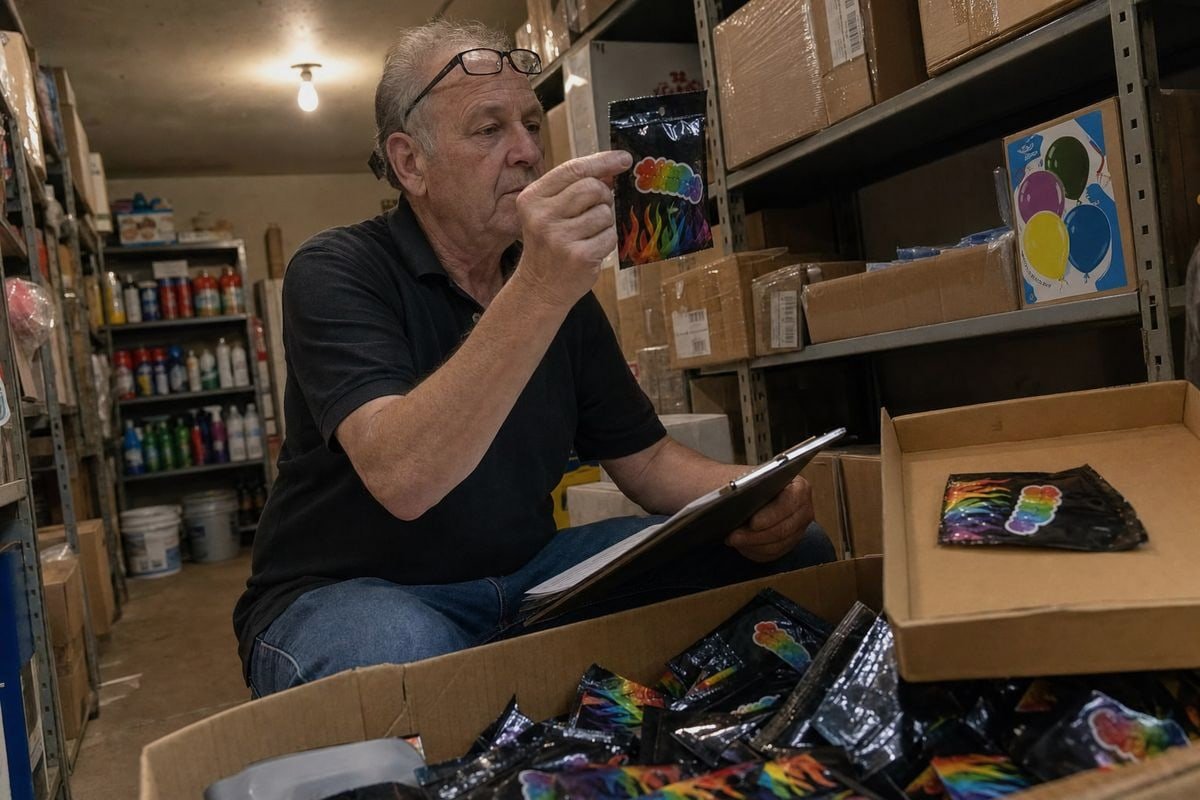
Die Haltbarkeit für diese Kategorie ist großzügig, vorausgesetzt, die Verpackung versagt nie. Die Mineralsalze 4 die den farbigen Flammeneffekt erzeugen, sind chemisch stabil. Sie "verfallen" nicht wie Lebensmittel. Was die Leistung tatsächlich beeinträchtigt, ist das Eindringen von Feuchtigkeit, das zu Verklumpung und schwächerer Farbausgabe führt, sowie wiederholte Temperaturschwankungen, die die Folienversiegelung im Laufe der Zeit belasten. Zum Vergleich: Versiegeltes Schießpulver, das bei etwa 20 °C und 55–65 % relativer Luftfeuchtigkeit gelagert wird, hat eine geschätzte Haltbarkeit von mindestens zehn Jahren gemäß den Herstellerangaben – ein anderes Produkt, aber ein Beweis dafür, dass stabile Pulver eine stabile Lagerung belohnen.
Ein praktischer Zeitplan für die Lagerhaltung
| Lagerbestand Alter | Zustandsprüfung | Aktion |
|---|---|---|
| 0–12 Monate | Siegel intakt, Beutel trocken | Normal anzeigen |
| 12–24 Monate | Siegel und Beuteltextur prüfen | Für saisonale Aktionen priorisieren |
| 24–36 Monate | Auf Verklumpung oder Verfärbung prüfen | Verkaufen, keinen tiefen Bestand nachbestellen |
| Beschädigt in jedem Alter | Gerissenes Siegel, Feuchtigkeit, Schwellung | Entfernen und gemäß Herstellerangaben entsorgen |
Den saisonalen Zyklus verwalten
Magic Fire Powder ist ein saisonaler Artikel mit kurzer Umlaufzeit. Die Nachfrage erreicht ihren Höhepunkt im Sommer-Camping, an Halloween und in der Kamin-Saison im Winter. Planen Sie Bestellungen so, dass der Lagerbestand innerhalb einer bis zwei Saisons umgeschlagen wird, anstatt jahrelang zu liegen. Wir helfen Distributoren, Lieferungen um diese Spitzen herum zu timen, und wir datieren Chargen, damit die FIFO-Rotation auf Filialebene einfach ist. Ein weiterer praktischer Tipp: Teilen Sie niemals einen Masterkarton in lose Lagerung auf. Der Kraft-Außenbeutel oder die Displaybox, die wir versenden, bietet eine zweite Feuchtigkeitsbarriere, und die Lagerung des Bestands darin kostet Sie nichts.
Welche Verpackung und Kennzeichnung benötige ich, um Magic Fire Powder in meinem Markt legal zu verkaufen?
Compliance-Fragen sind das Erste, was ernsthafte Käufer uns stellen – normalerweise vor dem Preis. Unsere CE-Kennzeichnung, SGS- und Intertek-Prüfberichte existieren, weil Zoll und Einzelhandelsketten Beweise und keine Versprechungen verlangen.
Sie benötigen die original versiegelte Verpackung mit klaren Gebrauchsanweisungen, Warnhinweisen wie "Beutel nicht öffnen", "Nicht zum Kochen", und "Von Kindern fernhalten", sowie Chargencodes und Barcodes. Führen Sie ein zugängliches SDS-Binder und überprüfen Sie die Einhaltung der Gefahrstoffvorschriften bei Ihrer örtlichen Feuerwehr, bevor Sie verkaufen.

Die gesetzlichen Anforderungen variieren je nach Markt, und das ist die ehrliche Komplikation: Es gibt keine einzige globale Klassifizierung für Flammenfarbpulver. Einige Gerichtsbarkeiten behandeln sie als allgemeine Konsumgüter. Andere ordnen sie näher an pyrotechnischem Zubehör unter strengeren die Einhaltung von Gefahrstoffvorschriften 5 Regeln. Der sichere Ansatz ist also vielschichtig – erfüllen Sie den stärksten gemeinsamen Standard und überprüfen Sie ihn dann lokal.
Die wesentlichen Kennzeichnungselemente
Beginnen Sie mit dem Etikett des Herstellers. Es sollte Gebrauchsanweisungen, die Anweisung "Beutel nicht öffnen", eine Warnung "Nicht zum Kochen" oder "Kein Essen über farbigen Flammen rösten" und eine Aussage "Nicht schlucken" enthalten, da die Pastellkristalle neuartigen Süßigkeiten oder grobem Zucker ähneln können. Die Sicherheitskennzeichnung im Regal sollte diese Punkte widerspiegeln: versiegelt halten, kühl und trocken lagern, nur zur Verwendung im Feuer. Fügen Sie Chargenrückverfolgbarkeitscodes und marktgerechte Barcodes hinzu. Für unsere Private-Label-Kunden drucken wir all dies – kundenspezifische Warnetiketten, Barcodes, mehrsprachige Anleitungen – direkt auf den Beutel und die Displaybox während der Produktion, sodass die Ware verkaufsfertig für die USA, die EU oder das Vereinigte Königreich ankommt.
Dokumentation, die Ihr Geschäft aufbewahren muss
Bewahren Sie ein physisches oder digitales SDS-Binder 6 für Mitarbeiter zugänglich auf. Ob Ihr Markt es SDS nennt oder ältere MSDS-Sicherheitsprotokolle referenziert, die Funktion ist dieselbe: Mitarbeiter und Ersthelfer erhalten sofort chemische Informationen. Reichen Sie auch die Prüfberichte und Zertifizierungen des Lieferanten ein. Wir stellen zur Verfügung ISO 9001 7, BSCI, CE und SGS/Intertek-Dokumentation mit jeder Exportlieferung genau, da Einzelhändler und Versicherer diese anfordern. Bestätigen Sie abschließend drei Dinge lokal vor der Markteinführung: die Mengengrenzen Ihres Brandschutzbeauftragten, die Ausstellungsanforderungen Ihres Versicherers und alle für Ihr Land spezifischen Regeln für die Kennzeichnung von Verbraucherprodukten. Wenn eine lokale Regel strenger ist als diese Basislinie, gilt die lokale Regel.
Schlussfolgerung
Magic Fire Powder versiegelt, kühl, trocken und getrennt lagern. Ausstellen gesichert, sichtbar und begrenzt. Kennzeichnung und lokale Vorschriften überprüfen. Wenn diese stimmen, verkauft sich dieses Produkt sicher und profitabel.
Fußnoten
Die CPSC bietet Sicherheitsrichtlinien und behördliche Aufsicht für Verbraucherprodukte, die Flammen oder pyrotechnische Effekte erzeugen. ↩︎
Erläutert die technischen Anforderungen an luftdichte Verschlüsse, um zu verhindern, dass Feuchtigkeit und Luft empfindliche chemische Pulver beeinträchtigen. ↩︎
Bietet einen Überblick über visuelle Merchandising-Techniken, die im Einzelhandel verwendet werden, um Produktvorteile zu kommunizieren und den Umsatz zu steigern. ↩︎
Beschreibt die spezifischen chemischen Salze, die zur Erzeugung verschiedener Farben in Flammen für Unterhaltungs- und pyrotechnische Zwecke verwendet werden. ↩︎
Die offizielle Ressource des US-Verkehrsministeriums für Vorschriften zur sicheren Handhabung und zum Transport gefährlicher Güter. ↩︎
Der Hazard Communication Standard der OSHA legt die Anforderungen für die Pflege von Sicherheitsdatenblättern und chemischen Informationen am Arbeitsplatz fest. ↩︎
Stabiler, maßgeblicher Überblick über den Qualitätsmanagementstandard ISO 9001.



 English
  Spanish
  German
  French
  Arabic
  Portuguese
Diskutieren Sie mit