






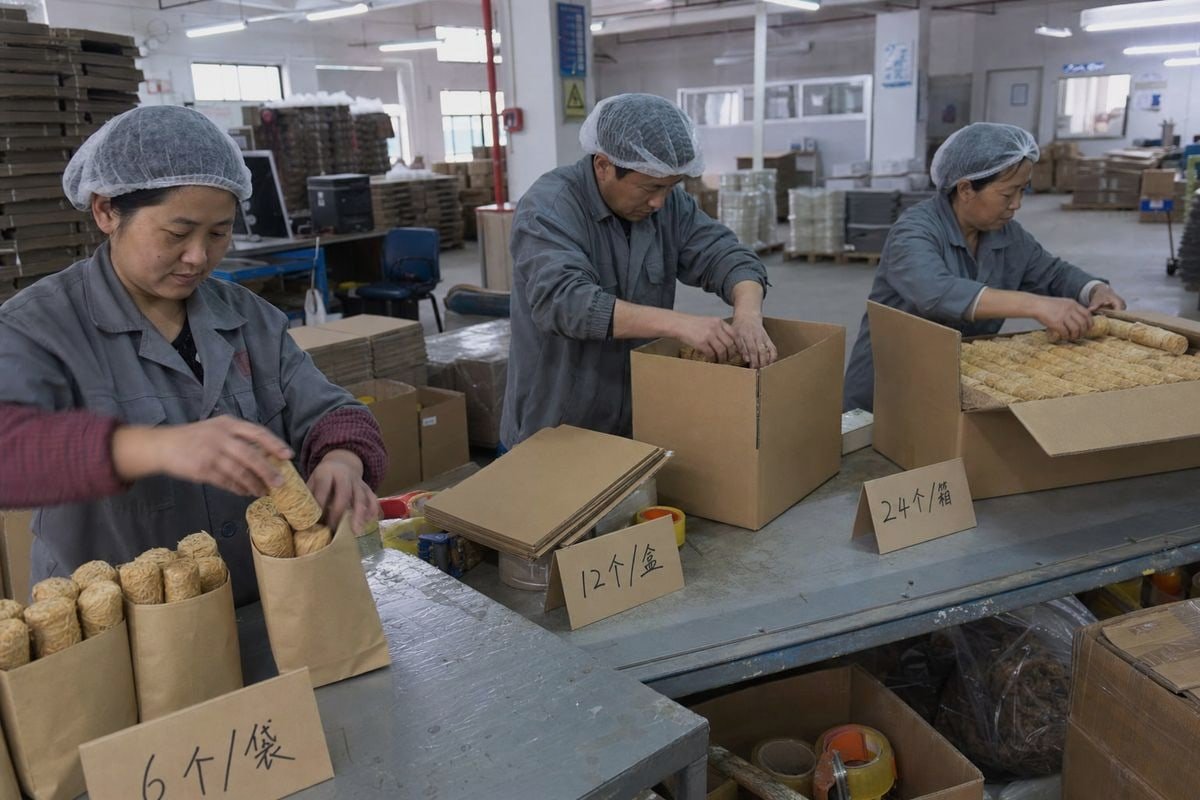
Aufteilung von Eltern-Kind-Varianten nach Verpackung für Holzfeuerzeug-Produktion 1 verwirrt viele Käufer. An unserer Produktionslinie habe ich beobachtet, wie Marken Verkäufe und ... verloren haben.
Um Eltern-Kind-Varianten nach Verpackung für Holzanzünder aufzuteilen, behalten Sie die Unterschiede in der Packungsanzahl (6, 12, 24 Einheiten) als Kind-Varianten unter einem Elternteil bei und trennen Sie Angebote nur, wenn die Verpackung die Identität, den Verwendungszweck oder den Kanal des Produkts ändert – wie z. B. Einzelhandelsgeschenkboxen im Vergleich zu Großhandelsbeuteln.
Die Logik ist einfach, aber die Ausführung zählt. Ich zeige Ihnen, wie wir Käufern helfen, dies richtig zu strukturieren, von MOQ-Fragen bis hin zu Flat-File-Mechanismen.
Kann ich mehrere Verpackungsvarianten bestellen, ohne meine Mindestmenge zu erhöhen?
Ein deutscher Händler stellte mir diese genaue Frage während eines Fabrikbesuchs 2 in Ningbo. Er wünschte sich drei Packungsgrößen, befürchtete aber, dass sich sein MOQ verdreifachen würde. Das tat es nicht.
Ja, die meisten erfahrenen Fabriken erlauben es, eine Produktionscharge über mehrere Verpackungsvarianten aufzuteilen, ohne die gesamte Mindestbestellmenge zu erhöhen, solange das Kernprodukt identisch ist und jedes Verpackungsformat ein angemessenes Minimum pro Variante erfüllt, typischerweise 20–30% der gesamten MOQ.
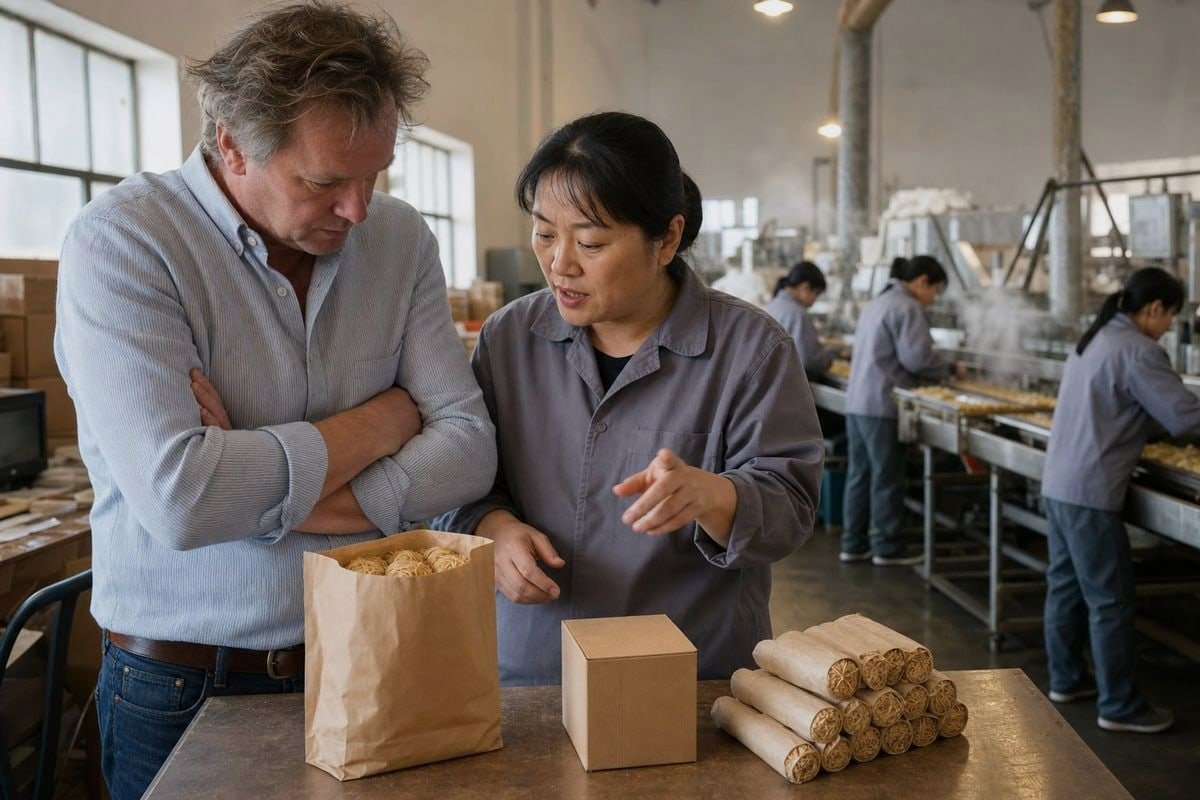
Der Grund, warum dies funktioniert, liegt darin, wie die Produktion tatsächlich abläuft. Wenn wir in Paraffin getauchte Holzrollen herstellen, ist der teure Teil die Kernproduktion: das Aufwickeln der Holzwolle 3, das Eintauchen in Paraffin und die Qualitätskontrolle der Brenndauer. Der Verpackungsschritt erfolgt danach, auf einer separaten Linie. So kann eine Charge von 50.000 identischen Feuerzeugen drei verschiedene Verpackungsläufe speisen, ohne etwas stromaufwärts zu stören.
Das gesagt, gibt es reale Grenzen. Jedes Verpackungsformat benötigt eigene Materialien – bedruckte Kartons, Polybeutel, Etiketten – und diese Materialien haben ihre eigenen Lieferanten-Mindestmengen. Ein kundenspezifisch bedruckter Einzelhandelskarton hat normalerweise ein Druck-MOQ von 1.000–3.000 Stück. Eine schlichte Kraftpapiertüte mit einem Aufkleber kann viel weniger sein. Deshalb sagen wir Käufern immer: Das Produkt-MOQ und das Verpackungs-MOQ sind zwei verschiedene Zahlen.
Wie sich variantenbezogene Mindestmengen typischerweise aufschlüsseln
| Verpackungsformat | Typische variantenbezogene Mindestmenge | Warum |
|---|---|---|
| Schlichter Polybeutel + Etikett | Sehr niedrig (500–1.000 Stück) | Standardmaterialien, Aufkleber |
| Kraftpapiertüte, generischer Druck | Niedrig (1.000–2.000 Stück) | Semi-Standardverpackung |
| Kundenspezifisch bedruckter Einzelhandelskarton | Mittel (2.000–3.000 Stück) | Drucklauf-Mindestmengen |
| Kundenspezifischer Display-Karton (PDQ) | Höher (3.000–5.000 Stück) | Strukturelle Werkzeuge und Druck |
Fragen, die Sie stellen sollten, bevor Sie sich festlegen
- Verpackt die Fabrik intern oder lagert sie die Verpackung aus?
- Was ist das MOQ für Verpackungsmaterialien, getrennt vom Produkt-MOQ?
- Können übrig gebliebene Verpackungsmaterialien für Ihre Nachbestellung gelagert werden?
In unserer 17-jährigen Erfahrung im Export in die USA und Europa 4 lagern wir oft die bedruckten Kartons eines Käufers für die nächste Bestellung, was Testbestellungen klein beginnen und sauber skalieren lässt.
Wie sollte ich Eltern-Kind-SKU-Varianten für meine Eigenmarke strukturieren?
Ein Kompromiss, den wir mit Private-Label-Kunden ständig abwägen: ein aufgeräumter Katalog versus maximale Suchabdeckung. Ihre SKU-Architektur entscheidet, welche Sie erhalten, und es ist schwer, dies später rückgängig zu machen.
Strukturieren Sie Ihre Markenlinie mit einem Elternteil pro Kernprodukt, wobei die Einheitenanzahl pro Paket als Variationsthema verwendet wird. Weisen Sie jeder Paketgröße eine eigene untergeordnete SKU, einen eigenen Barcode und einen eigenen Preis zu. Erstellen Sie nur dann eine separate Elternfamilie, wenn die Verpackung den Verwendungszweck oder die Zielgruppe des Produkts ändert.
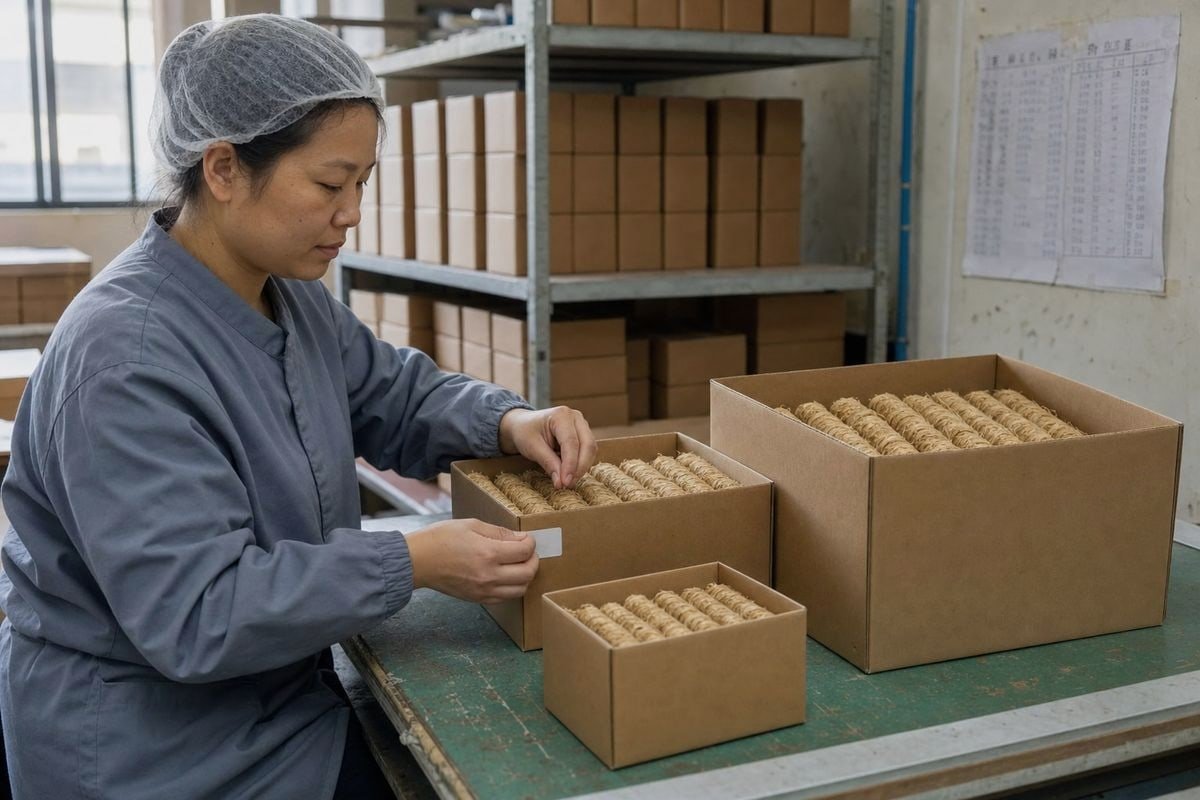
Das Variationsthema ist das Rückgrat der gesamten Struktur. Für Holzfeuerzeuge ist das am besten zu vertretende Thema die Paketmenge – dieselbe in Paraffin getauchte Holzrolle, verkauft als 12er-Packung, 24er-Packung oder 100er-Box. Käufer verstehen das sofort. Bewertungen werden auf Familienebene zusammengeführt, was bedeutet, dass Ihre neue 24er-Packung mit dem sozialen Beweis startet, den Ihre 12er-Packung bereits verdient hat.
Wo Käufer falsch liegen, ist, ein Elternteil für wirklich unterschiedliche Produkte zu verwenden. Eine in Paraffin getauchte Holzrolle und eine farbige Kiefernzapfen sind keine Varianten voneinander, auch wenn beide umweltfreundliche Feueranzünder 5 aus demselben Katalog sind. Sie unterscheiden sich in Zusammensetzung, Brennverhalten und Käuferabsicht. Sie unter einem Elternteil zu zwingen, verwirrt Kunden und kann die Familie auf Marktplätzen markieren.
Eine funktionierende SKU-Architektur für eine Marken-Feuerzeuglinie
| Ebene | Beispiel | Anmerkungen |
|---|---|---|
| Elternteil | FS-WOODROLL (nicht kaufbar) | Nur Behälter; kein Lagerbestand, kein Preis |
| Kind 1 | FS-WOODROLL-12 | Testgröße, Einzelhandelsverpackung |
| Kind 2 | FS-HOLZROLLE-24 | Standard-Haushaltspackung |
| Kind 3 | FS-HOLZROLLE-100 | Großpackung für Vielverbraucher |
| Getrennter Elternteil | FS-TANNEZAPFEN | Unterschiedliche Produktidentität |
Regeln, die wir privaten Label-Kunden empfehlen
- Behalten Sie den Elternteil als strukturellen Container. Kinder tragen die SKU, den Preis, den Lagerbestand und den Barcode.
- Geben Sie jedem Kind ein variantenspezifisches Hauptbild, das die Gesamteinheitenzahl zeigt. Allein dies reduziert Rücksendungen.
- Verwenden Sie ein hybrides Variationsthema (Material plus Menge) nur dann, wenn beide Attribute zutreffen und shoppable Unterschiede aufweisen – zum Beispiel ofengetrocknete Anzündhölzer im Vergleich zu Wachsrollen, jeweils in mehreren Mengen.
Wenn wir einrichten Herstellungsprogramme für Eigenmarken, weisen wir Barcodes zu und drucken die Einheitenanzahl prominent auf das Design der Einzelhandelsverpackung in der Fabrik, sodass das physische Produkt von Anfang an mit der Katalogstruktur übereinstimmt.
Kann ich meine Produktionscharge in verschiedene Verpackungsformate aufteilen?
Letzten Winter haben wir eine einzige Charge von 80.000 Holzrollen für einen kanadischen Käufer hergestellt und sie auf vier Arten verpackt: Einzelhandelsboxen, Großbeutel, Geschenkverpackungen und ein Camping-Multipack. Dasselbe Produkt, vier kommerzielle Leben.
Ja, eine einzelne Produktionscharge kann in mehrere Verpackungsformate aufgeteilt werden, da das Verpacken ein nachgelagerter Schritt ist. Dieselben Feuerstarter können in Einzelhandelsverpackungen, Großbeutel oder Geschenksets verpackt werden, vorausgesetzt, jedes Format erhält vor Beginn des Verpackungslaufs die richtige Kennzeichnung, Barcodes und Kartonspezifikationen.
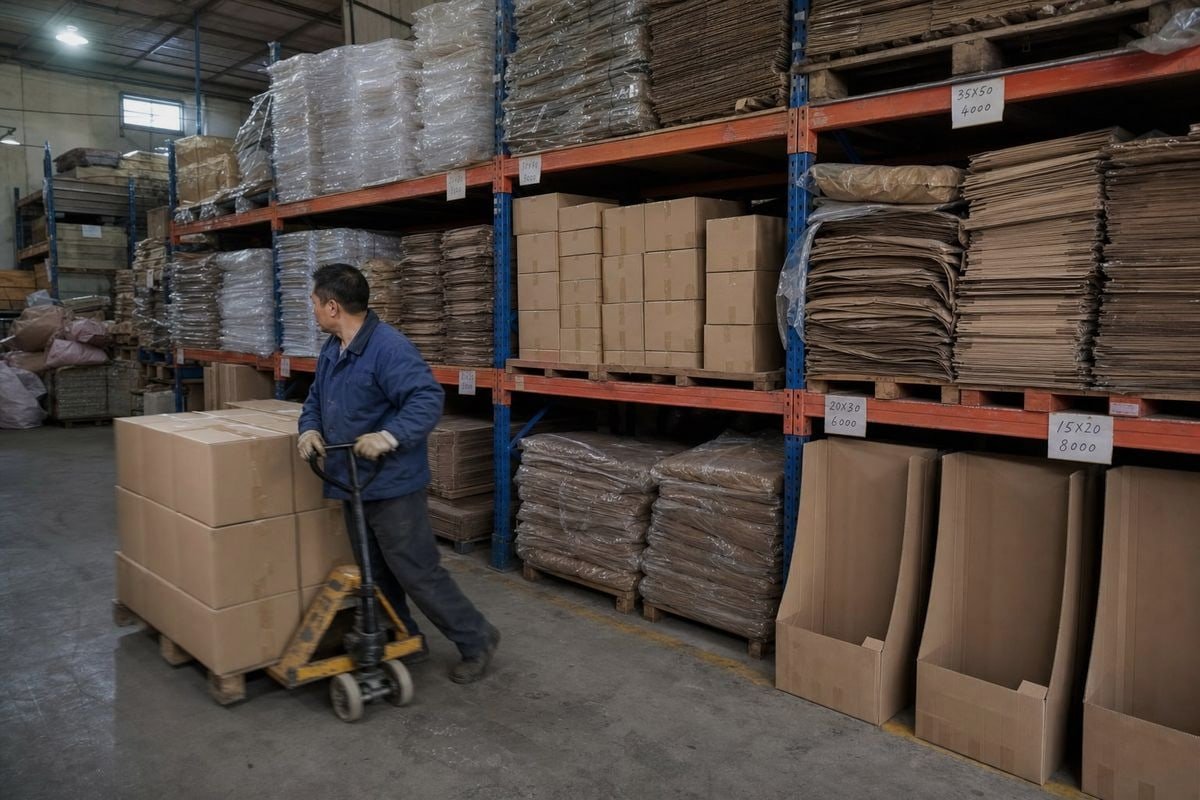
Die wichtigste Erkenntnis ist, dass eine Chargenaufteilung eine operative Entscheidung ist und sich auf drei reale Situationen abbildet. Wenn Sie verstehen, in welcher Sie sich befinden, wissen Sie, wie Sie sowohl die Fabrikbestellung als auch Ihren Katalog strukturieren.
Die drei Arten von Verpackungsaufteilungen
| Aufteilungstyp | Beispiel | Katalogbehandlung |
|---|---|---|
| Packungsgrößen-Aufteilung | Gleiche Rolle in 12, 24, 100 Stück | Als Kind-Varianten unter einem Elternteil beibehalten |
| Präsentationsaufteilung | Schrumpffolie vs. Einzelhandelsbox vs. Geschenkverpackung | Oft separate Angebote; die Wahrnehmung des Käufers unterscheidet sich |
| Kanalaufteilung | Einzelhandels-Regalbox vs. Großhandels-Großbeutel | Separate Familien; unterschiedliche Logistik und Käufer |
Eine Packungsgrößen-Aufteilung ist die sauberste. Das Produkt, der Verpackungsstil und der Käufer sind gleich; nur die Stückzahl pro Paket ändert sich. Dies gehört unter einen Elternteil.
Eine Präsentationsaufteilung wird kniffliger. Eine Geschenkverpackung mit einem Band zielt auf einen anderen Moment ab als ein schrumpffolienverpackter Ziegelstein. Bewertungen über die Großhandelsversion ("toller Wert, hässliche Schachtel") werden der Geschenkversion schaden, wenn sie eine Familie teilen. Wir raten normalerweise davon ab, diese zu trennen.
Eine Kanalaufteilung ist fast immer eine separate Familie. Großhandelsvertriebsformate erfordern unterschiedliche Kartons, unterschiedliche Palettenkonfigurationen 6, und manchmal unterschiedliche Compliance-Kennzeichnungen. Auf unseren Linien überspringt ein Großbeutel, der für den Umpackbetrieb eines Händlers bestimmt ist, den Einzelhandels-Barcode vollständig, während die verkaufsfertige Box den vollständigen Kennzeichnungssatz trägt – Warnhinweise, Zusammensetzung (wie unsere 50% Holzfaser, 50% Paraffindeklaration) und Herkunftsland.
Ein praktischer Hinweis zur Qualität: Da das Kernprodukt über eine Chargenaufteilung identisch ist, ist die Chargen-zu-Chargen-Konsistenz wichtiger denn je. Wenn Ihre 12er-Packung und Ihre 100er-Box aus verschiedenen Chargen mit unterschiedlichen Brennzeiten stammen, werden Ihre gebündelten Bewertungen dies aufdecken. Unsere Qualitätskontrolle prüft die Brennzeit und Zündung jeder Charge genau, damit eine aufgeteilte Charge in jeder Packung identisch funktioniert.
Was ist der beste Weg, um kundenspezifische Verpackungsanfragen mit meinem Hersteller zu koordinieren?
Ein britischer Käufer schickte uns einmal drei Tage vor der Produktion die endgültige Grafik mit einem Barcode, der zu einem anderen Produkt gescannt wurde. Wir haben es bemerkt, aber die Lektion blieb haften: Die Koordination der Verpackung erfordert einen Prozess, kein Glück.
Koordinieren Sie kundenspezifische Verpackungen, indem Sie die Spezifikationen frühzeitig bestätigen: Stanzform-Artwork, Barcode-Zuweisungen pro Kind-SKU, Warnhinweise, Stückzahlen und Kartonabmessungen. Legen Sie diese in der Musterphase fest, fordern Sie ein Muster der Vorproduktionsverpackung an und behalten Sie ein gemeinsames Spezifikationsblatt als einzige Quelle der Wahrheit bei.
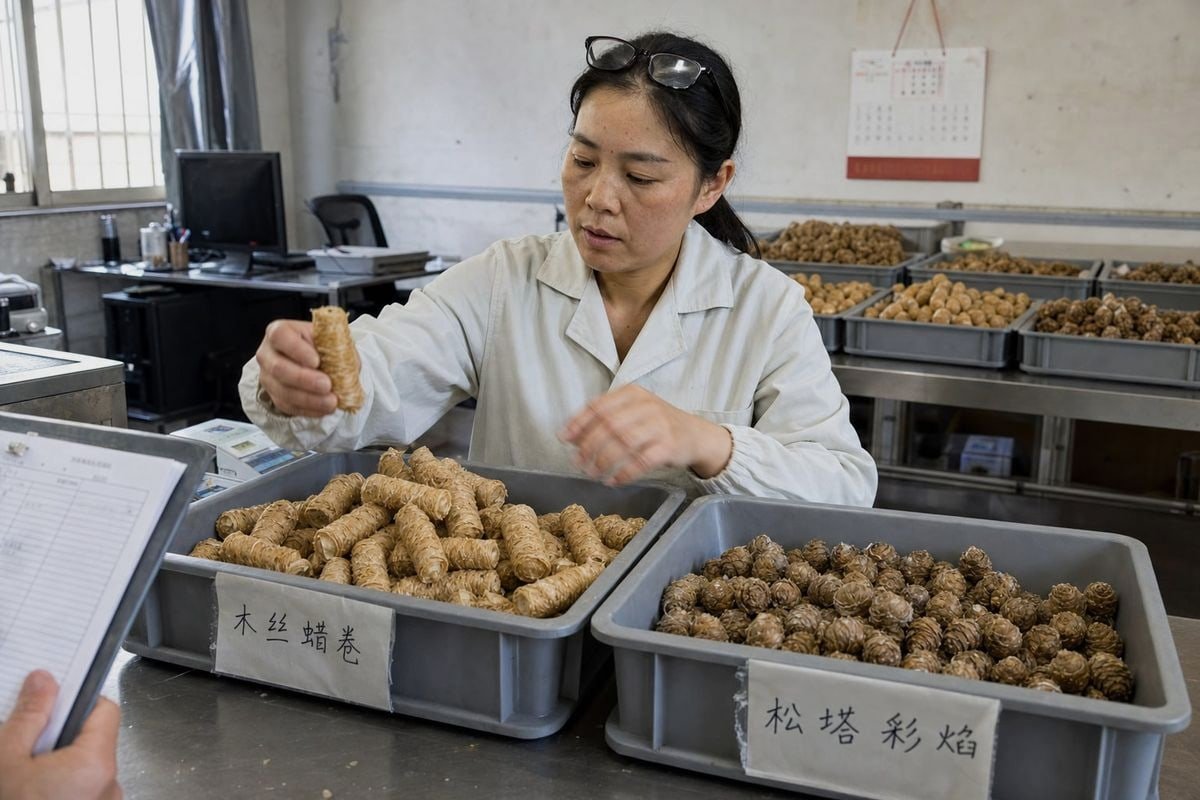
Gute Koordination folgt einer Sequenz. Hier ist der Prozess, den wir mit OEM/ODM-Kunden durchführen, verfeinert durch über 17 Jahre Versand von Feuerprodukten in über 30 Länder.
Der siebenschrittige Koordinations-Workflow
- Definieren Sie zuerst die Variant-Matrix. Listen Sie jede Kind-SKU, ihre Stückzahl, das Verpackungsformat und den Barcode auf, bevor die Grafik beginnt.
- Fordern Sie Dielines von der Fabrik an. Wir liefern exakte Vorlagen für Kartons, Beutel und Display-Kartons, damit Ihr Designer mit realen Abmessungen arbeitet.
- Bestätigen Sie Compliance-Elemente. Warnhinweise, Zusammensetzungsangaben und marktspezifische Texte (US-, EU-, UK-Versionen unterscheiden sich) müssen auf jedem Design der Einzelhandelsverpackung erscheinen. Unsere CE-Kennzeichnung und SGS/Intertek-Prüfberichte untermauern diese Behauptungen, was wichtig ist, wenn große Einzelhändler Ihre Verpackung prüfen.
- Genehmigen Sie ein Vorproduktionsmuster. A physisches verpacktes Muster erkennt Barcode-Fehler, Farbverschiebungen und Passformprobleme, die PDFs verbergen.
- Verpackung an Logistik anpassen. Letterbox-freundliche Abmessungen passen zu Abonnementmodellen; Exportkartons sollten den Container-Ladebedarf optimieren. Wir passen beides an.
- Synchronisieren Sie Ihre Systeme. Geben Sie jede Kind-SKU in Ihre Bestandsverwaltungssoftware ein, bevor die Waren versendet werden, damit der Wareneingang mit der Packliste übereinstimmt.
- Archivieren Sie das Datenblatt. Nachbestellungen sollten sich auf die genehmigte Version beziehen, nicht auf das Gedächtnis.
Die Feuchtigkeitsfrage verdient besondere Aufmerksamkeit für Feueranzünder. Papierbasierte Verpackungen benötigen eine Feuchtigkeitsbarriere 7 oder eine innere Poly-Auskleidung, um die Zündzuverlässigkeit während des Seefrachtverkehrs zu schützen. Wir berücksichtigen auch den Wachsduft in versiegelten Kartons; kleine Belüftungsdetails in der Verpackungsspezifikation verhindern Ansammlungen, ohne die Feuchtigkeitsbeständigkeit zu beeinträchtigen. Dies sind die Details, die eine echte Fabrik proaktiv aufwirft – und die, die ein Handelsunternehmen normalerweise übersieht.
Bitten Sie schließlich Ihren Hersteller, Ihre genehmigten Verpackungsmaterialien für Nachbestellungen aufzubewahren. Es verkürzt die Lieferzeiten und hält die Chargenpräsentation identisch, was die Konsistenz schützt, auf der Ihre Bewertungen beruhen.
Schlussfolgerung
Schlechte Variantenaufteilungen kosten Bewertungen, Rankings und Nachbestellungen. Richtig strukturiert – Packungsanzahl als Varianten, echte Unterschiede als separate Familien – wird die Verpackung zu einem Wachstumshebel. Wir helfen Ihnen, sie aufzubauen.
Fußnoten
Maßgebliche Übersicht über Feueranzündmethoden und -materialien, die bei der Herstellung von Holzfeueranzündern verwendet werden. ↩︎
Definition und Zweck von Werksbesuchen im Kontext von Fertigung und Qualitätssicherung. ↩︎
Technische Definition von Holzwolle, einer Hauptkomponente bei der Herstellung von Feueranzündern. ↩︎
Offizielle staatliche Ressource für Handelsvorschriften und kommerzielle Leitfäden in wichtigen Märkten. ↩︎
Offizieller EPA-Leitfaden mit Empfehlungen für die besten Praktiken für das Verbrennen von Holz und Feueranzünder. ↩︎
Maßgebliche Wikipedia-Eintragung mit Details zu internationalen Palettenstandards und -konfigurationen. ↩︎
Technischer Wikipedia-Überblick über Feuchtigkeitsbarrieren und Dampfschutzmaterialien. ↩︎

 English
  Spanish
  German
  French
  Arabic
  Portuguese
Diskutieren Sie mit