






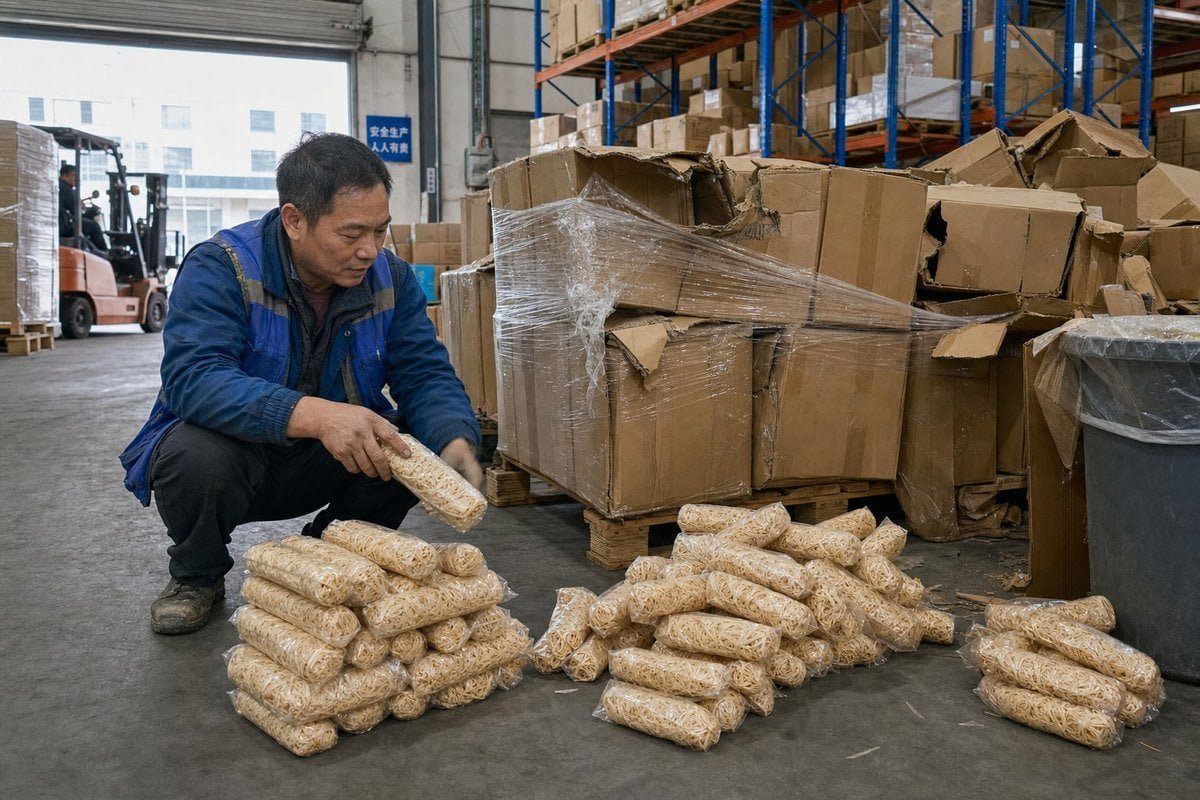
Beschädigte Verpackung an Holz-Feuerstarter 1 fühlt sich an wie verlorenes Geld, das in Ihrem Lager liegt. Ich habe gesehen, wie Käufer wegen zerdrückter Kartons in Panik gerieten, die unsere Produktionslinie in einwandfreiem Zustand verließen. Der Bestand verliert an Attraktivität im Regal, Einzelhändler lehnen ihn ab, und jede Woche, in der er liegt, fressen Lagerkosten Ihre Marge auf. Die gute Nachricht? Wenn die innenliegenden, mit Wachs getauchten Holzrollen trocken und intakt sind, handelt es sich meist um ein kosmetisches Problem – und kosmetische Probleme können überarbeitet, neu etikettiert und mit Gewinn weiterverkauft werden.
Um Holzanzünder mit beschädigter Verpackung zu überarbeiten und weiterzuverkaufen, überprüfen Sie jede Einheit auf Feuchtigkeit und Verunreinigungen, verwerfen Sie beeinträchtigte Ware, verpacken Sie einwandfreie Produkte in neuer, konformer Verpackung mit korrekten Sicherheitshinweisen, legen Sie den Zustand ehrlich offen und bepreisen Sie ihn 15–25 % unter dem regulären Einzelhandelspreis.
Der Prozess ist unkompliziert, sobald man ihn aufschlüsselt. Unten führe ich Sie durch sicheres Umpacken, Compliance-Regeln, Beschaffung Ersatzverpackung 2 schnell und die Verhandlung flexibler MOQs zur Deckung des Nachbearbeitungsbedarfs.
Was kann ich tun, um Holzanzünder nach Transportschäden sicher neu zu verpacken?
Ein Container, den wir einst nach Rotterdam verschifft hatten, kam mit zwei zerdrückten Paletten an. Der Importeur ging von einem Totalverlust aus. Nach der Inspektion waren über 90% der darin enthaltenen Holzanzünder perfekt verkaufsfähig.
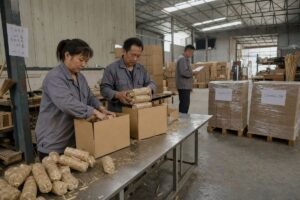
Beschädigte Ware in drei Gruppen sortieren: wie besehen weiterverkaufen, überarbeiten oder entsorgen. Jede Einheit auf Feuchtigkeit, Wachsaustritt, Geruch und Verunreinigung prüfen. Nur trockene, intakte Feuerstarter in neuen Plastiktüten, mit Schrumpffolienversiegelung oder Ersatzkartons neu verpacken und dann eine abschließende Qualitätskontrolle durchführen, bevor sie wieder gelistet werden.
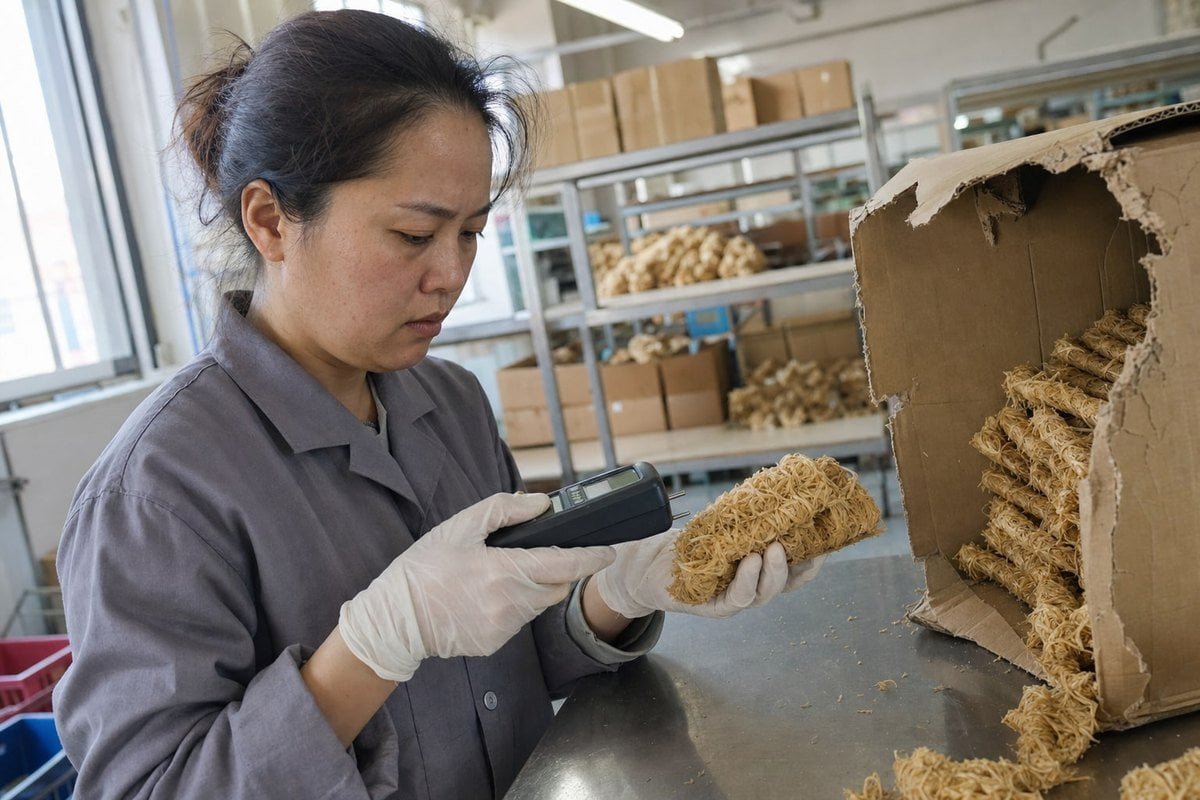
Der wichtigste Unterschied ist beschädigte Verpackung im Gegensatz zu beschädigtem Produkt. Wachsgetauchte Holzrollen sind überraschend robust. Die Wachsbeschichtung schützt den Holzwollkern 3 vor leichter Feuchtigkeit, und eine verbeulte Schachtel beeinträchtigt selten die Brennleistung. Wassereinwirkung ist jedoch eine andere Geschichte. Wenn ein Karton Wasserflecken aufweist, müssen Sie das Produkt selbst überprüfen, nicht nur die Schachtel.
Schritt-für-Schritt-Triage-Prozess
Ich empfehle diesen Arbeitsablauf, der dem ähnelt, was wir bei unserer eigenen Chargen-zu-Chargen-Qualitätskontrolle anwenden:
- Fotografieren Sie zuerst alles. Dokumentieren Sie den Schaden, bevor Sie den Bestand anfassen. Möglicherweise benötigen Sie Fotos für Ansprüche gegenüber Kurierdiensten oder Rückerstattungen durch Lieferanten.
- Sortieren Sie in drei Behälter. Als Ist verkaufen, überarbeiten und neu verpacken oder entsorgen.
- Auf Feuchtigkeit prüfen. Nasse Holzfasern werden nicht zuverlässig entzündet. Einfache Feuchtigkeitsgehaltstests – auch mit einem Handmessgerät – bestätigen, ob die Einheiten trocken geblieben sind.
- Vollständigkeit prüfen. Wenn Sie 100er-Einzelhandelsboxen verkaufen, zählen Sie die Einheiten. Unvollständige Sets verlieren schnell an Wiederverkaufswert.
- Riechen und inspizieren. Jeder Geruch von Schimmel, Kraftstoffkontamination oder Chemikalien bedeutet Entsorgung. Verkaufen Sie niemals ein kompromittiertes brennbares Produkt.
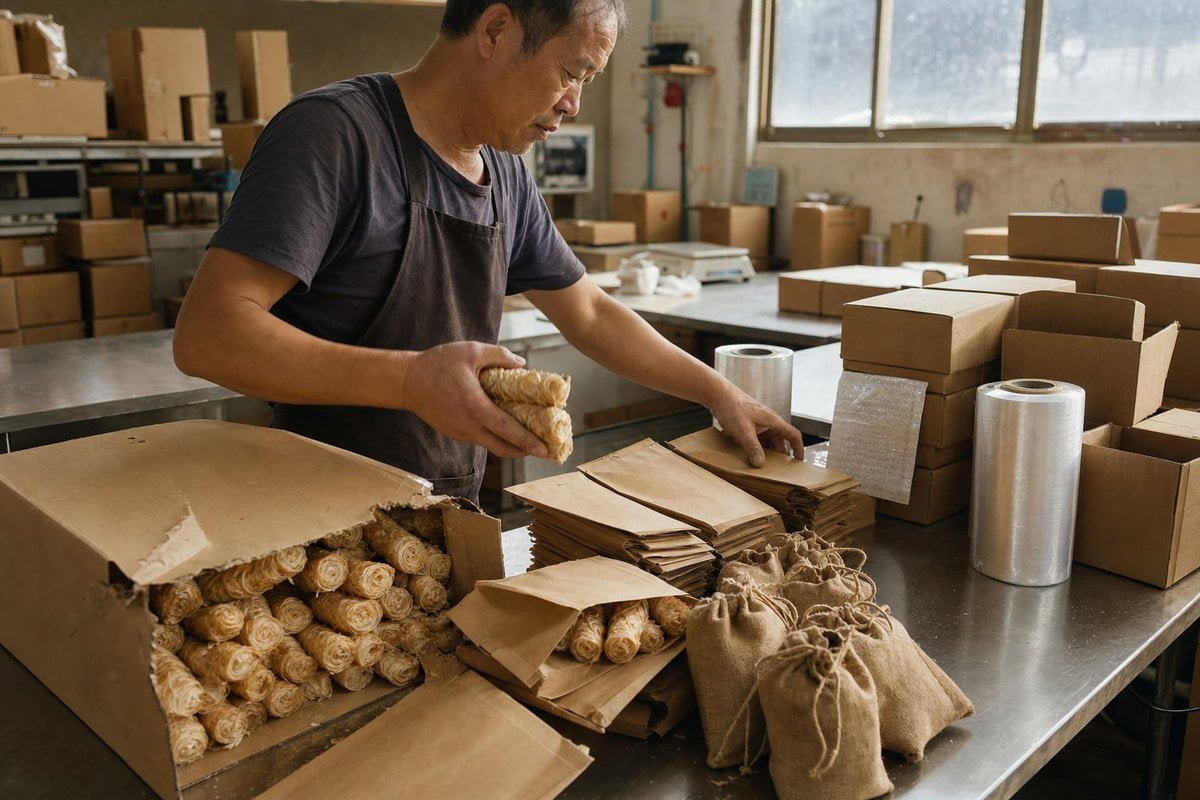
- Verpacken Sie den einwandfreien Bestand neu. Verwenden Sie saubere Nachverpackungsmaterialien: Polybeutel, Kraftpapiertüten, Schrumpffolienversiegelung oder schlichte Ersatzkartons.
- Abschließende Qualitätskontrolle. Überprüfen Sie Etiketten, Stückzahlen und Siegel, bevor der Bestand wieder in das Lager aufgenommen wird.
Auswahl der Nachverpackungsmaterialien
| Schadensstufe | Empfohlene Nachbearbeitung | Typische Kosten pro Einheit |
|---|---|---|
| Äußerer Karton zerdrückt, Einzelhandelsbox in Ordnung | Nur neuer Umkarton | Sehr niedrig |
| Einzelhandelsbox zerrissen oder zerkratzt | Neue bedruckte Box oder Kraftpapierschutzhülle | Niedrig |
| Einzelhandelsbox zerstört, Produkt intakt | Polybeutel oder Bulk-Nachverpackung mit neuem Etikett | Niedrig–mittel |
| Anzeichen von Wasser oder Kontamination | Entsorgen oder zerstören – nicht weiterverkaufen | N/A |
Rustikale Nachverpackung kann sogar einen Mehrwert schaffen. Lose Holzrollen, präsentiert in Jutebeuteln oder Kraftkartons, passen zur umweltfreundlichen Ästhetik von Feuerstartern, die viele Lagerfeuer- und Grillkäufer bereits wünschen.
Welche Compliance-Anforderungen muss ich beim Wiederverkauf von überarbeiteten Feuerstarter-Beständen erfüllen?
Compliance-Fragen tauchen bei fast jedem Käufergespräch auf, das wir in unserer Anlage in Ningbo führen. Insbesondere europäische Händler rühren keine nachbearbeiteten Feueranzündprodukte ohne korrekte Dokumentation und Kennzeichnung an.
Überarbeitete Feuerzeuge müssen die ursprünglichen Konformitätselemente enthalten: Sicherheitswarnhinweise, Zusammensetzungsdetails, Gebrauchsanweisungen und alle erforderlichen Zertifizierungszeichen. Sie müssen auch den umverpackten Zustand in Angeboten ehrlich angeben, Barcode- und Rückverfolgbarkeitsaufzeichnungen korrekt führen und niemals kontaminierte oder feuchtigkeitsgeschädigte brennbare Produkte weiterverkaufen.
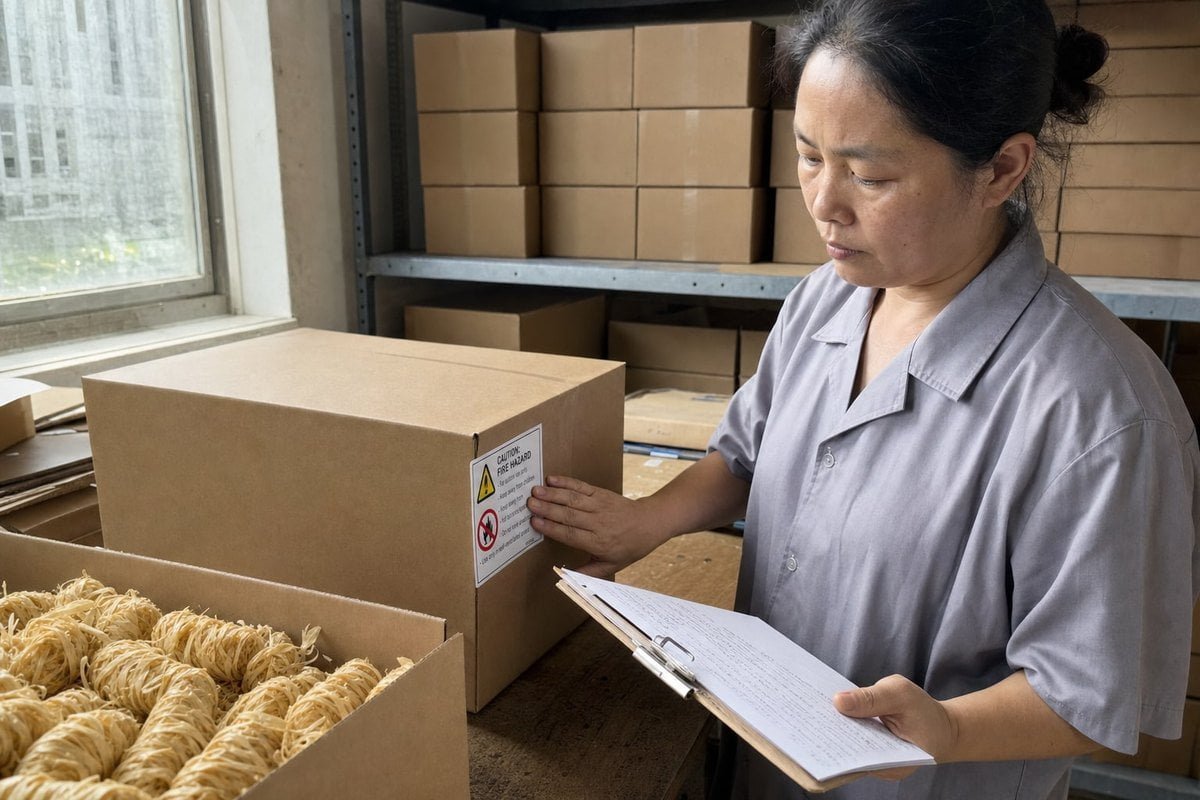
Das Nachverpacken entbindet Sie nicht von Ihren rechtlichen Verpflichtungen. Tatsächlich fügt es ein paar hinzu. Wenn Sie eine beschädigte Einzelhandelsbox ersetzen, muss alles, was auf dieser Box gedruckt ist, auf der neuen Verpackung nachgebildet werden. Nach unserer Erfahrung im Export in über 30 Länder gehören die nicht verhandelbaren Elemente Sicherheitswarnhinweise 4, Zusammensetzungsangaben (z. B. Holzfaser- und Paraffinteile), Herkunftsland und Gebrauchsanweisungen. Fehlt eines davon, kann eine Einzelhandelskette die gesamte Charge erneut ablehnen – diesmal wegen der Kennzeichnung, nicht wegen Beschädigung.
Die Compliance-Checkliste für nachbearbeitete Bestände
| Anforderung | Warum es wichtig ist | Häufiger Fehler |
|---|---|---|
| Sicherheitswarnhinweise | Gesetzlich vorgeschrieben für brennbare Güter in den meisten Märkten | Nachverpackung in schlichten Beuteln ohne Warnhinweise |
| Composition and origin info | Customs and retail compliance | Copying old text with wrong quantities |
| Certification marks (CE, test reports) | Proof the product passed lab testing | Assuming certification transfers without documents |
| Barcode accuracy | Prevents fulfillment and scanning errors | Reusing old barcodes on different pack sizes |
| Condition disclosure | Consumer protection and marketplace rules | Listing repacked stock as factory-new |
Disclosure Wording That Works
Marketplaces generally require honest condition statements. Use terms buyers understand: new in damaged packaging, repacked, or open-box. Transparency actually helps conversion. Buyers of practical goods like fatwood kindling sticks 5 and firelighter pucks care about function, not pristine boxes. A clear photo, a short condition note, and intact certification build more trust than a cosmetically perfect listing that hides the rework.
One more point from our factory floor: keep a rework log. Record batch numbers, quantities reworked, new label versions, and QC sign-off. If a customer complaint or audit ever arises, that paper trail protects you.
Wie wähle ich einen Fertigungspartner aus, der schnell Ersatzverpackungen liefern kann?
Speed decides rework economics. When a German distributor called us about torn display boxes, our team pulled the original artwork files and shipped replacement packaging within weeks — because we had produced the originals.
Wählen Sie einen Partner mit eigener Verpackungskompetenz, gespeicherten Grafikdateien, nachgewiesener OEM/ODM-Erfahrung und überprüfbaren Zertifizierungen wie ISO 9001 und BSCI. Stellen Sie sicher, dass er kleine Ersatzauflagen schnell produzieren, passende Warnetiketten und Barcodes liefern und Verpackungssendungen mit Ihren regulären Bestellungen konsolidieren kann.
The fastest replacement packaging almost always comes from the original manufacturer. If your supplier keeps your dielines, artwork, barcode files 6, and warning label templates on file, a reprint is a simple job. If they do not, you start from zero: new design, new proofing, new compliance review. That can add weeks you cannot afford when liquidation inventory pressure is building.
What to Verify Before You Commit
Evaluate any packaging partner against these criteria:
- Artwork retention. Do they archive your print files and label versions? At our factory, we keep every client's private-label files ready for reorders and emergency reprints.
- In-house or trusted local printing. A real factory in a manufacturing cluster can source printed boxes, sleeves, and repackaging supplies in days, not months.
- Compliance literacy. The partner should know what CE marks, SGS or Intertek test references, and safety warning labels your market requires — and place them correctly without hand-holding.
- Small-run flexibility. Replacement packaging orders are inherently small. A partner who only quotes full-container packaging runs is the wrong fit for rework.
- Consolidated logistics. The smartest move is shipping replacement boxes inside your next regular product order. This cuts freight cost dramatically and is standard practice for our long-term B2B accounts.
Trading Company vs. Factory for Replacement Packaging
A trading company must relay your request to a third-party printer, adding time and error risk at every step. A genuine factory controls artwork, printing coordination, and quality control inspection directly. When a first sample must reliably match the mass-production reprint — critical for brand consistency on shelf — that manufacturing depth matters more than a marginally lower quote.
Kann ich flexible Mindestbestellmengen (MOQs) mit meinem Lieferanten aushandeln, um Verpackungsanforderungen abzudecken?
Rigid MOQs are the quiet killer of rework projects. I have watched buyers abandon perfectly recoverable stock because their supplier demanded a 10,000-box minimum for a 2,000-unit repackaging job.
Ja. Die meisten etablierten Hersteller verhandeln reduzierte Mindestbestellmengen für Ersatzverpackungen, insbesondere für bestehende Kunden, die vorhandene Designs verwenden. Verbessern Sie Ihre Position, indem Sie Verpackungen mit Produktnachbestellungen konsolidieren, Standard-Boxgrößen akzeptieren, eine leichte Übermenge für zukünftige Vorfälle bestellen und die Anfrage als Teil einer langfristigen Partnerschaft formulieren.

MOQ-Flexibilität depends on where the cost sits. For printed packaging, the expensive part is setup: plates, color matching, and machine changeover. Once your artwork exists and plates are made, a smaller reprint run is far cheaper for the factory to justify. That is why existing customers get flexibility that new buyers do not. In our 17+ years serving importers across the US and Europe, we treat replacement packaging for active accounts as partnership service, not a standalone transaction.
Negotiation Levers That Actually Work
| Hebel | How It Helps | What You Concede |
|---|---|---|
| Bundle with product reorder | Factory amortizes setup across a bigger job | Timing tied to your next order |
| Order 10–20% overage | Covers future damage events cheaply | Small storage commitment |
| Accept stock box dimensions | Skips custom tooling entirely | Less distinctive shelf presence |
| Use kraft or generic packaging plus labels | Lowest MOQ path; labels print in tiny runs | More utilitarian look |
| Commit to annual volume | Supplier prices packaging as account service | Forecast accountability |
Turning Rework Into Product Strategy
Flexible MOQs also open creative resale value optimization plays. Repackage salvaged units as refill packs for customers who own a permanent storage tin. Build bundles combining bulk fire starter pods with fatwood kindling sticks as a complete fire kit. Add a zero-waste story to the new label — reworked stock genuinely fits the eco-friendly fire starters narrative, and circular-economy messaging 7 resonates with today's outdoor buyers. A QR code linking to fire-building instructions replaces any lost printed inserts at almost no cost. Each of these turns a damage event into a differentiated SKU rather than a discount problem.
Schlussfolgerung
Damaged packaging drains margin only if you let it. Inspect ruthlessly, repackage compliantly, disclose honestly, and partner with a factory that supplies replacement packaging fast — and reworked fire starters become profitable inventory again.
Fußnoten
1. Wikipedia entry for firelighters, providing context on the product's general use and composition. ↩︎
2. Authoritative overview of packaging materials, design, and labeling standards for consumer products. ↩︎
3. Wikipedia article describing wood wool, its manufacturing process, and its common applications in packaging and fuel. ↩︎
4. Official government guidelines on mandatory labeling requirements for consumer products to ensure user safety. ↩︎
5. Wikipedia page describing the natural properties and historical use of resinous fatwood as a fire starter. ↩︎
6. Official standards for barcodes and traceability records used in global retail and supply chains. ↩︎
7. Environmental agency overview of circular economy principles focused on waste reduction and material reuse. ↩︎


 English
  Spanish
  German
  French
  Arabic
  Portuguese
Diskutieren Sie mit