






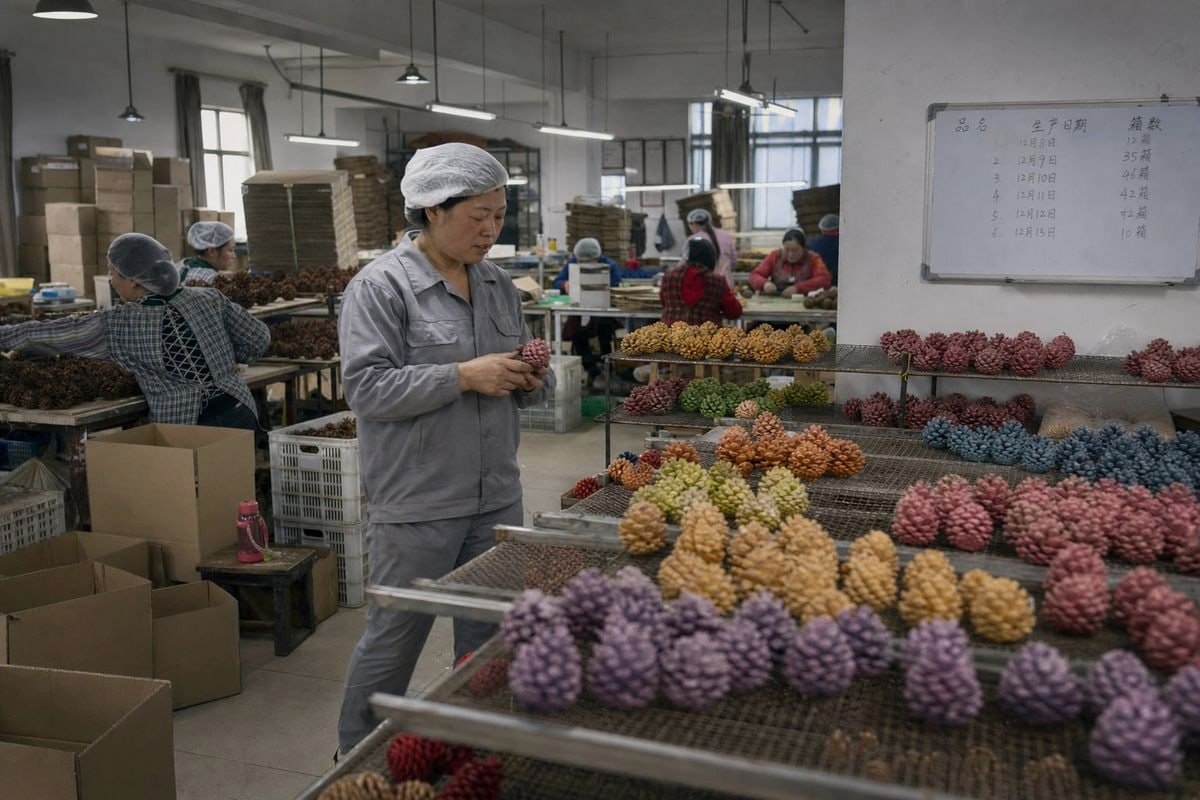
Rush order deadlines for fireplace colored pine cones fail quietly. On our production line, we've watched buyers lose entire holiday windows over one uninspected drying cycle or one missed carrier cutoff.
To protect rush order deadlines for fireplace colored pine cones, verify certifications first, then choose oversight by risk type: use an on-site merchandiser when color consistency and packaging accuracy are the threat; use loading supervision only when dispatch timing is the sole bottleneck.
The choice between these two roles is not about spending more. It is about placing control where your order is most likely to break. Let me walk you through how we see it from the factory floor.
What certifications should I verify before trusting a factory with my rush order deadline?
A German distributor once asked our team a sharp question during an audit: "Your samples look great, but what proves batch 40 will match batch 1 under a compressed schedule?" That question is the right one.
Before trusting a factory with a rush order, verify ISO 9001 for process control, BSCI for ethical capacity, and third-party test reports from SGS or Intertek. These prove the factory can hold quality under time pressure, not just produce good samples.

Certifications matter more on rush orders than on normal ones. Here is why. When a schedule is compressed, a factory cuts corners wherever its systems are weakest. A certified quality system tells you where those systems are strong. In our 17-plus years exporting color-flame products to more than 30 countries, we have never seen a rush order survive at a factory that treats compliance as paperwork.
The four documents that actually predict deadline performance
Ask for these before you place the order, not after:
| Zertifizierung | Was es beweist | Rush-order relevance |
|---|---|---|
| ISO 9001 1 | Documented production and QC processes | Processes hold even when speed increases |
| BSCI 2 | Audited labor and working conditions | Overtime capacity exists without hidden risk |
| CE-Kennzeichnung 3 | Produkt erfüllt EU-Sicherheitsanforderungen | No customs holds that destroy your timeline |
| SGS / Intertek-Berichte | Independent chemical and burn testing | No harmful chemicals; no retailer rejection |
For fireplace colored pine cones specifically, the SGS or Intertek report is critical. This is a fire-use product, not generic décor. Retailers in the US and EU will ask for burn-behavior and heavy-metal test data. If your supplier cannot produce a current report, your rush order may arrive on time and still be unsellable. That is a deadline failure by another name.
One more check most buyers skip
Confirm the factory actually owns the production line. Trading companies can show you borrowed certificates. Ask for the factory audit report with the facility address, then match it to the shipping documents. We host buyer audits at our Ningbo production site for exactly this reason. A real factory can show you the coloring, drying, and packing lines behind the paperwork. A trading company cannot, and on a rush order, that gap becomes your delay.
Should I send an on-site merchandiser or rely on loading supervision only for a tight production schedule?
The trade-off we weigh with buyers every Q3 is simple: pay for eyes during production, or pay for eyes at the dock? The honest answer depends on where your order is most likely to fail.
Choose an on-site merchandiser when defect risk sits inside production: dye consistency, drying, labeling, and packout. Choose loading supervision only when production is trusted and the risk is dispatch: counts, seals, staging, and carrier cutoffs. For most rush pine cone orders, production-stage oversight prevents more failures.

Here is the direct comparison we give purchasing managers:
| Faktor | On-site merchandiser | Loading supervision only |
|---|---|---|
| When they work | Throughout production | Final day, at container loading |
| Catches color inconsistency | Yes, inline during dyeing | No, discovered too late to fix |
| Catches moisture and mold risk | Yes, during drying checks | Only if visible in cartons |
| Catches mis-picks and label errors | Yes, at packout | Partially, by carton marks only |
| Protects carrier cutoff | Indirectly | Directly |
| Daily cost | Höher | Niedriger |
| Cost of a missed defect | Prevented early | Re-production plus air freight |
Why timing changes the answer for this product
Colored pine cones carry a defect risk that loading supervision cannot fix. Dye absorption varies by cone batch. Drying cycles get compressed on rush schedules, which raises mold and color-fixation risk. If a loading supervisor discovers uneven color or damp cartons at the container, you face a brutal choice: ship defects on time, or delay the shipment to rework. Both outcomes break your deadline in practice.
An on-site merchandiser catches these problems while they are still cheap. They monitor dye application, verify drying completion, and check packout accuracy daily. On our lines, inline checks during coloring and drying are exactly where we concentrate our own QC staff, because that is where fireplace pine cone quality is actually decided.
The hybrid model worth considering
If budget only allows partial coverage, do not default to loading-only. Assign the merchandiser for the first 30 to 40 percent of production, when color and drying processes are validated. Then switch to loading supervision for dispatch. This front-loads defect prevention and still guards the final handoff. It usually costs less than a full-time merchandiser and far less than one air-freight expedite fee after a late-stage rejection.
How can I confirm consistent quality across batches when I can't inspect every production run in person?
Years ago, we learned a hard lesson from a Canadian fireplace distributor. Their previous supplier's first batch was flawless. Batch three arrived with faded greens and cracked scales. The buyer had inspected nothing between orders. That experience shaped how we structure batch control today.
Confirm batch consistency by requiring golden samples signed by both parties, daily work-in-progress photo reports, retained batch samples at the factory, and defined AQL sampling for every production run. These four controls replace physical presence with verifiable evidence.

You cannot fly to China for every run. You do not need to. What you need is a system that makes deviation visible fast. Here is the framework we recommend and use ourselves:
Four remote controls that work
- Golden samples. Both sides sign and keep an approved reference cone set for each color. Every batch is checked against it, not against memory.
- Daily WIP reports. Time-stamped photos and short videos of dyeing, drying, and packing, sent through a cloud QC app or even a shared folder. Communication lag drops from days to hours.
- Retained samples. The factory keeps sealed samples from every batch for the season. If a complaint arrives in December, you can trace it to a specific run.
- AQL sampling per batch. Agree on an inspection level and defect classification in writing AQL-Stichprobenentnahme 4. Color deviation, moisture, and breakage should each have defined acceptance limits.
What to measure for this specific product
Fireplace colored pine cones have two quality dimensions: appearance and safe-use behavior. Your batch checks must cover both.
| Quality dimension | Was zu prüfen ist | Warum es wichtig ist |
|---|---|---|
| Color fixation | Uniform saturation against golden sample | Faded cones kill retail presentation |
| Feuchtigkeitsgehalt 5 | Fully dried before packing | Damp cones mold in transit and fix color poorly |
| Brandverhalten | Sample burn test per batch | Flame color effect must match claims |
| Verpackungsintegrität | Sealed pouches, correct labels, warnings | Fire-use items need clear usage restrictions |
That last row deserves emphasis. Colored pine cones should not be used in gas fireplaces or on cooking fires, and your packaging must say so. A batch with missing warning labels is a compliance defect, not a cosmetic one. On our lines, warning labels, barcodes, and private-label packaging are checked at packout as part of the same batch record, because a labeling failure causes returns and complaints just as surely as a color failure does.
What lead time and communication safeguards should I require from my supplier to avoid missing my deadline?
When we quote a rush order for the Q4 season, the first thing our sales team does is show the buyer our real capacity calendar. That transparency exists because we have seen what happens when factories overcommit in September and hide it until November.
Require a written production schedule with mid-production checkpoints, penalty clauses tied to those checkpoints, daily English-language progress updates during the rush window, buffer time before the carrier cutoff, and pre-agreed escalation contacts on both sides.
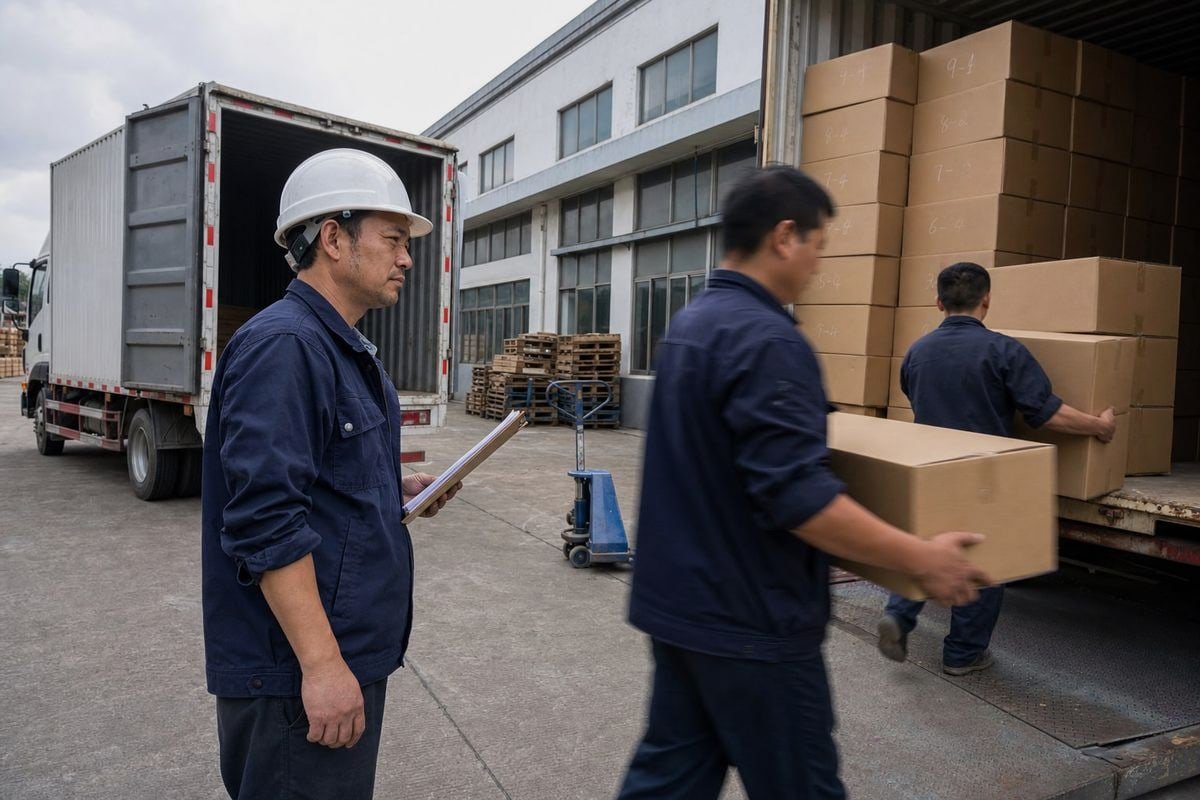
Seasonal fireplace décor demand peaks sharply in Q3 and Q4. Factories overbook. The suppliers who survive that pressure are the ones with systems; the ones who fail are the ones who go quiet. So build your safeguards around visibility and enforceable milestones, not promises Lieferkettenmanagement 6.
Tie penalties to checkpoints, not just final delivery
A Strafklausel 7 that only triggers on final QC failure gives you leverage after your deadline is already dead. Instead, define three or four mid-production checkpoints in the contract: material readiness, coloring completion, drying and packout completion, and container loading. Attach a small penalty or a remediation obligation to each. This gives you legal leverage throughout the cycle and, more importantly, gives the factory a reason to flag slippage early instead of hiding it.
Communication cadence for a rush window
Here is the cadence we hold ourselves to on rush orders:
- Order confirmation with a dated production plan within 48 hours.
- Daily WIP updates with photos during coloring and drying.
- Checkpoint reports at each contractual milestone, in English, same day.
- A 48 to 72 hour buffer between packout completion and the carrier cutoff.
- Named escalation contacts, so a problem reaches a decision-maker within hours.
The buffer is the safeguard buyers skip most often. Rush schedules tempt everyone to plan packout completion on the same day as loading. Do not accept that. Compressed drying times already raise the chance of undetected moisture defects. If a final check finds a problem, that buffer is the only thing standing between a fixable issue and a missed vessel. In our experience exporting to the US and Europe, orders with a two-day buffer almost always ship on time. Orders without one depend on luck.
Schlussfolgerung
Rush deadlines break where no one is watching. Verify certifications, place oversight where your real risk lives, demand batch evidence, and contract for checkpoints. Partner with a factory built for it.
Fußnoten
1. Authoritative standard reference for quality management systems mentioned as key certification. ↩︎
2. Official source explaining the ethical labor audit program referenced for supplier vetting. ↩︎
3. Background explanation of EU safety compliance mark referenced in certification table. ↩︎
4. Defines acceptance sampling standard used for batch quality control decisions. ↩︎
5. Relevant regulatory context for moisture and safety standards affecting packaged goods. ↩︎
6. Background concept underlying lead time and communication safeguards discussed. ↩︎
7. Legal reference clarifies how penalty clauses function and are enforced in commercial contracts. ↩︎



 English
  Spanish
  German
  French
  Arabic
  Portuguese
Diskutieren Sie mit