







Vorbereitung von SDS und Inhaltsstoffdokumenten für die Amazon-Gefahrgutprüfung scheitert bei mehr Verkäufern als die Produktqualität jemals. Ich habe beobachtet, wie Käufer unserer Magic Fire-Päckchen wegen eines einzigen falsch übereinstimmenden Produktnamens Wochen verloren haben. Eine unterdrückte ASIN bedeutet tote Lagerbestände, verlorenes Ranking und ein frustriertes Verkaufsteam. Die Lösung ist kein Glück – es ist ein sauberes, strukturiertes Dokumentenpaket, das vor der Auflistung erstellt wird.
Um SDS und Zutaten-Dokumente für die Amazon-Gefahrgutprüfung vorzubereiten, erhalten Sie ein GHS-konformes 16-Abschnitte-SDS von Ihrem Hersteller, gleichen Sie den Produktnamen und die Lieferantendetails exakt mit Ihrer ASIN ab, fügen Sie eine vollständige Zutatenliste mit CAS-Nummern hinzu und laden Sie die Datei (unter 20 MB) über den Workflow "Manage Dangerous Goods Classification" in Seller Central hoch.
Unten werde ich die genauen Dokumente, die Sie benötigen, wie wir sie liefern, warum Ablehnungen passieren und wie lange der gesamte Prozess wirklich dauert, durchgehen.
Welche Dokumente benötige ich, um die Hazmat-Prüfung von Amazon für Produkte mit Farbflammen zu bestehen?
Während einer Qualitätskontrollprüfung in unserer Produktionsstätte in Ningbo im letzten Jahr bat mich ein US-Kunde, alle Compliance-Dateien für eine SKU abzurufen. Der Stapel erzählte die ganze Geschichte dessen, was Amazon erwartet.
Für Produkte mit Farbflammen verlangt Amazon in der Regel ein GHS-konformes 16-Abschnitte-Sicherheitsdatenblatt, das mit Ihrer genauen ASIN verknüpft ist, sowie eine Offenlegung der chemischen Zusammensetzung mit CAS-Nummern. Wenn Amazon den Artikel als ungefährlich einstuft, kann anstelle eines vollständigen Sicherheitsdatenblatts ein Befreiungsblatt akzeptiert werden.
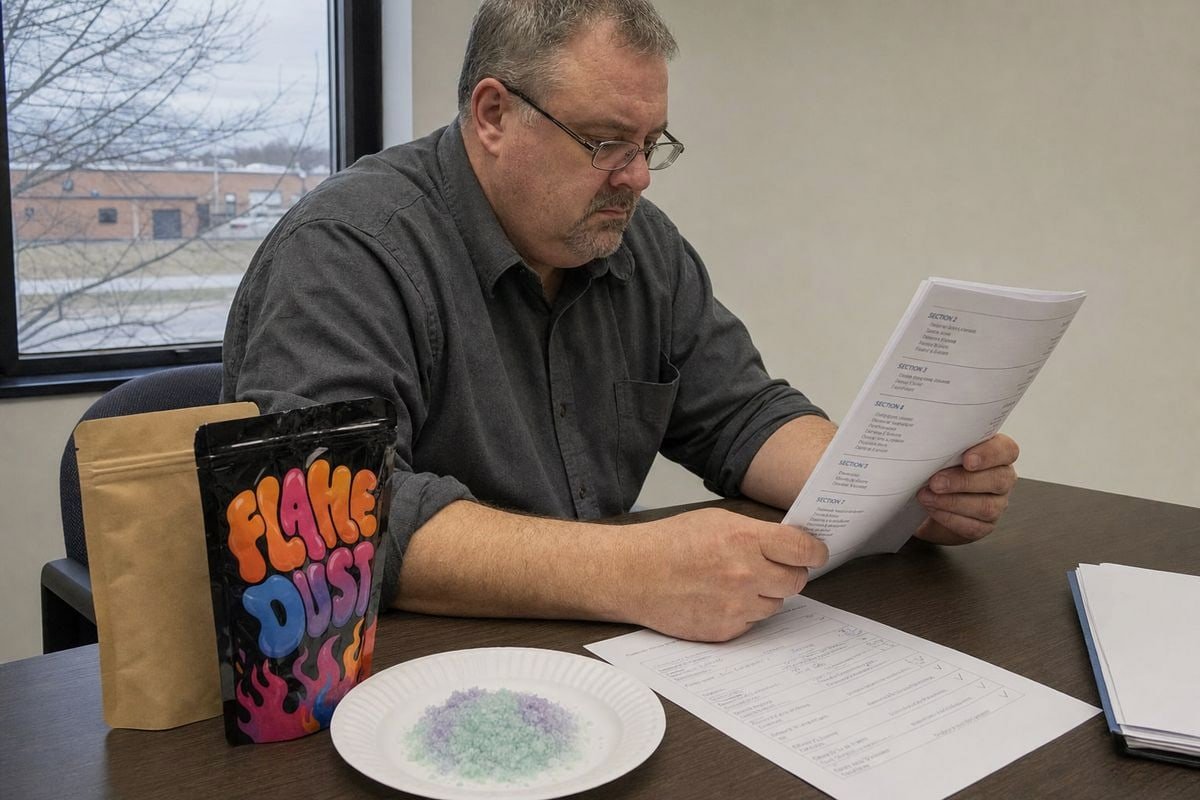
Die Amazon-Gefahrgutprüfung ist ein dokumentengesteuerter Screening-Schritt innerhalb des FBA Gefahrgut 1 Programms Sicherheitsdatenblatt 2. Amazon testet Ihr Produkt nicht. Es testet Ihre Unterlagen. Ihre Aufgabe ist es also, ein Paket abzugeben, das jede Frage beantwortet, bevor sie gestellt wird.
Das Kernstück: ein GHS-konformes SDS
Ihr SDS muss den GHS-Konformitätsstandards entsprechen, wobei alle 16 Abschnitte vorhanden und in der richtigen Reihenfolge sein müssen , und Spediteure und Zollbehörden verlassen sich darauf, um die deklarierte Klassifizierung einer Sendung zu validieren. 3. Das automatisierte System von Amazon prüft zuerst die Struktur der Abschnitte. Ein gekürztes oder neu geordnetes SDS schlägt daher oft fehl, bevor ein Mensch es überhaupt sieht. Die Abschnitte, die für Farbfackelpulver am genauesten geprüft werden, sind Abschnitt 1 (Identifizierung), Abschnitt 3 (Zusammensetzung), Abschnitt 9 (physikalische Eigenschaften, einschließlich Flammpunktdaten) und Abschnitt 14 (Transportinformationen, einschließlich der UN-Nummer und des Versandnamens, falls zutreffend).
Unterstützende Dokumente, die das Paket stärken
| Dokument | Zweck | Wenn Amazon danach fragt |
|---|---|---|
| – ein ordnungsgemäßer | Nachweise der primären Gefahrenklassifizierung | Fast immer für chemische Produkte |
| Liste der Inhaltsstoffe mit CAS-Nummern 4 | Verifiziert die Zusammensetzung von Abschnitt 3 | Formulierungsbasierte oder mehrkomponentige Produkte |
| Ausnahmegenehmigung | Erklärt den Status als nicht gefährlich | Nur wenn das Produkt keine regulierten Substanzen enthält |
| Drittanbieter-Testbericht (SGS/Intertek) | Unabhängige Verifizierung | Folgeanfragen oder Berufungen |
| Produktetikett-Grafik | Bestätigt, dass Sicherheitspiktogramme und Warnungen übereinstimmen | Streitigkeiten über Nichtübereinstimmung |
Eine Warnung aus Erfahrung: Ein Befreiungsformular für Kosmetika oder Neuheitenartikel ist nur gültig, wenn das Produkt tatsächlich keine regulierten Substanzen enthält. Wenn ein Farbfackelzusatz Metallsalze enthält, die eine Gefahrgutklassifizierung auslösen, garantiert die Einreichung eines Befreiungsformulars anstelle eines SDS die Ablehnung. Wählen Sie den Dokumententyp basierend auf der Chemie, nicht auf der Bequemlichkeit.
Kann Sunrich SDS- und Testberichte bereitstellen, die dem Compliance-Format von Amazon entsprechen?
Ein niederländischer Händler schickte uns einmal in leichter Panik eine E-Mail: Seine Auflistung für unsere Farbfackel-Kiefernzapfen wurde markiert, und sein vorheriger Lieferant hatte ihm nie ein echtes SDS gegeben. Wir hatten sein vollständiges Paket innerhalb weniger Tage fertig.
Ja. Sunrich bietet GHS-konforme 16-Abschnitt-SDB-Dokumente, vollständige Offenlegung der Inhaltsstoffe mit CAS-Nummern und SGS/Intertek-Prüfberichte für jedes von uns hergestellte Farbflammenprodukt. Wir stimmen Produktnamen, Lieferantendetails und Etikettendaten mit Ihrer ASIN ab, damit das Paket die Validierungsprüfungen von Amazon besteht.

Nach über 17 Jahren Herstellung von feuerbezogenen Produkten und Export in über 30 Länder betrachten wir Compliance-Unterlagen als Teil des Produkts, nicht als nachträglichen Gedanken. Unsere Käufer in den USA, Deutschland und Großbritannien können ohne sie einfach nicht listen. Hier ist also, was unser Dokumentenpaket beinhaltet und warum jedes Stück wichtig ist.
Was wir mit jeder OEM-Bestellung übergeben
Erstens, das SDS selbst. Wir erstellen es auf Englisch nach GHS-Konformitätsstandards, mit Flammpunktdaten in Abschnitt 9, Toxikologie in Abschnitt 11 und Transportdetails in Abschnitt 14. Da unsere Magic Fire-Formeln umweltfreundliche Materialien ohne schädliche Chemikalien verwenden, spiegelt der Transportabschnitt typischerweise einen nicht eingeschränkten Status wider – aber wir dokumentieren ihn trotzdem ordnungsgemäß, anstatt Felder leer zu lassen.
Zweitens, die Offenlegung der chemischen Zusammensetzung. Amazon fragt zunehmend nach einer Überprüfung auf Inhaltsstoffebene für formulierungsbasierte Produkte. Wir liefern eine Liste von CAS-Nummern für jede Komponente, was Ihnen auch hilft, automatisierte Sperren zu umgehen, die durch vage Inhaltsstoffbegriffe ausgelöst werden.
Drittens, Marktplatz-Lokalisierung. Ein SDS, das für OSHA 5 in den USA verfasst wurde, unterscheidet sich von dem, was WHMIS in Kanada oder REACH/CLP 6 in der EU erwartet. Da wir in alle drei Regionen versenden, bereiten wir die Version vor, die Ihrem Zielmarktplatz entspricht.
Warum Private-Label-Verkäufer eine Ausrichtung des Herstellers benötigen
Hier ist der Teil, den viele Verkäufer verpassen. Wenn Sie unter Ihrer eigenen Marke verkaufen, muss das SDS Ihren aufgelisteten Produktnamen anzeigen – nicht den Namen der Fabrik für die Formel. Da wir echte One-Stop-OEM/ODM-Dienstleistungen anbieten, stellen wir das SDS unter Ihrem Private-Label-Produktnamen aus, der Zeichen für Zeichen mit Ihrem ASIN-Titel übereinstimmt, mit Ihren Markendetails in Abschnitt 1. Dieser einzelne Ausrichtungsschritt beseitigt den häufigsten Ablehnungsgrund, bevor Sie überhaupt hochladen.
Warum werden so viele Gefahrstoffanträge abgelehnt und wie kann ich das vermeiden?
Der Kompromiss, den ich am häufigsten mit neuen Käufern bespreche, ist Geschwindigkeit versus Genauigkeit. Sie möchten, was auch immer sie heute zur Hand haben, hochladen. Ich rate immer zuerst zu einer eintägigen Qualitätsprüfung – denn eine Ablehnung kostet weit mehr als ein Tag.
Die meisten Gefahrstoffanträge scheitern aufgrund vermeidbarer Diskrepanzen: Der Produktname im Sicherheitsdatenblatt unterscheidet sich vom ASIN-Titel, Lieferantendetails fehlen, das Dokument ist älter als fünf Jahre, Abschnitte sind unvollständig oder der falsche Dokumenttyp wurde hochgeladen. Die Überprüfung dieser fünf Punkte vor der Einreichung verhindert fast alle Ablehnungen.

Die Überprüfung von Amazon basiert auf strengen Validierungslogiken. Wenn Sie verstehen, was das System prüft, können Sie jeden häufigen Fehler im Voraus beheben. Hier ist die Landschaft der Ablehnungen, wie wir sie bei unseren Exportkunden erlebt haben.
Die Ablehnungsgründe, nach Häufigkeit geordnet
| Ablehnungsgrund | Was Amazon prüft | Wie man es vor dem Hochladen behebt |
|---|---|---|
| Namensabweichung | 1:1-Übereinstimmung zwischen SDS-Produktnamen und ASIN-Titel | Stellen Sie das SDS mit dem genauen Listungsnamen, einschließlich Markensuffixen, erneut aus |
| Veraltetes SDS | Überarbeitungsdatum innerhalb der letzten fünf Jahre (60 Monate) | Fordern Sie ein neu datiertes, neu verifiziertes SDS vom Hersteller an |
| Fehlende Abschnitte | Alle 16 GHS-Abschnitte vorhanden und in der richtigen Reihenfolge | Verwenden Sie einen Hersteller oder einen qualifizierten SDS-Erstellungsservice, bearbeiten Sie ihn niemals selbst |
| Falscher Dokumenttyp | SDS erforderlich, aber Befreiungsblatt hochgeladen | Bestätigen Sie zuerst die Klassifizierung gefährlicher Güter und wählen Sie dann das Dokument aus |
| Unvollständiger Abschnitt 3 | Inhaltsstoffe, CAS-Nummern, Konzentrationen | Fügen Sie eine ergänzende Inhaltsstoffoffenlegung bei |
| Datei-Probleme | Unter 20 MB, lesbar, richtige Sprache gekennzeichnet | Komprimieren Sie die PDF-Datei und legen Sie die Dokumentensprache beim Hochladen fest |
Die subtilen Fehler, die es wert sind, zu kennen
Über die großen Fünf hinaus verursachen einige ruhigere Probleme Verzögerungen. Selbst winzige Diskrepanzen bei der juristischen Person – "Inc." gegenüber "LLC" im Lieferantennamen – können einen Validierungsfehler auslösen. Generische Duftstoffbegriffe wie "Parfum" in Abschnitt 3 können automatisierte Sperren auslösen; eine ergänzende Offenlegung, die jede Unterkomponente mit CAS-Nummern auflistet, löst dies. Und es lohnt sich, Abschnitt 3 zu prüfen auf PFAS 7 proaktiv, da die Filter von Amazon für diese Substanzen immer strenger werden.
Eine weitere Vorsichtsmaßnahme für internationale Verkäufer: Eine Ablehnung in einem Marktplatz kann eine synchronisierte Compliance-Überprüfung derselben ASIN in jeder anderen Region auslösen, in der Sie verkaufen. Saubere Dokumentation in Ihrem Heimatmarktplatz schützt Ihren globalen Katalog, nicht nur eine Listung.
Wie lange dauert es, bis Sicherheitsdatenblätter und Zutaten-Dokumentationen vor der Auflistung fertig sind?
Eine Lektion, die wir früh in unserem Exportgeschäft gelernt haben: Käufer, die die Dokumentation parallel zum Produktionsstart planen, halten den Zeitplan ein, während Käufer, die sie als letzten Schritt behandeln, fast immer ihr Startfenster verlieren.
Mit einem Hersteller, der über vorbereitete Dokumentation verfügt, dauert die Erstellung eines Amazon-konformen SDS-Pakets 3–7 Werktage, um es an Ihre ASIN anzupassen. Wenn Ihr Lieferant kein SDS hat, dauert die Erstellung eines neuen SDS 2–4 Wochen. Die Überprüfung durch Amazon selbst dauert in der Regel mehrere zusätzliche Werktage.

Die ehrliche Antwort hängt davon ab, wo Sie anfangen. Ich werde die Zeitachse in die drei realistischen Szenarien aufteilen, die wir bei Distributoren und Outdoor-Marken sehen, und dann die Taktik zur Zeitplanung teilen, die die meisten Risiken beseitigt.
Zeitplan nach Ausgangspunkt
| Ihre Situation | Vorbereitungszeit | Hauptaufgaben |
|---|---|---|
| Lieferant hat ein aktuelles, GHS-konformes SDS | 3–7 Werktage | ASIN-Namensabgleich, Sprachprüfung, Dateivorbereitung, Upload |
| SDS existiert, ist aber veraltet oder nicht konform | 1–2 Wochen | Neudatierung, Umstrukturierung in 16 Abschnitte, Hinzufügen von CAS-Daten |
| Kein SDS vorhanden | 2–4 Wochen | Sammlung von Inhaltsstoffdaten, SDS-Erstellung, Verifizierung, Übersetzung |
Zusätzlich zur Vorbereitung planen Sie Zeit für die eigene Überprüfung durch Amazon ein, nachdem Sie über das Compliance-Dashboard von Seller Central eingereicht haben. Überprüfungen werden oft innerhalb weniger Werktage abgeschlossen, aber Folgeanfragen nach Inhaltsstofflisten oder Testberichten können dies verlängern. Und denken Sie daran, dass der Fristendruck auch umgekehrt wirkt: Sobald Amazon Dokumente anfordert, haben Verkäufer möglicherweise nur vier Werktage Zeit, bevor die Listung unterdrückt wird. Deshalb ist es eine verlierende Strategie, auf eine Markierung zu warten.
Die Schatten-Listing-Taktik
Der klügste Ansatz, den wir Käufern empfehlen, ist ein "Schatten-Listing". Erstellen Sie Ihr FBA-Angebot mit null Lagerbestand etwa 30 Tage vor dem Versand Ihrer Produktionscharge. Dies löst die Gefahrgutprüfung frühzeitig aus, sodass jeder Dokumentationsfehler auftaucht und behoben wird, während sich Ihr Lagerbestand noch auf unserer Produktionslinie befindet – nicht, während er in einem Fulfillment-Center eingefroren ist. Wenn wir OEM-Bestellungen für US-Kunden bearbeiten, geben wir das SDS-Paket bei Auftragsbestätigung frei, nicht bei Versand, genau damit diese Taktik funktioniert. Dokumentation und Fertigung sollten parallel laufen, niemals nacheinander.
Schlussfolgerung
Eine unterdrückte Listung ist teuer; ein sauberes Dokumentationspaket ist billig. Bereiten Sie ein GHS-konformes SDS vor, gleichen Sie es mit Ihrer ASIN ab, verifizieren Sie die Inhaltsstoffe mit CAS-Nummern und reichen Sie es frühzeitig ein – bevor Amazon die Angelegenheit erzwingt.
Fußnoten
Hintergrundkonzept zur Klassifizierung gefährlicher Güter im Zusammenhang mit der Amazon-Gefahrgutprüfung. ↩︎
Hintergrund zu Zweck, Struktur und regulatorischer Rolle von SDS in der chemischen Sicherheit. ↩︎
Erläutert den GHS-Rahmen, der die Struktur von SDS und die Compliance-Anforderungen zugrunde liegt. ↩︎
Autoritative Quelle, die CAS-Registrierungsnummern zur Identifizierung von Inhaltsstoffen erklärt. ↩︎
OSHA regelt die US-Gefahrenkommunikationsstandards, die für die SDS-Compliance referenziert werden. ↩︎
Autoritative Wikipedia-Eintragung, die die EU-Chemikalienklassifizierungs- und Kennzeichnungsstandards erklärt. ↩︎
EPA-Ressource zu PFAS-Substanzen, relevant für Bedenken bei der Prüfung von Inhaltsstoffen in Abschnitt 3. ↩︎



 English
  Spanish
  German
  French
  Arabic
  Portuguese
Diskutieren Sie mit