







Ein Produktsicherheitsdokumentationspaket für gefärbte Kiefernzapfen für den Kamin sieht einfach aus, bis der Zoll, ein Einzelhändler oder eine Aufsichtsbehörde danach fragt digitales Produkt-Pass 1. Unsere Fabrik hat erlebt, dass Sendungen wegen einer fehlenden Seite eingefroren wurden.
Ein Produktsicherheitsdokumentationspaket für gefärbte Kiefernzapfen für den Kamin muss ein 16-teiliges Sicherheitsdatenblatt, eine Analyse der chemischen Zusammensetzung, Berichte über Entflammbarkeitsprüfungen, Ergebnisse von Schwermetalltests, eine FHSA-konforme Warnkennzeichnung, eine Konformitätsbescheinigung, Chargenrückverfolgbarkeitsaufzeichnungen und ein schriftliches Memo zur regulatorischen Klassifizierung enthalten.
Das ist die kurze Antwort. Unten zerlege ich jeden Teil der Akte, Abschnitt für Abschnitt, damit Sie genau wissen, was Sie vor Ihrer ersten Großbestellung verlangen müssen.
Welche Zertifizierungen und Testberichte muss ich für gefärbte Kiefernzapfen beifügen?
Während unserer über 17-jährigen Exporttätigkeit von Farbflammenprodukten in die USA und nach Europa ist die häufigste Frage unserer Käufer nicht der Preis. Es geht darum, welche Testberichte tatsächlich wichtig sind.
Sie benötigen ein GHS-konformes Sicherheitsdatenblatt, eine Analyse der chemischen Zusammensetzung mit Ergebnissen zum Schwermetallgehalt, Berichte über Entflammbarkeitsprüfungen, eine toxikologische Risikobewertung, Prüfzertifikate von Drittanbietern wie SGS oder Intertek, eine Konformitätserklärung und marktspezifische Dokumente wie den Nachweis der CE-Kennzeichnung für die EU.

Das Erste, was geklärt werden muss, ist die Klassifizierung. Gefärbte Kiefernzapfen befinden sich in einer schwierigen Lage. Einige Verkäufer behandeln sie als harmlose Wohndekoration. Einige Aufsichtsbehörden könnten sie als brennbare Verbraucherchemikalien betrachten, näher an Feueranzündern. In den USA die Verbraucherproduktsicherheitskommission (CPSC) 2 behandelt Kaminzubehör nicht automatisch als Feuerwerkskörper. Die Zusammensetzung, der Verwendungszweck und Ihre Marketingaussagen entscheiden jedoch über die Kategorie. Deshalb empfehlen wir immer, dass das Paket mit einem kurzen Memo zur behördlichen Klassifizierung beginnt. Es besagt in einfacher Sprache, warum das Produkt ein Kaminzubehör und kein pyrotechnisches Gerät.
ist.
Ich erwähne dies, weil einige Käufer uns im Laufe der Jahre zurückgedrängt haben. Sie argumentieren, das Produkt sei „nur bemalte Kiefernzapfen“ und die Bürokratie sei übertrieben. Unsere Antwort ist direkt: Die Metallsalze, die die farbigen Flammen erzeugen, sind Chemikalien, und die Regeln zur Gefahrenkommunikation gelten für Chemikalien. Die Dokumentation des Produkts, als ob die Prüfung streng wäre, ist der günstigere Weg. Der Wiederaufbau einer Compliance-Akte nach einer Zollbeschlagnahme ist der teure.
| Dokument | Was sie abdeckt | Die Kerndokumente, in Reihenfolge der Priorität |
|---|---|---|
| Sicherheitsdatenblatt (SDB) | Wer stellt es normalerweise aus | Alle 16 GHS-Abschnitte: Gefahren, Erste Hilfe, Brandbekämpfung, Lagerung, Entsorgung |
| Chemische Zusammensetzungsanalyse | Hersteller, abgestimmt auf die tatsächliche Formel | Farbstoffsalze, Wachse, Beschichtungen, Duftstoffverbindungen |
| Hersteller plus Drittlabor | Schwermetallgehaltsbericht | SGS, Intertek oder gleichwertiges Labor |
| Entflammbarkeitsprüfung | Blei und eingeschränkte Metalle nach CPSIA-ähnlichen Grenzwerten | Akkreditiertes Prüflabor |
| Toxikologische Risikobewertung 3 | Brandrate, Zündverhalten, keine explosiven Aufwallungen | Verbrennungsrauch, Potenzial für Haut- und Augenreizungen |
| Toxikologe oder Laborpartner 4 Konformitätserklärung | (CoC) | Hersteller oder Importeur |
| Erklärung, dass die Charge den geltenden Vorschriften entspricht | Klassifizierungsmemo | Schriftliche Begründung für die behördliche Kategorie des Produkts |
Hersteller mit Compliance-Berater.
Wie weise ich die Chargen-zu-Chargen-Konsistenz für mein Sicherheitspaket nach?
Die Metallsalze und Beschichtungen, die farbige Flammen erzeugen, sind Chemikalien, die den Regeln zur Gefahrenkommunikation unterliegen, und behandelte Zapfen können Haut, Augen und Atemwege ohne ordnungsgemäße Dokumentation und Warnungen reizen.
Sie beweisen die Chargen-zu-Chargen-Konsistenz mit chargennummerierten Produktionsaufzeichnungen, eingehenden Rohstoffzertifikaten, festen Formulierungspezifikationen mit Toleranzen, Chargen-eigenen Brenntests, Feuchtigkeitsgehaltsprüfungen, zurückbehaltenen Proben jeder Charge und einem Konformitätszertifikat, das jede Lieferung mit ihren Testdaten verknüpft.
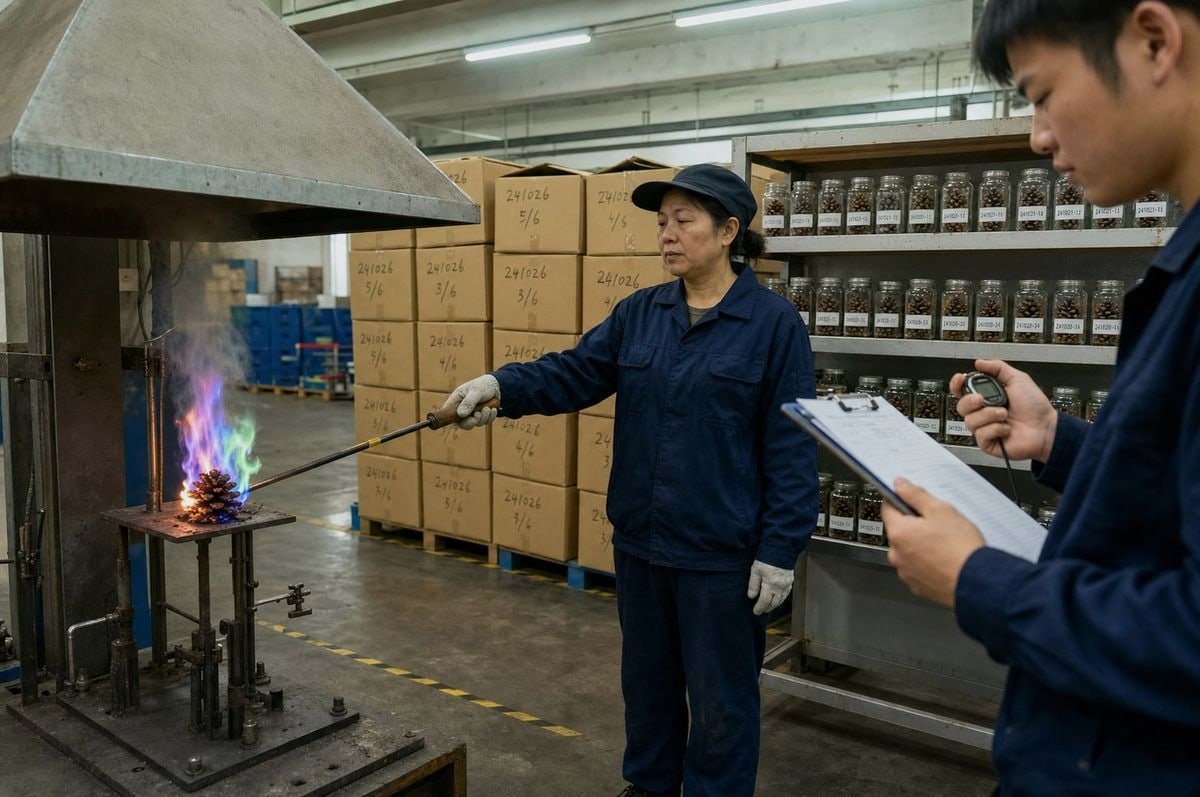
Ein deutscher Händler wandte sich nach einer schlechten Erfahrung anderswo wieder an uns: Das Muster brannte schön, aber die Großlieferung produzierte schwache Farben und starken Rauch. Diese Lücke ist genau das, was die Konsistenzdokumentation verhindert.
Konsistenz ist, wo sich eine echte Fabrik von einem Handelsunternehmen unterscheidet. In unseren Produktionslinien trägt jede Charge von Farbflammen-Kiefernzapfen eine Chargennummer, die auf drei Dinge zurückgeführt werden kann: die Quelle der rohen Kiefernzapfen, die Charge der Behandlungschemie und die Charge der Beschichtung oder des Wachses. Wenn sich eines davon ändert, kann sich das Brennverhalten ändern. Käufer sehen diese Komplexität nicht auf einem Produktfoto. Sie sehen sie erst, wenn Charge 3 mehr raucht als Charge 1.
Ein praktisches Konsistenzsystem
- Hier ist der Prozess, den wir Ihnen von jedem Lieferanten empfehlen, Schritt für Schritt:. Feste Formelspezifikation.
- Die genaue Salzbeladung, das Beschichtungsgewicht und die Wachsart werden mit Toleranzen aufgeschrieben. Keine stillschweigenden Ersetzungen. Eingangsverifizierung der Materialien.
- Jede Lieferung von Farbstoffsalzen und Wachsen kommt mit einer Lieferantenerklärung an und wird vor der Verwendung überprüft. Feuchtigkeits- und Trocknungsregelung.
- Brennprüfung pro Charge. Kiefernzapfen werden auf einen definierten Feuchtigkeitsschwellenwert getrocknet. Hohe Feuchtigkeit verursacht Dampfblasen und Funkengefahr, daher gehören Spezifikationen für die Ofentrocknung in die Akte.
- Rückstellmuster. Von jeder Charge wird eine Probe verbrannt. Die Bediener prüfen das Zündverhalten, den Flammfarbeneffekt, die Brenndauer, die Rauchentwicklung und die Rückstände.
- Von jeder Charge wird eine versiegelte Probe für einen definierten Zeitraum aufbewahrt, damit jede Reklamation mit der tatsächlichen Produktionscharge abgeglichen werden kann. Chargengebundene CoC.
Die Konformitätserklärung jeder Sendung verweist auf die Chargennummern und die zugrunde liegenden Prüfberichte.
| Was der Chargenbericht enthalten sollte | Warum es wichtig ist |
|---|---|
| Chargennummer und Produktionsdatum | Aufzeichnungselement |
| Ermöglicht die Eingrenzung von Rückrufen und die Verfolgung von Reklamationen | Bestätigt, dass die Farb- und Wachszusammensetzung nicht abgewichen ist |
| Feuchtigkeitsgehaltsmessung | Verhindert Knallen, Funkenflug und inkonsistente Zündung |
| Brennprüfprotokoll | Nachweis, dass die Charge wie die genehmigte Probe performt |
| Unterschrift des Bedieners und der Qualitätskontrolle | Verantwortlichkeit innerhalb der Fabrik |
| Referenz der zurückbehaltenen Probe | Physischer Beweis für Streitfälle aufbewahrt |
Unsere ISO 9001 5 Das System erzwingt diese Disziplin bei jeder Charge, und unsere BSCI-Audits verifizieren, dass der Prozess real ist und keine Papiertheater. Der praktische Vorteil für Sie ist einfach: Die erste Probe, die Sie genehmigen, spiegelt zuverlässig die Qualität der Massenproduktion wider. Bitten Sie Ihren Lieferanten, Ihnen einen ausgefüllten Chargenbericht aus einer früheren Bestellung zu zeigen. Wenn er ihn nicht innerhalb eines Tages vorlegen kann, bewahrt er ihn nicht auf.
Welche Warnhinweise und Konformitätskennzeichnungen müssen auf meiner Verpackung angebracht sein?
Der Etikettenaufdruck ist der Bereich, in dem wir überraschend viel Zeit mit Private-Label-Kunden verbringen. Wenn wir kundenspezifische Kraft-Beutel und Kordelzug-Säcke entwickeln, wird das Warnfeld vor der Grafik entworfen, nicht danach.
Die Verpackung muss eine FHSA-ähnliche Warnkennzeichnung mit einem Signalwort, Gefahrenhinweisen, "Außer Reichweite von Kindern aufbewahren", Erste-Hilfe-Anweisungen, Anwendungsbeschränkungen, die das Produkt auf holzbrennende Kamine und Lagerfeuer beschränken, Verboten für Gasgeräte und Kochfeuer, Lagerungshinweisen und Chargenidentifikation tragen.

Gemäß dem Bundesgesetz über gefährliche Stoffe (FHSA) 6, ein chemisches Konsumprodukt, das Haut, Augen oder Atemwege reizen kann, erfordert eine Warnkennzeichnung. Signalwörter sind hier wichtig. Abhängig von Ihrer toxikologischen Risikobewertung, das Etikett beginnt mit VORSICHT oder WARNUNG, gefolgt von den spezifischen Gefahrenhinweisen. Vage Etiketten wie "mit Vorsicht verwenden" erfüllen niemanden – weder die CPSC, noch einen EU-Marktüberwachungsbeamten, noch das Compliance-Team eines Einzelhandelskäufers.
Der Block mit den Anwendungsbeschränkungen ist der Teil, den die meisten Verkäufer falsch machen. Die Marktplatzrichtlinien für diese Produkte sind konsistent und streng, und Ihr Etikett sollte sie Wort für Wort widerspiegeln:
- Zur Verwendung in nur holzbrennenden Kaminen, Feuerschalen und Lagerfeuern, wo solche Produkte erlaubt sind.
- Nicht in Gas- oder Propankaminen oder Gas-Holz-Sets verwenden.
- Nicht für Kochfeuer, BBQ-Grills oder jegliche Lebensmittelzubereitung verwenden.
- Zu einem bestehenden Feuer hinzufügen; nicht als Anzünder verwenden, es sei denn, es wurde dafür getestet und gekennzeichnet.
- Kein Essen über den farbigen Flammen rösten.
- Aufsicht bei der Verwendung in der Nähe von Kindern und Haustieren. Von Hitze, Funken und Zündquellen bei der Lagerung fernhalten.
- An einem kühlen, trockenen, gut belüfteten Ort in einem dicht verschlossenen Behälter lagern.
Etikettenelemente nach Markt
| Element | Grundlage der US-Anforderungen | EU-Ansatz |
|---|---|---|
| Signalwort und Gefahrenhinweise | FHSA-Warnkennzeichnung | CLP-konforme GHS-Erklärungen |
| Erste-Hilfe-Text bei Verschlucken, Hautkontakt, Augenkontakt | FHSA-Pflichtinhalt | SDS Abschnitt 4 auf der Verpackung gespiegelt |
| Kindersicherheitserklärung | "Außerhalb der Reichweite von Kindern aufbewahren" | Dasselbe in der Landessprache |
| Konformitätskennzeichnung | CoC im Besitz des Importeurs | CE-bezogene Dokumentation, wo zutreffend |
| Chargen-/Losnummer | Unterstützt Rückverfolgbarkeit und Rückrufe | Erforderlich für die Marktüberwachung |
| Sprache | Englisch | Sprache jedes Ziellandes |
Eine moderne Ergänzung, die wir zunehmend für Kunden drucken, ist eine QR-Code 7 Verknüpfung mit einem digitalen Produktpass: chargenspezifische Sicherheitszertifikate, das SDB und ein kurzes Anleitungsvideo. Beschaffungsteams im Einzelhandel mögen es, weil es das Dokumentationspaket von einem Aktenschrank in etwas verwandelt, das ein Verbraucher im Gang überprüfen kann. Da wir Warnetiketten, Barcodes und Display-Verpackungen als Teil unseres OEM/ODM-Services intern bearbeiten, werden der Compliance-Text und die Grafik zusammen genehmigt, was den klassischen Fehler vermeidet, schöne Verpackungen mit einem rechtlich leeren Warnhinweis zu haben.
Wie kann ich einen Lieferanten dazu bringen, vollständige Dokumentation bereitzustellen, bevor ich eine Großbestellung aufgeben?
Eine Lektion, die ich früh in unserem Exportgeschäft gelernt habe: Die Käufer, die nach Dokumenten fragen vor Anzahlung senden, haben später fast nie Compliance-Probleme. Diejenigen, die danach fragen.
Fordern Sie das Sicherheitsdatenblatt (SDB), Prüfberichte von Drittanbietern, Ergebnisse von Schwermetalltests, ein Musterkonformitätszertifikat und einen vergangenen Chargenbericht an, bevor Sie eine Anzahlung leisten. Überprüfen Sie die Berichtsnummern direkt beim Labor, verknüpfen Sie die Dokumentationslieferungen mit Ihrem Kaufvertrag und betrachten Sie eine Weigerung oder Verzögerung als disqualifizierendes Warnsignal.

Legitime Fabriken erwarten diese Anfrage. An unserem Produktionsstandort in Ningbo halten wir aus genau diesem Grund ein stehendes Dokumentationspaket bereit und können SGS- oder Intertek-Berichtsnummern weitergeben, die ein Käufer direkt beim Labor überprüfen kann. Ein Lieferant, der zögert, einen "Musterbericht" mit Wasserzeichen für ein anderes Produkt sendet oder Dokumente "nach Bestätigung der Bestellung" verspricht, sagt Ihnen etwas Wichtiges. Hören Sie darauf.
Eine Checkliste für die Dokumentation vor der Bestellung
Arbeiten Sie diese Sequenz durch, bevor Sie Geld zusagen:
- Fordern Sie das vollständige Paket schriftlich an. SDB, chemische Zusammensetzungsanalyse, Entflammbarkeitsprüfbericht, Ergebnisse des Schwermetallgehalts, Klassifizierungsmemo und eine Muster-CoC.
- Überprüfen Sie die Details. Der Produktname, die Formulierung und die Verpackung auf den Berichten müssen mit dem übereinstimmen, was Sie tatsächlich kaufen. Ein Bericht für Farbflammen-Päckchen deckt keine behandelten Kiefernzapfen ab.
- Unabhängig überprüfen. Rufen oder mailen Sie das ausstellende Labor mit der Berichtsnummer. SGS und Intertek 8 Beide bestätigen die Echtheit. Dies dauert zehn Minuten und filtert die meisten Fälschungen heraus.
- Fordern Sie einen Aufzeichnungssatz einer früheren Charge an. Dies beweist, dass das Qualitätssystem in der täglichen Produktion läuft, nicht nur während der Audits.
- Bestellen Sie eine bezahlte Testcharge. Eine flexible MOQ-Testbestellung ermöglicht es Ihnen, das Produkt selbst einem Brenntest zu unterziehen und zu überprüfen, ob die Etiketten, Barcodes und Beilagen wie angegeben angekommen sind.
- Dokumente in den Vertrag aufnehmen. Machen Sie chargenbezogene Testdaten und die CoC zur Bedingung für die Endzahlung und benennen Sie die erforderlichen Dokumente ausdrücklich.
- Bestätigen Sie die englischsprachige Reaktionsfähigkeit. Während der Produktion treten Compliance-Fragen auf. Wenn die Kommunikation vor dem Verkauf langsam ist, wird die Kommunikation nach dem Verkauf noch schlechter sein.
Ein weiterer Punkt zu Anreizen. Ein Lieferant, der auf den niedrigsten Preis ausgerichtet ist, hat wenig Spielraum, um ordnungsgemäße Tests zu finanzieren, und die Dokumentation ist normalerweise die erste Ecke, die gespart wird. Ein Lieferant, der als langfristiger Fertigungspartner positioniert ist, behandelt die Compliance-Datei als Teil des Produkts. Wenn unsere Kunden in den USA, Deutschland und Großbritannien die Händler-Onboarding durchlaufen, ist das Dokumentationspaket das, was sie gelistet bekommt – die Kiefernzapfen selbst sind fast der einfache Teil.



 English
  Spanish
  German
  French
  Arabic
  Portuguese
Diskutieren Sie mit