







Die Auswahl von magischem Feuerpulver erscheint einfach, bis eine Bestellung schiefgeht Schwermetalle 1. An unserer Produktionslinie in Ningbo habe ich Käufer gesehen, die Einzelhandelstüten mit Event-Ware verwechseln – und dafür bezahlen. Eine falsche Lieferung kann abgelehnte Sendungen, unzufriedene Veranstaltungsorte oder Rückgaben im Handel bedeuten. Die Lösung besteht darin, genau zu wissen, was jeder Käufertyp tatsächlich optimiert.
Verbraucher wählen magisches Feuerpulver wegen der Bequemlichkeit: kleine, vordosierte Beutel, einfache Zündung und sichere neuartige Farbeffekte. Veranstaltungsplaner wählen wegen der Kontrolle: Großmengen, geprüfte Zertifizierungen, gleichbleibende Brenndauer, Einhaltung von Veranstaltungsorten und kundenspezifisches Branding. Dieselbe Produktkategorie bedient zwei sehr unterschiedliche Kauflogiken.
Ich werde dies Abschnitt für Abschnitt aufschlüsseln. Ich werde Zertifizierungen, Brenndauer und Farbintensität, Verpackung und Kennzeichnung sowie schließlich Mindestbestellmengen und Eigenmarkenoptionen behandeln. Jeder Bereich lässt sich klar zwischen den beiden Käufersegmenten aufteilen.
Welche Zertifizierungen sollte ich beim Beschaffen von magischem Feuerpulver für Großveranstaltungen vs. Einzelhandelspackungen überprüfen?
Ein deutscher Händler fragte mich einmal nach unserer vollständigen Testberichtdatei, bevor er überhaupt nach dem Preis fragte. Dieses Gespräch lehrte mich, wie wichtig die Einhaltung von Vorschriften für ernsthafte Käufer ist, insbesondere in der EU.
Für Einzelhandelsverpackungen, überprüfen Sie SGS- oder Intertek-Sicherheitsprüfberichte, CE-Kennzeichnung und Dokumentation für ungiftige Materialien. Für Großveranstaltungen zusätzlich Werksaudits nach ISO 9001 und BSCI, Chargenprüfkonsistenz und Dokumentation, die Brandschutzbestimmungen des Veranstaltungsortes und Haftpflichtversicherer erfüllt.

Das Zertifizierungsfrage ist der erste Filter, den jeder professionelle Käufer anwenden sollte. In unseren über 17 Jahren Export von Farbfackelprodukten in über 30 Länder habe ich noch nie eine große Einzelhandelskette oder einen ernsthaften Event-Lieferanten gesehen, der Waren ohne Papiere akzeptiert hat. Aber die Papiere unterscheiden sich je nach Kanal, und dieser Unterschied ist wichtig.
Einzelhandelsorientierte Zertifizierungen
Einzelhandelskäufer benötigen den Nachweis, dass das Produkt für eine untrainierte Person sicher ist. Das bedeutet Laborberichte von Drittanbietern von Stellen wie SGS oder Intertek 2 , die Material- und Schwermetallsicherheit abdecken. Es bedeutet auch CE-Kennzeichnung 3 für die EU und klare, ungiftige Zutaten-Dokumentation für Märkte wie die USA. Eine große Kette wie ein Baumarkt-Einzelhändler wird auch oft die Fabrik selbst prüfen. Deshalb haben wir BSCI-Sozialkonformitätszertifizierung 4 neben unseren Produktzertifikaten. Einzelhändler prüfen die Fabrik, nicht nur die Tüte.
Event-orientierte Dokumentation
Eventplaner tragen die rechtliche Verantwortung für Menschenmengen. Ihre Lieferanten müssen mehr als einen Sicherheitsbericht liefern. Sie benötigen normalerweise Sicherheitsdatenblätter 5, Chargen-Testkonsistenz und Dokumente, die der Veranstaltungsort Brandschutzbeauftragter 6 oder Versicherer akzeptiert. Ein Outdoor-Festival in Polen und ein Indoor-LARP-Event in Frankreich können unterschiedliche Feuerregeln anwenden, daher müssen die Papiere vollständig genug sein, um sich anzupassen.
| Zertifizierung / Dokument | Einzelhandelskonsumenten | Eventplaner |
|---|---|---|
| SGS / Intertek Prüfbericht | Erforderlich | Erforderlich |
| CE-Kennzeichnung (EU) | Erforderlich | Erforderlich |
| In unseren über siebzehn Jahren des Exports in die USA, nach Deutschland, Großbritannien und Frankreich sind die Dokumente, die Käufer am häufigsten anfordern, | Bevorzugt | Effektiv erforderlich |
| BSCI Sozialaudit | Von großen Ketten gefordert | Bevorzugt |
| Sicherheitsdatenblatt (SDB) | Selten angefordert | Standardanforderung |
| Chargenkonsistenzaufzeichnungen | Selten angefordert | Oft erforderlich |
| Vom Veranstaltungsort/Versicherer akzeptierte Dokumentation | Nicht benötigt | Kritisch |
Mein Rat ist einfach: Fragen Sie Ihren Lieferanten nach dem vollständigen Dokumentensatz, bevor Sie Muster anfordern. Eine echte Fabrik kann dies innerhalb eines Tages erstellen. Ein Handelsunternehmen normalerweise nicht.
Wie wähle ich die richtige Brenndauer und Farbintensität für verschiedene Käufersegmente aus?
Die Brenndauer ist die Spezifikation, die wir bei OEM-Projekten am häufigsten anpassen. Wenn wir eine Formel für eine Campingmarke im Vergleich zu einem Festivalhändler kalibrieren, ändern sich die Granulat-Mischung und die Dosierung merklich.
Verbraucher reagieren am besten auf Brenndauern von 20–60 Minuten pro Beutel mit lebendigen Farbwechseln für Lagerfeuer und Kamine. Eventplaner benötigen längere, wiederholbare Brennvorgänge, gesättigte Einzel- oder sequenzierte Farben, die sich gut fotografieren lassen, und eine Dosierung, die sich über große Feuerstellen hinweg vorhersagbar skalieren lässt.
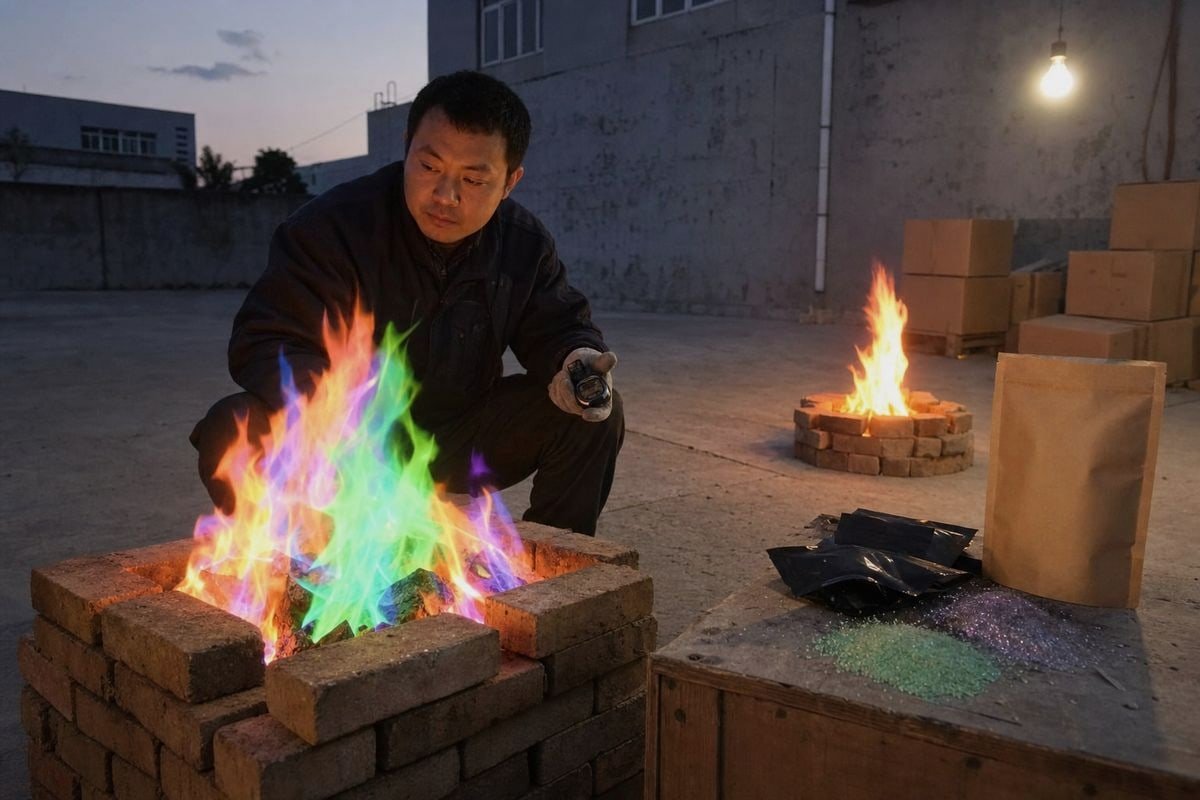
Brenndauer und Farbintensität sind dort, wo die Produktentwicklung auf Käuferpsychologie trifft. Ich wäge diesen Kompromiss bei fast jeder kundenspezifischen Bestellung ab: Mehr Farbstoff pro Beutel bedeutet kräftigere Farbe, aber es erhöht auch die Kosten pro Einheit und verändert, wie die Granulate in die Flamme gelangen. Die richtige Balance hängt davon ab, wer das Feuer entzündet.
Was Verbraucher wirklich wollen
Eine Familie auf einem Campingplatz will eines: die Tüte hineinwerfen, Regenbogenflammen sehen, den Moment genießen. Unsere Standard-Magic-Fire-Tüten sind darauf abgestimmt. Eine 25-Gramm-Tüte mit etwa einer halben Stunde wechselnder Blau-, Grün- und Rottöne trifft den Sweet Spot aus Wow-Faktor und Preis. Verbraucher vergleichen selten technische Spezifikationen. Sie vergleichen das Foto auf der Verpackung mit dem, was sie im Feuer sehen. Daher ist die Chargen-zu-Chargen-Farbkonsistenz die eigentliche Qualitätsmetrik – wenn die Flamme schwächer aussieht als die Abbildung auf der Verpackung, gibt es Rücksendungen.
Was Eventplaner wirklich brauchen
Event-Einkäufer denken in Gesamtheiten, nicht in Momenten. Ein Hochzeitskoordinator möchte eine Feuerschale im Farbthema des Paares für einen ganzen zweistündigen Empfang glühen sehen. Ein LARP- oder Mittelalter-Event-Organisator möchte "magische" Flammen, die den ganzen Abend über mehreren Feuerschalen dramatisch bleiben. Das ändert die Auswahlkriterien:
- Dauer pro Dosis – längere, gleichmäßigere Brände reduzieren die Nachdosierung während des Events.
- Farbintensität – tiefe, fototaugliche Farbtöne sind für Fotografie und Video wichtig.
- Wiederholbarkeit – jede Feuerschale muss übereinstimmen; eine gemischte Charge ruiniert den visuellen Eindruck.
- Skalierbarkeit – Dosierungsanleitungen müssen von einer Feuerstelle auf zwanzig übertragbar sein.
Wir entwickeln oft einfarbige oder sequenzielle Farbformeln für diese Käufer, während Einzelhandelslinien mehrfarbig bleiben. Fragen Sie Ihren Lieferanten, ob er Brenndauer und Farbton unabhängig voneinander abstimmen kann. Wenn nicht, verkaufen sie eine feste Formel weiter.
Welche Verpackungs- und Kennzeichnungsanforderungen unterscheiden sich zwischen Einzelhandelskunden und Kunden der Veranstaltungsplanung?
Verpackung ist, wo ich die meisten Testbestellungen erfolgreich oder gescheitert habe. Unsere Fabrik produziert die gleichen Kernkörnchen in heißversiegelten Folienbeuteln, Kraft-Standbodenbeuteln, Plastikgläsern und Flip-Top-Displayboxen – und jedes Format dient einem anderen Käufer.
Einzelhandels-Zauberpulver benötigt auffällige Einwegbeutel, verkaufsfertige Kartons, Barcodes und Verbraucherwarnhinweise in lokalen Sprachen. Eventplanungskunden benötigen feuchtigkeitsgeschützte, wiederverschließbare Großverpackungen, Dosierungsanleitungen pro Feuertyp, Zugang zu Sicherheitsdatenblättern und oft neutrale oder markenkonforme Etiketten.

Verpackung ist nicht nur eine Behälterentscheidung. Es ist eine Compliance-Entscheidung, eine Logistikentscheidung und eine Marketingentscheidung in einem. Lassen Sie mich die beiden Kanäle klar trennen.
Prioritäten für Einzelhandelsverpackungen
Der Einzelhandel lebt oder stirbt im Regal. Unsere Verbraucherbeutel verwenden glänzende Folie mit lebendigen Flammen-Grafiken, weil Impulskäufer entscheiden in Sekunden im Campingausrüster oder an der Kasse. Aber die aufregende Vorderseite verbirgt ernste Anforderungen auf der Rückseite: Warnhinweise in der Sprache des Ziellandes, Gebrauchsanweisungen, Barcodes und Importeurdetails. Für unsere EU-Sendungen bereiten wir mehrsprachige Warnetiketten vor; für die USA folgen wir Normen für die Kennzeichnung von Verbraucherprodukten 7. Die Präsentation spielt auch eine Rolle – Flip-Top-Thekenboxen, die einzelne Beutel enthalten, verwandeln eine SKU in eine selbstvermarktende Einheit. Feuchtigkeitsbeständige Heißsiegelung ist nicht verhandelbar, denn ein feuchter Beutel bedeutet eine matte Flamme und eine schlechte Bewertung.
Prioritäten für Event-Kundenverpackungen
Event-Käufer legen weniger Wert auf Regalattraktivität und mehr auf Handhabung. Sie wünschen sich wiederverschließbare Kraft- oder Folien-Standbodenbeutel in größeren Gewichten, klare Dosierungstabellen für Feuerstellen im Vergleich zu Feuerschalen im Vergleich zu Kohlebecken und eine stabile Lagerleistung über einen saisonalen Kalender hinweg. Einige benötigen auch gastseitige Sicherheitsinformationen, die sie am Veranstaltungsort aushängen können, da attendees mit Atemwegsempfindlichkeiten fragen könnten, was im Feuer ist.
| Verpackungselement | Einzelhandelskanal | Event-Kanal |
|---|---|---|
| Format | Einweg-Folienbeutel, Displayboxen | Bulk-wiederverschließbare Beutel oder Gläser |
| Frontdesign | Hochwirksame Grafiken, Markenfarben | Funktional, oft neutral oder kundenindividuell gebrandet |
| Kennzeichnung | Verbraucherwarnungen, Barcodes, lokale Sprache | Dosierungstabellen, SDS-Referenz, Handhabungshinweise |
| Feuchtigkeitsschutz | Heißversiegelte Beutel | Wiederverschließbare Barrierebeutel |
| Extras | Regalfertige Display-Verpackung | Gestaffelte Lieferverpackung, Lagerungshinweise |
Wenn Sie einen Lieferanten beauftragen, geben Sie zuerst den Kanal an. Die Verpackungsspezifikation schreibt sich von selbst.
Sollte ich unterschiedliche Mindestbestellmengen oder Private-Label-Optionen für Konsumgüterhändler vs. Eventplaner anbieten?
Ein britischer Importeur begann einst mit einer kleinen Testbestellung unserer Beutel, bevor er auf volle Containerladungen skalierte. Dieser gestaffelte Ansatz prägte, wie wir heute MOQs strukturieren – und ich empfehle jedem Käufer, auf die gleiche Weise zu verhandeln.
Ja. Bieten Sie niedrigere Test-MOQs mit vollständiger Private-Label-Unterstützung für Konsumgüterhändler, die die Regalperformance testen, und flexible Großhandels-MOQs mit individuellen Farben, Dosierungen und gestaffelten Lieferungen für Eventplaner an. Eine starre MOQ-Struktur verliert eines der beiden Segmente.

MOQ und Private-Label-Strategie sind, wo sich eine echte Fabrik von einem Handelsunternehmen unterscheidet. Da wir unsere eigenen kompletten Produktionslinien betreiben, können wir Chargengrößen, Verpackungsläufe und Branding anpassen, ohne mit einer versteckten dritten Partei neu zu verhandeln. Hier ist, wie ich Käufern rate, ihre Beschaffung zu strukturieren.
MOQ-Logik für Verbraucher-Einzelhändler
Einzelhandelskäufer stehen vor Regalrisiken. Eine neue farbige Flammen-SKU kann in Deutschland gut laufen und in Brasilien ins Stocken geraten. Die clevere Struktur ist also ein bescheidenes Test-MOQ – genug Einheiten, um zwei oder drei Einzelhandelsgeschäfte zu testen – gefolgt von skalierten Preisstufen, wenn Nachbestellungen eingehen. Private Labeling sollte ab der ersten Bestellung verfügbar sein, nicht hinter riesigen Mengen gesperrt. In unseren OEM-Projekten bedeutet dies benutzerdefinierte Beutelgrafiken, markenabgestimmte Displayboxen, Barcodes und lokalisierte Warnhinweise auch bei Testmengen. Wenn ein Lieferant einen vollen Container verlangt, bevor er Ihre Marke druckt, wird Ihr Markttest viel zu teuer.
MOQ-Logik für Eventplaner und Prop-Käufer
Event-Käufer – Festival-Geschenkhändler, LARP-Requisitenlieferanten, Event-Ausstattungsdistributoren – bestellen in Pulsen, die an Saisons gebunden sind. Ihre Bedürfnisse sind unterschiedlich:
- Bulk-Gewicht MOQs anstelle von Stückzahl-MOQs, da sie nach Feuerstelle dosieren.
- Kundenspezifische Farbentwicklung für thematische oder Corporate-Color-Abstimmung.
- Gestaffelte Lieferpläne abgestimmt auf Event-Kalender, damit der Vorrat frisch bleibt.
- Haltbarkeitsgarantie durch geeignete Barriereverpackung und Lagerungshinweise.
Eine praktische Einkaufs-Checkliste
Bevor Sie sich festlegen, bestätigen Sie diese sechs Punkte mit jedem Lieferanten: rechtlicher Status der Produktklasse in Ihrem Markt, beabsichtigte Feuerart, Vollständigkeit der Zertifizierungsdatei, Passform der Verpackungskanäle, Konsistenz von Muster zu Massenproduktion und Nachbestellfristen. Wir haben unser Geschäft auf den dritten und fünften Punkten aufgebaut – unser erstes Muster spiegelt zuverlässig die Bulk-Qualität wider, da die gleichen Linien und QC-Prozesse beides produzieren. Diese Konsistenz ist mehr wert als ein marginaler Preisnachlass über eine mehrjährige Beziehung.
Schlussfolgerung
Verbraucher kaufen magisches Feuerpulver für einfache Neuheit; Eventplaner kaufen für konforme, wiederholbare Produktion. Passen Sie Zertifizierungen, Brennspezifikationen, Verpackungen und MOQs an das richtige Segment an – und arbeiten Sie mit einer Fabrik zusammen, die beides unterstützt.
Fußnoten
Hintergrund zu toxischen Elementen, die in externen Material-Sicherheitsberichten geprüft wurden. ↩︎
Führende externe Labore, auf die verwiesen wird, um Produkt-Sicherheitsprüfberichte zu verifizieren. ↩︎
Erklärt die EU-Konformitätskennzeichnung, die für die Einhaltung von Verbraucherprodukten erforderlich ist. ↩︎
Offizielle Stelle, die BSCI-Sozialaudits verwaltet, auf die von der Fabrik verwiesen wird. ↩︎
Offizielle Leitlinien zur erforderlichen Dokumentation zur Gefahrenkommunikation für Lieferanten. ↩︎
Erklärt die Rolle von Brandschutzbeauftragten bei der Genehmigung von Dokumenten zur Veranstaltungs-Sicherheit. ↩︎
US-Behörde, die offizielle Kennzeichnungsanforderungen festlegt, auf die für Verbrauchersendungen verwiesen wird. ↩︎



 English
  Spanish
  German
  French
  Arabic
  Portuguese
Diskutieren Sie mit