







CLP classification, UFI codes, and Poison Center Notification confuse many buyers of Magic Fire Powder. I have watched shipments sit in EU customs over one missing code. On our production line, we solved this with a documented compliance workflow.
To handle CLP classification, UFI codes, and Poison Center Notification for Magic Fire Powder, verify the exact formulation via the SDS, classify the mixture under CLP criteria, generate a UFI if hazardous, submit a PCN through the ECHA Submission Portal, and print the UFI on every label.
The name on the pouch tells you nothing legally. The formula does. Below, I walk through each step in the order EU regulators expect, using what we have learned shipping color-flame packets to Germany, France, the Netherlands, and Poland.
What documentation do I need from my supplier to verify CLP classification for Magic Fire Powder?
A German distributor once sent me an SDS from a rival supplier and asked if it covered our product too. It did not, and it never can. Every SKU we make at our Ningbo facility gets its own documentation, because CLP compliance starts with the exact formula.
You need a current Safety Data Sheet for the exact SKU, a full ingredient list with CAS numbers and concentrations, third-party test reports, the supplier's CLP self-classification rationale, and confirmation of any harmonised Annex VI classifications for individual components.
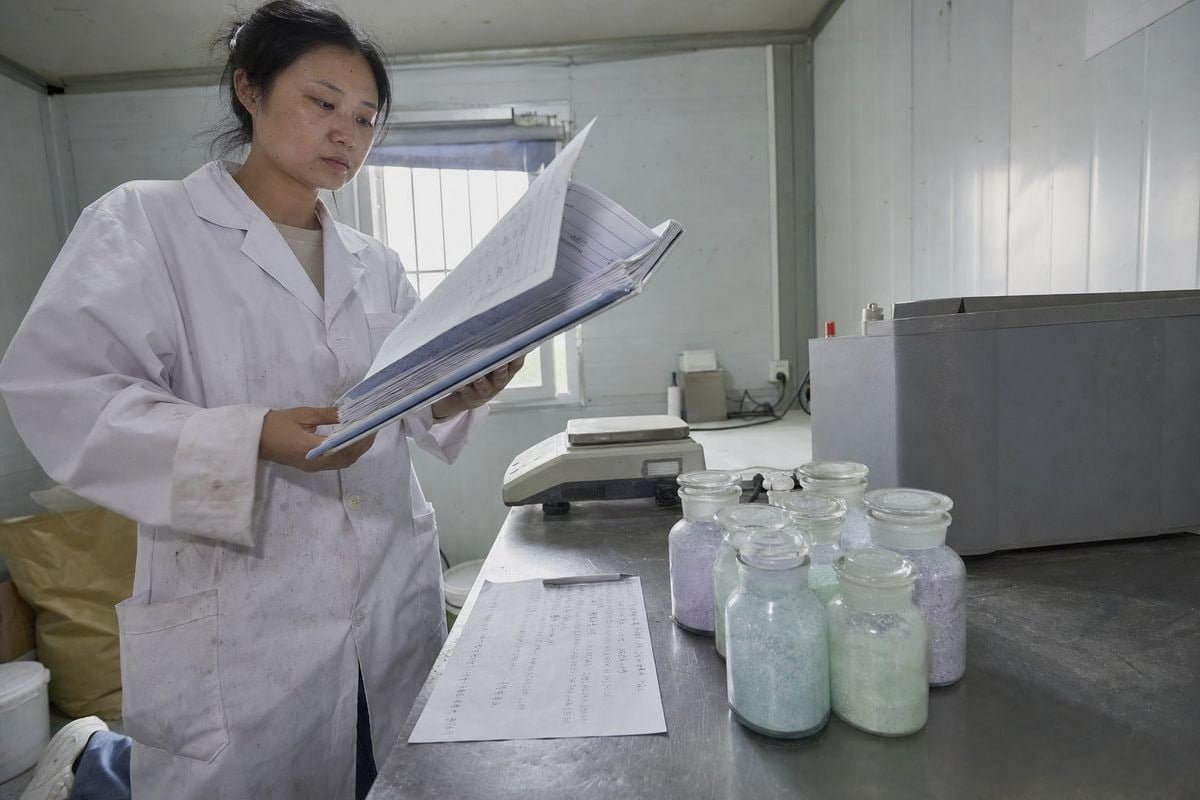
The core problem is that "magic fire" products are not one fixed chemical. Some formulas are non-hazardous decorative additives. Others contain metal salts that trigger hazards like Acute Toxicity (H302), Eye Irritation (H319), or Aquatic Chronic toxicity (H410). A buyer cannot know which category a product falls into by looking at the pouch. Only the paperwork tells you.
Die Dokumenten-Checkliste
Start with the SDS. Check Sicherheitsdatenblatt 1 Section 1.1 to confirm the product identifier matches your actual SKU, not a similar product from the same factory. Then work through this list:
| Dokument | Was zu überprüfen ist | Warum es wichtig ist |
|---|---|---|
| SDS (latest revision) | Section 1.1 matches your SKU; Section 2 shows classification | Legal basis for all downstream duties |
| Full composition sheet | CAS-Nummern 2 and concentration ranges for all ingredients | Needed for PCN; disclosure typically starts at 0.1% |
| Harmonised classification check | Each component checked against CLP Annex VI | Harmonised entries must be applied, not negotiated |
| Test reports (SGS/Intertek) | Physical hazard data, e.g., burning rate for flammable solids | Supports or rules out self-classification |
| Classification rationale | How the supplier classified the mixture | Shows calculation rules or test data were used |
Ingredient hazard is not mixture classification
Here is where many buyers stumble. A hazardous ingredient does not automatically make the whole mixture hazardous. Classification depends on concentration, physical form, and CLP calculation rules 3. For example, magnesium powder carries harmonised hazardous classifications, but a mixture containing a small percentage may classify very differently than the pure substance. Conversely, a product marketed as "safe for campfires" can still be a hazardous mixture. Marketing language has zero legal weight. In our experience, honest SDS authoring done at the factory level, backed by real test data, is what gets containers through EU customs without delays.
How do I generate and register a UFI code before shipping to EU markets?
Timing is the trade-off I weigh most often here. Buyers want fast production slots, but printing labels before the UFI is confirmed means reprinting later. We now lock the UFI into the artwork approval stage for every private-label order heading to the EU.
Generate the UFI using the free ECHA UFI Generator by combining your company VAT number with an internal formulation number. Then register it by including the UFI in a Poison Center Notification submitted via the ECHA Submission Portal before the product enters the EU market.
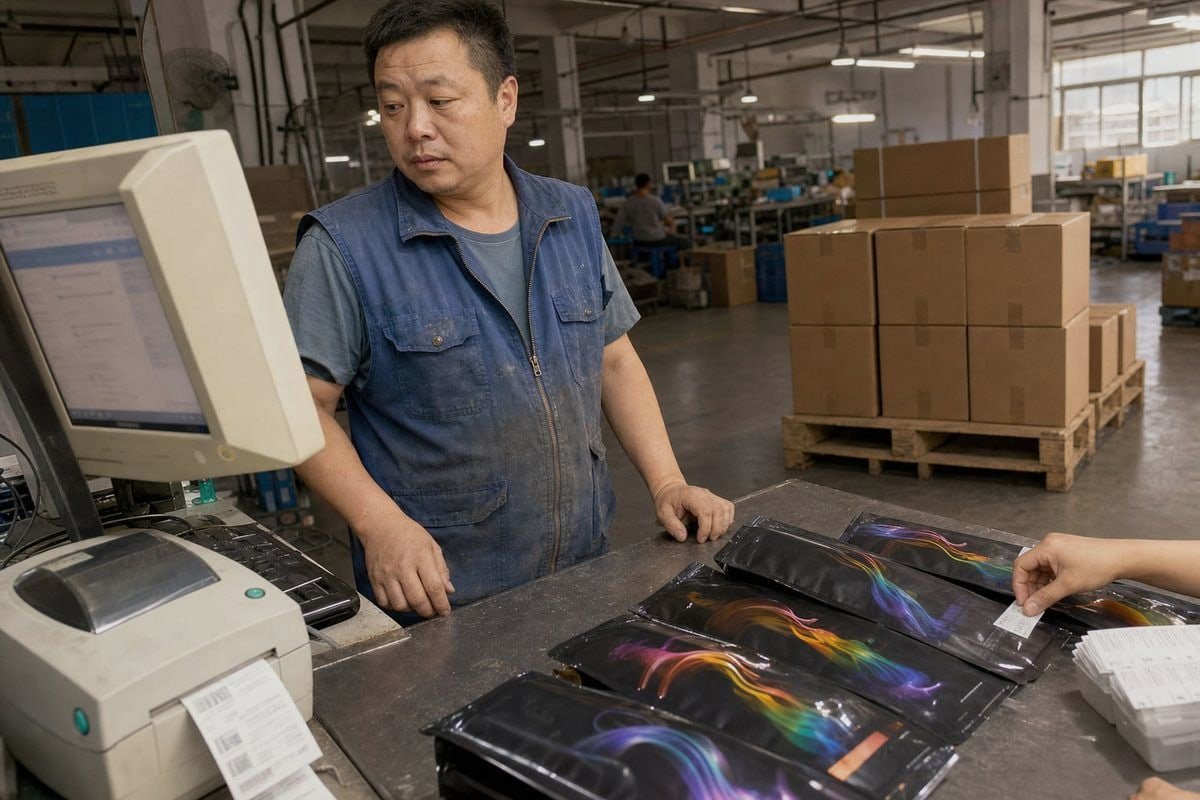
The UFI is a 16-character Unique Formula Identifier 4. It must appear on the product label preceded by the prefix "UFI:" in capital letters. Poison centres use it to match an emergency call to the exact formulation on file. That is the whole point: it is an emergency-response tool, not a branding element or a quality mark.
The generation and registration process
- Confirm the mixture is classified as hazardous under CLP. If it is not hazardous for health or physical effects, a UFI and PCN may not be required. Treat this as a compliance check, not an assumption.
- Open the free ECHA UFI Generator online.
- Enter the company VAT number and assign a unique internal formulation number. This combination guarantees the code is unique across the European Economic Area.
- Record which formulation each UFI maps to. If the recipe changes, you need a new UFI.
- Prepare the PCN dossier, using IUCLID software or the online dossier builder, and include the UFI.
- Submit through the ECHA Submission Portal 5 before the first shipment is placed on the market.
- Add the UFI to the label artwork and confirm placement before mass printing.
Whose UFI goes on the label?
This depends on your business model. The table below shows the common scenarios we handle for importers and private-label brands:
| Szenario | Who generates the UFI | Anmerkungen |
|---|---|---|
| Importer sells under manufacturer's brand | Manufacturer or importer | Importer holds the legal PCN duty in the EU |
| Private label with disclosed formula | Brand owner, using own VAT | Full composition shared for the dossier |
| Private label with confidential formula | Manufacturer provides UFI | Mixture in mixture (MiM) provision protects trade secrets |
| Multiple color variants, same base carrier | One UFI per formula, grouped | Group Submissions can consolidate variants |
The mixture in mixture (MiM) route matters when a supplier will not disclose the full recipe. The notifier can reference the supplier's UFI in their own submission, keeping upstream formulas confidential while still giving emergency responders access to the full chemical chain.
Which countries require Poison Center Notification, and who is responsible for submitting it?
A Polish wholesaler taught me a hard lesson early in our EU export years. He assumed his freight forwarder handled notifications. Nobody had filed anything, and his first pallet of color-flame packets stalled at distribution. Responsibility, we learned, must be assigned in writing before production starts.
All EU and EEA member states require Poison Center Notification for hazardous mixtures under CLP Annex VIII. The EU-based importer or downstream user placing the mixture on the market is legally responsible for submitting the PCN, not the non-EU manufacturer or the freight forwarder.
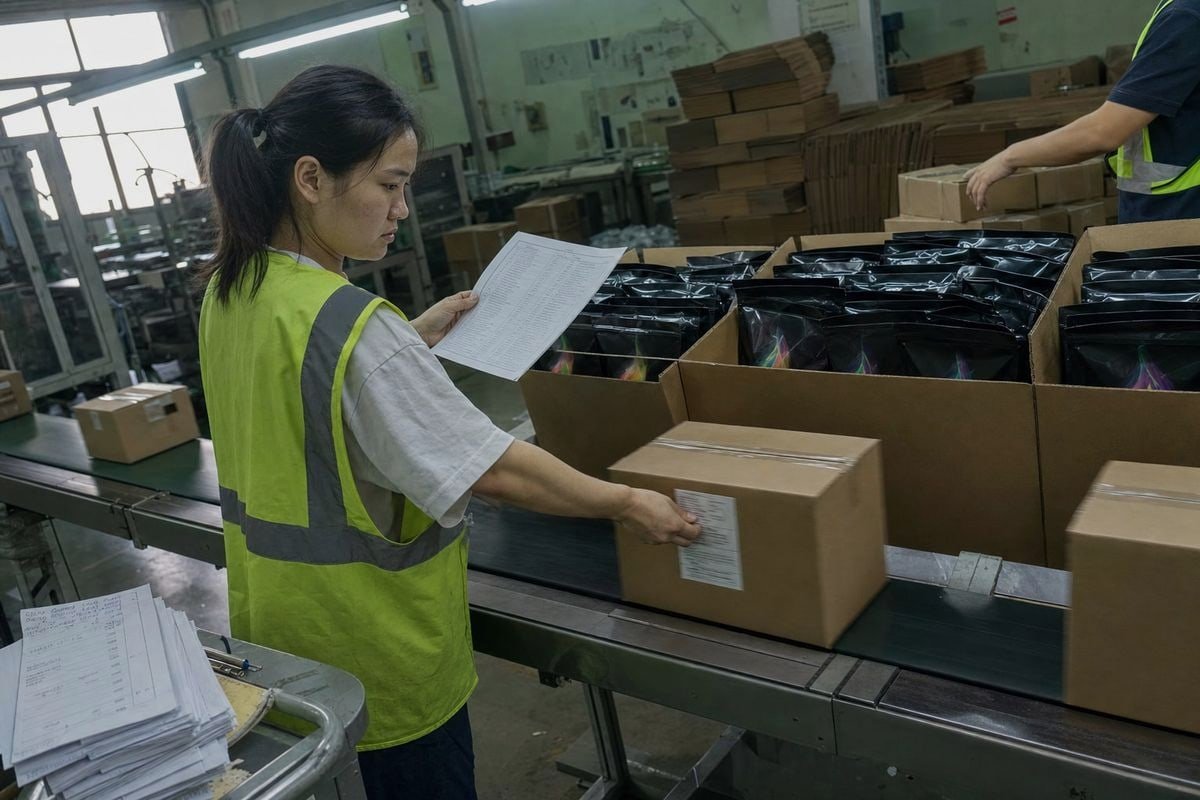
The rule covers the entire EU plus EEA countries like Norway. Since January 1, 2025, the transition period has fully closed, so hazardous mixtures already on the market must be fully compliant with Annex VIII compliance requirements 6. There is no grace period left to lean on.
Who carries the legal duty
A China-based factory like ours cannot hold the PCN obligation, because the duty holder must be established in the EU. That leaves three common duty holders:
- The EU importer who first brings the mixture into the Union.
- A downstream user who reformulates or rebrands the mixture.
- An EU-based Only Representative or appointed entity, in some arrangements.
We support every submission with data, dossier files, and the UFI, but the legal filing sits with our buyer or their EU entity. Any supplier who tells you otherwise is glossing over the regulation.
National differences and fees
The ECHA Submission Portal is central, but member states keep some local requirements. Budget for them.
| Land | Extra consideration |
|---|---|
| Italien | Per-submission administrative fees apply |
| Belgien | Per-product or per-submission fees apply |
| Hungary | National fees charged outside the ECHA portal |
| Deutschland, Frankreich, Niederlande | Accept ECHA portal submissions; language of the dossier must suit the market |
| Norway (EEA) | Covered by Annex VIII; notify for the Norwegian market too |
The dossier itself must disclose the full chemical composition, including non-hazardous ingredients above roughly 0.1% concentration. That is why a vague composition sheet from a supplier is not good enough. If your Magic Fire Powder has green, blue, and purple variants sharing one base carrier, Group Submissions let you consolidate them into a single notification, provided only the colorant concentration varies within defined ranges. That saves real money in fee-charging member states.
Can my manufacturer help me prepare compliant SDS and labeling to speed up notification approval?
When we developed our kraft-bag and jar formats for Magic Fire packets, we rebuilt our labeling templates around EU rules first, then adapted them for the US and Australia. That sequence was deliberate. The EU label is the hardest one to get right, so it became our baseline.
Yes. A capable manufacturer should provide SKU-specific SDS authoring, correct hazard pictograms, signal words, hazard and precautionary statements, UFI placement on artwork, and full composition data for the PCN dossier, cutting weeks off your notification and market-entry timeline.
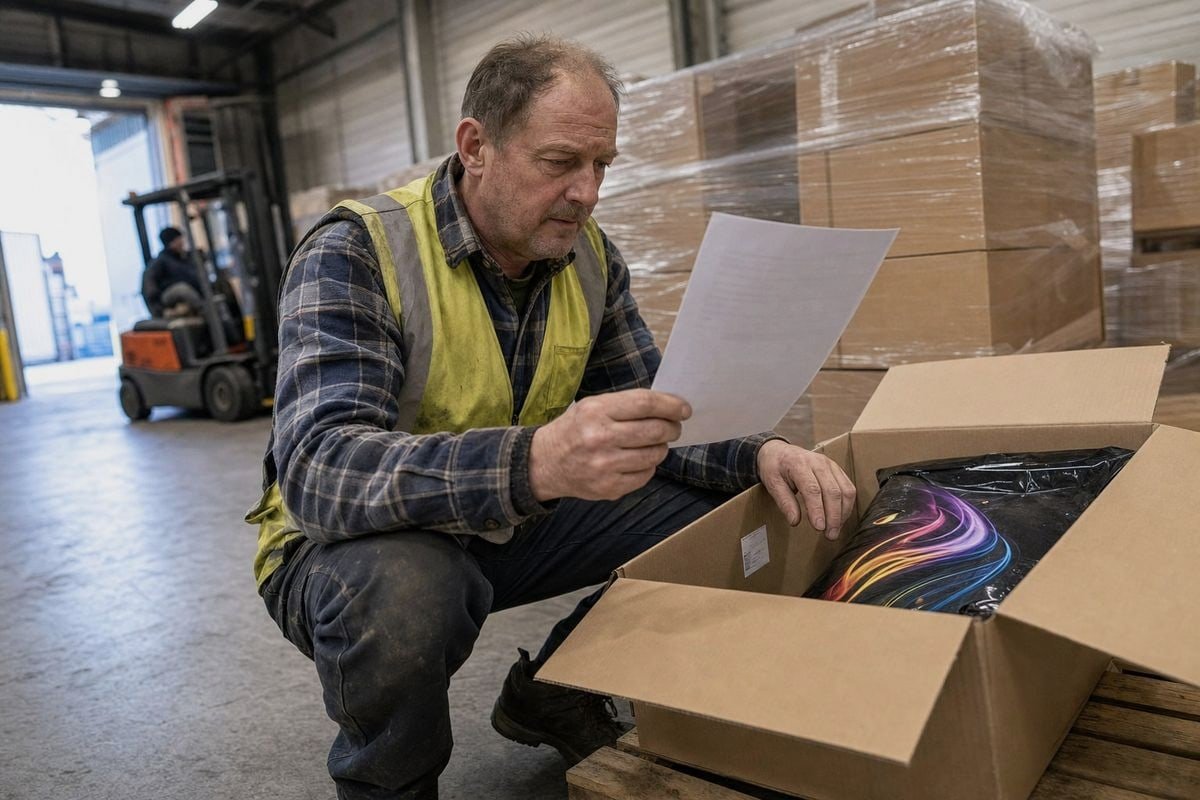
Not every factory can do this. Trading companies often forward a generic SDS copied from another product. Then the buyer's regulatory consultant finds mismatches between the SDS, the label, and the actual crystals in the pouch. That mismatch is exactly what delays notification approval and triggers questions from national authorities.
What real manufacturer support looks like
At our Liuyang headquarters and Ningbo production site, compliance support runs alongside production, not after it. For an EU-bound order, we prepare:
- An SDS authored for the exact formulation and batch specification, with correct classification in Section 2, including any aquatic toxicity classification if metal salts warrant it.
- Label artwork carrying the required Gefahrenpiktogramme 7, the correct signal words, and the applicable hazard and precautionary statements.
- The full composition breakdown, with CAS numbers and concentrations, formatted for the buyer's PCN dossier or handed over via the MiM route if confidentiality is needed.
- UFI placement checked against print proofs before mass production.
Small sachets and label space
Our foil sachets are compact, which raises a practical question: how do you fit everything on a tiny pouch? Article 29(2) of the CLP Regulation allows certain label elements to be omitted on small packaging, provided the UFI and core hazard pictograms remain visible. We usually solve this with a fold-out label or by carrying full information on the display box while the sachet keeps the essentials. Because we run ISO 9001 8 and BSCI-audited lines with SGS and Intertek test reports on file, buyers can attach credible third-party evidence to their submissions. In our experience exporting to 30+ countries over 17 years, a clean, consistent documentation package is the single biggest factor in fast approvals. One more point: reassess whenever anything changes. A new colorant supplier, a shifted concentration, or a new pack size can all require an updated SDS, a new UFI, and a revised PCN.
Schlussfolgerung
Magic Fire Powder compliance follows the formula, not the name. Verify the SDS, classify under CLP, generate the UFI, file the PCN, and partner with a factory that documents everything.
Fußnoten
1. Official ECHA guidance defines SDS requirements referenced throughout the CLP verification process. ↩︎
2. Wikipedia explains the CAS Registry Number system used for ingredient identification in PCN dossiers. ↩︎



 English
  Spanish
  German
  French
  Arabic
  Portuguese
Diskutieren Sie mit