







Checkout-Display-Boxen für gefärbte Kiefernzapfen für den Kamin können eine Massenware 1 in einen Impulskauf verwandeln. Doch in unserer Produktionslinie fragen die meisten Käufer sie nie an – und verlieren Marge.
Um Lieferanten dazu zu bringen, Checkout-Displayboxen für gefärbte Kiefernzapfen für den Kamin herzustellen, präsentieren Sie Ihre Anfrage als wiederholbares Einzelhandelsprogramm: Geben Sie genaue Abmessungen, Stückzahlen, Artwork-Dateien, Barcode-Anforderungen und realistische saisonale Volumina an. Zielen Sie auf Hersteller ab, die bereits Produkte mit Farbflammen herstellen und Inhouse-OEM-Displayverpackungsdienste anbieten.
Die gute Nachricht ist, dass dieser Prozess einfacher ist, als er klingt Druckplatten 2. Im Folgenden gehe ich auf die Lieferantenauswahl, Zertifizierungen, MOQ-Verhandlungen und die Einhaltung von Kennzeichnungsvorschriften ein – die vier Fragen, die uns Käufer am häufigsten stellen.
Wie finde ich einen Lieferanten, der individuelle Verkaufsverpackungen für farbige Kiefernzapfen herstellen kann?
Ein deutscher Händler schickte uns einst eine Tüte Konkurrenzkiefern und eine handgezeichnete Skizze einer Thekenbox. Drei Wochen später lieferten wir ihm einen Prototyp mit Stanzzuschnitt. So arbeitet der richtige Lieferant.
Finden Sie einen Lieferanten, indem Sie Hersteller ansprechen, die bereits farbige Kiefernzapfen herstellen und kundenspezifische Einzelhandelsverpackungen im eigenen Haus anbieten. Überprüfen Sie, ob sie ihre eigenen Produktionslinien betreiben, bitten Sie um Fotos von früheren Thekenaufstellern und fordern Sie einen Stanzprototypen an, bevor Sie eine vollständige Bestellung aufgeben.
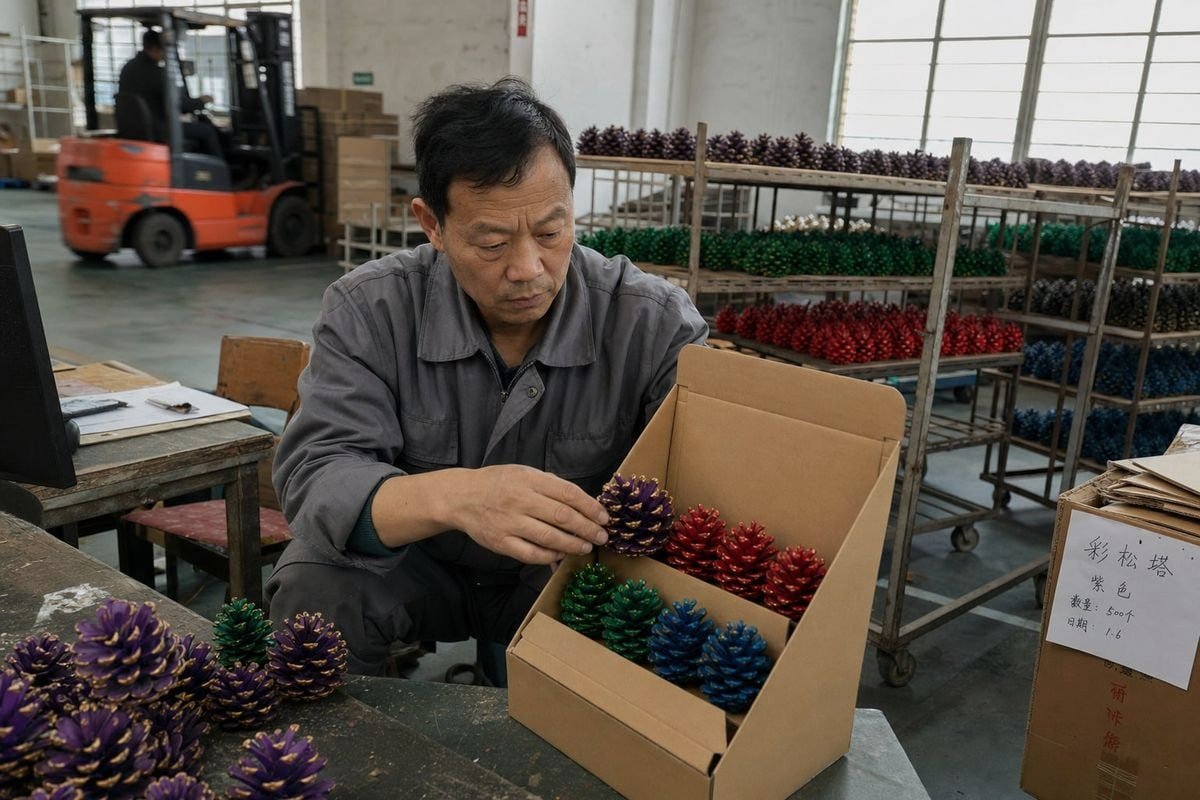
Der größte Fehler, den ich bei Käufern sehe, ist die Aufteilung der Arbeit. Sie kaufen Kiefernzapfen von einer Fabrik und Displays von einer Wellpappe-Herstellungsanlage 3 woanders. Dann ist niemand für die Passform verantwortlich. Die Zapfen klappern, die Schale zerdrückt sich beim Transport, und der Einzelhändler lehnt die Lieferung ab. Nach unserer Erfahrung im Export von saisonalen Kaminprodukten in mehr als 30 Länder wählen die Käufer, die erfolgreich sind, einen Partner, der sowohl das Produkt als auch die Einzelhandelsfertige Verpackung (RRP) unter einem Dach abwickelt.
Wo man zuerst suchen sollte
Beginnen Sie mit Fabriken, die bereits farbwechselnde Kiefernzapfen, Feueranzünder oder Kaminzubehör verkaufen. Die Produktkategorie ist etabliert – Sie finden flammfärbende Zapfen in Beuteln und Nachfüllpackungen auf großen Marktplätzen. Das bedeutet, dass die Lieferanten die SKU verstehen. Was die meisten nicht investiert haben, sind Point-of-Purchase (POP) Displays 4, weil niemand danach gefragt hat. Ihre Anfrage ist ein Konvertierungs-Upgrade, keine neue Erfindung. Diese Formulierung senkt die Entwicklungshürden dramatisch.
Wie man einen Kandidaten qualifiziert
Stellen Sie diese Fragen, bevor Sie ein Angebot anfordern:
| Qualifizierungsfrage | Was eine starke Antwort ausmacht |
|---|---|
| Stellen Sie die Kiefernzapfen selbst her? | Ja, mit eigener Färbe- und Qualitätskontrolllinie – kein Handelsunternehmen |
| Haben Sie schon Theken-Display-Einheiten (CDU) gebaut? | Fotos von früheren PDQ-Schalen oder CDUs für andere Kunden |
| Können Sie Co-Packing machen? | Zapfen werden im Haus in Displays verpackt, versandfertig für den Einzelhandel |
| Können Sie eine weiße Probe liefern? | Ein unbedruckter Prototyp mit Stanzzuschnitt zur Passformprüfung innerhalb von 2–3 Wochen |
| Welches Material empfehlen Sie? | E-Wellen-Wellpappe für Quetschfestigkeit und saubere Druckoberfläche |
Ein weiterer Tipp aus unserem eigenen Angebotsprozess: Lieferanten reagieren schneller und bieten bessere Preise, wenn Ihre erste E-Mail wie ein Programm und nicht wie ein Gefallen klingt. Geben Sie Ihren Vertriebskanal, das geschätzte Jahresvolumen und die geplante Markteinführungssaison an. Wenn ein Käufer uns sagt: "Baumarkt, US-Mittlerer Westen, Q4-Programm, drei Nachbestellungen erwartet", behandelt unser Team die Werkzeugkosten ganz anders als eine einmalige Anfrage.
Welche Zertifizierungen sollte ich vor der Genehmigung eines Display-Box-Designs anfordern?
Die Einhaltung von Vorschriften ist der Punkt, an dem wir am meisten schlaflose Nächte haben – und an dem unsere Käufer die meisten Listungen im Einzelhandel erzielen. Eine schöne CDU ist nichts wert, wenn das Produkt darin nicht rechtmäßig den Zoll passieren oder eine Prüfung des Einzelhändlers bestehen kann.
Fordern Sie ISO 9001 für Qualitätsmanagement, BSCI für soziale Compliance in der Fabrik, CE-Kennzeichnung für europäische Märkte und Testberichte von Drittanbietern von SGS oder Intertek für die Farbflammen-Chemie an. Fordern Sie Dokumente an, die sich auf die tatsächliche Produktcharge beziehen, nicht auf generische Fabrikzertifikate.

Hier ist der Kompromiss, den ich neuen Käufern immer erkläre. Zertifikate kosten die Fabrik Zeit und Geld, daher werden unzertifizierte Lieferanten immer unter den zertifizierten im Preis liegen. Aber gefärbte Kiefernzapfen für den Kamin sind ein Verbrennungsprodukt. Wenn Ihr Einzelhändler, Versicherer oder Zollamt einen Nachweis verlangt und Sie keinen haben, stoppt das gesamte Programm. Dieses Risiko ist ein paar Cent pro Einheit nicht wert. Unsere eigenen Käufer in den USA, Deutschland und Großbritannien behandeln Testberichte als harte Anforderung, bevor sie überhaupt die Grafik prüfen.
Die Checkliste für die Zertifizierung
| Zertifikat | Was es beweist | Warum es für die Genehmigung der Display-Box wichtig ist |
|---|---|---|
| ISO 9001 | Qualitätsmanagementsystem | Stellt sicher, dass Display und Produkt von Charge zu Charge konsistent bleiben |
| BSCI | Ethische Fabrikbedingungen | Von vielen großen Einzelhandels-Sourcing-Kanälen vor der Listung verlangt |
| CE | Europäische Produktkonformität | Obligatorisches Signal für die EU-Distribution von Feuerprodukten für Verbraucher |
| SGS / Intertek-Berichte | Drittanbieter-Labortests | Verifiziert umweltfreundliche Formulierung ohne schädliche Chemikalien |
Ordnen Sie die Papiere dem Produkt zu
Akzeptieren Sie kein Zertifikat für "dekorative Kiefernzapfen", wenn Sie ein Produkt für den Einsatz im Feuer verkaufen. Der Testbericht sollte sich auf die Farbformel selbst beziehen. In unserer Fabrik in Ningbo führen wir Chargen-Aufzeichnungen genau deshalb, weil Einzelhandelsprüfer 5 Rückverfolgbarkeit verlangen, nicht nur ein gerahmtes Zertifikat. Bestätigen Sie auch die Materialien der Display-Box: Wenn Sie eine feuchtigkeitsbeständige Innenbeschichtung wünschen, um die Farbstoffe vor Feuchtigkeit zu schützen, fragen Sie, ob die Beschichtung selbst lebensmittelecht oder zumindest dokumentiert ist, da Checkout-Theken oft in der Nähe von Verbrauchsgütern stehen.
Fragen Sie schließlich eine direkte Frage: "Können Sie den Testbericht schicken, bevor ich eine Anzahlung leiste?" Eine echte Fabrik sagt ja. Ein Handelsunternehmen zögert normalerweise.
Kann ich eine niedrige MOQ für eine Probebestellung von kundenspezifischen Display-Verpackungen erhalten?
Last autumn, a Canadian importer asked us for 300 display boxes to test two store locations. We said yes — with conditions. That negotiation taught both sides where the real MOQ pressure comes from.
Ja, niedrige MOQs für Testbestellungen sind erreichbar, wenn Sie die Displaystruktur standardmäßig halten und nur den Druck anpassen. Erwarten Sie Testläufe von 300–500 Displayeinheiten von flexiblen Herstellern, mit gestaffelten Preisen, die erheblich sinken, sobald saisonale Nachbestellungen 500 oder mehr Einheiten erreichen.

Let me be honest about why Minimum Order Quantity (MOQ) exists. Custom display packaging carries fixen Kosten 6: die-cutting tools, printing plates, artwork setup, and line changeover time. Spread over 5,000 units, those costs disappear. Spread over 200 units, they dominate the price. A supplier who refuses a tiny custom order is not being difficult — the math simply does not work. But there are smart ways to shrink the gap, and we use them with trial buyers every season.
Four ways to lower your trial MOQ
- Use a standard die-cut, custom print. If the supplier already has a PDQ tray tool in a suitable size, you skip tooling costs entirely and pay only for printing.
- Combine SKUs on one die. Run your pine cone display and a fire starter display on the same structure with different artwork.
- Ask for two quotes. Request pricing for standard bulk bags and for display-box packaging side by side. Comparing cost per unit against expected impulse-sale margin makes the business case obvious — for you and for your retailer.
- Commit to a reorder trigger. Offer a written intent: if the trial sells through by a set date, you reorder at a defined volume. This converts a risky one-off into a program.
What a realistic tiered structure looks like
| Bestellgröße | What to expect |
|---|---|
| 300–500 Displays | Trial pricing, standard structure, custom print, higher unit cost |
| 500–1,500 displays | Tiered discount begins; custom die-cut becomes viable |
| 1,500+ displays | Full custom CDU with header card, co-packing included, best unit economics |
One objection I hear often: "I'll just buy plain bags and build my own displays locally." That works for a single shop. It fails at scale, because local assembly labor in the US or EU costs far more than factory co-packing, and hand-built displays rarely survive a retail buyer's review. Start small, but start with the factory doing the packing.
Wie stelle ich sicher, dass meine Marken- und Warnhinweise die Einfuhrbestimmungen erfüllen?
When we develop private-label artwork with a new client, the warning panel is designed first — before the logo, before the colors. That order surprises buyers, but it prevents expensive reprints.
Gestalten Sie zuerst das Warnschild: Fügen Sie Anweisungen zur bestimmungsgemäßen Verwendung, zur Verbrennung, zur Sprache "von Kindern fernhalten" und zur Lagerung in der Sprache des Zielmarktes hinzu. Bestätigen Sie dann das Barcode-Format, die Herkunftsangabe und die Angaben des Importeurs mit Ihrem Zollagenten, bevor Sie die Massenproduktion genehmigen.
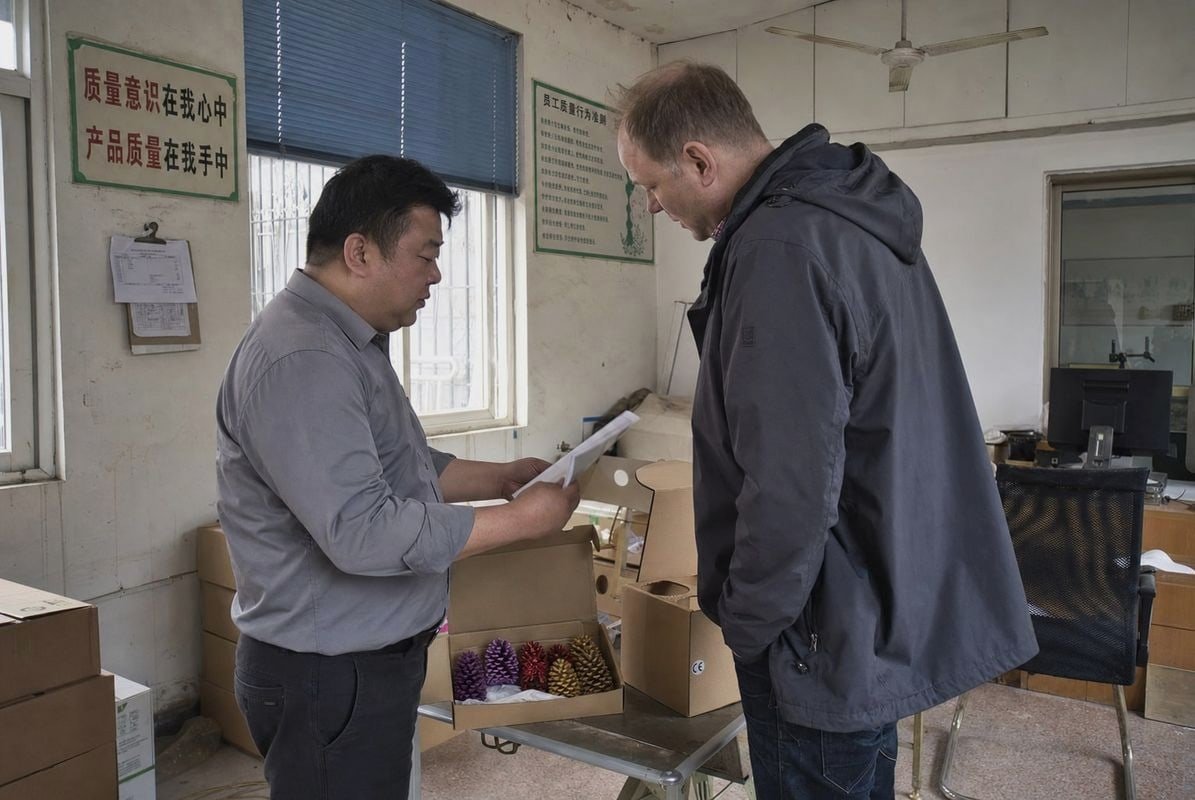
There is a real tension here, and I will not pretend otherwise. A checkout display exists for impulse purchase marketing — bold graphics, a strong header card, maybe a scent-venting aperture releasing pine and cinnamon aroma to stop foot traffic. Warning text fights that visual goal. But the more prominent the display, the more visible your compliance gaps become. Retail buyers know this. In our 17 years shipping color-flame products to the US, Germany, France, and beyond, artwork rejected for weak safety labeling has delayed more launches than any production issue.
Build the label from the inside out
Work through these layers in order:
- Safety text. Intended use (fireplace, fire pit, campfire), quantity guidance, ventilation notes, "do not use for cooking" where relevant, and child-safety language.
- Regulatory basics. Country of origin, importer name and address, net contents, and batch code for traceability.
- Barcode and retail data. Confirm whether the retailer needs a barcode on each unit, on the display, or both. Get the GTIN format right the first time.
- Brand and marketing layer. Only now add the logo, the seasonal story, and the value proposition. A QR code linking to a short loop of the multicolored flames is a smart addition — it proves the "hidden value" of a product that looks plain on the shelf.
Private label without the guesswork
Most buyers should start with private label sourcing: the supplier's proven pine cones inside your branded display. Full OEM development of a new formulation is unnecessary when the product already works. What matters is that your supplier supports the full labeling package — warning panels 7, barcodes, multilingual text, and shelf-ready assembly. On our side, we treat the label review as a formal checkpoint: no artwork goes to print until the compliance layer is signed off in writing by the buyer. I recommend you demand the same discipline from any supplier, because a reprinted display run costs weeks you do not have before the season starts.
Schlussfolgerung
Getting checkout display boxes made is not hard — getting them made right is. Specify clearly, verify certifications, negotiate tiered MOQs, and design compliance first. Choose a factory partner, not just a price.
Fußnoten
1. Explains the economic definition of bulk goods transformed through retail packaging. ↩︎
2. Wikipedia article on flexography, detailing the use of flexible printing plates for packaging materials. ↩︎
3. Defines the material and production facility used for industrial shipping and display containers. ↩︎
4. Authoritative Wikipedia entry for point-of-sale displays, covering retail marketing and impulse buy structures. ↩︎
5. Professional resource for quality auditing and compliance standards in retail supply chains. ↩︎
6. Wikipedia page defining fixed costs and their role in business accounting and production. ↩︎
7. Official Electronic Code of Federal Regulations (eCFR) detailing legal requirements for cautionary warning panels. ↩︎


 English
  Spanish
  German
  French
  Arabic
  Portuguese
Diskutieren Sie mit