






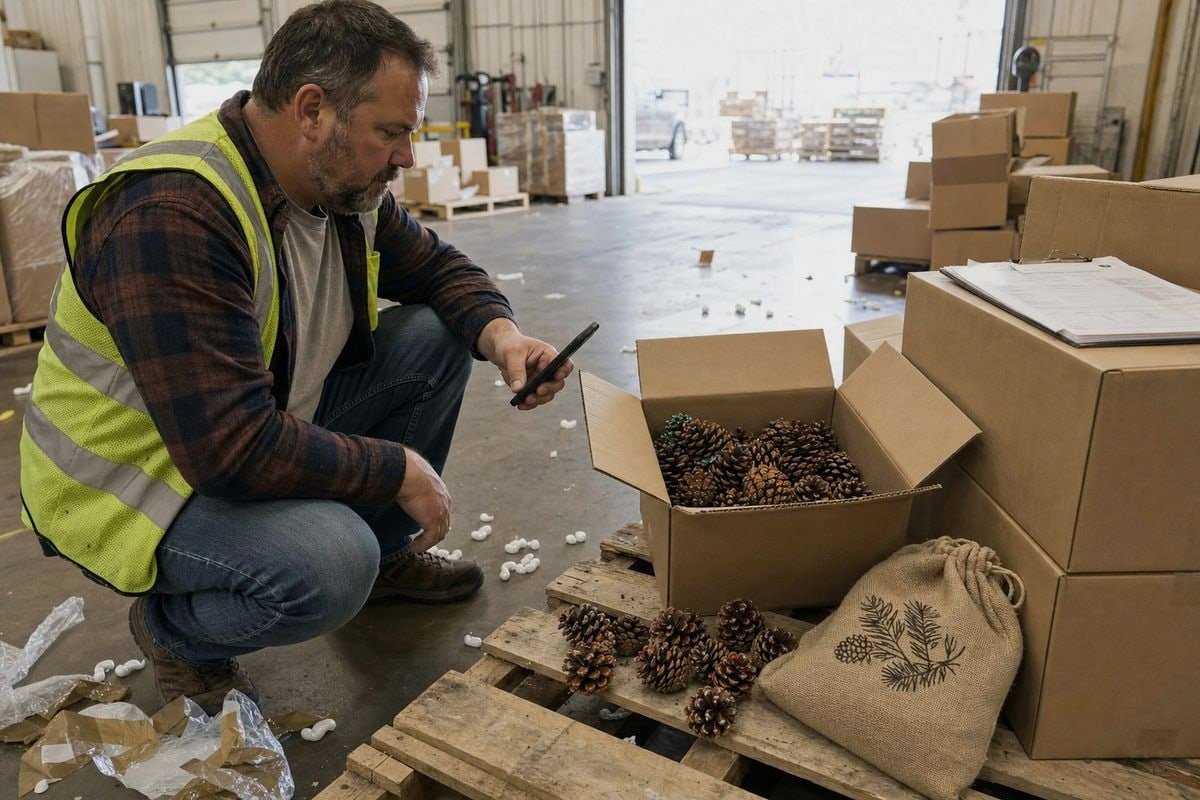
Einreichen einer Reklamation bei einem Lieferanten wegen Qualitätsmängeln bei Feuerwerkskörpernce 1 gefärbte Kiefernzapfen können sich unangenehm anfühlen BSCI 2. Auf unserer Produktionslinie haben wir gesehen, wie Käufer Geld verloren haben, nur weil sie nichts dokumentiert haben.
Um einen Anspruch bei einem Lieferanten wegen defekter, gefärbter Kiefernzapfen für den Kamin geltend zu machen, inspizieren Sie die Lieferung sofort, fotografieren Sie die Mängel, notieren Sie Chargennummern und die Anzahl der Mängel, senden Sie eine schriftliche Reklamation mit Ihrer Bestellnummer und dem Kaufnachweis, fordern Sie eine bestimmte Abhilfe und legen Sie eine Frist für die Antwort fest.
Das ist die Kurzfassung. Der Rest dieses Artikels führt Sie detailliert durch jeden Schritt, von der Dokumentation bis zur Eskalation, damit Ihre Reklamation tatsächlich gelöst wird.
Welche Unterlagen benötige ich, um eine Qualitätsreklamation für defekte, gefärbte Kiefernzapfen zu unterstützen?
Vor ein paar Jahren schickte uns ein europäischer Händler eine E-Mail mit einer Zeile: "Die Zapfen funktionieren nicht." Unser QC-Team konnte nicht darauf reagieren. Dann schickten sie Fotos, Chargennummern und ein Brennvideo – und wir haben es in drei Tagen gelöst.
Sie benötigen einen Kaufnachweis, die Bestell- oder Rechnungsnummer, das Lieferdatum, Chargen- oder Kartonnummern, hochauflösende Fotos der Mängel und der Verpackung, ein kurzes Burn-Test-Video, die Anzahl der betroffenen Einheiten und Screenshots des ursprünglichen Produktangebots oder der genehmigten Musterbeschreibung.
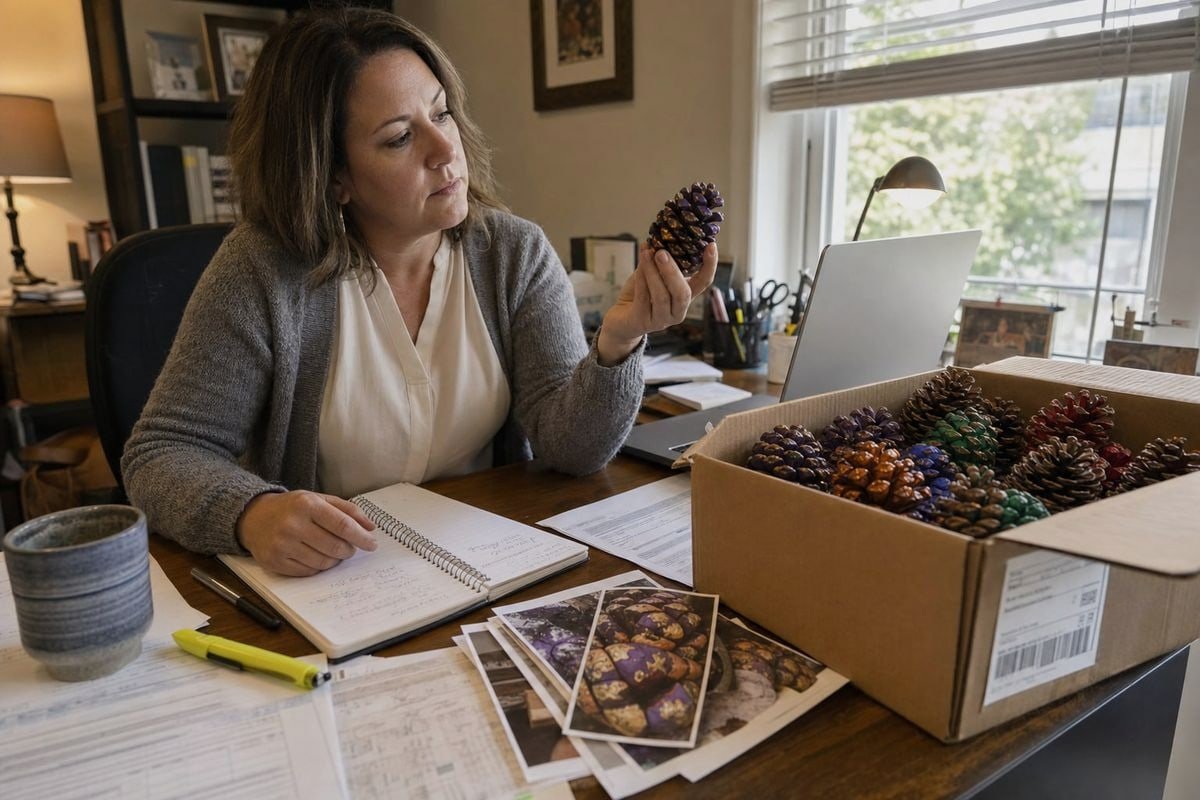
Starke Reklamationen basieren auf Beweisen, nicht auf Adjektiven. Lieferanten reagieren auf Daten. Eine vage Beschwerde erhält eine vage Antwort, während eine dokumentierte Reklamation eine Gutschriftanfrage genehmigt. Hier ist, was Sie sammeln sollten und warum jeder Punkt wichtig ist.
Die Kernbeweismittel-Checkliste
| Ein aussagekräftiger Nichtkonformitätsbericht sollte die unten aufgeführten Punkte enthalten. Wir bitten unser eigenes QS-Team, dieselbe Datei zusammenzustellen, bevor eine Charge unsere Fabrik verlässt, damit wir genau wissen, wie ein ordnungsgemäßer Anspruch aussieht. | Warum es wichtig ist |
|---|---|
| Kaufnachweis (Rechnung, PO, Auftragsbestätigung) | Bestätigt die Transaktion und die vereinbarte Spezifikation |
| Chargen- oder Losnummern von Kartons | Ermöglicht die Rückverfolgung von Chargennummern und eine Ursachenanalyse |
| Fotos von Zapfen und Verpackung | Zeigt den Mangel und sein Ausmaß visuell |
| Brenn-Test-Video | Beweist Funktionsstörungen, wie z. B. schwache oder fehlende Flammenfarbe |
| Anzahl und Prozentsatz der defekten Einheiten | Quantifiziert das Problem, anstatt es nur zu beschreiben |
| Screenshots von Angeboten oder genehmigten Muster-Spezifikationen | Verankert die Reklamation in dem, was versprochen wurde |
| Notizen zum Entdeckungsdatum und zu den Lagerbedingungen | Schließt unsachgemäße Handhabung nach der Lieferung aus |
Quantifizieren, nicht nur beschreiben
Nach unserer Erfahrung in der Abwicklung von Lieferantenstreitigkeiten von beiden Seiten Lieferkettenmanagement 3, ist die überzeugendste Zahl die Fehlerrate. Zählen Sie die defekten Einheiten. Wenn 240 von 2.000 Zapfen schlechte Farbanhaftung aufweisen oder keine gefärbten Flammen erzeugen, geben Sie dies als 12% Fehlerrate an. Das verwandelt Ihre Dokumentation von Produktmängeln von einer Meinung in eine messbare kommerzielle Tatsache.
Fordern Sie auch technische Dokumente an
Für Produkte mit Farbflammen können Sie auch die Sicherheitsdatenblatt 4 für die spezifische Charge anfordern. Das Sicherheitsdatenblatt bestätigt, ob die chemischen Behandlungsstandards 5 hinter den Flammenfarben dem entsprechen, was versprochen wurde. Eine konforme Fabrik bewahrt diese für jeden Produktionslauf auf – wir stellen sie routinemäßig mit unseren SGS- und Intertek-Prüfberichten aus. Wenn ein Lieferant kein Sicherheitsdatenblatt für Ihre Charge vorlegen kann, stärkt dies Ihre Reklamation.
Wie erkenne ich, ob ein Defekt an einer gefärbten Kiefernzapfen ein Herstellungs- oder ein Versandproblem ist?
Der Kompromiss, den wir bei jeder Reklamationsprüfung abwägen, ist dieser: Eine Fabrik sollte für Produktionsfehler haftbar sein, aber ein Frachtführer sollte für Transportschäden haftbar sein. Wenn Sie die Kategorie falsch einordnen, wird Ihre Reklamation an die falsche Partei weitergeleitet und Sie verlieren Wochen.
Herstellungsfehler umfassen schlechte Farbstoffhaftung, schwache oder fehlende Flammenfarben, hohen Feuchtigkeitsgehalt und inkonsistente Beschichtung über eine Charge hinweg. Versandprobleme umfassen zerdrückte Kartons, zerbrochene Kegel, wasserfleckige Verpackungen und chemische Leckagen, die durch Stöße verursacht werden. Ordnen Sie das Schadensmuster seiner wahrscheinlichsten Ursache zu.

Diese Unterscheidung entscheidet, wer bezahlt. Ein Herstellungsproblem geht als Qualitätsreklamation an den Lieferanten. Transportschäden werden über eine Frachtschadensmeldung 6, normalerweise gegen den Spediteur oder die Versicherung des Versenders, abgewickelt. Die Einreichung des falschen Typs ist einer der häufigsten Fehler, die wir bei Importeuren sehen.
So unterscheiden Sie die beiden
| Symptom | Wahrscheinliche Ursache | Reklamationstyp |
|---|---|---|
| Zapfen zischen oder brennen mit normalen orangefarbenen Flammen | Unterdosiertes Farbmittel oder Trocknungsfehler | Herstellung – Lieferantenreklamation |
| Stumpfe, fleckige oder abblätternde Farbbeschichtung | Schlechte Farbanhaftung in der Produktion | Herstellung – Lieferantenreklamation |
| Zapfen fühlen sich feucht an; Schimmel- oder Pilzflecken | Hoher Feuchtigkeitsgehalt oder kontaminierter, wild gesammelter Bestand | Herstellung – Lieferantenreklamation |
| Zerdrückte oder zerbrochene Zapfen mit intakter Beschichtung | Aufprall während des Transports | Versand – Frachtschadensmeldung |
| Wasserfleckige Kartons, durchnässte Innentaschen | Feuchtigkeitsexposition während des Transports | Versand – Frachtschadensmeldung |
| Leaked packets and residue inside cartons | Could be either; check seal quality and carton condition | Investigate both |
Two simple tests you can run
First, a moisture check. Colored pine cones must be fully dried before treatment, or the metal salts cannot react properly in the fire. If a sample feels heavy, soft, or damp, the drying process likely failed at the factory. A basic Feuchtigkeitsgehaltstest 7 on a few cones gives you technical proof.
Second, a burn test. Take five to ten cones from different cartons and burn them under normal fireplace conditions. Film it. If cones from multiple cartons all fail to produce the advertised colors, the defect is batch-level and points squarely at production, not shipping. Our own quality control inspection protocol includes exactly this kind of sampling before any container leaves the Ningbo facility, because batch-wide functional failure is almost never caused by transit.
When the cause is genuinely unclear
Some cases sit in the middle. Chemical leakage, for example, can come from weak factory sealing or from rough handling. In that situation, document everything, notify both the supplier and the carrier within their respective windows, and let the evidence decide.
Welche Reaktionszeit und Lösungsdauer kann ich von einem konformen Lieferanten nach Einreichung eines Anspruchs erwarten?
A US camping brand once told me the reason they consolidated their orders with us: not that we never had an issue, but that we acknowledged their one claim within 24 hours and shipped replacements the same week. Response speed reveals a supplier's character.
Ein konformer Lieferant sollte Ihren Anspruch innerhalb von 24–72 Stunden bestätigen, Ihre Chargennummern innerhalb von ein bis zwei Wochen untersuchen und eine konkrete Abhilfe anbieten: eine Ersatzlieferung, eine vollständige oder teilweise Rückerstattung oder eine Gutschrift auf Ihre nächste Bestellung. Stille über eine Woche hinaus ist ein Warnsignal.

Expectations matter here, because the market splits into two camps. Some sourcing advice pushes buyers toward aggressive, formal claims with strict 14-day deadlines. Consumer-style advice suggests a softer, seller-first approach. In B2B trade, the practical answer sits in between: act fast and stay factual, but give the supplier a fair, defined window to respond.
A realistic claim timeline
- Day 0–3: Inspect the shipment and document defects. Most quality-claim windows for seasonal and natural products are short, sometimes just 14 days from delivery.
- Day 3–5: Send the written claim with all evidence, a specific remedy request, and a response deadline of five to seven business days.
- Week 1–2: The supplier investigates via batch number tracking, checks retained samples, and reviews quality control inspection records.
- Week 2–3: You receive a resolution offer. Negotiate if the offer only partially covers your loss.
- Week 3+: If ignored, escalate — resend the claim to management, invoke your payment terms or trade-assurance protections, and involve third-party mediation if needed.
What resolution is reasonable to request
Match the remedy to the defect scope. For a partial defect, a partial refund or credit memo request covering the defective percentage is standard. For a batch-wide functional failure, ask for a full replacement shipment or refund, and request a corrective-action report so the next order does not repeat the problem. Check the wholesale return policy in your contract first — for consumables like fire cones, most suppliers will not accept physical returns and will instead credit or replace, which actually works in your favor since return freight often costs more than the goods.
One nuance worth raising: a supplier may argue that flame-color performance is "subjective." That objection collapses when your claim is anchored in objective evidence — burn videos, moisture readings, and the listing's own promises about flame duration and hue. This is exactly why the documentation step comes first.
Wie kann ich im Voraus einen Lieferanten auswählen, um Qualitätsansprüche bei zukünftigen Bestellungen zu vermeiden?
After 17+ years running color-flame production lines in China and exporting to more than 30 countries, I can tell you the honest truth: the best claim is the one you never have to file. Supplier selection prevents most quality disputes before they start.
Wählen Sie einen Lieferanten mit geprüften Zertifizierungen wie ISO 9001, BSCI, CE und Testberichten von Drittanbietern, echtem Fabrikbesitz anstelle von Handelsunternehmensstatus, dokumentierter Chargen-Qualitätskontrolle, aufbewahrten Goldmustern, klaren schriftlichen Anspruchsverfahren und reaktionsschneller englischer Kommunikation, bevor Geld den Besitzer wechselt.

Buyers often ask me what separates a reliable fire-product factory from a risky one. It is rarely price. Low quotes usually mean skipped steps: shortened drying times, diluted colorant treatments, or no quality control inspection between batches. Here is a practical vetting framework.
Supplier vetting checklist
| Vetting Point | Was zu überprüfen ist | Rote Flagge |
|---|---|---|
| Konformität | ISO 9001 8, BSCI, CE, SGS/Intertek test reports with dates | "Certificates available" but never shown |
| Fabrikstatus | Production facility photos, video call, or audit | Vague answers about where production happens |
| Chargenkonsistenz | Whether the first sample reflects mass-production quality | Sample quality that later drops in bulk orders |
| Chemische Sicherheit | SDS for colorant formulas; eco-friendly, non-harmful chemical treatment standards | No SDS, or reluctance to share formulas' safety data |
| Claim procedure | Written policy covering claim windows, remedies, and replacement shipment terms | No documented dispute process at all |
| Kommunikation | Response speed and clarity during sampling | Days of silence before you have even paid |
Build a burn test protocol into your orders
The strongest long-term safeguard is a written quality agreement. Ask the supplier to retain a golden sample from your approved pre-production run. Then test a small percentage of every incoming batch against that sample — same flame colors, same burn duration, same coating quality. If quality drifts in a later shipment, you have empirical, side-by-side evidence, and the claim resolves itself quickly. We keep retained samples for our OEM clients for exactly this reason; it protects both sides.
Start small, then scale
Finally, use trial orders wisely. A supplier who accepts a flexible MOQ for a first order, passes your burn tests, and documents everything is signaling long-term reliability. A supplier who pushes you toward a large first order with no sampling stage is asking you to carry all the risk. Choose the partner who makes future claims unnecessary, not just the quote that looks cheapest today.
Schlussfolgerung
Quality disputes drain time and margin. Document defects fast, quantify them, claim in writing with a clear remedy, and vet certified factory partners so future orders never need a claim.
Fußnoten
1. European Commission page explaining the CE marking certification cited for supplier compliance verification. ↩︎
2. Official source describing the BSCI social compliance auditing program mentioned as a supplier vetting criterion. ↩︎
3. Background concept link for readers unfamiliar with broader supplier and logistics coordination processes. ↩︎
4. CDC/NIOSH provides authoritative guidance on Safety Data Sheets referenced for chemical colorant compliance. ↩︎
5. EPA program on safer chemical standards relevant to flame colorant treatment safety claims. ↩︎



 English
  Spanish
  German
  French
  Arabic
  Portuguese
Diskutieren Sie mit