







Die technische Q&A-Unterstützung von Lieferanten für farbige Kiefernzapfen zu organisieren, klingt einfach, bis eine Charge mit abfärbender Farbe oder schwacher Flammenfarbe eintrifft CE-Anforderungen 1. Auf unserer Produktionslinie in Ningbo sehen wir, warum Käufer verbrannt werden: Sie bestellen, bevor sie fragen. Die Lösung ist ein strukturierter Lieferanten-Interviewprozess, und ich werde Sie durch unseren führen.
Um technische Q&A-Unterstützung für farbige Kiefernzapfen zu organisieren, definieren Sie zuerst Ihren Anwendungsfall, senden Sie dem Lieferanten einen standardisierten Fragebogen zur Farbchemie und Sicherheit, fordern Sie Testberichte und Chargendokumentationen an, legen Sie einen benannten technischen Ansprechpartner mit vereinbarten Reaktionszeiten fest und überprüfen Sie die Expertise anhand von beispielbasierten Fragen, bevor Sie in großen Mengen bestellen.
Das ist die Kurzfassung. Unten gliedere ich es in vier praktische Schritte. Jeder Schritt enthält die genauen Fragen, die Sie stellen müssen, und die Dokumente, die Sie verlangen müssen.
Welche Fragen sollte ich einem Lieferanten stellen, um zu bestätigen, dass seine gefärbten Kiefernzapfen sicher und konform sind?
Ein deutscher Händler stellte uns einmal vierzehn Sicherheitsfragen, bevor er eine einzige Kartonschachtel unserer Farbflammen-Kiefern-Zapfen bestellte Borsäure 2. Wir haben jede einzelne beantwortet. Diese Bestellung wurde zu einem fünfjährigen Kundenkonto, und sie lehrte mich, welche Fragen echte Fabriken von Wiederverkäufern trennen.
Fragen Sie, welche Farbstoffe verwendet werden, ob das Produkt von SGS oder Intertek zertifiziert ist, ob es den CE-Anforderungen entspricht, welche Verwendungsbeschränkungen gelten (niemals Kochfeuer) und fordern Sie vor jedem Kauf schriftlich Sicherheitsdatenblätter sowie Spezifikationen für ungiftige Farbstoffe an.

Bevor Sie etwas fragen, verstehen Sie, was Sie tatsächlich kaufen. Farbige Kiefernzapfen fallen in mindestens drei Produkttypen, und die Sicherheitsfragen ändern sich für jeden einzelnen.
Kennen Sie zuerst Ihren Produkttyp
Dekorative gefärbte Zapfen für den Großhandel mit dekorativen Botanicals erfordern Fragen zur Farbstoffchemie und zur Sicherheit im Innenbereich. Flammenfarbene Zapfen für Kamine erfordern Fragen zu Verbrennungszusätzen. Handwerkliche Zapfen erfordern Fragen zur Reinigung und Schädlingsbekämpfung. Das Vermischen dieser verschwendet die Zeit aller.
| Produkttyp | Hauptsicherheitsrisiko | Wichtige Frage |
|---|---|---|
| Dekorative gefärbte Zapfen | Farbabrieb, Dämpfe, Exposition von Kindern/Haustieren | Ist der Farbstoff wasserbasiert und ungiftig für die Darstellung im Innenbereich? |
| Flammenfarbene Feuerzapfen | Verbrennungszusätze, Missbrauch auf Grills | Welche Metallsalze werden verwendet und ist das dekorative Verbrennen der einzige zugelassene Verwendungszweck? |
| Bastel-/DIY-Zapfen | Schimmel, Insekten, Harzaustritt | Wie werden die Zapfen gereinigt, entwanzt und getrocknet? |
Fordern Sie die Offenlegung der Inhaltsstoffe an, nicht Versprechungen
Einige DIY-Quellen beschreiben das Flammenfärben von Zapfen mit Kupferchlorid, Kupfersulfat 3, Borax oder Borsäure. Diese Chemikalien erzeugen Farbe, aber sie bergen Handhabungsbedenken, und das zufällige Mischen erzeugt unvorhersehbare Reaktionen. In unseren eigenen Formulierungen verwenden wir umweltfreundliche Farbstoffe ohne schädliche Chemikalien, und wir sagen das auf Papier – durch SGS 4 und Intertek-Testberichte, nicht nur eine Verkaufsaussage. Jeder glaubwürdige Lieferant sollte Ihnen auf Anfrage Sicherheitsdatenblätter 5 und ungiftige Farbstoffspezifikationen aushändigen. Wenn sie zögern, gehen Sie weg.
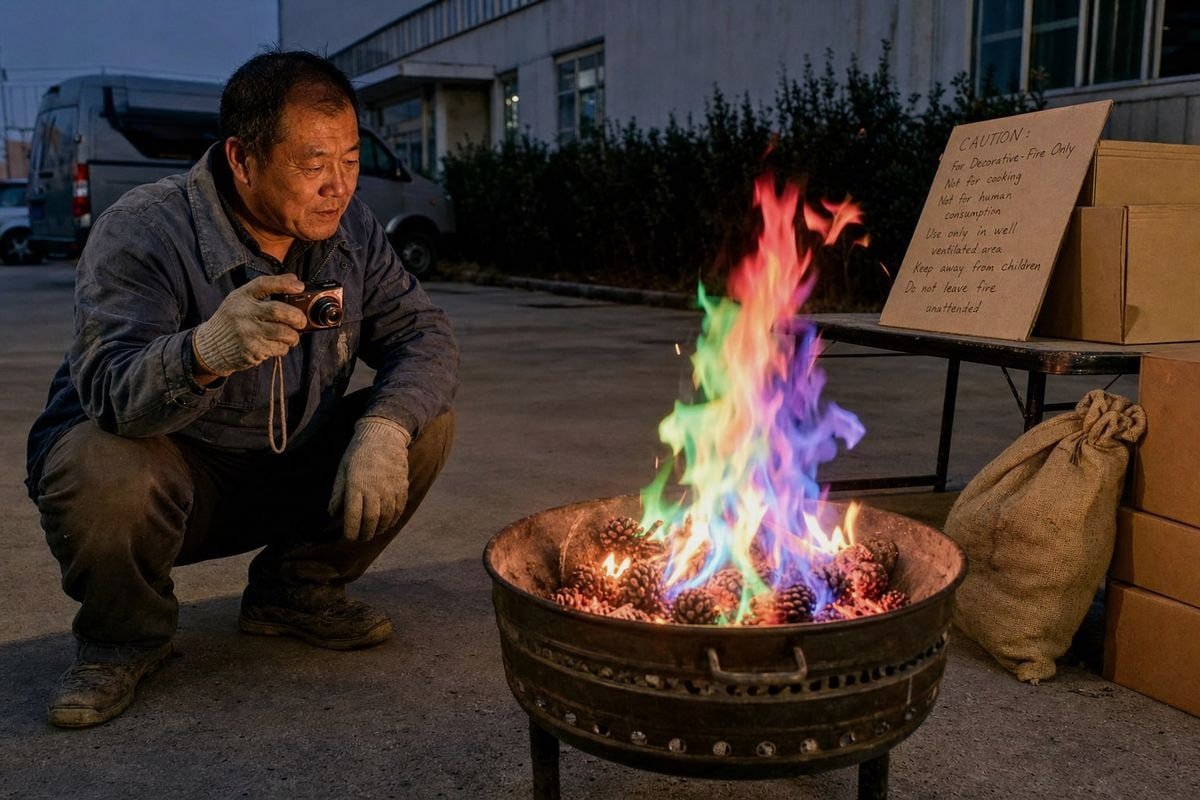
Eine feste Regel, die wir jedem Käufer sagen: Flammenfarbene Kiefernzapfen sind nur für dekorative Feuer bestimmt. Sie dürfen niemals auf Kochfeuern oder Grillgeräten verwendet werden. Ein seriöser Lieferant wird diese Einschränkung freiwillig mitteilen und auf Warnetiketten aufdrucken. Wenn Ihr Lieferant dies nicht erwähnt, weiß er entweder nichts über seine eigene Chemie oder es ist ihm egal. Beides ist disqualifizierend.
Wie kann ich einen direkten technischen Support-Kanal mit meinem Pinecone-Hersteller einrichten, bevor ich eine Großbestellung aufgeben?
Der Kompromiss, den ich am häufigsten abwäge, ist Geschwindigkeit gegen Tiefe. Käufer wollen Antworten in Stunden, aber echte technische Antworten zum Brennverhalten erfordern manchmal einen Produktionsingenieur, keinen Verkäufer. Die Lösung, auf die wir nach 17 Jahren Export gekommen sind, ist ein zweistufiger Support-Kanal, der vor der ersten Bestellung vereinbart wird.
Richten Sie einen benannten technischen Ansprechpartner ein, der von Ihrem Vertriebsmitarbeiter getrennt ist, vereinbaren Sie einen schriftlichen Service Level für Reaktionszeiten, richten Sie ein gemeinsames Dokumentenarchiv für Testberichte und technische Datenblätter ein und planen Sie einen Videoanruf vor der Bestellung, um die Produktion und die Qualitätskontrolle live zu besprechen.

Ein Support-Kanal ist keine WhatsApp-Nummer. Es ist eine dokumentierte Vereinbarung, die Personalwechsel und Zeitzonen überdauert. Hier ist die Reihenfolge, die ich empfehle, basierend darauf, wie unsere besten langfristigen Kunden in den USA, Großbritannien und den Niederlanden arbeiten.
Ein Fünf-Schritte-Einrichtungsprozess
- Senden Sie ein Anforderungsbriefing. Geben Sie Ihren Produkttyp, Zielmarkt, Vertriebskanal und Ihre Compliance-Anforderungen an, bevor Sie eine einzige technische Frage stellen. Dies ermöglicht es der Fabrik, Sie an den richtigen Ingenieur weiterzuleiten.
- Fordern Sie einen benannten technischen Ansprechpartner an. Fragen Sie, wer Fragen zu Chemie, Brennzeit und Farbechtheit beantwortet. Holen Sie sich seinen Namen und seine Rolle schriftlich. Wenn jede Antwort nur vom Vertrieb kommt, ist die "Fabrik" möglicherweise ein Handelsunternehmen.
- Zustimmen Service Level Agreements für Lieferanten. Definieren Sie Reaktionszeiten für Routinefragen (24–48 Stunden sind über Zeitzonen hinweg angemessen) und für dringende Qualitätsfragen (am selben Tag). Nehmen Sie dies in Ihre Einkaufsbedingungen auf.
- Erstellen Sie ein gemeinsames Dokumenten-Repository. Ein einfacher gemeinsamer Ordner reicht aus. Er sollte technische Datenblätter, Zertifizierungen, Chargenfotos und Feuchtigkeitsgehalte pro Lieferung enthalten. Schicke B2B-Portale sind nett; ein disziplinierter Ordner reicht aus.
- Halten Sie einen Videoanruf vor der Bestellung oder eine virtuelle Prüfung ab. Bitten Sie, den Trocknungsbereich, die Färbestation und die Verpackungslinie zu sehen. Wir bieten Käufern regelmäßig Live-Rundgänge durch unsere Anlage in Ningbo an. Eine Fabrik, die sich einer Kamera verweigert, hat etwas zu verbergen.
Einige Beschaffungsleitfäden empfehlen jetzt Blockchain-Rückverfolgbarkeits-Ledger und IoT-Feuchtigkeitssensoren in Containern. Diese Werkzeuge existieren, aber ehrlich gesagt, die meisten Bestellungen von farbigen Kiefernzapfen benötigen sie nicht. Chargencodes, datierte Fotos und ein reaktionsschneller Ingenieur lösen die gleichen Probleme zu einem Bruchteil der Kosten. Passen Sie die Werkzeuge an die Bestellgröße an.
Welche Dokumente und Testberichte sollte ich während der technischen Q&A anfordern, um die Produktkonsistenz zu überprüfen?
Ein Käufer aus Polen erzählte mir einmal, dass die zweite Lieferung seines früheren Lieferanten "wie ein anderes Produkt" von der ersten aussah. Nichts in seinen Unterlagen konnte dies beweisen, da er keine chargenbezogenen Dokumente zum Vergleichen hatte. Diese Lücke ist genau das, was Ihre Checkliste für Dokumente schließen muss.
Fordern Sie Prüfberichte von Drittanbietern (SGS oder Intertek), gegebenenfalls flammhemmende Zertifizierungen, ISO 9001- und BSCI-Fabrikzertifikate, Chargencodes mit Rückverfolgbarkeitsprotokollen, Ergebnisse von Farbechtheitstests, Aufzeichnungen über den Feuchtigkeitsgehalt, MSDS-Dokumente und eine unterzeichnete Freigabe von Mustern vor der Produktion vor Beginn der Massenfertigung an.
Dokumente erfüllen zwei Aufgaben. Erstens beweisen sie die Konformität für Zoll und Einzelhandelskäufer. Zweitens schaffen sie eine Basis, damit jede zukünftige Charge mit der ersten genehmigten Probe verglichen werden kann. In unserer Fabrik ist die goldene Probe, die Ihr Team abzeichnet der Vertrag für die Massenproduktion – die Chargen-zu-Chargen-Qualitätskontrolle ist nur dann sinnvoll, wenn es einen dokumentierten Bezugspunkt gibt.
Die wichtigsten Checklisten für Dokumente
| Dokument | Was es beweist | Wann anfordern |
|---|---|---|
| SGS / Intertek Prüfbericht | Produktsicherheit und Zusammensetzung | Bevor die Angebotsphase endet |
| ISO 9001 6 Zertifikat | Quality assurance standards at factory level | During supplier screening |
| BSCI 7 Auditbericht | Ethische und soziale Compliance | During supplier screening |
| CE-Dokumentation | Konformität mit dem EU-Markt | Before EU-bound orders |
| MSDS for dyes and colorants | Chemical safety and handling | With the first sample |
| Batch code + traceability log | Harvest source, drying date, treatment date | Mit jeder Lieferung |
| Colorfastness testing results | Dye will not bleed, rub off, or fade | Bei Mustergenehmigung. |
| Feuchtigkeitsgehaltsprotokoll | Prevents mold and brittleness in transit | Mit jeder Lieferung |
| Pre-production sample sign-off | Locks the quality reference | Before bulk production starts |
Verify, then compare across batches
Do not just file these papers. Use them. Check that the test report matches the exact product SKU, not a similar item. Confirm the certificate dates are current. Then, when batch two arrives, compare its moisture record, batch photos, and burn performance against batch one. Product shelf life also depends on these numbers — a cone shipped too damp will mold in a warehouse long before it reaches a shelf. Documentation is your early-warning system, not a formality.
Wie bewerte ich die Reaktionsfähigkeit und das Fachwissen eines Lieferanten, wenn wir benutzerdefinierte Brennzeiten oder Farbformeln besprechen?
Custom requests are where suppliers reveal themselves. When a Canadian camping brand asked us to extend the color effect on our pinecones for longer fireside sessions, our engineers came back with the real constraints — cone porosity, coating weight, absorption rates — before quoting anything. That conversation is the test I want you to run on every supplier.
Senden Sie eine spezifische benutzerdefinierte Anfrage, wie z. B. eine Zielbrenndauer oder eine Pantone-Farbreferenz, und bewerten Sie dann den Lieferanten hinsichtlich der Reaktionsgeschwindigkeit, ob er technische Einschränkungen ehrlich erklärt, ob er natürliche Kegelvariationen erwähnt und ob er einen Muster- und Testprozess vorschlägt, anstatt allem sofort zuzustimmen.

Responsiveness is easy to measure. Expertise is harder, because a fluent salesperson can sound expert. The trick is asking questions where a real production engineer and a reseller give different answers.
Questions that expose real expertise
Ask how natural variation in pine cone porosity affects chemical absorption. A real factory knows cones from different harvests absorb colorant differently, which changes both flame color intensity and burn time. Ask what tolerance they hold on color and size per batch. Ask how they run colorfastness testing on decorative finishes. A reseller will dodge; an engineer will give you numbers and process steps.
Watch for honest pushback. When a buyer asks us for an exact burn time, we explain the realistic range first, because organic materials never behave like injection-molded plastic. A supplier who agrees to every specification without discussion has either never tested it or plans to disappoint you later.
A simple scoring framework
| Kriterium | Strong Signal | Rote Flagge |
|---|---|---|
| Reaktionsgeschwindigkeit | Within 24–48 hours with substance | Days of silence, then vague replies |
| Technical depth | Explains porosity, absorption, coating trade-offs | Says "no problem" to everything |
| Honesty about limits | States realistic tolerances and MOQs | Promises exact specs instantly |
| Musterrichtlinie | Proposes iterative sample testing | Pushes for bulk order first |
| Documentation habit | Sends TDS and test data unprompted | Sends only marketing photos |
Run two or three suppliers through this same custom request in parallel. Document their answers side by side. The winner is rarely the cheapest quote — it is the one whose answers you could defend to your own retail customers.
Schlussfolgerung
Skipping technical Q&A support from suppliers for colored pine cones risks unsafe, inconsistent shipments. Define your use case, demand documentation, set a support channel, and test expertise before ordering.
Basic décor orders may need only light screening. But fire-use products, custom colors, and private-label programs demand the full playbook above. In our 17 years exporting color-flame pinecones and Magic Fire packets to 30+ countries, the buyers who asked the hardest questions upfront always had the smoothest reorders. Send your questionnaire before your PO — a supplier worth partnering with will welcome it.
Fußnoten
1. Background on the EU conformity marking suppliers must document for compliance. ↩︎
2. Background on this handling-sensitive chemical mentioned in flame-color formulations. ↩︎
3. Background on this combustion additive chemical mentioned for flame coloring. ↩︎
4. Official site of the third-party testing agency repeatedly cited for verification. ↩︎
5. Explains the standard document format referenced for chemical safety disclosure. ↩︎
6. Official ISO page for the quality management standard cited as a factory certificate. ↩︎
7. Official amfori website providing the definitive guide to the Business Social Compliance Initiative (BSCI) auditing standards. ↩︎



 English
  Spanish
  German
  French
  Arabic
  Portuguese
Diskutieren Sie mit