






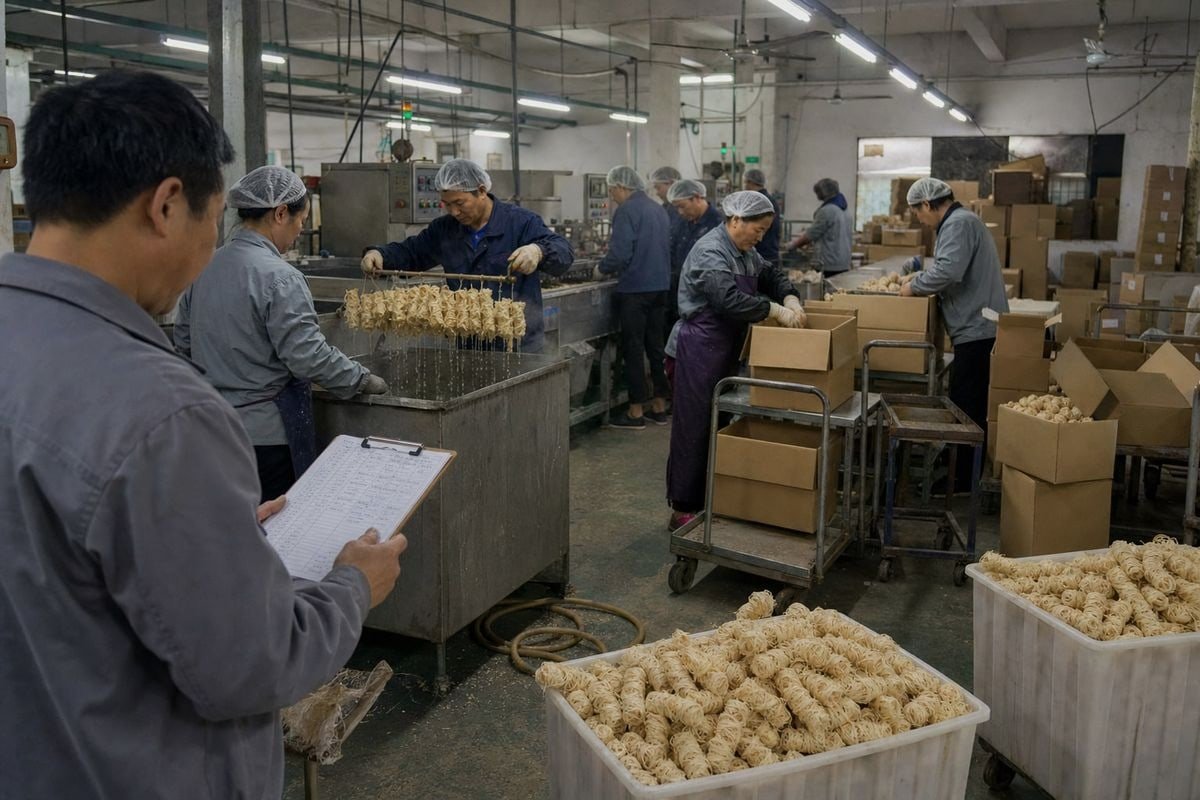
Buyers ask us this constantly on our wood fire starter production line: factory or Handelsunternehmen 1 REACH chemical compliance 2? Choose wrong, and you risk inconsistent burn times, hidden markups, and failed compliance audits. Choose right, and sourcing gets simpler.
A factory is better for wood fire starters when you need lower unit costs, consistent burn performance, custom packaging, and verified compliance at scale. A trading company suits smaller trial orders, mixed-product containers, and buyers still validating market demand before committing to volume.
The honest answer depends on your situation. In this guide, I will break down both supplier types, show you how to tell them apart, and give you a practical checklist before you order.
How can I tell if a wood fire starter supplier is a real factory or just a trading company?
A buyer from Germany once told me he had worked with a "factory" for two years before discovering it was a trader reselling our category of product. Verification matters more than the sales pitch.
Check the business license and scope, confirm manufacturing registration rather than sales-only registration, request live factory video calls, review production photos and audit reports like BSCI, and cross-check the registered address against the claimed production site. Traders usually fail two or more of these checks.

Many suppliers on B2B platforms label themselves "manufacturer" regardless of what they actually do. The label costs nothing. Verification does. So you need a repeatable process, not a gut feeling.
Start with the paperwork
Fordern Sie das Chinese business license 3. Look at the registered business scope. A real factory will list manufacturing or production in its scope. A trading company will list wholesale, import-export, or sales only. Also check whether the company can issue a manufacturer-type VAT invoice 4. Traders often cannot. Our own license shows production, and we share it in the first email when buyers ask, because we know serious purchasing managers check.
Then verify the physical operation
Documents can be borrowed. Production lines cannot. Request a live video walkthrough of the wax-dipping line, the wood wool processing area, and the packing floor. A trader will stall, reschedule, or send stock photos. A factory will show you the floor within a day or two. Third-party audits like BSCI 5 or ISO 9001 also tie a specific address to a specific operation, which makes them hard to fake.
Watch for hybrid suppliers
Some companies both make and trade. They may produce wax cubes in-house but resell wood wool rolls from a subcontractor. So verify the role per product, not per company. Ask directly: "Do you produce this exact SKU on your own line?"
| Verification Check | Echte Fabrik | Handelsunternehmen |
|---|---|---|
| Business scope | Manufacturing listed | Sales/wholesale only |
| Live factory video call | Accepted quickly | Delayed or refused |
| Audit reports (BSCI, ISO 9001) | Tied to their address | Borrowed or absent |
| Technical questions on wax ratios | Answered in detail | Vague or relayed |
| Registered address | Matches production site | Office building only |
What advantages do I gain by sourcing wood fire starters directly from the manufacturer?
The trade-off I weigh with every OEM client 6 is the same: how much control does this buyer actually need? For private-label fire starter brands, the answer is usually "a lot more than they think."
Sourcing wood fire starters directly from the manufacturer typically cuts unit costs by 5–20%, gives you control over wax formulation and burn time, ensures batch-to-batch consistency, simplifies compliance audits like FSC and REACH, and speeds up private-label packaging customization.
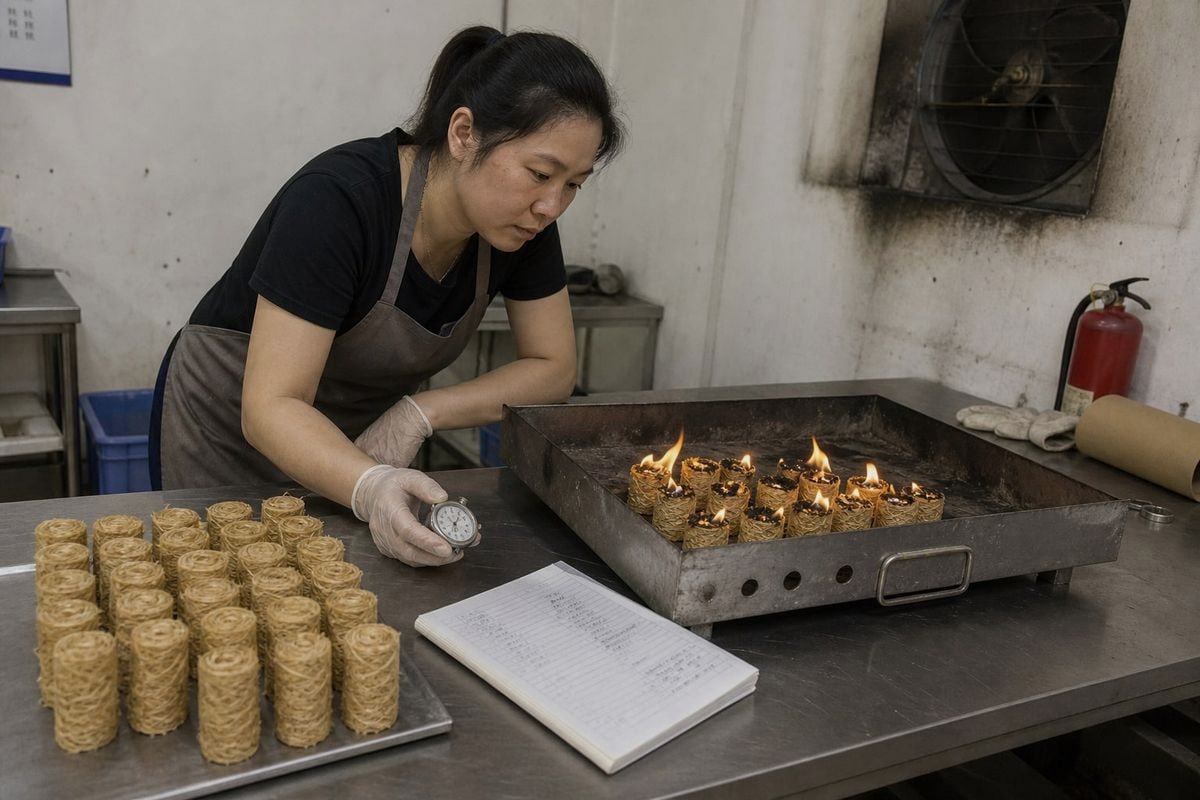
Price is the advantage everyone talks about first. Removing the middleman margin matters, especially in a price-sensitive category where retailers compare cost per burn minute. But in my seventeen-plus years in this industry, the buyers who stay with us long term rarely stay for price alone. They stay for control.
Control over the recipe
Wood fire starters are not a commodity. One product may burn eight minutes. A competing product may burn over seventeen. The difference comes from the wood fiber density, the wax type, and the dipping process. When you work factory-direct, you can specify these variables. Our standard wax-dipped wood rolls use a controlled fiber-to-paraffin ratio, and a client can ask us to adjust burn time, size, or odor profile. A trader relays your request to an unknown third party and hopes for the best.
Konsistenz von der Probe bis zur Massenproduktion
This is the quiet killer in this category. A trader may send you an excellent sample from Factory A, then fill your container from Factory B when capacity gets tight in peak season. The burn time drifts. The moisture resistance drifts. Your retail reviews suffer. On our lines, the first sample reliably reflects mass production because the same line, materials, and QC checks produce both.
Compliance you can actually audit
FSC wood sourcing 7 and REACH chemical compliance are far easier to verify when you can trace the raw material at the source. For US and EU retail channels, this is not optional. We hold ISO 9001, BSCI, CE, and SGS/Intertek test reports precisely because our buyers' compliance teams demand documents tied to the actual production site.
Faster, cheaper private-label work
Custom boxes, display packaging, warning labels, and barcodes move faster when the packaging line sits next to the production line. Traders usually outsource this step, which adds cost and one to two weeks of lead time.
Will working with a trading company affect my pricing, lead times, or quality control?
A Dutch distributor once showed me two invoices for identical-looking wood wool starters: one from a trader, one from a factory. The gap was real, but the full picture was more nuanced than the price difference suggested.
Yes, in predictable ways. Trading companies add a 5–20% margin, extend lead times when they outsource packaging, and limit your quality-control visibility since you cannot audit the real production site. However, they offer lower MOQs, faster samples, and multi-factory backup capacity.
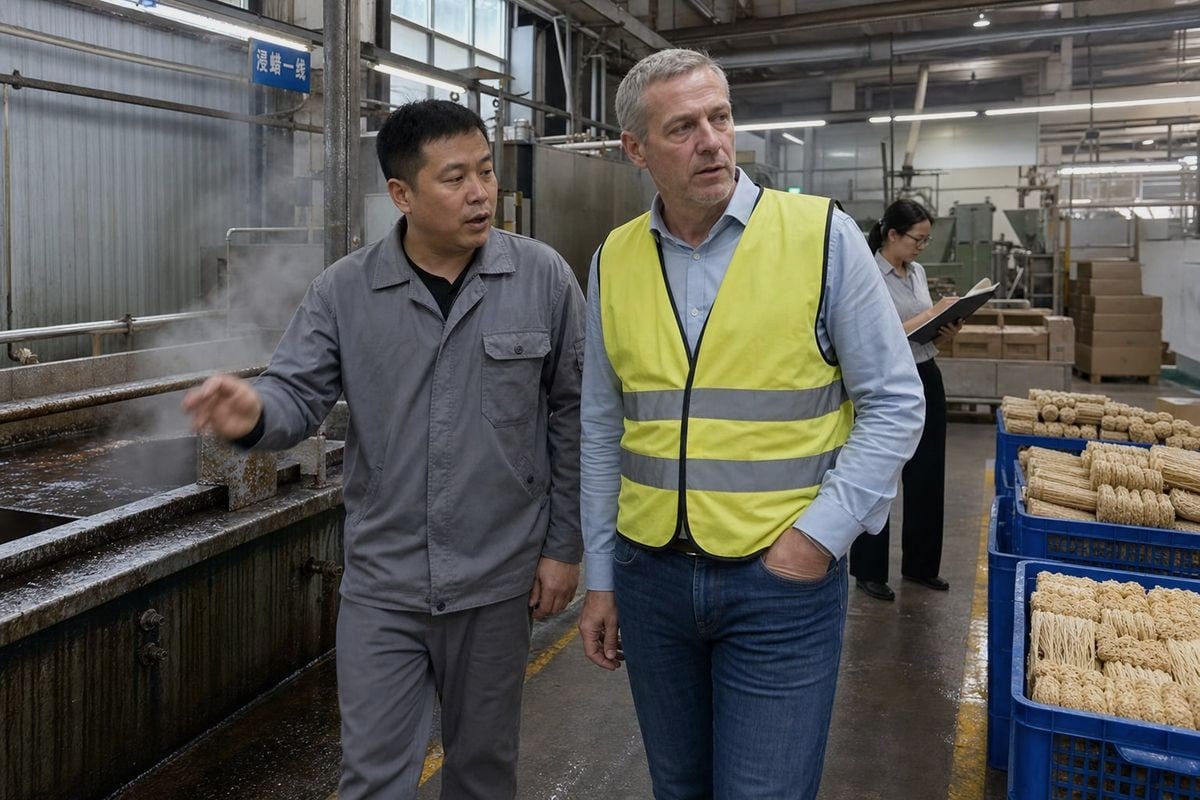
Let me be fair to trading companies here, because they genuinely serve a purpose. The question is whether that purpose matches your stage of business.
Where traders genuinely help
Traders often hold stock, so first samples arrive fast. They accept smaller MOQs because they aggregate orders from several buyers. They can bundle your wood fire starters with tongs, gloves, and charcoal into one mixed container. Their export documentation and English communication are often polished, because international trade is their entire job. And during the October-to-February peak season, a trader with a multi-factory network can absorb demand overflow when a single factory hits capacity limits.
Where traders quietly cost you
The problems show up later, and they show up in your quality data. Here is how the two models compare on the factors purchasing managers care about most:
| Faktor | Direkt ab Werk | Handelsunternehmen |
|---|---|---|
| Stückpreis | Basislinie | +5–20% markup |
| Mindestbestellmenge | Higher (full production runs) | Lower (aggregated orders) |
| Sample speed | Days to a week | Often immediate from stock |
| Chargenkonsistenz | Same line, same QC | May switch source factories |
| Compliance traceability | Direct FSC/REACH audit trail | Raw material source often obscured |
| Custom packaging lead time | Integrated, faster | Outsourced, +1–2 weeks |
| Peak-season capacity | Fixed by one plant | Flexible across network |
| Kommunikation | Varies; check English capability | Usually strong |
The deepest risk is quality control. Wood fire starters with dedicated paraffin-dipping lines produce far more consistent burn times than starters sourced from rotating subcontractors. If your trader switches factories mid-contract, you may never know until customers complain that the new batch smokes, smells, or dies out early. You also lose landed-cost clarity: a trader's quote may look close to factory pricing, but rework, returns, and inconsistent packaging quietly erode the difference.
What questions should I ask a supplier to verify their production capability before I place an order?
Early in our export history, a UK buyer sent us a two-page question list before his first trial order. It felt demanding at the time. Now I recommend his approach to every new client.
Ask about production line ownership, monthly capacity, wax formulation control, in-house packaging capability, certification documents tied to their address, sample-to-mass-production consistency guarantees, and raw material traceability. Then confirm answers with a live video audit and independent burn testing of samples.

Good questions do two jobs. They collect facts, and they test how the supplier responds. A real factory answers technical questions quickly and specifically. A trader gives round numbers and delays, because he has to ask someone else.
The question checklist
Use these in your first two or three emails or calls:
- Do you produce this exact wood fire starter SKU on your own line? Ask for the line location and a video walkthrough.
- What is your monthly capacity for this product, and what happens during peak season? Vague answers signal outsourcing.
- What is your wax-to-fiber ratio, and can you adjust burn time? A factory quotes specifics, such as a 50% wood fiber, 50% paraffin composition, and explains the trade-offs.
- Which certifications do you hold, and are the reports tied to your registered address? Request ISO 9001, BSCI, and SGS- oder Intertek-Berichte 8 directly.
- Can you trace your wood source for FSC purposes and confirm REACH compliance on the wax?
- Is packaging and private-label printing done in-house? In-house packaging shortens lead times and protects artwork quality.
- How do you guarantee the mass-production batch matches the approved sample? Ask for their batch QC procedure in writing.
- What is your MOQ for a trial order, and can it grow flexibly?
Then test the product, not just the supplier
Words are cheap. Samples are evidence. Run this comparison on every shortlisted supplier:
| Burn Test Metric | Was aufzuzeichnen ist | Warum es wichtig ist |
|---|---|---|
| Brenndauer | Time from ignition to flame-out | Products vary widely, roughly 8 to 17+ minutes |
| Zuverlässigkeit der Zündung | Lights on first match, yes/no | Retail returns start here |
| Odor | Neutral, waxy, or chemical | Critical for food-adjacent BBQ use |
| Ash and residue | Amount left after burn | Affects grill and fireplace cleanup |
| Feuchtigkeitsbeständigkeit | Burn after 24h in humid air | Key for camping positioning |
| Landed cost per burn minute | Total landed cost ÷ minutes | The true price comparison |
Compare landed cost per burn minute, not sticker price. A starter that costs slightly more but burns twice as long wins on the metric your end customers actually experience.
Schlussfolgerung
Choosing between a factory and a trading company for wood fire starters is a stage decision, not a permanent one. Trading companies lower the barrier for trial orders, mixed containers, and fast samples. Factories win on unit economics, burn-time consistency, compliance traceability, and private-label speed once your product is proven. The risk of choosing wrong is real: hidden markups compound, and invisible factory-switching erodes the quality your brand depends on. So verify the supplier's true role with licenses, video audits, and certification checks, then let sample burn tests and landed cost per burn minute make the final call. From our own production floor in China, serving distributors across the US and Europe for over seventeen years, the pattern is clear — test with flexibility, then scale with a factory partner you have verified yourself.
Fußnoten
1. Background concept clarifying how trading companies function versus manufacturers.


 English
  Spanish
  German
  French
  Arabic
  Portuguese
Diskutieren Sie mit