







Fireplace colored pine cones sometimes burn plain yellow, and buyers get complaints حمض البوريك 1. On our production line, we have spent years solving exactly this problem for private-label brands.
Fireplace colored pine cones fail to produce vivid colors when the metal salts cannot outshine the fire's natural yellow-orange light. Common causes include sodium interference, weak chemical soaking, residual moisture, low combustion temperature, and salts flaking off before the cone reaches the hottest flame zone.
The good news is that every one of these failure points can be traced, tested, and fixed. Let me walk you through the chemistry, the manufacturing side, and how to source a product that actually performs.
What causes my colored pine cones to burn without producing vivid flame colors?
During a factory trial many years ago, our team tossed a poorly dried batch into a test fireplace and watched it smolder in dull orange. That failed batch taught us more than any textbook.
Colored pine cones lose their vivid flames when sodium contamination, background firelight, moisture, or insufficient salt loading suppress the emission. The metal salts only glow when they reach a hot flame zone in high concentration, so weak soaking or damp cones produce faint or invisible color.
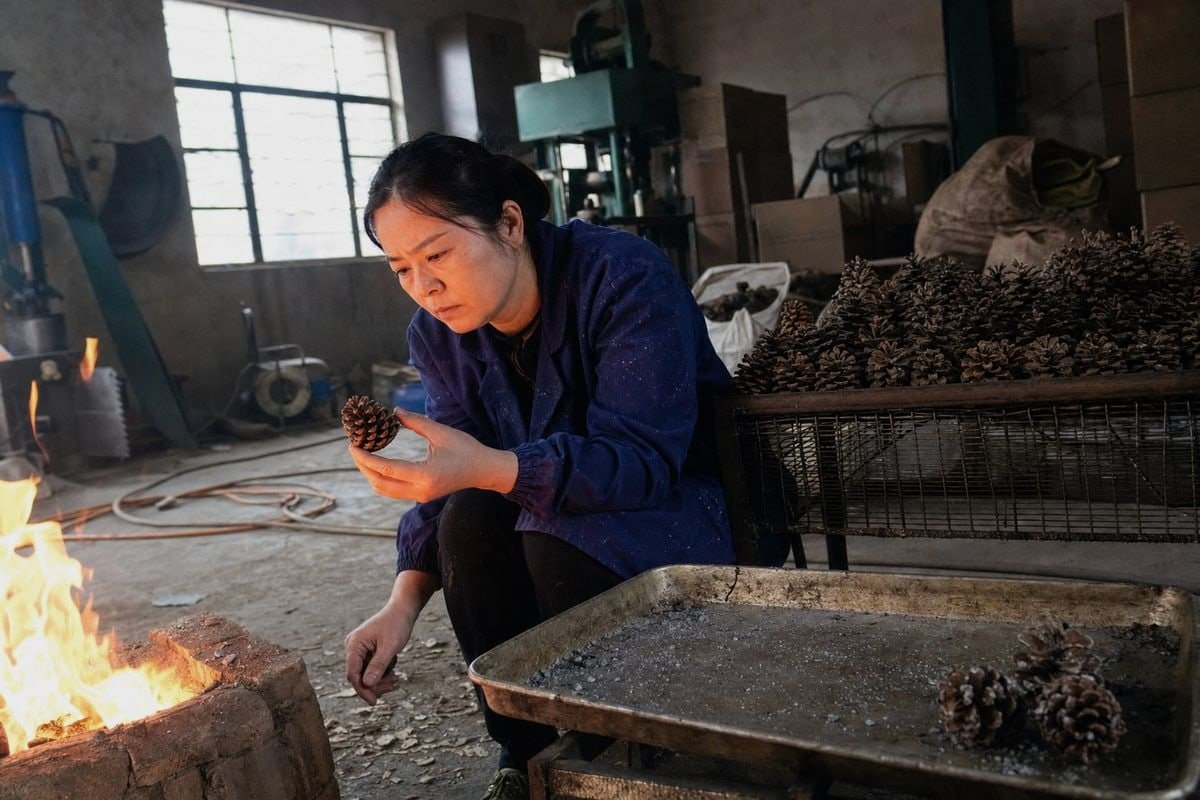
The first thing to understand is that the color does not come from paint or dye. It comes from الملونات اللهب 2 — specific metal salts that emit characteristic light when heated. Copper compounds give green and blue-green, كلوريد السترونشيوم 3 gives red, potassium gives purple, and boric acid gives a soft green. When a cone burns, the heat excites the electrons in these metal atoms, and as those electrons relax, they release light at fixed wavelengths. That is the entire trick.
So why does it often fail? Because the emission is fragile, and a wood-burning fireplace is a hostile environment for it.
The five most common failure causes
| Failure Cause | ماذا يحدث | Why Color Disappears |
|---|---|---|
| Sodium interference | Trace sodium from wood, water, or dust burns bright yellow | Sodium's emission overpowers blue, green, and purple hues |
| Weak saturation | Chemical soaking only coats the surface of the scales | Salts burn off in seconds instead of lasting minutes |
| Residual moisture | Water and sap absorb heat as they evaporate | Local combustion temperature stays too low for excitation |
| Background luminosity | Burning logs emit intense broad-spectrum orange light | The dim colored emission gets visually washed out |
| Chemical flaking | Dried crystals fall off during shipping or handling | Little colorant remains by the time the cone hits the fire |
Notice a pattern here. Most failures happen before the cone ever touches the fire. If the chemical soaking process is shallow, if the drying is rushed, or if there is no binding agent such as paraffin wax holding the salts to the wood fibers, the product is doomed at the factory — not in your customer's fireplace.
There is also a placement issue. A cone smoldering in the embers will rarely show color. The salts need to vaporize inside the hottest part of the flame. And a small, calm fire displays color far better than a roaring blaze, because there is less competing yellow light. One more nuance worth remembering: "not colorful" does not always mean "not working." Many cheap products do emit color, but only as a faint tint at the flame edges that the eye simply cannot separate from the orange glow.
How can I verify a supplier's color-flame formula meets international safety and compliance standards?
A German distributor once emailed us before signing anything, asking for our full SGS report and BSCI audit results. That is exactly the right instinct, and we welcomed it.
Verify a supplier by requesting third-party test reports from SGS or Intertek, confirming ISO 9001 and BSCI certification, checking CE documentation for the EU, reviewing the chemical composition disclosure, and confirming the formula excludes heavy metals like lead, arsenic, and hexavalent chromium.

Compliance is not paperwork theater. Anything you burn indoors enters the air your customer breathes, so regulators in the US and EU treat flame colorants seriously. In our seventeen-plus years exporting to more than thirty countries, we have seen buyers lose entire container shipments at customs because a supplier's "certificate" turned out to be a photocopied template. Here is how to protect yourself.
عملية تحقق خطوة بخطوة
- Request the actual test reports, not just certificates. A legitimate SGS or Intertek report has a verifiable report number. Call or check online to confirm it is real and current.
- طابق التقرير مع المنتج. Reports must name the exact SKU and formula, not a "similar item." Formulas that swap copper sulfate for a cheaper, unlisted compound are a red flag.
- Check for banned substances. اطلب heavy-metal screening 4 results. Safe color-flame formulas rely on food-adjacent or low-toxicity metal salts, never lead or barium compounds.
- Confirm factory-level audits. ISO 9001 5 proves a quality system exists. BSCI proves the factory passed a social compliance audit 6. Trading companies usually cannot show either under their own name.
- Ask for warning label and SDS support. A serious supplier provides صحائف بيانات السلامة 7 and market-specific warning labels for the US, EU, and other regions.
- Order a tested trial batch. Burn samples yourself. Check smoke behavior, odor, and residue before committing to volume.
One objection we hear often: "Some sources say these products are harmless novelties, others warn about toxic fumes — who is right?" The honest answer is that both exist in the market. Poorly formulated products using industrial-grade chemicals can produce unpleasant or harmful fumes. Properly formulated products using screened, eco-friendly metal salts burn cleanly with normal ventilation. That gap is exactly why third-party testing matters. The formula, not the product category, determines safety.
What manufacturing factors affect batch-to-batch consistency in color-flame pinecone production?
Consistency is the trade-off we weigh every single day: faster drying saves cost, but slower controlled drying locks the salts deep into the wood fibers. We choose the slower path, and our repeat buyers are the reason why.
Batch consistency depends on raw pinecone moisture control, salt solution concentration tolerances, soaking time and temperature, controlled drying cycles, wax-binding uniformity, and storage humidity. Factories without documented process controls at each stage produce cones with unpredictable flame color and burn time.
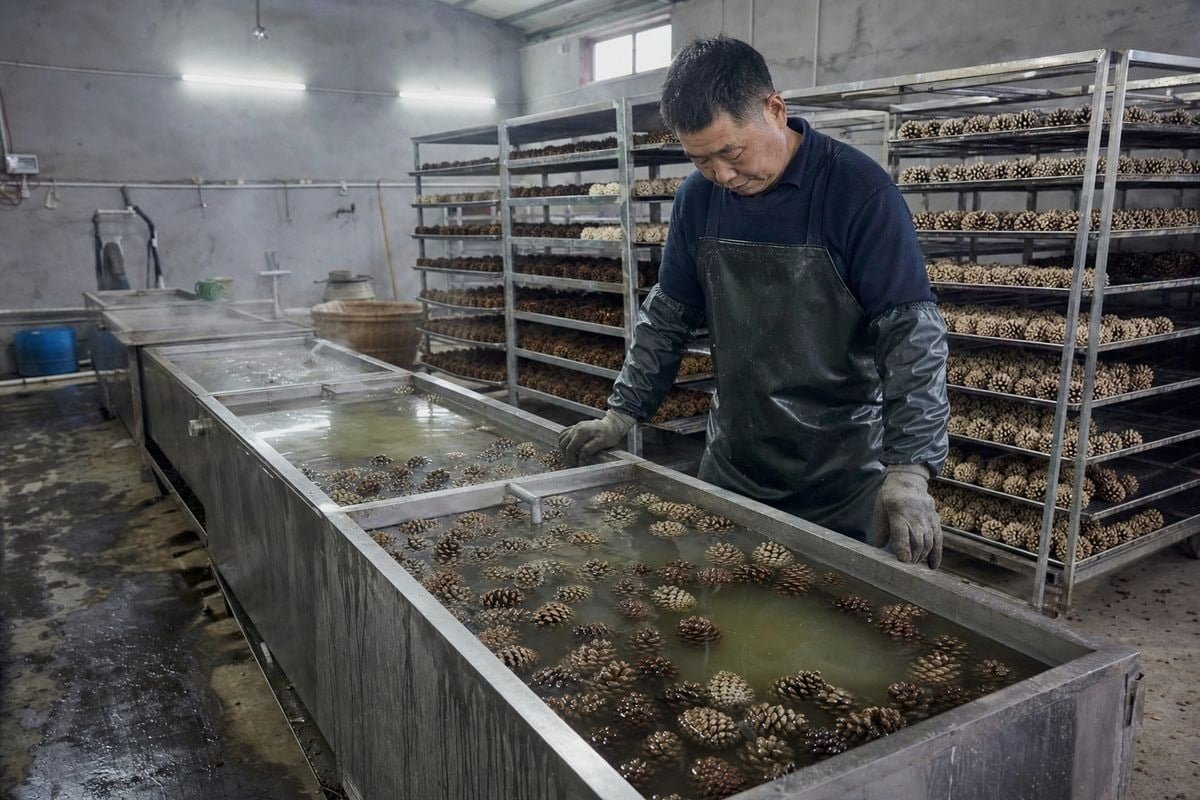
Buyers often assume a pine cone is a pine cone. It is not. Natural cones vary in size, resin content, density, and moisture — sometimes dramatically between harvest regions and seasons. If a factory does not normalize these inputs before chemical soaking, no downstream process can save the batch.
Where consistency is won or lost
| Production Stage | Key Variable | Consequence If Uncontrolled |
|---|---|---|
| استلام المواد الخام | Cone moisture and resin content | Uneven salt absorption; soot-heavy smoky burns |
| Solution preparation | Salt concentration and water purity | Weak color or sodium interference from impure water |
| Chemical soaking | Time, temperature, agitation | Surface-only coating that burns off in seconds |
| التجفيف | Temperature curve and duration | Trapped moisture that lowers combustion temperature |
| Wax binding | Coating thickness and coverage | Salts flake off in transit; inconsistent ignition |
| Storage and packing | Humidity control | Hygroscopic salts absorb moisture and leach out |
The hygroscopic problem deserves special attention. Many flame colorants naturally pull moisture from the air. If cones sit in a humid warehouse for weeks before packing, the salts can migrate out of the wood fibers or chemically degrade. At our Ningbo facility, we control storage humidity and use sealed, resealable packaging precisely for this reason. Wax-dipped pinecones solve two problems at once — the paraffin layer seals moisture out and locks the crystals in.
There is also a sampling issue every purchasing manager should know. Some suppliers hand-prepare golden samples that never match mass production. Ask directly: is the sample pulled from a standard production run? With complete production lines and batch records, that question should be easy to answer. If a supplier hesitates, your first container will likely disappoint your retail customers.
How do I choose a factory that can customize burn time and flame intensity for my private label?
A Canadian camping brand once asked us for a fifteen-minute burn per cone in kraft pouch packaging with their own logo. That project shaped how we now structure every OEM conversation.
Choose a factory with in-house formula control, adjustable wax loading for burn time, documented flame-intensity testing, flexible MOQs for trial orders, and full private-label capability including custom pouches, boxes, warning labels, and barcodes. True manufacturers, not trading companies, can adjust these variables directly.
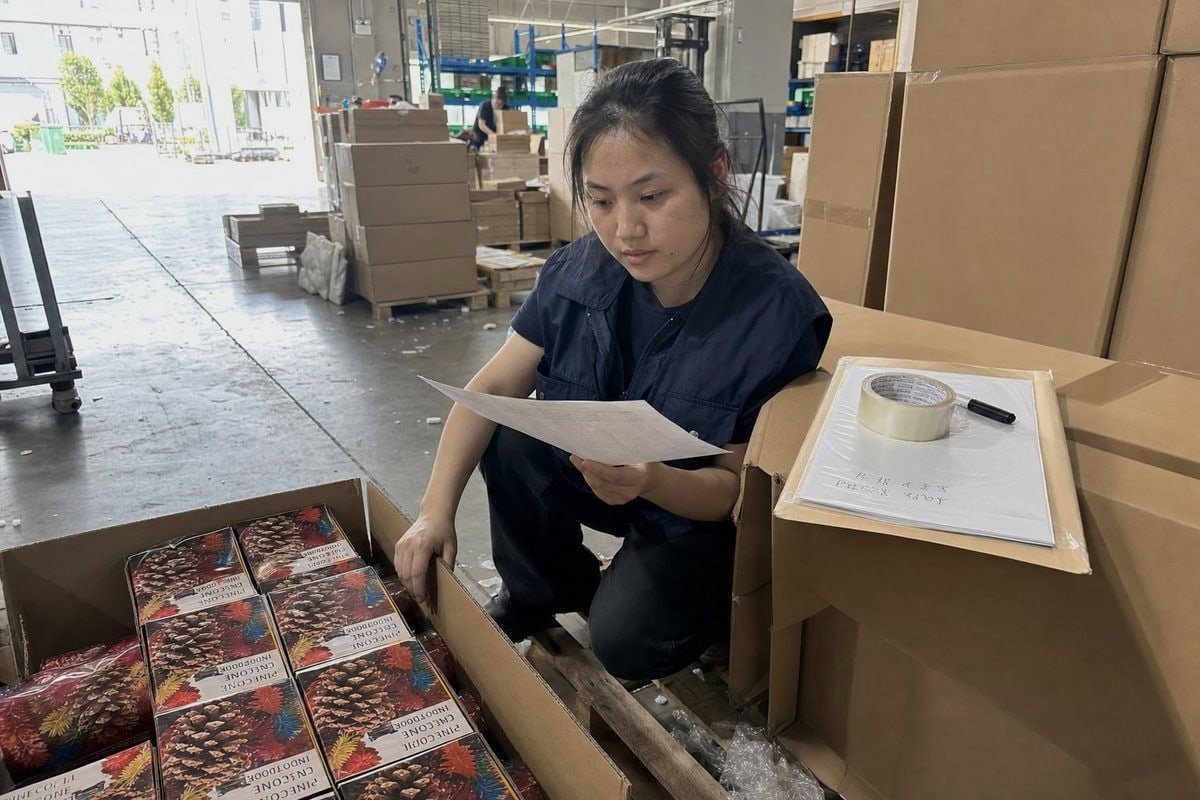
Burn time and flame intensity are engineering outputs, not accidents. A factory that controls its own formula can tune them; a trading company reselling generic stock cannot. Here is what actually gets adjusted behind the scenes: wax loading affects how long the cone sustains a flame, salt concentration affects how strong the color reads against the fire, and cone size selection affects total burn duration. A fireplace product for cozy evening use needs a different tuning than a campfire product competing with a large outdoor flame.
أسئلة تفصل المصانع الحقيقية عن البائعين
- Can you show me two versions of the same cone with different burn times, produced on request?
- Can you adjust color intensity for a wood-burning fireplace versus an open fire pit?
- What packaging formats do you run in-house — kraft stand-up pouches, burlap drawstring sacks, jars, display boxes?
- Do you print market-specific warning labels and barcodes, or do I need a third party?
- What is your MOQ for a trial order, and does the trial come off the standard line?
Matching product tuning to your market
| Your Market | Recommended Tuning | Packaging Fit |
|---|---|---|
| Fireplace and home décor retail | Longer burn, moderate color, low smoke | Burlap sack or gift box |
| العلامات التجارية للتخييم والخارجية | Strong color intensity, weather-sealed | Resealable kraft pouch |
| BBQ and fire pit distributors | Fast ignition, robust flame | Bulk jar or multi-pack |
| تجار المهرجانات والفعاليات | Vivid short bursts, high visual impact | Small single-use packets |
One more practical point on expectations. Even the best-tuned product will not produce cartoon-bright rainbow fire in every condition. Honest suppliers help you write realistic packaging claims — "adds vibrant color accents to your fire" performs better long-term than "neon rainbow flames," because it prevents returns and negative reviews. We have seen brands succeed for years on repeat purchases precisely because the product delivered what the label promised. Your factory should be a partner in setting those expectations, not just a source of cheap goods.
خاتمة
Weak flame color usually traces back to chemistry and manufacturing, not user error. Source from a certified, formula-controlling factory, and your fireplace colored pine cones will perform as promised.
ملاحظات ختامية
1. Reference on the compound used to produce soft green flame coloring in the formula. ↩︎
2. Explains the chemistry of metal salts emitting characteristic colors when heated in flame. ↩︎
3. Background on the specific salt compound responsible for red flame coloration. ↩︎
4. WHO fact sheet on health risks from heavy metals, supporting the need for screening. ↩︎
5. Authoritative Wikipedia entry providing a comprehensive overview of the ISO 9001 standard. ↩︎
6. Official amfori BSCI page defining the social compliance audit standard referenced in verification. ↩︎
7. OSHA's official hazard communication resource explaining Safety Data Sheet requirements. ↩︎



 English
  Spanish
  German
  French
  Arabic
  Portuguese
انضم إلى المحادثة