






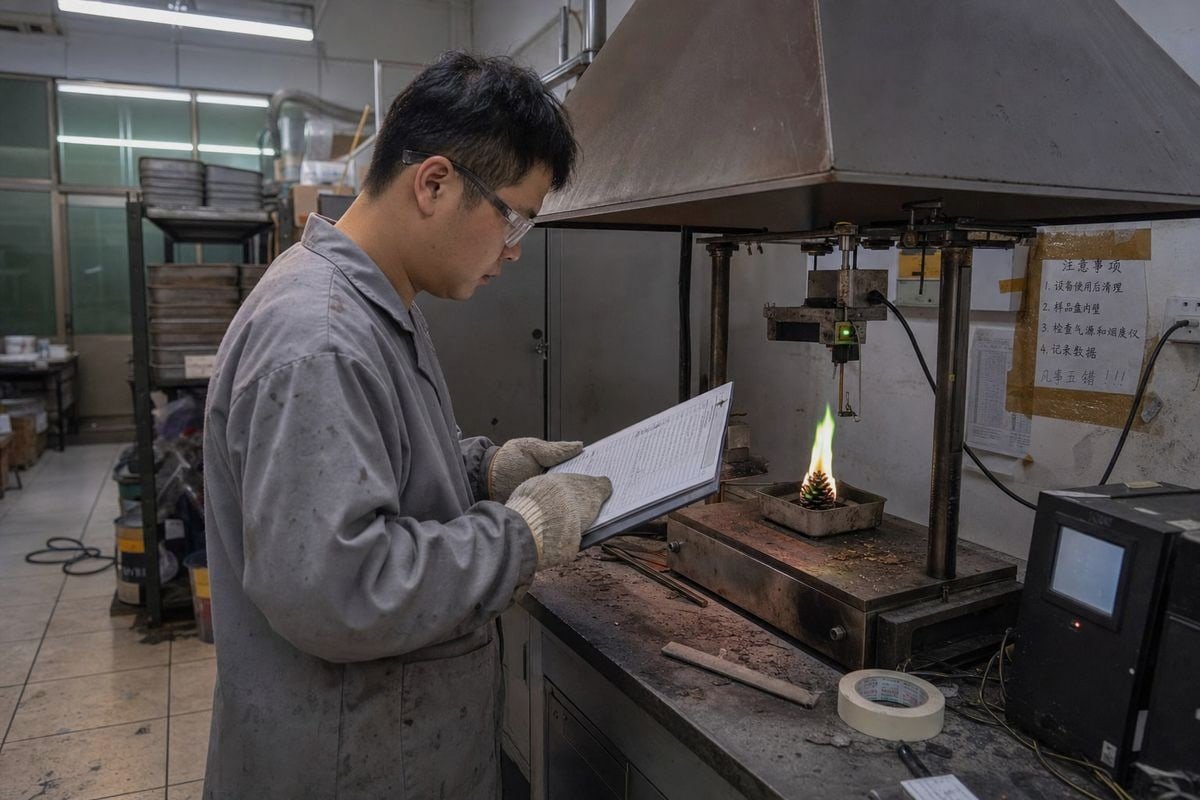
بيانات اختبار الاحتراق تفصل موردي أكواز الصنوبر الملونة الآمنة للمواقد عن الموردين المحفوفين بالمخاطر مركبات عضوية متطايرة 1. في خط إنتاج اللهب الملون الخاص بنا، رأيت المشترين يتخطون هذه الخطوة ويدفعون ثمنها لاحقًا.
طلب بيانات اختبار احتراق المنتج النهائي التي تغطي وقت الاشتعال، ومعدل إطلاق الحرارة، ومعدل فقدان الكتلة، وتصنيف كثافة الدخان، ونتائج اختبار انبعاثات CO/CO₂، بالإضافة إلى صحيفة بيانات السلامة (SDS) تكشف عن كيمياء صبغة اللهب، وتحليل تركيز المعادن الثقيلة، وشهادة المختبر من طرف ثالث من هيئات مثل SGS أو Intertek.
هذا هو الجواب المختصر. لكن كل نقطة من نقاط البيانات هذه تخفي فخاخًا يمكن أن تغرق طلبًا بالجملة. دعني أريك ما يجب أن تطلبه، ولماذا.
ما هي الشهادات التي يجب أن تدعم تقارير اختبار الاحتراق الخاصة بالمورد؟
قبل بضع سنوات، أرسل لي موزع ألماني "تقرير اختبار" لمنافس - صفحة واحدة، لا اسم للمختبر، لا معيار مذكور. اكتشف فريق الامتثال لدينا أنه لا قيمة له في حوالي ثلاثين ثانية.
يجب أن تكون تقارير اختبار الاحتراق مدعومة بشهادة مختبر من طرف ثالث من هيئات معتمدة مثل SGS أو Intertek، مع الإشارة إلى معايير معترف بها مثل ASTM E1354 أو ISO 5660-1، إلى جانب شهادة الجودة ISO 9001 على مستوى المصنع، ووضع علامة CE حيثما ينطبق ذلك، وصحيفة بيانات سلامة كاملة للمنتج المعالج.
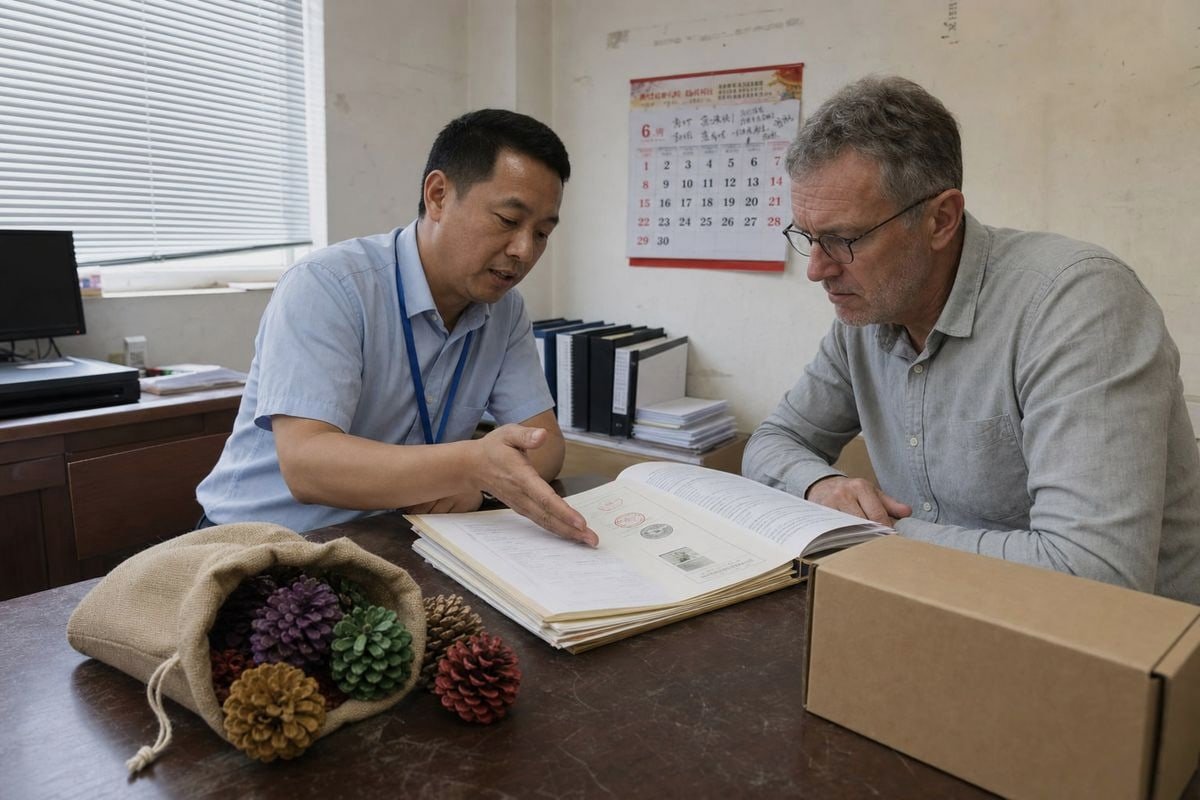
تقرير الاختبار لا يكون موثوقًا إلا بقدر مصداقية المنظمة التي أصدرته. في خبرتنا التي تزيد عن 17 عامًا في تصدير أكواز الصنوبر ذات اللهب الملون وعبوات النار السحرية إلى أكثر من 30 دولة، فإن المشترين الذين لم يواجهوا أبدًا مشكلة جمركية أو مشكلة مسؤولية كانوا هم الذين تحققوا من سلسلة الشهادات أولاً، وليس فقط الأرقام الموجودة على الصفحة.
حزمة الشهادات التي يجب أن تتوقعها
فكر في وثائق المورد كطبقات. كل طبقة تجيب على سؤال مختلف.
| وثيقة | ما يثبته | علامة حمراء إذا كانت مفقودة |
|---|---|---|
| ISO 9001 2 | المصنع لديه نظام إدارة جودة حقيقي | من المحتمل أن يكون اتساق الدُفعات غير متحقق منه |
| تقرير اختبار SGS أو Intertek | قام مختبر مستقل باختبار المنتج الفعلي | قد تكون البيانات ذاتية الإبلاغ أو مستعارة |
| علامات CE / خاصة بالسوق | المنتج يلبي متطلبات سوق الوجهة | تأخيرات جمركية أو شحنات مرفوضة |
| SDS (صحيفة بيانات السلامة 3) | يتم الكشف عن التركيب الكيميائي والمخاطر | يتم إخفاء كيمياء الملونات عنك |
| تدقيق BSCI | الامتثال الأخلاقي والاجتماعي في المصنع | قد ترفض سلاسل البيع بالتجزئة الإدراج |
طابق التقرير مع المنتج
هذا هو الفخ الذي أراه في أغلب الأحيان. يسلم المورد تقريرًا شرعيًا - ولكنه يغطي أكواز صنوبر غير معالجة، أو خط إنتاج مختلف تمامًا. يعالج معالجة اللون سلوك الاشتعال، وانبعاث الدخان، ومنتجات الاحتراق الثانوية. لذلك يجب أن يذكر التقرير العنصر النهائي المعالج الجاهز للبيع بالتجزئة، ويفضل أن يكون مع رقم الدُفعة أو المجموعة. اطلب رقم تقرير المختبر أيضًا. تسمح لك المختبرات ذات السمعة الطيبة بالتحقق من التقرير مباشرة من خلال أنظمتها عبر الإنترنت. نشجع مشتركينا على القيام بذلك بالضبط مع مستندات SGS و Intertek الخاصة بنا، لأن التحقق لا يكلف شيئًا ويبني الثقة بسرعة.
قم أيضًا بتأكيد معيار الاختبار. قياس السعرات الحرارية المخروطية تحت ASTM E1354 4 أو ISO 5660-1 هو الطريقة المعيارية لبيانات أداء الحريق للمنتجات القابلة للاحتراق. التقرير الذي لا يذكر أي معيار يصف حرقًا مرتجلًا، وليس اختبارًا.
كيف يمكنني تفسير بيانات اتساق وقت الاحتراق ولون اللهب عبر الدُفعات؟
كل دفعة إنتاج في منشأتنا في نينغبو تنتهي بحرق عينة. نقوم بتسجيل وقت الاحتراق، وبداية اللون، ومدة اللون لكل دفعة - لأن المنتجات النباتية المصنوعة يدويًا تنجرف إذا تركتها.
قارن البيانات على مستوى الدفعة حول وقت الاحتراق، ووقت بدء اللون، ومدة لون اللهب المرئي مقابل نطاق التفاوت المحدد من قبل المورد؛ يُظهر الموردون المتسقون سجلات دفعة تلو دفعة مع تباين صغير، بينما تشير التقلبات الواسعة إلى تحميل غير متحكم فيه للملونات، أو محتوى الرطوبة، أو مصادر المواد الخام.
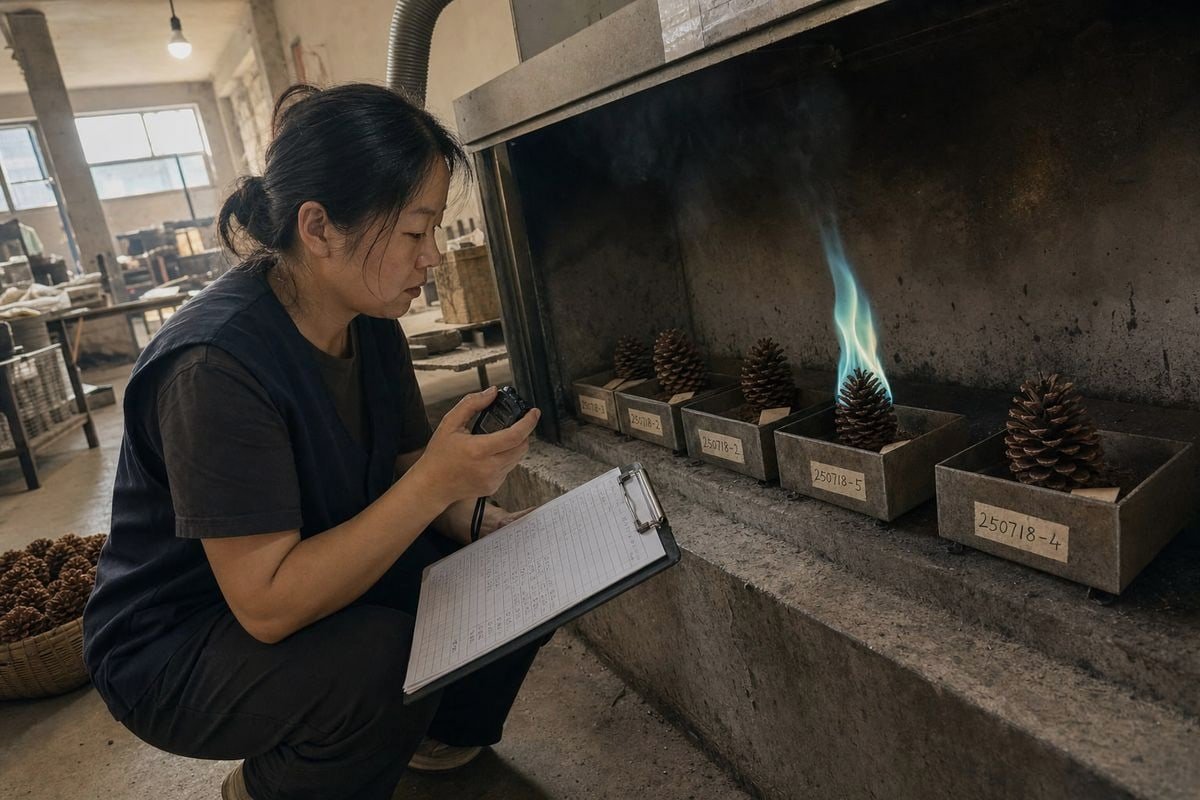
أكواز الصنوبر هي كتلة حيوية طبيعية ذات محتوى طاقة حقيقي - تضع الدراسات المنشورة قيمتها الحرارية تقريبًا بين 17.8 و 19.9 ميجا جول / كجم. هذا يعني أن المخروط نفسه هو وقود، ويختلف حجمه وكثافته ومحتواه من الرطوبة حسب الحصاد. أضف معالجة كيميائية فوق ذلك، ولديك مصدران للتغيير مكدسان معًا. بيانات الدُفعة هي كيف ترى ما إذا كان المورد يتحكم في كليهما.
الأرقام المهمة دفعة بدفعة
عندما نجري تحليل التركيب الكيميائي وفحوصات الاحتراق على كل دفعة، نتتبع عددًا قليلاً من القيم. اطلب من المورد الخاص بك نفس الشيء:
| المقياس | ما يخبرك به | علامة صحية |
|---|---|---|
| وقت الاحتراق الإجمالي | المدة التي يساهم بها مخروط واحد في النار | نطاق ضيق عبر الدُفعات |
| وقت بدء اللون | مدى سرعة ظهور اللهب الملون | تأخير يمكن التنبؤ به وقابل للتكرار |
| مدة اللون | حصة وقت الاحتراق مع لون مرئي | نسبة مستقرة لكل دفعة |
| مستوى تحميل الملونات | جرامات المعالجة لكل مخروط | هدف موثق مع تسامح |
| محتوى الرطوبة عند التعبئة | محرك سلوك الاشتعال والدخان | مقاس ومسجل لكل دفعة |
فصل أداء اللون عن أداء السلامة
هنا تمييز أدفع به في كل مكالمة مشترٍ. مدة لون اللهب هي مقياس تسويقي. يخبرك أن المنتج يبدو جيدًا. لا يخبرك شيئًا عما إذا كان يحترق بشكل نظيف. يمكن للمخروط أن يلقي لهبًا أزرق وأخضر زاهيًا مع إنتاج دخان مفرط أو اشتعال غير منتظم. لذا اقرأ بيانات وقت الاحتراق جنبًا إلى جنب مع مقاييس السلامة من القسم التالي - وليس بدلاً منها أبدًا.
نصيحة عملية أخرى. اسأل عما إذا كانت العينة الأولى التي وافقت عليها قد تم سحبها من تشغيل إنتاج عادي أو تم تحضيرها يدويًا. موقفنا كان دائمًا أن العينة يجب أن تعكس الإنتاج الضخم، وسجلات الدُفعات هي الدليل. إذا لم يتمكن المورد من إظهار تاريخ الدُفعات، فقد تكون عينتك الجميلة هي أفضل مخروط سيرسلونه لك على الإطلاق.
ما هي مقاييس السلامة والانبعاثات الأكثر أهمية للوائح السوق المستهدف الخاص بي؟
شحن منتجات اللهب الملون إلى الولايات المتحدة وألمانيا وفرنسا وأستراليا علّم فريق الامتثال لدينا شيئًا واحدًا: كل سوق يطرح سؤالًا مختلفًا قليلاً، لكن مجموعة البيانات الأساسية متطابقة تقريبًا.
إعطاء الأولوية لمعدل إطلاق الحرارة وتصنيف كثافة الدخان من اختبارات المخروط الحراري، ونتائج اختبارات انبعاثات أول أكسيد الكربون وثاني أكسيد الكربون، وتحليل تركيز المعادن الثقيلة للرصاص والكادميوم والزرنيخ، وانبعاثات الجسيمات، وبيانات المركبات العضوية المتطايرة - فهذه تغطي المتطلبات الأساسية عبر أطر سلامة المستهلك في الولايات المتحدة والاتحاد الأوروبي.
يهتم المنظمون بلحظتين: الاحتراق نفسه، وما ينتهي به الأمر في الغرفة والمدخنة بعد ذلك. يجب أن تغطي طلبات البيانات الخاصة بك كلاهما.
أثناء الاحتراق
مخرجات مسعر المخروط هي الأساس. يخبرك وقت الاشتعال بمدى سرعة اشتعال المنتج تحت تدفق حراري موحد - تختبر المختبرات الجادة عند مستويات محددة مثل 25 أو 50 كيلو واط/م². معدل إطلاق الحرارة الأقصى هو أفضل مؤشر على خطر الاشتعال في صندوق النار السكني. يصف إجمالي إطلاق الحرارة ومعدل فقدان الكتلة مقدار الطاقة التي يلقيها المخروط في النار ومدى سرعة ذلك. يشير إنتاج الدخان، الذي غالبًا ما يتم الإبلاغ عنه كمساحة انقراض محددة أو تصنيف كثافة الدخان، إلى مخاوف السخام والرؤية.
بعد الاحتراق
هنا يدخل جودة الهواء الداخلي في الصورة. ينتج الاحتراق غير الكامل أول أكسيد الكربون 5, ، لذا فإن نسب أول أكسيد الكربون / ثاني أكسيد الكربون مهمة لأي منتج يستخدم في مدفأة منزلية، خاصة في ظروف المسودة المنخفضة. تثير أملاح المعادن التي تخلق اللون - مركبات النحاس للأزرق والأخضر، على سبيل المثال - أسئلة حول المعادن في الطور البخاري في منطقة التنفس، وهذا هو السبب بالضبط في أن وثائق سلامة كبريتات النحاس وتقريرًا كاملاً عن نواتج الاحتراق يجب أن يكونا في ملفك. تركيز المعادن الثقيلة 6 يتماشى التحليل للرصاص والكادميوم والزرنيخ مع معايير المستهلك مثل ASTM F963 7 ويحافظ عليك بعيدًا عن الملوثات التي لا يتحملها أي سوق. تحليل الرماد المتبقي والبيانات المتعلقة بالكربون تكتمل الصورة، حيث تتفاعل المخاريط المعالجة كيميائيًا مع رواسب المدخنة الموجودة. إذا استخدم عملاؤك مواقد خشبية تحفيزية، فاسأل أيضًا عما إذا كانت الأملاح المتطايرة يمكن أن تؤثر على المحفزات التحفيزية.
| قلق السوق | البيانات المطلوب طلبها | لماذا هو مهم |
|---|---|---|
| خطر الاشتعال | معدل إطلاق الحرارة الأقصى، وقت الاشتعال | سلوك يمكن التنبؤ به في صندوق النار |
| جودة الهواء الداخلي | أول أكسيد الكربون / ثاني أكسيد الكربون، المركبات العضوية المتطايرة، الجسيمات الدقيقة 2.5 | التعرض الصحي في غرفة المعيشة |
| الملوثات السامة | المعادن الثقيلة، صحيفة بيانات السلامة، فحص الديوكسين | حماية الامتثال والمسؤولية |
| سلامة المدخنة | تحليل الرماد المتبقي، بيانات الكربون | خطر صيانة المداخن على المدى الطويل |
| توافق الموقد | إرشادات المحفز التحفيزي | تجنب إتلاف ضوابط الانبعاثات |
تمت صياغة منتجاتنا الخاصة بمواد صديقة للبيئة ولا تحتوي على مواد كيميائية ضارة، ونحن ندعم ذلك بتقارير اختبار بدلاً من الصفات - لأن سمية ملونات اللهب هي مسألة بيانات، وليست مسألة تسويق.
هل يجب أن أطلب اختبارًا معمليًا مستقلاً قبل تقديم طلب بالجملة؟
سألني مشترٍ أمريكي ذات مرة عما إذا كان التحقق المستقل من تقاريرنا سيغضبنا. إجابتي: العكس. يرحب الموردون ذوو العمق التصنيعي الحقيقي بالتدقيق، لأنه يقضي على المنافسين الذين لا يستطيعون البقاء عليه.
نعم - قبل أي طلب بالجملة، أو تكليف أو التحقق من اختبارات معملية مستقلة على عينات الإنتاج من المخاريط المعالجة النهائية، تغطي أداء الاحتراق، والانبعاثات، والمعادن الثقيلة؛ التكلفة صغيرة مقارنة بحاوية تم سحبها، وسيتعاون الموردون الصادقون بسهولة.
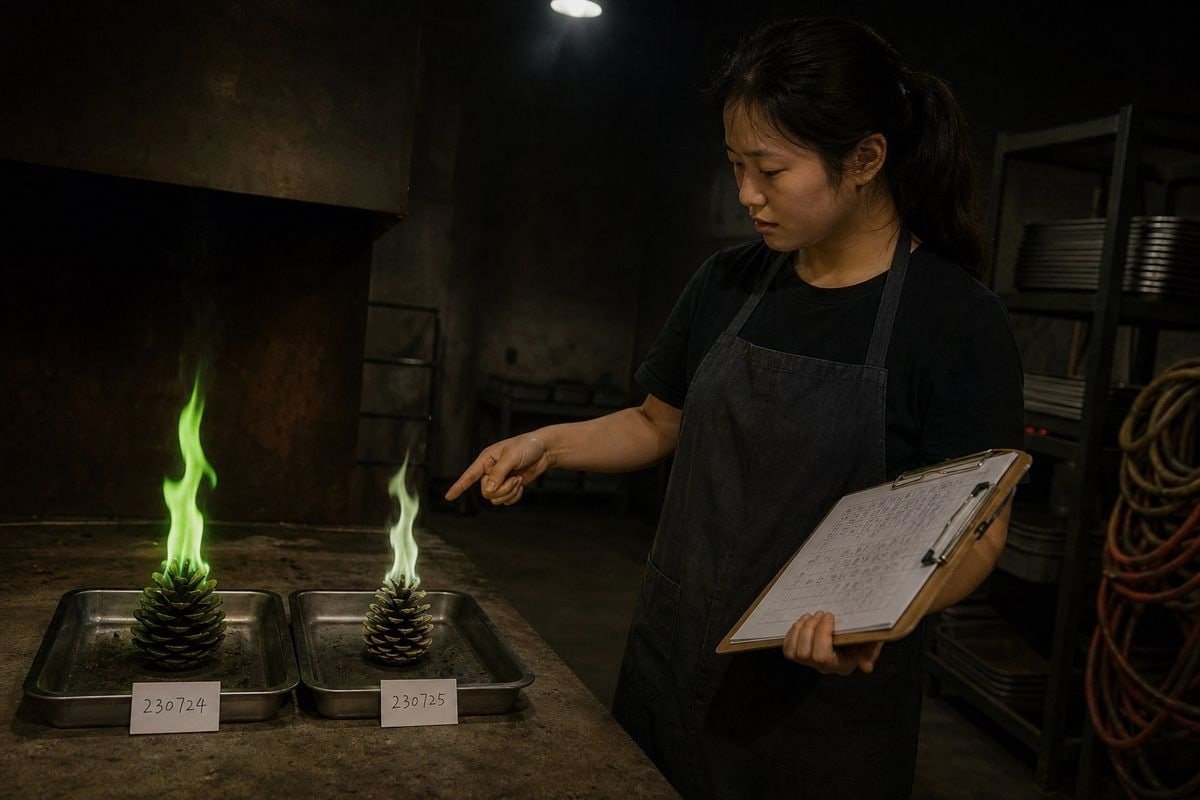
يعترض بعض البائعين على هذا. حجتهم: هذه عناصر مبتكرة للاستخدام الزخرفي القصير، لذا فإن بيانات الاحتراق الرسمية مبالغ فيها. أفهم المنطق، لكنه يفشل عند ملامسة الواقع. الاستخدام القصير لا يزال احتراقًا مباشرًا في مدفأة حقيقية، داخل منزل حقيقي. المخروط الأساسي هو الوقود، والمعالجة تغير كيفية تصرف هذا الوقود، ولا يخبرك فيديو توضيحي ولا صحيفة بيانات سلامة المواد وحدها كيف يؤدي المنتج النهائي أداءه تحت النار. العناية الواجبة هنا هي قرار المشتري، وليس مجرد قرار تنظيمي.
عملية اختبار عملية قبل الطلب
- اسحب العينات بشكل صحيح. خذها من تشغيل إنتاج فعلي، وليس من دفعة عرض مختارة يدويًا. عشوائي عبر الكراتين إذا استطعت.
- اختر النطاق. كحد أدنى: مسعر المخروط (ASTM E1354 أو ISO 5660-1)، انبعاثات أول أكسيد الكربون / ثاني أكسيد الكربون، المعادن الثقيلة، وتحليل التركيب الكيميائي للطلاء.
- حدد الظروف. حدد تدفق الحرارة، وإعداد العينة، ومحتوى الرطوبة وقت الاختبار، بحيث تكون النتائج قابلة للمقارنة مع تقارير المورد الخاصة.
- تحقق من الوثائق. تأكد من تطابق صحيفة بيانات السلامة مع نتائج المختبر حول كيمياء الملونات. التناقضات هي علامة تحذير خطيرة.
- ضع وتيرة إعادة الاختبار. للطلبات المستمرة، أعد الاختبار سنويًا أو عندما يغير المورد التركيبة أو مصدر الملون أو أصل المخروط.
علامات حمراء تبرر الانسحاب
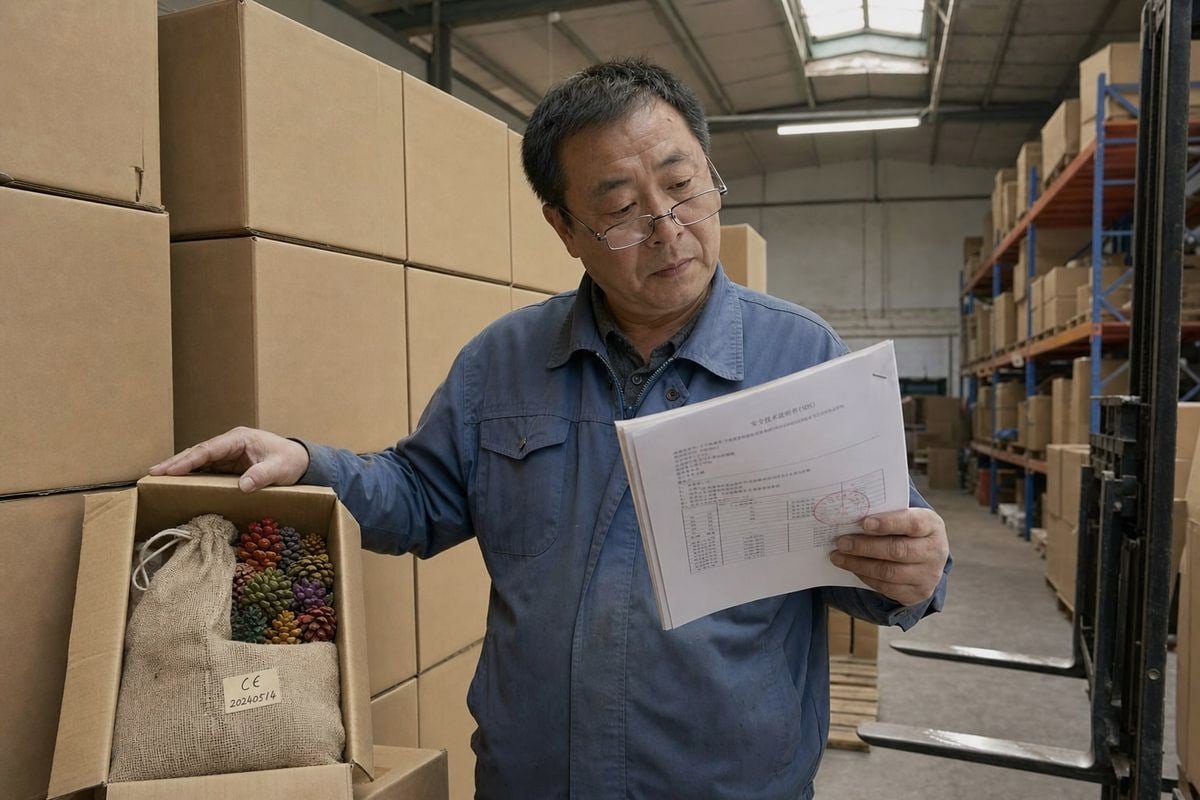
انتبه للموردين الذين يقدمون بيانات للمخاريط غير المعالجة فقط، ويرفضون الكشف حتى عن فئة مواد تلوين المواد الكيميائية، ويدعون أن المنتج مقاوم للحريق دون دليل، أو يستبدلون عروض الفيديو بنتائج اختبار الانبعاثات. في تجربتنا في التصدير إلى الأسواق المتطلبة مثل ألمانيا والمملكة المتحدة، كان لدى المشترين الذين أصروا على التحقق المستقل تخليص جمركي أكثر سلاسة وقوائم تجزئة أقوى. تتطلب قنوات البيع الكبيرة بشكل متزايد هذه الوثائق مقدمًا. الحصول عليها قبل الطلب بالجملة يعني أنك تتفاوض من موقع قوة؛ الحصول عليها بعد ذلك يعني أنك تتحمل المخاطر.
خاتمة
اطلب بيانات احتراق المنتج النهائي، وشهادات موثقة، وسجلات اتساق الدُفعات، وتأكيدًا من مختبر مستقل. هذه القائمة تجعل عملية شراء مبتكرة محفوفة بالمخاطر خط إنتاج قابل للدفاع عنه وجاهز للعرض.
ملاحظات ختامية
مصدر وكالة حماية البيئة حول المركبات العضوية المتطايرة وتأثيرات جودة الهواء الداخلي المذكورة كمقياس للسلامة. ↩︎
صفحة ISO الرسمية التي تحدد شهادة إدارة الجودة التي تمت مناقشتها في المقال. ↩︎
مرجع خلفي يشرح نوع وثيقة SDS المطلوبة من الموردين. ↩︎
يشرح معيار قياس المخاريط الذي تمت الإشارة إليه لمنهجية اختبار الاحتراق. ↩︎
مورد CDC حول المخاطر الصحية من أول أكسيد الكربون المتعلقة بانبعاثات الاحتراق الداخلي التي تمت مناقشتها. ↩︎
مورد EPA رسمي يفصل خصائص المعادن الثقيلة وتركيزاتها البيئية. ↩︎
خلفية حول معيار سلامة المنتجات الاستهلاكية المشار إليه لحدود المعادن الثقيلة. ↩︎
 English
  Spanish
  German
  French
  Arabic
  Portuguese
انضم إلى المحادثة