







Weighing service fees vs savings between a sourcing agent and direct suppliers in China confuses many buyers. On our Magic Fire production line, we see both approaches succeed—and fail—every season.
Weighing service fees vs savings means comparing total landed cost, not unit price. Agents charge 3–10% but can offset that through better factory pricing, fewer defects, and less rework. Direct suppliers win when you have experience, verified certifications, simple repeat orders, and in-house quality control capacity.
The wrong choice does not show up in the quote. It shows up months later, in a container of unsellable goods or in fees you never needed to pay. Let me walk you through how to make this call properly, using real numbers and real scenarios from the buyer's side of the table.
What certifications should I verify before choosing between a sourcing agent and a direct supplier?
Last year, a German distributor asked us for our SGS reports before discussing price at all. That request told me he understood the real risk in China sourcing: compliance, not cost.
Verify ISO 9001 for quality systems, BSCI for social compliance, CE marking for European market access, and third-party test reports from SGS or Intertek. Whether you buy through an agent or a direct supplier, insist on original certificates issued to the actual factory, not a trading company.
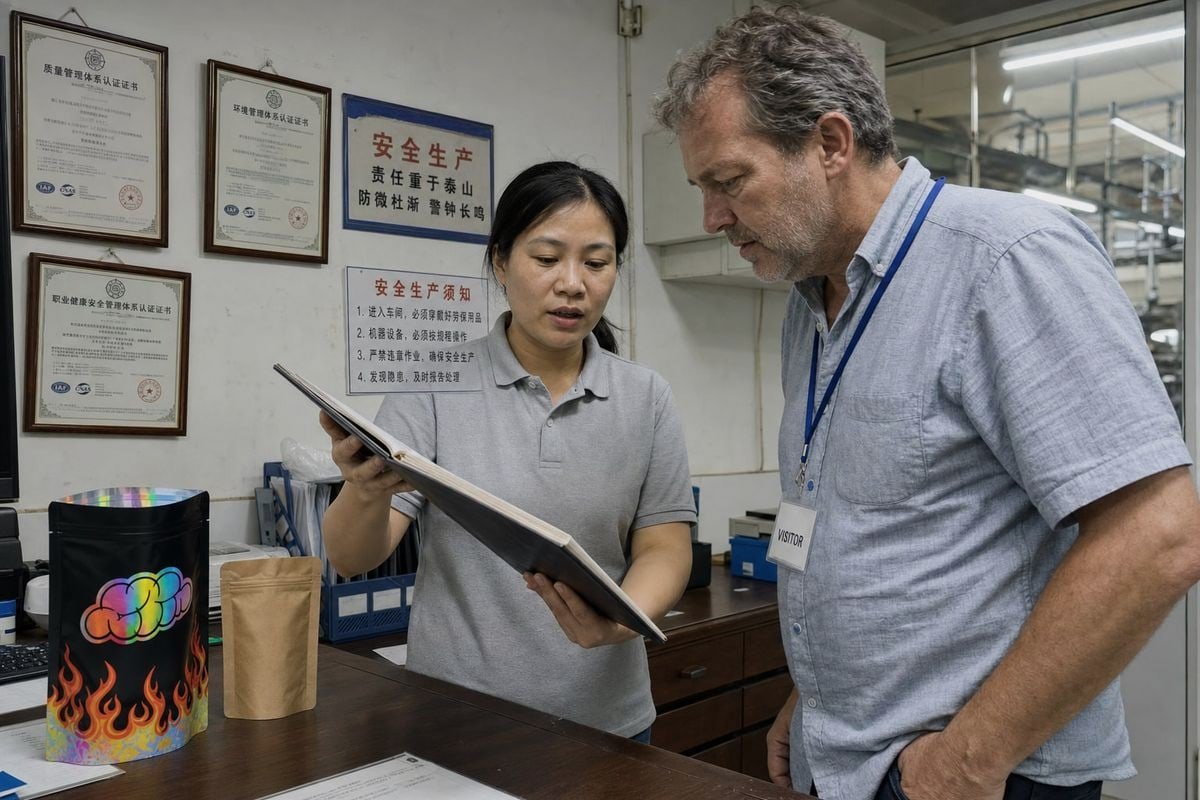
Certification is where the agent-versus-direct question gets practical fast. A good sourcing agent verifies business licenses 1, factory certifications, and production capacity before you pay a deposit. That is genuine value. But if you go direct, you must do the same verification yourself—and many buyers skip steps because they do not know what to check.
المستندات الأساسية للمطالبة
At our factory, we keep ISO 9001, BSCI, CE, and SGS/Intertek reports on file because our US and European buyers treat them as hard requirements, not nice-to-haves. Here is what each one actually tells you:
| شهادة | ما تثبته | Common red flag |
|---|---|---|
| ISO 9001 | المصنع يدير نظام إدارة جودة موثق | Certificate issued to a different company name |
| BSCI | Social and labor compliance audit passed | Audit older than the validity window |
| سي | المنتج يلبي توجيهات السلامة الأوروبية | Self-declared marking with no test file behind it |
| تقارير SGS / Intertek | Independent lab testing of the actual product | Report covers a different product or batch |
Why the company name on the certificate matters
Here is the trap. Many "suppliers" on B2B platforms 2 are trading companies holding certificates borrowed from factories they resell for. If a quality problem appears, the certificate holder is not your contract partner. An honest agent catches this. Going direct, you catch it by asking one simple question: does the name on the certificate match the name on your فاتورة أولية 3? If it does not, ask why. In our experience exporting to 30+ countries, buyers who verify this one detail avoid most of the fraud cases that agents are hired to prevent. If a direct supplier provides matching, current, product-specific documents without hesitation, you have removed a large share of the risk an agent would otherwise manage for you.
There is a trade-off I discuss with buyers constantly: the agent's fee is visible on day one, but the costs of going direct arrive quietly, one invoice at a time.
Hidden costs can erase most of the apparent savings from skipping an agent. Factory audit travel runs $3,000–$5,000 per visit, pre-shipment inspections cost $300–$500 each, and a single container of defective goods can cost $10,000–$50,000 in returns, disposal, or rework.
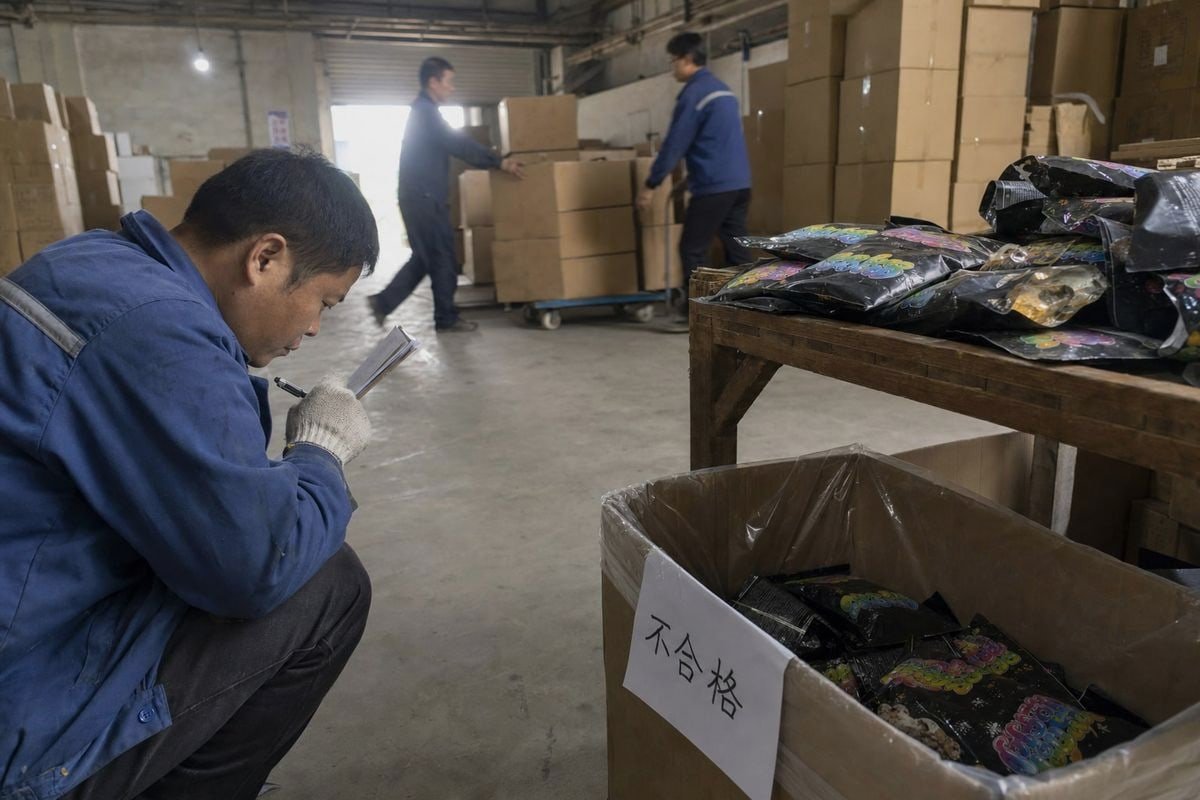
The math looks simple at first. Skip the agent, save the 3–10% commission. On a $50,000 order, that is $1,500 to $5,000 back in your pocket. But that calculation only holds if nothing goes wrong and you spend no meaningful internal time managing the order. In practice, neither assumption survives contact with a first shipment.
Where the invisible money goes
| Hidden cost | النطاق النموذجي | When it hits you |
|---|---|---|
| Factory audit travel | $3,000–$5,000 per visit | Before you place the first order |
| فحص ما قبل الشحن | $300–$500 per inspection | Every production run |
| Extra sample rounds | Courier fees plus weeks of delay | During development |
| Specification miscommunication | Rework or reorder cost | After goods arrive |
| Internal staff time | Salaried hours you never itemize | Continuously |
| Failed shipment | $10,000–$50,000+ | Worst case, once is enough |
The comparison buyers should actually run
Do not compare the agent fee to zero. Compare the full cost of buying directly—travel, inspections, samples, your team's hours, and a realistic allowance for defects—against the full cost of buying through the agent, fees included. We have seen buyers of our color-flame pinecones save real money going direct because they reorder the same SKU with the same specs every quarter. We have also seen first-time importers lose a full season's margin on one miscommunicated packaging spec. The visible fee is rarely the biggest number in this equation. The expected cost of mistakes usually is. Your honest answer to "how likely am I to make one?" decides which column wins.
What level of quality control can I expect working directly with a factory versus using an agent?
A batch-consistency check taught me this lesson early: our first Magic Fire sample once burned a perfect blue-green, but an untuned mixing step shifted the mass-production color. We rebuilt the process so that never repeats.
Direct factory relationships give you QC only as strong as the factory's own systems and your ability to verify them. Agents add an independent layer—supplier vetting, in-process checks, and pre-shipment inspections—which matters most for custom products, first orders, and quality-critical goods.

Quality control is where the two paths diverge most sharply, and where generalizations fail. The honest answer depends on which factory, which agent, and which product.
What QC looks like going direct
When you work directly with a disciplined factory, you get access to the source. You can request in-process photos, batch records, and burn-test videos before shipment. On our lines in Ningbo, we run batch-to-batch consistency checks precisely so the first sample reliably reflects mass production—because our buyers order private-label goods 5 and cannot afford color drift between the sample and ten thousand retail-ready pouches. The catch: you must know what to ask for. A buyer who cannot read a test report or specify a tolerance is trusting, not controlling.
What an agent adds
An agent gives you eyes you do not have. They can:
- Audit the factory before you commit money.
- Check production mid-run, not just at the end.
- Conduct or commission pre-shipment inspections 6 against your spec sheet.
- Push back on the factory in Mandarin, in person, with leverage from other orders.
That said, an agent inspecting a product they do not deeply understand can miss functional defects. For a novelty flame-colorant, an inspector might count pouches and check seals but never actually burn a sample. Whoever does your QC—agent, third-party lab, or your own team—make sure the checklist tests the product's actual function, not just its packaging. The best setup we see among experienced distributors is a hybrid: direct factory relationship, plus an independent وكالة فحص طرف ثالث 7 on every shipment. That costs $300–$500 per run and removes most of the QC argument for a full-service agent.
How do I calculate the true ROI of paying agent fees for a trial order?
A Canadian buyer once told me he treated his first agent fee as tuition. By his third reorder, he had gone direct with us—and kept the inspection habit the agent taught him.
Calculate ROI by comparing the agent fee against the cost of a failed trial order: fee ÷ order value versus (defect probability × loss if it fails). If a $500 fee on a $10,000 trial cuts your failure risk meaningfully, the fee functions as cheap insurance.

Trial orders are exactly where the fee-versus-savings question gets sharpest, because the order value is small but the learning stakes are high. Here is a simple framework you can run on one sheet of paper.
The break-even calculation
Work through these steps:
- Total the agent's cost. Commission (typically 3–10%), plus any inspection fees or minimum charges. Tiered pricing often means higher percentages on small trial orders, so confirm the actual number.
- Estimate your failure cost going direct. Include reshipping, rework, disposal, lost shelf commitments, and the internal hours to fix it.
- Assign an honest failure probability. First-time importer, custom product, new supplier? That risk is not small. Experienced buyer, verified factory, repeat SKU? It shrinks fast.
- Compare. If fee < (failure probability × failure cost), the agent pays for itself.
مثال عملي
| سيناريو | Direct sourcing | Through agent (7% fee) |
|---|---|---|
| Trial order value | $10,000 | $10,000 + $700 fee |
| Inspection | $400 (self-arranged) | Included |
| Estimated failure probability | 20% (first order, custom packaging) | 8% (vetted supplier, supervised production) |
| Cost if trial fails | $6,000 | $6,000 |
| Expected loss | $1,200 | $480 |
| Expected total cost | $11,600 | $11,180 |
In this example, the agent wins the trial order—then the logic flips on reorders, when your failure probability drops and the fee becomes pure overhead. One practical note for importers under roughly $500,000 per year across multiple suppliers: at that scale, the fee often behaves like insurance rather than overhead. Also demand itemized invoices; some agents embed margins in unit pricing instead of charging transparent commissions, which makes this whole calculation impossible to run honestly.
خاتمة
Stop comparing agent fees to factory prices. Compare all-in landed costs, verify certifications either way, and let order complexity—not the visible commission—decide your sourcing path.
ملاحظات ختامية
1. Background on the legal registration document buyers must verify before trusting a supplier. ↩︎
2. Leading B2B sourcing platform referenced as the marketplace where trading company misrepresentation occurs. ↩︎
3. Explains the trade document buyers cross-check against certificates to confirm supplier identity. ↩︎
4. Official EU source explains CE marking requirements referenced for European market access. ↩︎
5. Background on private-label manufacturing relevant to the color-consistency example given. ↩︎
6. Intertek is a leading provider of pre-shipment inspection services mentioned as an agent function. ↩︎
7. SGS is a major independent inspection provider matching the third-party inspection service described. ↩︎



 English
  Spanish
  German
  French
  Arabic
  Portuguese
انضم إلى المحادثة