






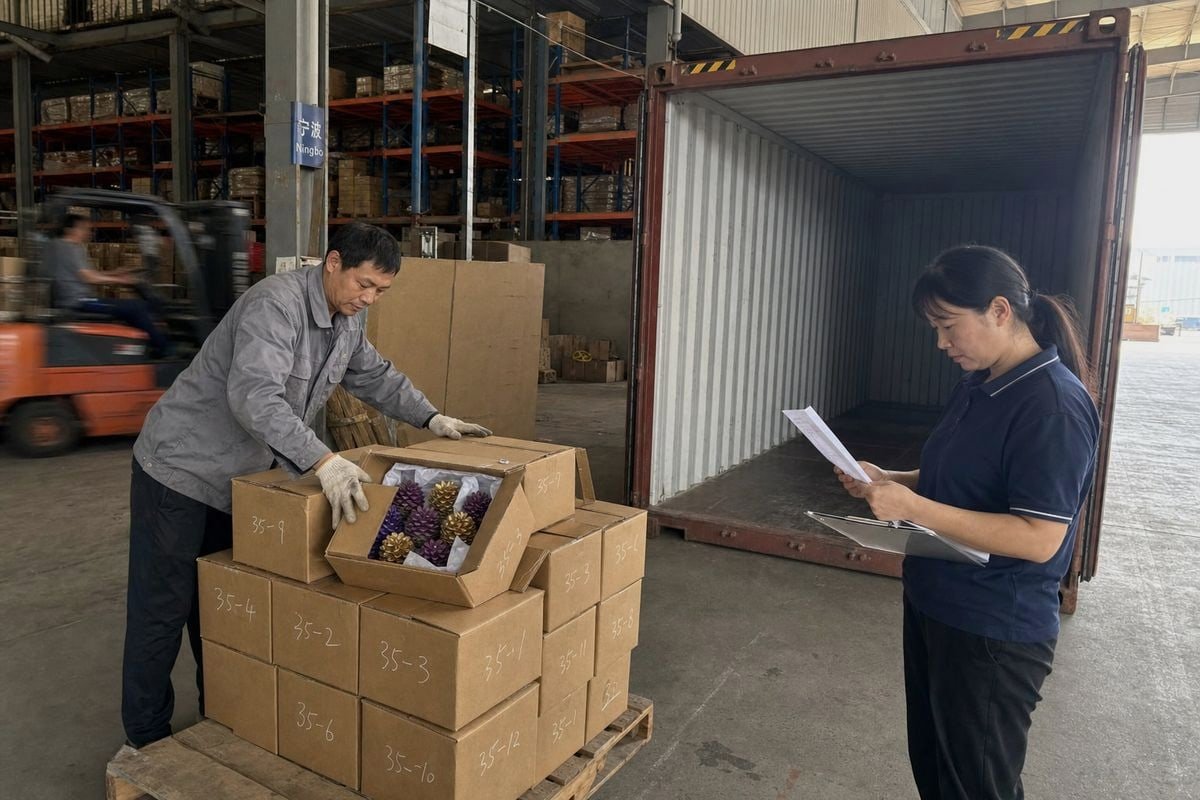
Shipping small trial orders of fireplace colored pine cones sounds simple until the freight quotes arrive شهادة صحة النبات 1. At our Ningbo production line, we watch first-time buyers overpay constantly. One wrong choice between LCL and FCL can double your landed cost, delay your seasonal launch, and kill your trial's profitability before a single pouch hits a shelf. The fix is knowing which mode actually fits a lightweight, seasonal, coated botanical product.
For small trial orders of fireplace colored pine cones, LCL (Less than Container Load) is usually the best choice, because trial volumes fall well below the 12–15 CBM break-even point where FCL becomes cheaper. Choose FCL only for urgent, fragile, or near-container-sized shipments.
That is the short answer. But the real decision depends on volume, timing, compliance, and total landed cost. Let me walk you through each factor, based on what we see across 30+ export markets.
What factors should I weigh when choosing LCL over FCL for a first trial order?
A German distributor once asked me to quote FCL for six cartons of color-flame pinecones. We ran the numbers together, and the container would have been 95% empty air. That conversation happens more often than you would think.
Weigh five factors: total shipment volume in CBM, urgency of delivery, fragility of the coated pine cones, demand certainty, and all-in landed cost. If your trial order sits under roughly 12–15 CBM and demand is unproven, LCL almost always wins.
Here is the core comparison at a glance:
| عامل | LCL (Shared Container) | FCL (Full Container) |
|---|---|---|
| الأفضل لـ | Trial orders under 12–15 CBM | Shipments near or above 15 CBM |
| Cost model | Pay per CBM used | سعر ثابت لكل حاوية |
| وقت العبور | Slower (consolidation adds days) | Faster, more direct |
| مخاطر المناولة | More touchpoints, shared cargo | Sealed after loading, fewer handoffs |
| Cash tied up | منخفض | عالي |
| Demand fit | Uncertain, seasonal testing | Proven, repeat demand |
Volume comes first, and it is measured in CBM
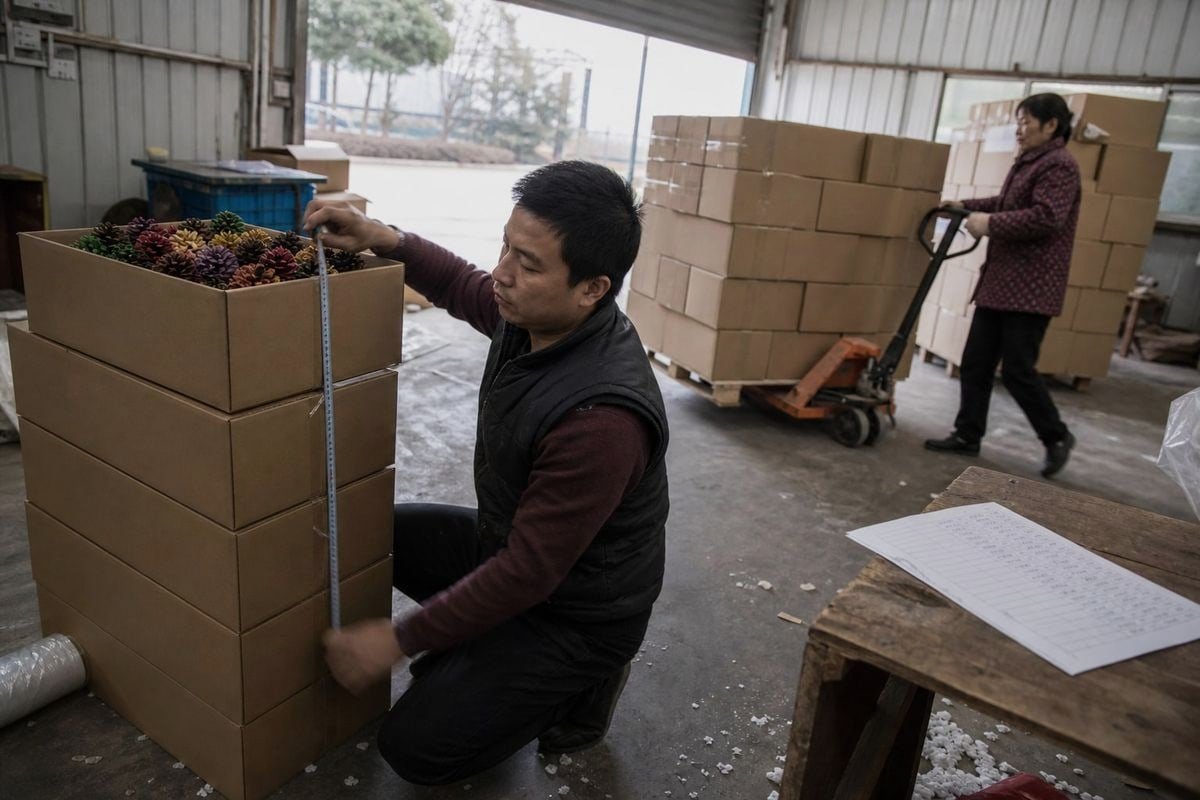
Colored pine cones are a low-density product. Our purple, red, and gold hand-finished cones are fist-sized and light, so a shipment hits a volume limit long before it hits a weight limit. This means your decision should be based on cubic meters, not kilograms and not carton count. A trial order of a few hundred kraft pouches typically occupies 1–4 CBM. That is nowhere near container territory.
Fragility is the honest counterargument
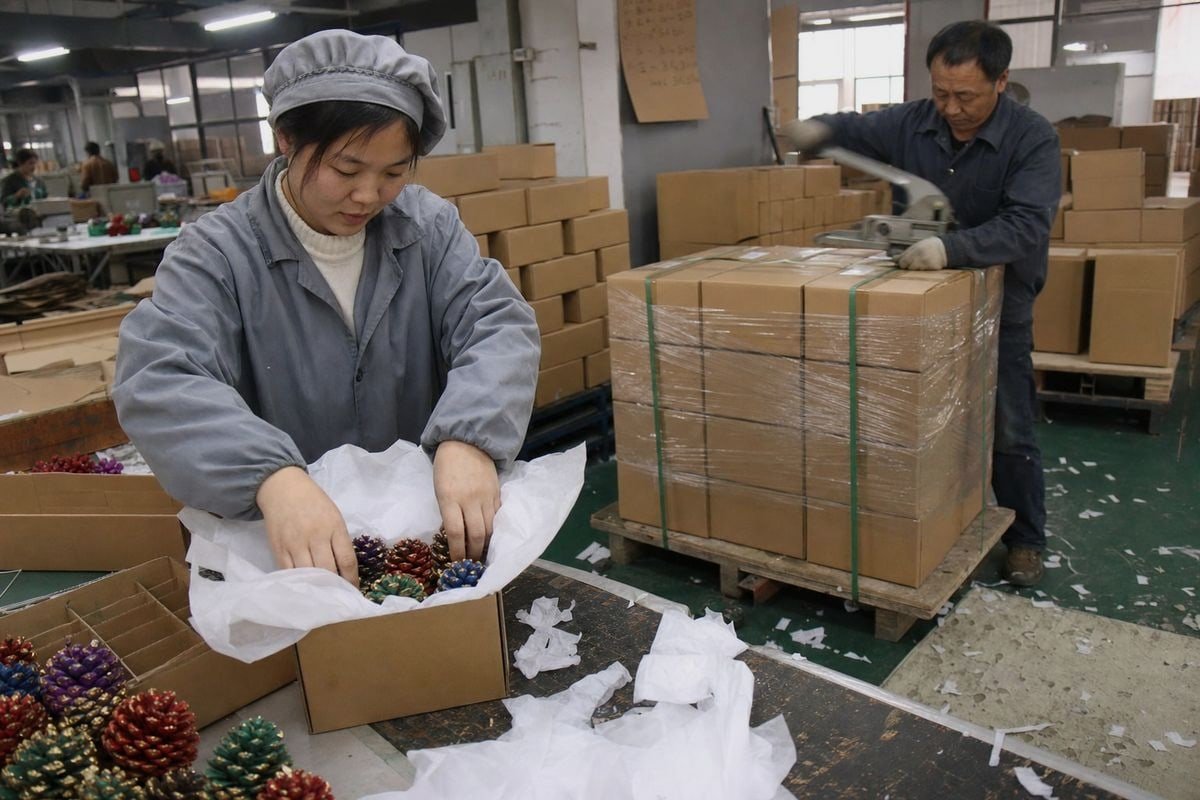
Some buyers push back: coated pine cones have painted or treated scales, and LCL means more handling. That concern is valid. FCL containers are sealed at origin and touched less in transit. But in our experience, proper packing solves most of it. We use rigid inner cartons, moisture-proof liners, and palletized loads for LCL shipments precisely because deconsolidation warehouses are rough environments. Good packaging turns the fragility argument from a reason to choose FCL into a packing specification for LCL.
Demand uncertainty settles the tie
A trial order exists to test the market. Tying cash into a full container of seasonal fireplace decor before you know your sell-through rate is a scaling decision made too early. LCL fits a "test first, scale later" strategy. FCL is what you graduate to.
How can I keep shipping costs manageable when importing a small batch of colored pine cones?
The trade-off we weigh most often for buyers is packing density versus protection. Every extra centimeter of void fill inside a carton is a centimeter of ocean freight you pay for, so we optimize both at the factory.
Keep costs manageable by minimizing billed CBM through dense export packing, comparing all-in landed cost quotes rather than base ocean rates, considering courier or air freight for orders under 1 CBM, and using buyer's consolidation to combine multiple trial orders into one LCL shipment.

The biggest hidden trap in LCL is not the ocean rate itself. LCL commonly runs somewhere around USD $50–$150 per CBM, which looks cheap. But origin handling, CFS fees, deconsolidation charges, and destination fees stack on top. A quote that looks like $120 can land at three times that once every line item is added. Always ask your forwarder for the all-in door or port cost, and compare that figure against an FCL quote if you are anywhere near the threshold.
Match the shipping mode to the order size
| Trial Order Size | Recommended Mode | لماذا |
|---|---|---|
| Under 1 CBM | Air freight or courier consolidation | Faster, avoids CFS fees, less humidity exposure |
| 1–12 CBM | LCL sea freight | Pay only for space used, lowest entry cost |
| 12–15 CBM | Get both LCL and FCL quotes | Break-even zone varies by lane and fees |
| Above 15 CBM | FCL (20ft container) | Flat rate beats accumulated per-CBM charges |
Practical ways we help buyers cut billed volume
- Compress the retail packaging. Our stand-up kraft pouches ship flat-packed with cones nested where the design allows, then the buyer's team or our line assembles display-ready packs.
- Standardize carton dimensions. Uniform cartons palletize tightly, which reduces the "loss factor" forwarders add for irregular cargo.
- Consolidate suppliers. If you are testing our color-flame pinecones alongside firestarters or Magic Fire packets, a buyer's consolidation service combines everything into one LCL shipment. One buyer testing three product lines from us cut per-line freight cost substantially this way.
- Book early in the season. Fireplace decor peaks in Q3 bookings. Rates and space tighten from August onward, so trial orders placed in spring ship cheaper and calmer.
What customs and compliance documents do I need for shipping fire-themed products internationally?
Compliance is where I have seen the most trial orders stall at destination ports. After 17+ years exporting fire-related goods to the US, Germany, the UK, and beyond, we treat documentation as part of the product, not an afterthought.
You typically need a commercial invoice, packing list, bill of lading, certificate of origin, an MSDS/SDS for the colorant coating, third-party safety test reports such as SGS or Intertek, and, for botanical products, phytosanitary or heat-treatment documentation depending on the destination country.
Fire-themed products sit in a sensitive category. Customs officers see the words "fire" and "flame" on a packing list and look twice. Colored pine cones raise two separate compliance questions, and buyers often confuse them.
Question one: is it a botanical product?
Pine cones are plant material. Many countries, including the US and Australia, apply plant-import rules. Depending on the destination, you may need a شهادة صحة النبات 3 or proof of treatment showing the cones are processed, dried, and free of pests. Because our cones are fully coated and treated during production, they are typically classified as processed decorative goods rather than raw botanicals, but the paperwork must state this clearly. A vague product description on the invoice invites inspection delays.
Question two: is it dangerous goods?
This depends entirely on the chemistry. If pigments or coatings contain flammable solvents, the cargo can be classified as بضائع خطرة 4, which restricts LCL co-loading and may force dedicated FCL or special DG handling at much higher cost. This is exactly why we formulate our color-flame products with eco-friendly, non-hazardous materials and back that up with إس جي إس 5 and Intertek test reports. When your وثيقة بيانات سلامة المواد (MSDS) 6 shows a non-DG classification, LCL consolidators accept the cargo without friction. Consolidators enforce shared liability across every shipper in the container, so they check these documents strictly.
قائمة التحقق من المستندات الأساسية
| وثيقة | الغرض | من يقدمه |
|---|---|---|
| فاتورة تجارية وقائمة تعبئة | Customs valuation and cargo details | المصنع |
| بوليصة الشحن 7 | Contract of carriage, cargo release | Forwarder/carrier |
| شهادة المنشأ | Duty rates, trade agreements | Factory via chamber |
| صحيفة بيانات السلامة / SDS | Proves non-hazardous coating classification | المصنع |
| تقارير اختبار SGS / Intertek | Product safety verification for retail | المصنع |
| Phytosanitary / treatment proof | Plant-material import clearance where required | Factory, per destination |
| ISO 9001 8 / BSCI documentation | Retailer supplier-audit requirements | المصنع |
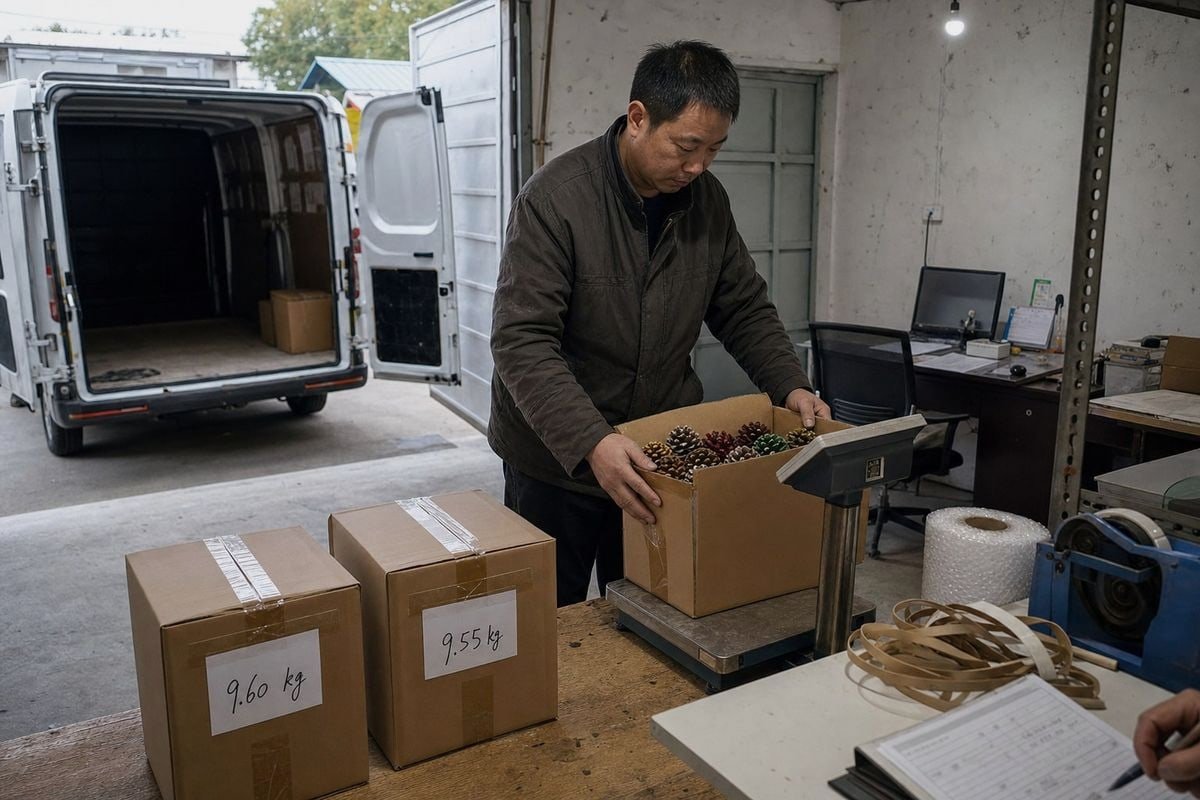
My advice: request the full document pack before you book freight, not after. We send buyers a compliance folder with the sample shipment so their customs broker can pre-check everything.
How do I estimate realistic lead times when consolidating a trial shipment with other cargo?
A lesson we learned early: buyers rarely miss a season because production ran late. They miss it because they planned around the ocean transit time alone and forgot everything wrapped around it.
Estimate LCL lead time by adding production time, 3–7 days for origin consolidation, the base ocean transit, and 5–15 extra days for deconsolidation and customs at destination. A realistic trial-order timeline from China to the US or Europe is 6–10 weeks door to door.
LCL is slower than FCL by design. Your cartons wait at an origin container freight station until the consolidator fills the box with other shippers' cargo. At destination, the container must be unpacked, sorted, and cleared before your pallets release. Each stage adds days, and the variance is wider than FCL because you depend on other people's cargo and paperwork.
Build your timeline backward from the shelf date
For seasonal fireplace decor, work backward from when the product must be in your warehouse. Here is the buildup we walk buyers through:
- Production: trial orders of colored pine cones typically take 2–3 weeks on our lines, including custom pouch printing and وسجلات التبخير لمعظم أسواق الوجهة. يضيف الصنوبر الملون طبقة أخرى: اختبار سلامة الملونات،.
- Inland transport and origin CFS: 3–7 days for trucking, receiving, and waiting for consolidation.
- Ocean transit: roughly 15–20 days to the US West Coast, 30–35 days to Northern Europe, lane depending.
- Destination deconsolidation and customs: 5–15 days, longer if any document raises a question.
- Final delivery: 2–5 days to your warehouse.
Add a one-to-two-week buffer during peak season. Q4 fireplace products should be booked by late summer at the latest.
Where delays actually come from
In our export experience, the two most common LCL delays are incomplete MSDS documentation flagged by the consolidator at origin, and a co-loaded shipper's customs problem holding the whole container at destination. You cannot control the second risk, which is another reason clean, complete paperwork on your own cargo matters: it ensures your goods release the moment the container clears. FCL avoids the shared-container risk entirely, which is why urgent restocks sometimes justify a container even at lower fill. But for a trial order with a sensible buffer, LCL timelines are entirely manageable.
خاتمة
Overpaying on a first import can sink a promising product before launch. For small trial orders of fireplace colored pine cones, start with LCL, verify compliance early, and scale to FCL later.
The logic is straightforward. Trial volumes of lightweight, seasonal decor almost never approach the 12–15 CBM break-even point, so paying for a full container means paying for empty space. LCL matches uncertain demand, limits cash tied up in inventory, and works safely when the factory packs for the extra handling. FCL earns its place once demand is proven, timing is tight, or volumes genuinely fill a container — it is a scaling decision, not a trial decision. Whatever mode you choose, compare all-in landed costs, insist on a complete compliance pack including MSDS and لا تدع موردًا يخبرك "لا بأس، الجميع يبيعه". اطلب تقارير مستوى الدفعة. تحقق أيضًا من, and build a realistic 6–10 week timeline with a seasonal buffer. If you are planning a trial order of color-flame pinecones or related fire products, we are happy to run the CBM calculation, prepare the document folder, and quote both modes so you can decide with real numbers instead of guesses.
ملاحظات ختامية
1. IPPC sets international standards for phytosanitary certificates required for plant-based exports. ↩︎
2. Background on container shipping relevant to LCL versus FCL freight discussion. ↩︎
3. USDA guidance on plant-import rules relevant to botanical pine cone shipments. ↩︎
4. Background concept explaining classification restrictions on hazardous cargo shipping. ↩︎
5. Official site of the third-



 English
  Spanish
  German
  French
  Arabic
  Portuguese
انضم إلى المحادثة