







UKTR due diligence trips up many UK buyers of our wood fire starters OPSS inquiry 1. One missing harvest-origin document can stall a shipment, trigger an OPSS inquiry 2, or worse — product seizure. Having supplied UK importers for years from our Ningbo lines, I have seen how a thin paper trail turns a simple wood-wool product into a compliance headache. The fix is a structured, risk-based file built before the goods ship.
To set up UKTR due diligence for wood fire starters from China, gather product and species data, harvest-origin evidence, and supply-chain documents; assess illegal-logging risk; mitigate any non-negligible risk through extra verification or testing; then keep all records for at least five years.
That is the framework in one sentence. Now let me walk you through each step, using the documents, risk checks, and record systems that actually satisfy UK enforcement officers.
What documents do I need from my Chinese supplier to build a UKTR-compliant due diligence file?
A UK distributor once asked us for "a certificate" the week before shipment. We sent a full document pack instead — because under UKTR, a single certificate never carries a due diligence file on its own.
You need a product specification with species names, quantity and trade description, country and region of harvest, supplier details, chain-of-custody documents linking harvest to factory, legality evidence from the harvest country, plus commercial documents such as invoices, purchase orders, and bills of lading.

The first thing to understand is your role. If you are the first business placing the fire starters on the GB market, you are the "operator." The full due diligence duty 3 sits with you, not with your Chinese supplier. Downstream "traders" only keep basic traceability records. So the file must be yours, built from evidence your supplier provides.
Wood fire starters complicate this because they are composite products. Our own wax-dipped wood rolls combine صوف الخشب 4 with paraffin. UK guidance says each timber species in a composite must be considered separately, while the wax component falls outside timber rules. If the product mixes virgin and recycled wood, only the virgin timber needs assessment — but you must be able to prove which part is recycled.
قائمة التحقق من المستندات الأساسية
| وثيقة | ما يجب أن يظهره | من يقدمه |
|---|---|---|
| ورقة مواصفات المنتج | Composition (e.g., wood fiber and paraffin split), trade name | الشركة المصنعة |
| Species declaration | Common and scientific species names | الشركة المصنعة |
| Harvest-origin statement | Country of harvest, and region or concession where relevant | Manufacturer / upstream mill |
| سجلات سلسلة الحفظ | Each transfer from forest to factory | All supply-chain parties |
| دليل الشرعية | Harvest permits, plantation licenses, or equivalent | Upstream forest owner / mill |
| Commercial documents | Invoices, POs, packing lists, bills of lading | Supplier and freight forwarder |
One warning I give every UK buyer: country of export is not country of harvest. China is a processing hub. Wood wool pressed in Zhejiang may come from timber grown elsewhere. Your file must trace back to where the tree was actually cut, not where the product was packed. At our factory, we map that chain before quoting a UK order, because we know the question is coming.
How do I assess and mitigate illegal-logging risk when sourcing wood fire starters from China?
Early in our export history, a European client rejected a quote purely because our origin paperwork stopped at the wood-wool mill. That lesson reshaped how we document upstream sources, and it maps directly onto UKTR risk assessment.
Assess risk by checking the true country of harvest, species risk, prevalence of illegal logging in that region, supply-chain complexity, and document strength. If risk is not negligible, mitigate it with extra documentation, third-party verification, species testing, or by switching to a traceable source.
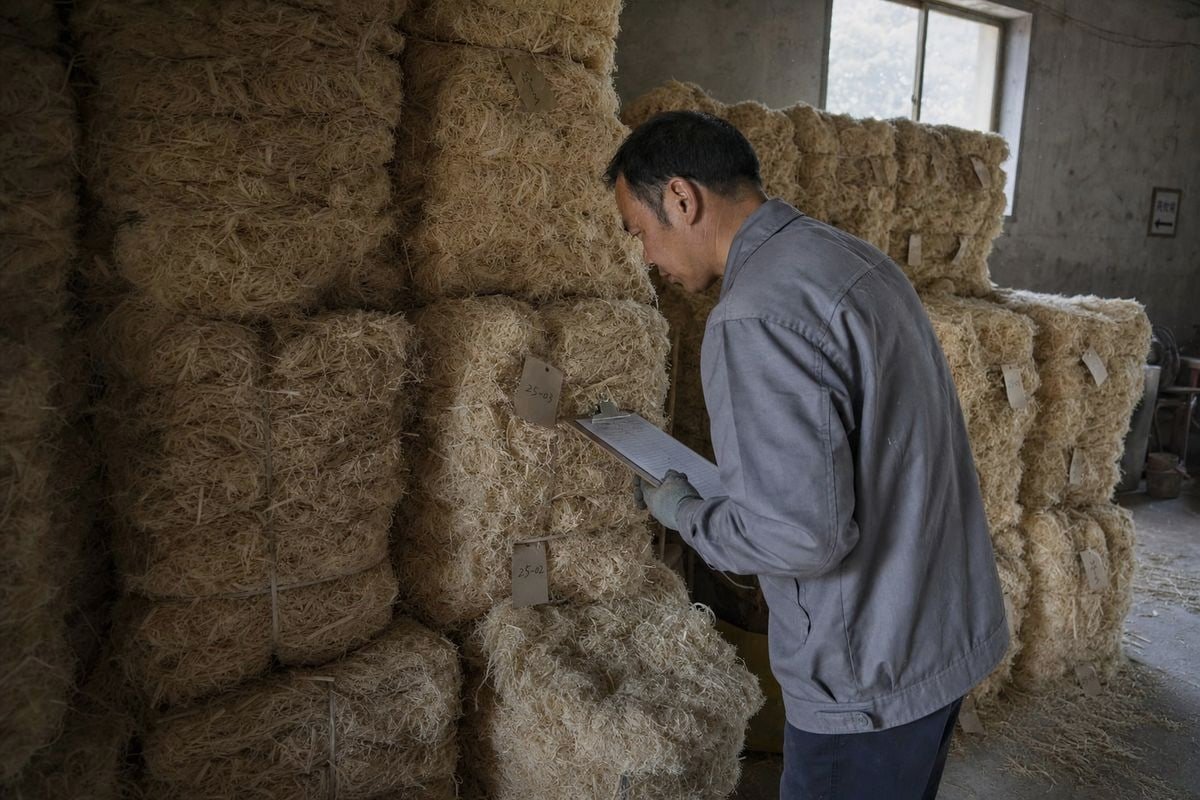
UKTR is risk-based, not checklist-based. Your job is to reach a defensible judgment that the risk of illegal harvest 5 is negligible. Because China is widely treated as a higher-risk sourcing country, enforcement bodies expect deeper scrutiny, not a lighter touch.
A four-step risk assessment process
- Confirm the true origin. Ask where the raw timber was harvested. Do not stop at the Chinese factory invoice. If the wood crossed borders before processing, every leg needs evidence.
- Evaluate species risk. Fast-grown plantation pine or poplar carries far lower risk than mixed or unnamed hardwoods. If the supplier cannot name the species, treat that as a red flag.
- Score supply-chain complexity. Count the intermediaries. One plantation, one mill, one factory is easy to verify. Multiple traders between forest and factory raise risk with every step.
- Test the documents. Do dates, quantities, and species match across permits, invoices, and transport papers? Inconsistencies signal weak traceability.
Matching mitigation to risk level
| Risk finding | Practical mitigation |
|---|---|
| Species unclear or unverified | Third-party wood species identification testing |
| Origin claims rest on supplier statements only | Request harvest permits, plantation licenses, or mill records |
| Multiple intermediaries with gaps | On-the-ground supplier or mill audit by a specialist firm |
| Documents inconsistent | Corrected, corroborated paperwork before shipment — or a new source |
| Risk cannot be reduced to negligible | Do not place the product on the GB market |
In our experience, fire starters made from plantation softwood residues sit at the low end of the risk scale — but only when the paper trail proves it. A "recycled wood" label helps only if the recycled claim is documented; any virgin timber content still needs full assessment. We also encourage UK buyers to layer in social-compliance checks alongside timber legality. Our تدقيق BSCI 6 exists partly because serious importers now run labor-practice screening in parallel with UKTR, and a combined file is far more defensible.
Which certifications or test reports should I request to prove timber legality under UKTR?
Buyers often open negotiations with us by asking for FSC paperwork 7 and nothing else. I always slow that conversation down, because certification is useful evidence — but it is not, on its own, UKTR compliance.
Request forest certification with valid chain-of-custody scope where available, harvest permits or plantation licenses, supplier legality declarations, and third-party test reports such as SGS or Intertek verification. Then independently verify certificate validity and scope, because certification alone does not satisfy UKTR.
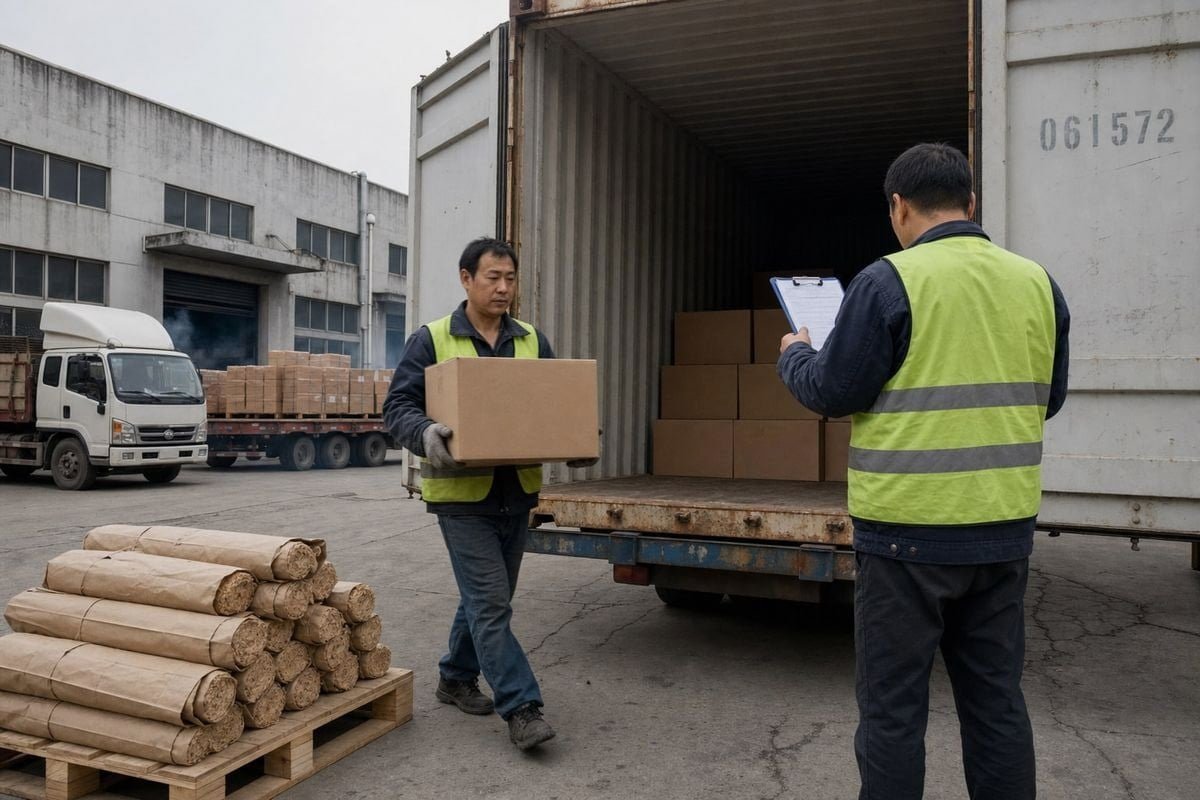
UK guidance is explicit on this point: buying certified material does not automatically make you compliant. A certificate is an input to your risk assessment, not a substitute for it. When sourcing from a higher-risk country, you must check that the certificate is real, current, covers the specific product line, and actually connects to the timber in your shipment.
How different evidence types support your file
| نوع الدليل | ما تثبته | Its limit under UKTR |
|---|---|---|
| Forest certification (e.g., FSC/PEFC-type schemes) | Managed-forest sourcing with chain of custody | Must be validity-checked; does not replace risk assessment |
| Harvest permits / plantation licenses | Legal right to harvest at origin | Must match species, region, and timeframe of your goods |
| Supplier legality declaration | Supplier's formal legality commitment | Weak alone; needs corroborating documents |
| Third-party lab test reports | Species identity, composition, safety | Confirms the product, not the harvest legality |
| Independent mill or forest audits | On-the-ground origin verification | Cost and lead time; used for higher-risk chains |
From our side of the table, we treat testing as a trust accelerator. Our SGS and Intertek reports on fire-starter composition, and our ISO 9001 and BSCI audits, do not replace a UK buyer's timber-legality checks — but they show the supplier runs documented, auditable processes. That matters when an enforcement officer asks why you judged your Chinese source credible. A supplier who volunteers test reports, audit results, and upstream permits gives you a far stronger risk-assessment narrative than one who emails a scanned certificate and goes quiet. Ask for the full evidence stack, verify each piece, and note your verification steps in the file.
How do I keep my due diligence records audit-ready for ongoing UK Timber Regulation compliance?
There is a trade-off I discuss with every long-term UK partner: build the record system once and update it per shipment, or scramble to reconstruct evidence when an inspection letter arrives. The first path costs hours; the second can cost the product line.
Keep all due diligence records — specifications, species declarations, origin evidence, invoices, shipping documents, risk-assessment notes, and mitigation outcomes — organized per product and shipment, retained for at least five years, reviewed at least annually, and retrievable quickly for OPSS enforcement requests.
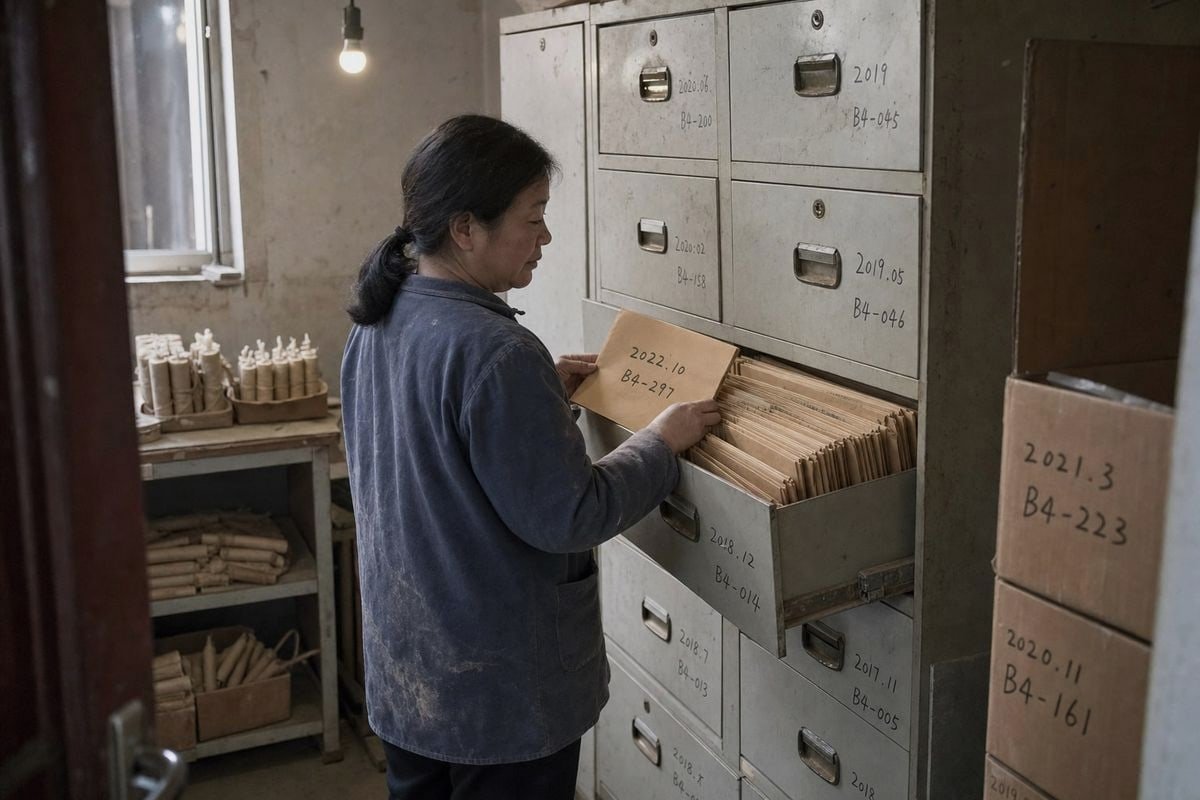
UKTR treats due diligence as a living system, not a one-time file. You must maintain it, evaluate it regularly, and be able to produce records on request. The five-year retention rule applies to operators' due diligence records, and traders must also keep five years of supplier and customer traceability data.
Build a per-shipment audit file
For each shipment of fire starters, I recommend one folder containing:
- The product specification and composition breakdown
- The species declaration with scientific names
- Harvest-origin evidence and chain-of-custody documents
- Purchase orders, invoices, packing lists, and bills of lading
- Your written risk-assessment notes and conclusion
- Any mitigation actions taken and their outcomes
- Verification records for certificates and test reports
The risk-assessment notes are the piece importers most often skip. Enforcement officers want to see that you actively evaluated risk, not that you assumed it away. Even two paragraphs recording what you checked, what you found, and why you judged the risk negligible transforms the file.
Keep the system alive between shipments
Review the system at least once a year, and immediately when something changes — a new supplier, a new species, a new upstream mill, or a shifted raw-material source. On our production side, we flag material or supply-chain changes to standing UK customers precisely so their files never drift out of date. Repeat orders are not a reason to stop checking; they are the point where quiet upstream changes usually creep in. Consistent batch documentation from a stable factory partner is what keeps year three of a program as defensible as shipment one.
خاتمة
UKTR due diligence for China-sourced wood fire starters rests on four pillars: complete documents, honest risk assessment, targeted mitigation, and five-year audit-ready records — supported by a transparent factory partner.
ملاحظات ختامية
1. Official page for the UK enforcement body that investigates timber compliance failures. ↩︎
2. OPSS is the UK body enforcing UKTR and investigating suspected illegal timber imports. ↩︎
3. Government guidance detailing the operator's legal due diligence obligation under UKTR. ↩︎
4. Background definition of the wood-fiber material used in these fire starters. ↩︎
5. Background on illegal logging, the core risk UKTR due diligence is designed to prevent. ↩︎
6. Official amfori BSCI page defines the social-compliance audit mentioned as parallel screening. ↩︎
7. FSC is a globally recognized certification scheme referenced when verifying legal timber sourcing. ↩︎

 English
  Spanish
  German
  French
  Arabic
  Portuguese
انضم إلى المحادثة