






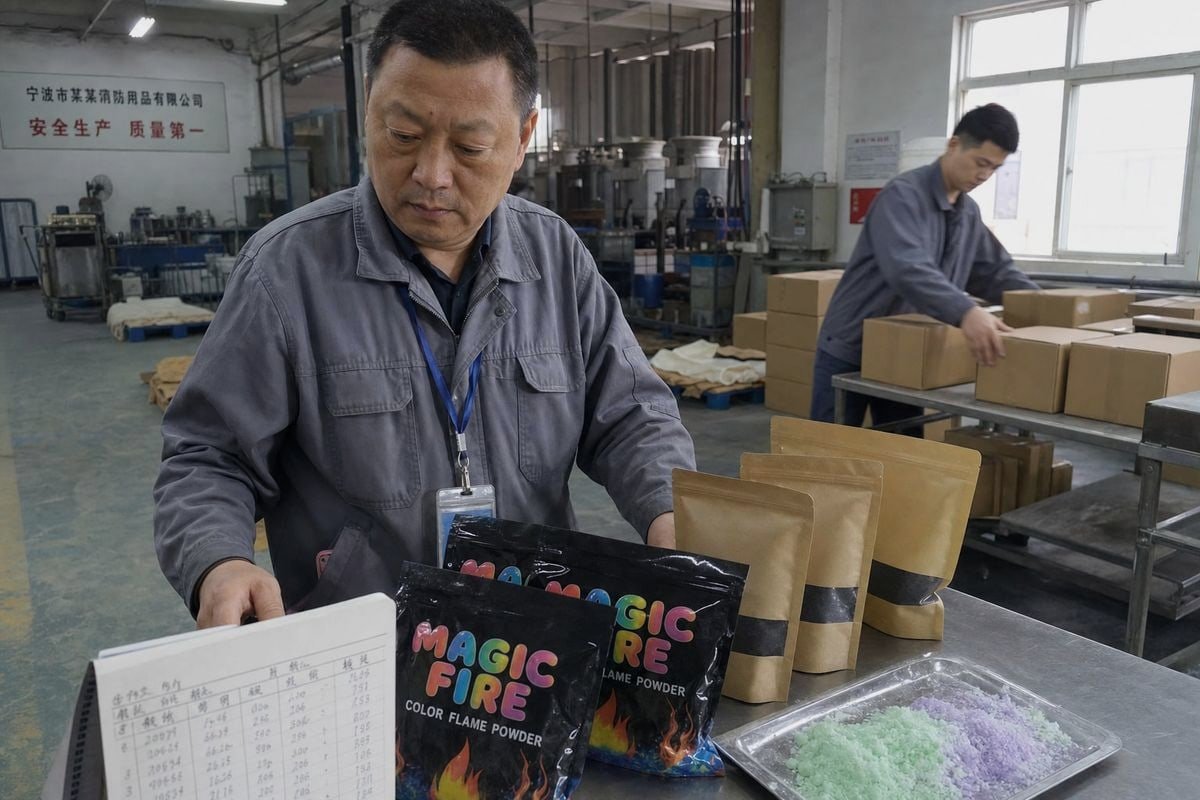
Buyers ask me about supplier self-inspection reports vs third-party inspection for Magic Fire Powder almost weekly BSCI 1. One bad batch can burn wrong colors, fail customs, or trigger a recall. On our production line, we have seen how a "perfect" self-report can hide exactly those risks — which is why we submit our own products to SGS and إنترتيك 2 instead of asking buyers to take our word for it.
Supplier self-inspection reports for Magic Fire Powder are useful process-control signals but are less reliable than third-party inspection, because the supplier benefits from a pass result. Independent inspection adds unbiased sampling, standardized defect counting, and verifiable evidence, making it the safer basis for shipment release decisions.
Let me break this down the way I explain it to purchasing managers الامتثال للائحة CE 3. We will look at what makes a self-report credible, why independence matters, how to verify batch consistency, and which approach actually saves you time.
What Should I Look for to Confirm a Self-Inspection Report Isn't Just Paperwork?
A few years back, a German distributor showed me a competitor's self-inspection file. Every shipment for two years: zero defects. Our QC team laughed — that pattern alone told us the inspections were cosmetic.
A credible self-inspection report states the sampling method, acceptance standard (such as AQL level), lot number, inspection date, inspector identity, and includes photo evidence. Reports showing repeated zero-defect results, vague sampling, or missing checkpoints are usually paperwork produced to satisfy buyers, not genuine quality control.
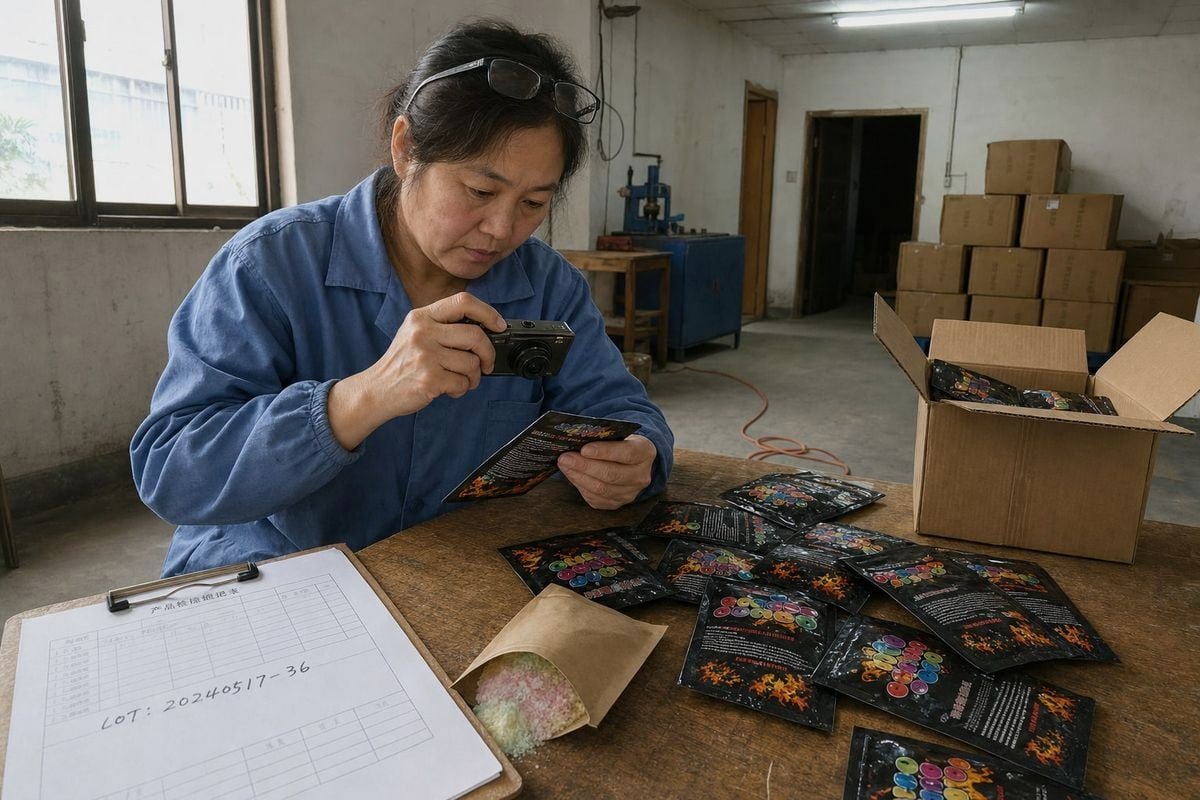
Here is the uncomfortable truth I share with buyers: a self-inspection report answers "what does the supplier say happened?" It does not answer "what actually happened?" You cannot close that gap from your office. But you can spot the reports that were never designed to be honest in the first place.
The Elements a Real Report Must Contain
At our factory in Ningbo, every internal QC report for our Magic Fire packets records the specific lot, the sample size drawn, the standard applied, and the actual defect count — including the defects we found. A report with no defects across many lots is a red flag, not a green one. Real production always produces some variation.
Use this checklist when you review any self-inspection document:
| عنصر | What Genuine Looks Like | علامة حمراء |
|---|---|---|
| Sampling method | Named plan (e.g., AQL with defined level) | "Random check" with no numbers |
| Lot traceability | Specific batch and production date | No lot number, or generic dates |
| Defect data | Actual counts, including minor defects | Zero defects, every shipment |
| Photo evidence | Timestamped photos of samples and packaging | No photos, or recycled stock images |
| Inspector | Named person and role | Unsigned or anonymous |
| التوقيت | Inspection at correct production stage | Report dated after packing was sealed |
Why Zero Defects Is the Biggest Warning Sign
Industry guidance notes that factory QC reports are least believable when they show improbably low or zero defect rates across many shipments. That pattern usually indicates cursory inspection or reporting bias. In our own line, we expect and record minor issues — a slightly weak heat seal, a color-print misalignment — and we document how each was resolved. A supplier who shows you their real defect data is showing you a real quality system. A supplier who shows you perfection is showing you paperwork.
Why Do I Need Third-Party Verification Even If My Supplier Provides SGS or Intertek Reports?
Here is a distinction we explain carefully to new buyers, because it matters more than most realize: an SGS report on file is not the same as an SGS inspection of your shipment.
A supplier's SGS or Intertek report typically certifies one tested sample at one point in time, not your specific order. Third-party pre-shipment inspection verifies that the actual goods leaving the factory match that certified standard, closing the gap between a past test and your current shipment.
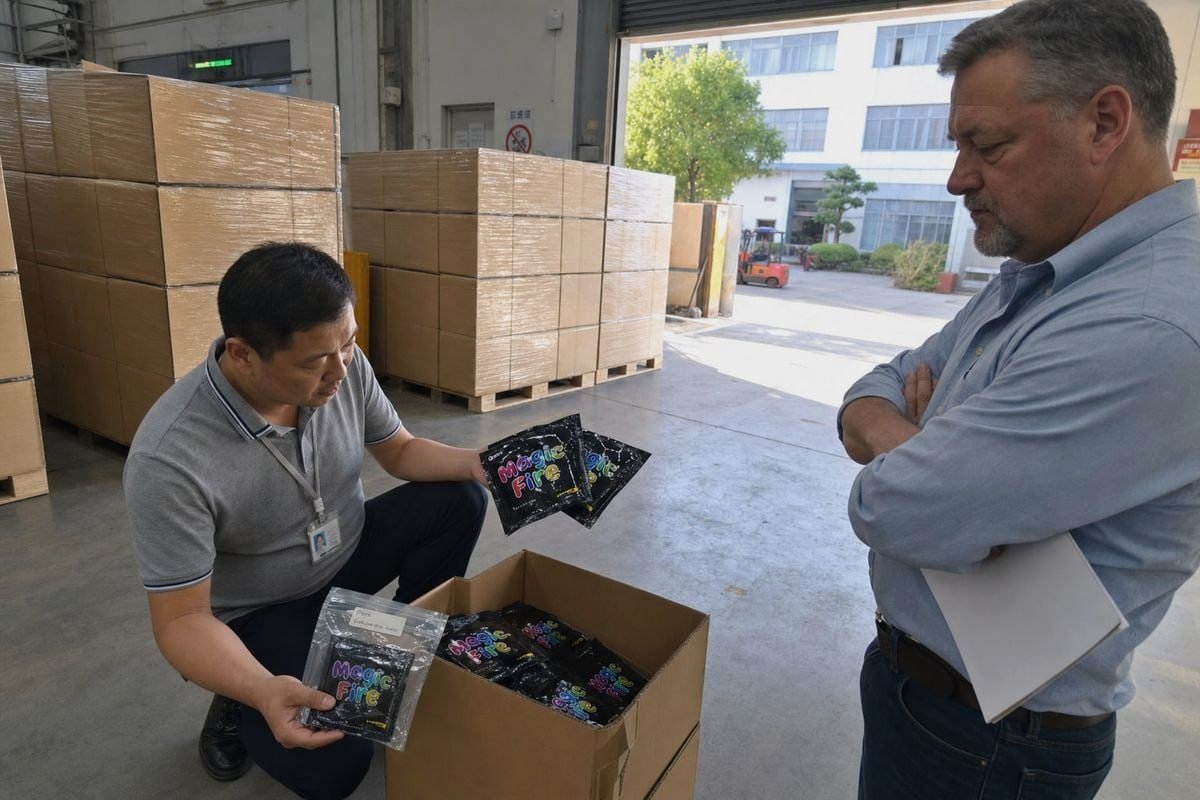
We hold SGS and Intertek test reports for our Magic Fire products, alongside ISO 9001 4, BSCI, and CE compliance. And we still tell buyers: those documents prove our formulation and materials passed independent testing. They do not, by themselves, prove that carton 47 of your 5,000-unit order contains that same formulation at that same quality. That is a different question, answered by a different inspection.
The Two Jobs of Independent Verification
Think of third-party involvement as covering two separate risks:
- Product-level risk — Is the formulation safe and compliant? A lab test report (SGS, Intertek, بيوريو فيريتاس 5) answers this. Check that the report is recent, matches the exact product variant you ordered, and can be verified directly with the issuing lab.
- Shipment-level risk — Does this specific order match the tested standard? Only an independent pre-shipment inspection answers this, through random sampling from your actual lot, standardized defect counting, and photo documentation.
The verification gap sits between these two. A self-report may be perfectly accurate — but you usually cannot tell whether it is accurate without external validation. That is why importers, customs authorities 6, and increasingly event insurers treat supplier self-inspection alone as insufficient. Liability underwriters for fire-related products often specifically require proof of third-party inspection before approving coverage.
Why Incentives, Not Honesty, Are the Core Issue
I want to be fair to factories here, because we are one. The reliability gap is not mainly about dishonesty. The supplier's QC team reports to the same organization that benefits from shipment approval and payment release. That structural conflict of interest 7 makes self-inspection weakest at exactly the moment you need it most: the pre-shipment stage. Independence changes the credibility of findings, regardless of anyone's intentions. One industry figure worth knowing: roughly 30% of AQL inspections in China fail when an independent third party checks — a defect level that self-reported factory QC rarely surfaces on its own.
How Can I Tell If a Supplier's Batch-to-Batch Quality Control Actually Matches Their Test Results?
During one production run of our color-flame packets, we caught a raw-material shift ourselves: a new lot of copper compound changed our blue-flame intensity slightly. We flagged it, adjusted, and documented it. That experience taught me what buyers should look for.
Compare the supplier's batch records against independent results over multiple orders. Consistent quality shows matching lot numbers, documented raw-material controls, stable spectrometric or burn-test results, and defect rates that track realistically. Mismatches between self-reported data and third-party findings reveal weak batch control.
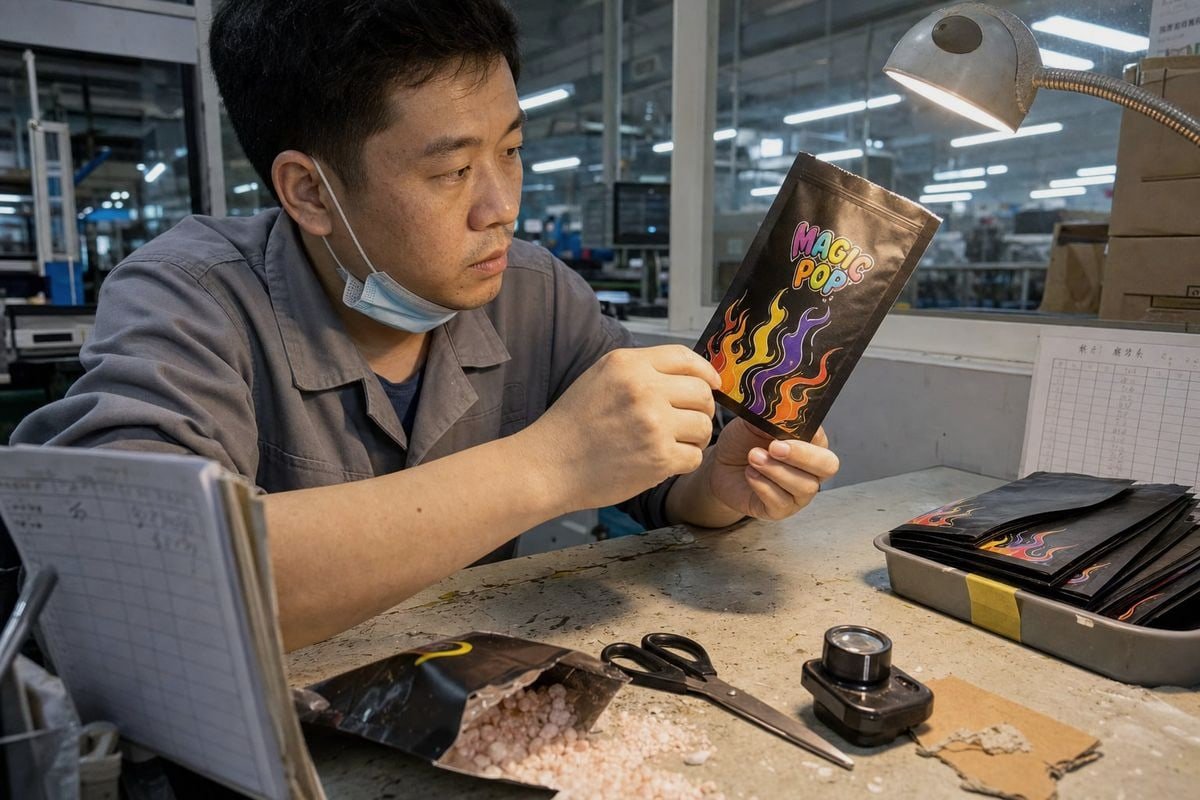
Batch consistency is where color-flame products live or die. The strontium and copper compounds 8 that create red and blue flames vary between raw-material lots. Particle size, chemical purity, and moisture content all affect flame color and safety. Self-inspection frequently misses these shifts because they require instrument-based analysis, while independent labs catch them through spectrometric testing.
A Practical Verification Process
Here is the process I recommend to purchasing managers, based on how our own buyers audit us:
- Request batch records for three past orders. Look for raw-material lot numbers tied to finished-goods lots. No traceability means no real batch control.
- Compare the golden sample to production units. Your approved sample should reliably predict mass production. Ask how the factory locks the formulation and packaging spec after approval.
- Commission an independent burn test or lab analysis on one shipment. Then compare the results against the supplier's own report for the same lot. Small honest gaps are normal. Large gaps mean the self-inspection is not measuring what it claims to.
- Track defect patterns across orders. Realistic variation builds trust. Suspicious uniformity does not.
What Self-Inspection Commonly Misses
Quality-inspection guidance identifies six common failure points in supplier self-checks. Map them to color-flame powder specifically:
| نقطة الفشل | Magic Fire Powder Example | How to Catch It |
|---|---|---|
| Measurement differences | Factory judges flame color by eye, not standard | Independent burn test against reference |
| Missing checkpoints | Moisture content never tested | Request the checkpoint list in writing |
| Wrong sampling | Samples pulled only from first cartons | Require random sampling across lot |
| Wrong timing | Inspection after sealing, not during filling | Verify inspection stage in report |
| Inconsistent execution | Different inspectors, different criteria | Ask for the written work instruction |
| Reporting bias | Minor defects omitted from report | Cross-check with third-party results |
At our facility, batch-to-batch control is the reason we can promise that the first sample reflects mass-production quality. Any supplier making that promise should be able to show you the system behind it — not just the report.
Which Inspection Approach Will Save Me Time and Risk When Sourcing Magic Fire Powder in Bulk?
The trade-off I weigh with every buyer is simple: inspection costs days and dollars up front, while skipped inspection costs weeks and reputations later. After 17 years exporting fire products to 30+ countries, I have never seen the math favor skipping.
A layered approach saves the most time and risk: rely on supplier self-inspection for in-process control, require third-party pre-shipment inspection for release decisions, and verify lab certifications directly with the issuing body. For bulk Magic Fire Powder orders, independent inspection typically costs far less than one rejected shipment.

For a comparison-driven decision, start with the numbers side by side:
| عامل | Self-Inspection Only | Third-Party Only | Layered (Both) |
|---|---|---|---|
| Objectivity | Low — conflict of interest | High — independent | عالي |
| Defect detection | Weak at pre-shipment stage | Strong, but a sample snapshot | Strongest |
| Speed of feedback | Fast, continuous | Slower, scheduled | Fast + verified |
| Cost per order | Included in price | Moderate fee | Moderate fee |
| Customs/insurer acceptance | Often insufficient | Widely accepted | Strongest |
| Risk of rejected shipment | الأعلى | منخفض | الأدنى |
Match the Inspection Level to the Risk Level
Not every order needs the same intensity. The higher the safety, compliance, or customer-loss risk, the more the case tilts toward independent verification. A small trial order from a certified factory with a proven track record can reasonably rely on lab reports plus supplier QC data. A first bulk order for a Home Depot–type retail channel cannot. In our experience shipping to the US, Germany, and the UK, large retail buyers and their insurers increasingly treat third-party pre-shipment inspection as non-negotiable for fire-related products.
Where the Market Is Heading
Two trends are worth planning for. First, regulatory momentum favors dual-verification: AI-assisted photo and video inspection layered with independent lab audits, specifically to reduce falsified reporting. Second, blockchain-based documentation is emerging as a way to make both self-inspection and third-party records tamper-proof. Neither replaces the core principle. Third-party inspection remains a sample-based snapshot — stronger than self-inspection, not infallible. That honest limit is exactly why we run both: strict internal batch control on our lines, plus SGS and Intertek verification that buyers can check independently. Self-inspection is a management tool. Third-party inspection is a verification tool. Bulk buyers need both doing their separate jobs.
خاتمة
Self-inspection reports tell you what a supplier claims. Third-party inspection tells you what an independent party can verify. For Magic Fire Powder, use both — but release shipments only on verified evidence.
ملاحظات ختامية
1. Links to the official amfori BSCI social compliance program the supplier claims to hold. ↩︎
2. Intertek is a named independent testing body referenced for lab verification. ↩︎
3. Official EU page explaining the CE marking compliance requirement referenced in the article. ↩︎
4. References the official quality management standard the supplier claims certification against. ↩︎
5. Bureau Veritas is a recognized independent inspection and certification company mentioned as a lab option. ↩︎
6. Provides background on the customs agencies referenced as requiring verified inspection evidence. ↩︎
7. Explains the general concept underlying why self-reporting parties may lack objectivity. ↩︎
8. Background on chemical compounds used to create flame colors discussed in the article. ↩︎



 English
  Spanish
  German
  French
  Arabic
  Portuguese
انضم إلى المحادثة