






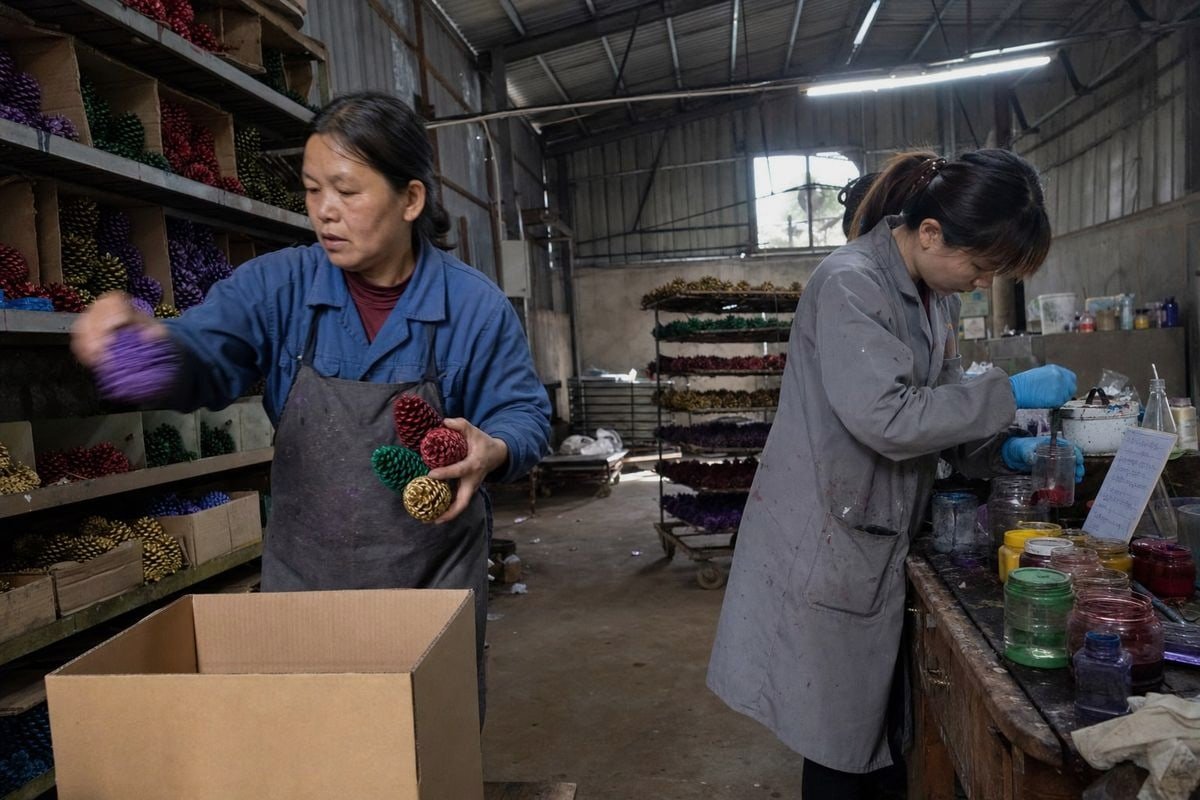
OEM vs ODM timelines and sampling costs for يمكن لـ Sunrich توفير مُشعلات الصنوبر النارية في أكياس قطنية، وأكياس بلاستيكية، وتغليف بيع بالتجزئة مخصص للمستوردين، وتجار الجملة، وأصحاب العلامات التجارية، وتجار التجزئة. 1 confuse many buyers. Miss the difference, and our production line has watched orders miss Christmas entirely. Here is how to avoid that.
ODM colored pine cones use existing factory formulas, so samples ship in 7–15 days at low or no cost. OEM projects need custom color development, tooling, and compliance testing, pushing sampling to 20–35 days and $50–300+ per set, with launch timelines two to three times longer.
The gap sounds simple on paper. In practice, it decides whether your product reach 2es shelves before the holiday rush or sits in a warehouse until next year. Let me break down each cost and timeline factor so you can choose with confidence.
What Are the Typical Sampling Costs I Should Expect for OEM vs ODM Colored Pine Cones?
Last spring, a German distributor asked us to quote two sampling paths for the same pinecone product تقارير اختبار SGS و Intertek 3. The cost difference surprised him, and the reasons behind it matter for every buyer.
ODM samples of colored pine cones typically cost little or nothing beyond freight, because factories pull from stock colors and existing formulas. OEM samples run $50–300+ per set, covering custom Pantone matching, dye formulation, prototype batches, and often per-project compliance testing for the new chemistry.

The cost gap comes from what the sample actually pays for. With ODM, our team simply pulls cones from an existing production run, adjusts packaging if needed, and ships them out. You pay for handling and courier fees. That is usually it. Some factories, ours included, will even credit the sample fee against your first order.
OEM is a different animal. When a buyer wants a proprietary flame-color formula or an exact brand color on the coating, we start development work. That means lab time, small prototype batches, اختبار الاحتراق 4ing, and revision rounds. Each of those steps has a real internal cost, and it gets passed on.
What Each Sample Fee Actually Covers
| مكون التكلفة | ODM Sample | OEM Sample |
|---|---|---|
| Base product | Existing stock | Custom development |
| Color matching | Standard color library | Pantone matching, 2–4 rounds |
| Formula work | Already validated | New dye or flame chemistry |
| وثائق الامتثال | Amortized from prior testing | Charged per project |
| Tooling | لا شيء | Possible, $2,000–$20,000+ in some categories |
| Typical sample cost | Free to nominal, plus freight | $50–300+ per set |
The Compliance Cost Most Buyers Forget
In our experience exporting to the US and Europe, compliance is the hidden multiplier. Our standard color-flame pinecones already carry SGS و Intertek 5 test reports, so ODM buyers inherit that documentation at no extra charge. A custom OEM formulation may need fresh REACH, CPSIA, or قانون 65 6 review. That testing is billed per project, and it can cost more than the samples themselves. Ask about this before you commit, not after.
How Long Will My Production Timeline Take If I Choose OEM Instead of ODM?
One trade-off we weigh constantly at our Ningbo facility 7 is calendar risk. A buyer chasing a unique flame color must accept weeks of development that a stock-color buyer simply skips.
Choosing OEM extends your first sample from 7–15 days to 20–35 days, adds 2–4 revision rounds worth 2–4 extra weeks, and stretches post-approval production from 20–30 days to 45–60 days. Total OEM launch often takes 3–6 months versus 4–8 weeks for ODM.
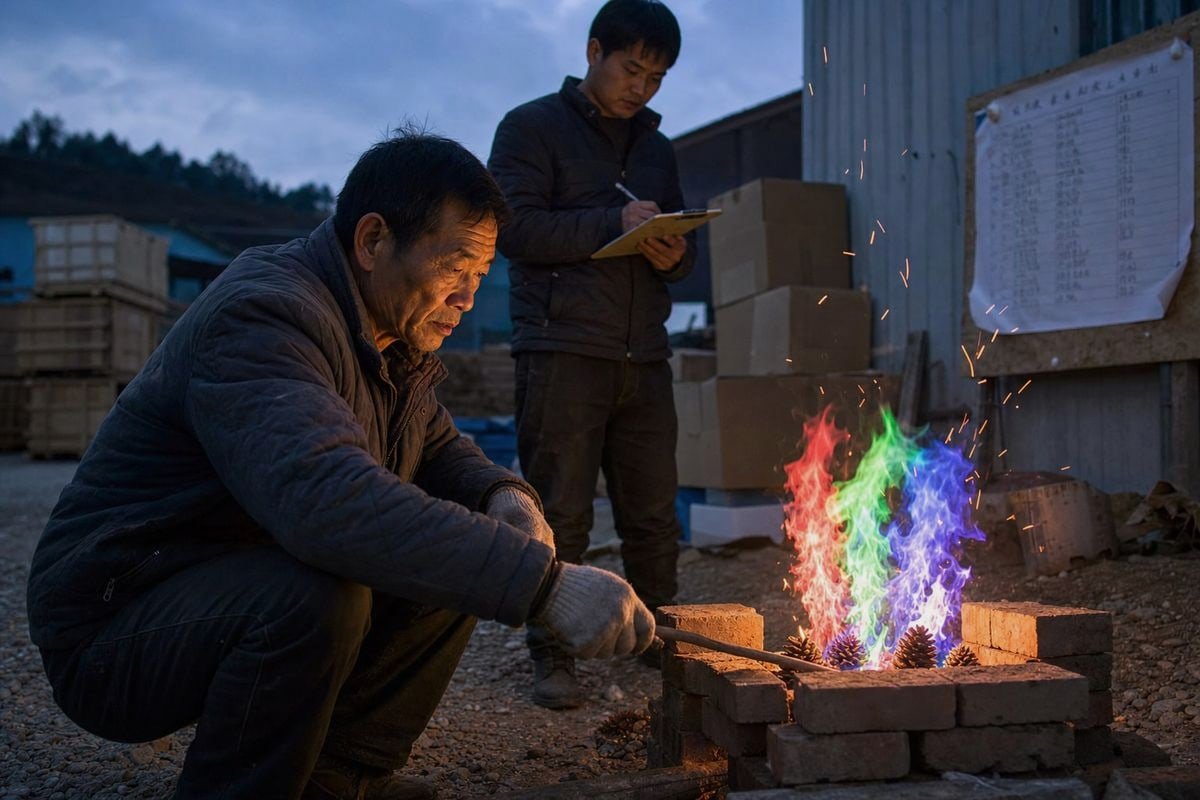
Here is why the OEM path takes longer at every stage. First comes specification work. We translate your brief into a formula target, a coating method, and a packaging plan. Then our lab runs prototype batches. Color-flame chemistry is sensitive; a green flame that looks vivid in one burn test can look weak in another if the coating thickness drifts. So we test, adjust, and test again before the first sample even ships.
Then come your revisions. In our records, OEM color-matching sign-off rarely happens in one round. Two to four rounds is normal, and each round adds shipping time both ways plus lab adjustments.
Side-by-Side Timeline Comparison
| المدة النموذجية | ODM Path | OEM Path |
|---|---|---|
| First sample | 7-15 يومًا | 20-35 يومًا |
| Revision rounds | Usually 1 round | 2–4 rounds, adds 2–4 weeks |
| Sample approval to production | 20-30 يومًا | 45–60 يومًا |
| Total launch window | 4-8 أسابيع | 3–6 months (longer with tooling) |
The Seasonal Harvest Factor
Pine cones are a harvested raw material, gathered mainly from fall through early winter. Our warehouse holds pre-harvested inventory for standard products, so ODM orders draw on stock year-round. An OEM order placed off-season, especially one needing a specific cone size or species, can face raw material sourcing delays that no amount of factory speed can fix. If your OEM brief lands in June for a new cone format, build extra buffer into your plan.
Which Option Lets Me Get to Market Faster With Lower Upfront Development Costs?
A UK camping brand once told me their entire first-year plan hinged on hitting the autumn buying window. We steered them toward ODM, and that call saved their launch.
ODM gets you to market faster with lower upfront costs. Samples arrive in days, tooling costs are zero, MOQs are lower, and compliance documents already exist. For seasonal colored pine cones, ODM's 4–8 week launch window beats OEM's 3–6 months in nearly every first-launch scenario.
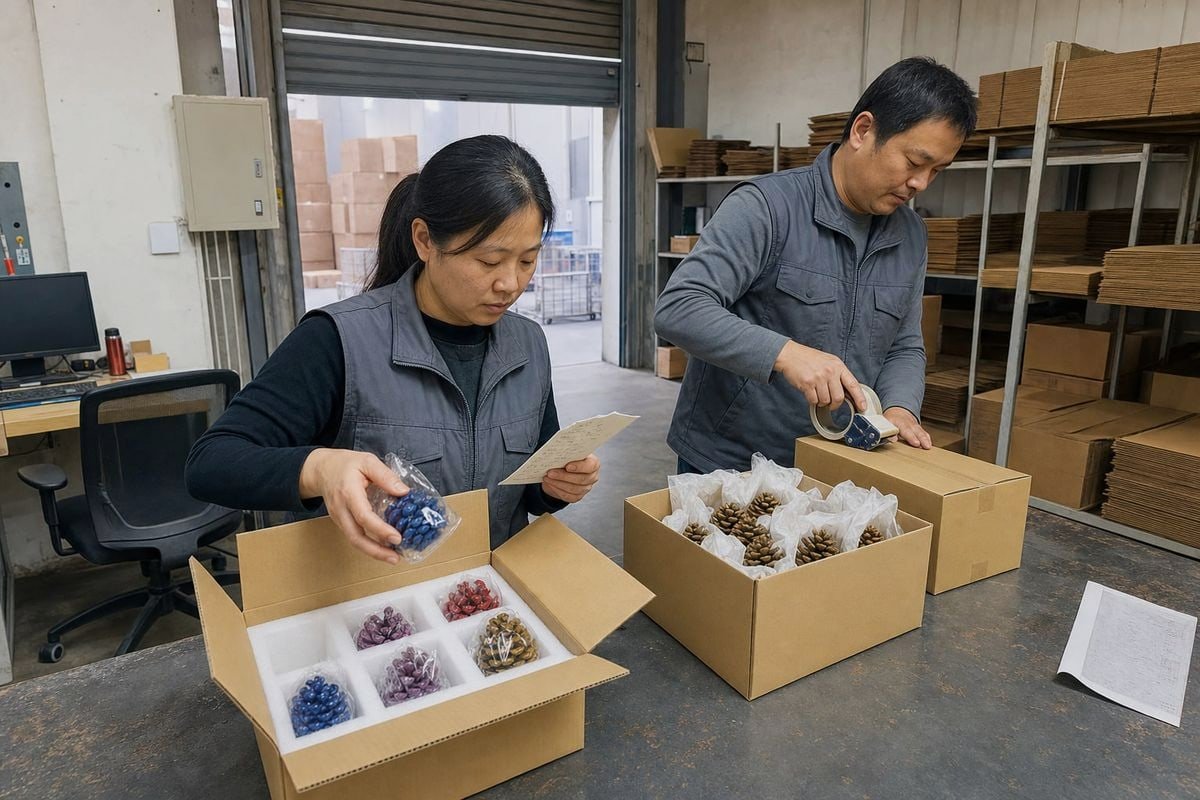
For most buyers, the honest answer is ODM, and the numbers make it clear. Consider the two paths as a decision list:
- Choose ODM if you want to brand an existing product, pick from standard flame colors, test a market with a small order, or hit a fixed seasonal deadline.
- Choose OEM if you need a proprietary color system, a unique coating or scent, a new cone size, or true product exclusivity that competitors cannot copy.
A useful shorthand we share with buyers: ODM buys speed; OEM buys differentiation.
Why ODM Wins on Upfront Economics
Factories amortize tooling and formula development across many ODM customers. That means you pay nothing toward development that others already funded. Our color-flame pinecones, for example, run on production lines refined over 17+ years. An ODM buyer plugs into that maturity on day one. Private-label branding, custom drawstring bags, kraft pouches, or display boxes can still be added quickly, because packaging edits move much faster than chemistry changes.
A Practical Rule for Seasonal Products
For calendar-driven décor, timing beats unit cost. A container of perfectly customized pinecones arriving in mid-December is worth far less than a standard-color container arriving in September. Some buyers object that ODM products lack differentiation. That concern is fair but often overstated: packaging, bundle format, and brand story differentiate seasonal products more than the cone color itself does. And there is a middle path worth asking about. Many factories, including ours, offer a semi-custom tier: color-only customization on existing formats. You get more flexibility than standard ODM with far less cost and delay than full OEM.
What Hidden Fees or Delays Might I Encounter When Switching Between OEM and ODM Sampling?
Years of quoting both paths have taught our sales team one lesson: the switch between OEM and ODM mid-project is where budgets quietly bleed. Buyers rarely see it coming.
Hidden costs when switching include forfeited development fees, re-testing charges for compliance, new MOQ thresholds, repeated freight for extra sample rounds, and lost calendar time. Moving from ODM to OEM mid-project can add 6–12 weeks and thousands of dollars in unplanned development and testing costs.

Let me walk through the traps we see most often, because each one is avoidable with the right questions upfront.
The Most Common Hidden Charges
| Hidden Item | When It Appears | التأثير النموذجي |
|---|---|---|
| Forfeited development work | Abandoning OEM mid-way | Development fees are non-refundable |
| Fresh compliance testing | Any formula change, even small | Per-project charges, 2–6 weeks delay |
| MOQ jump | ODM to OEM switch | MOQs can rise from small trial lots to 500kg–5 tons |
| Repeat sample freight | Each extra revision round | Courier fees both ways, 1–2 weeks each round |
| Off-season raw material sourcing | OEM needing non-stock cones | Weeks to months waiting on harvest |
| Packaging re-approval | New warning labels or barcodes | Artwork and print proofing cycles |
Delays That Do Not Show Up on Any Quote
Paperwork moves slower than product. When a buyer switches from our stock formula to a custom one, the existing SGS or Intertek reports no longer apply. New testing takes weeks, and some retail channels will not accept a purchase order without the certificates in hand. We have seen buyers clear production on time, then wait at the documentation stage.
Freight planning is the other silent delay. ODM programs let you book shipping early because timelines are predictable. OEM revision cycles make booking risky; miss a vessel cutoff by three days and you may wait two weeks for the next sailing. My advice: lock your compliance scope and revision limit in writing before sampling starts, and ask your factory to flag any change that voids existing test reports.
خاتمة
Choosing wrong between OEM and ODM can sink a seasonal launch. Our rule after 17+ years: start with ODM for speed and validation, then invest in OEM once the market proves demand.
ملاحظات ختامية
1. Background on conifer cones as the natural raw material discussed throughout the article. ↩︎
2. EU REACH regulation governs chemical substances used in custom coatings and dyes.



 English
  Spanish
  German
  French
  Arabic
  Portuguese
انضم إلى المحادثة