






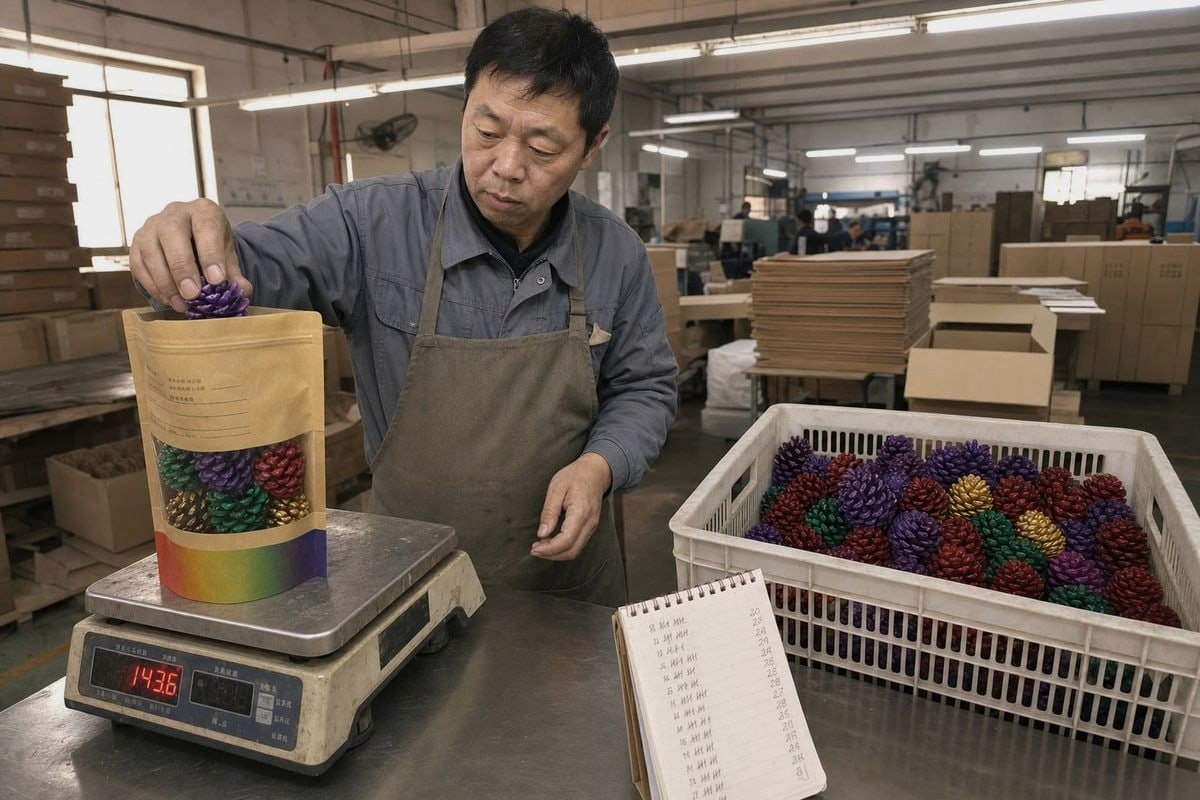
Measuring the cost-effectiveness of fireplace colored pine cones confuses many buyers I speak with. Two quotes look identical, yet one delivers half the value — and our factory sees why daily.
To measure the cost-effectiveness of fireplace colored pine cones, calculate price per kilogram (total cost ÷ weight), price per piece (total cost ÷ cone count), and cost per fire session. Then adjust for burn time, cone size, shipping weight, and packaging to find true value.
Each metric answers a different question. Weight tells you how much material you get. Piece count tells you how many uses you get. Let me walk you through both, step by step.
What’s the Best Way to Compare Price Per Piece Versus Price Per Kilogram When Sourcing Colored Pine Cones?
A buyer from Germany once sent me two competing quotes and asked which was cheaper. One priced per cone, one per kilogram. On paper they looked incomparable — but they weren't.
The best way is to convert every quote into both metrics: divide total price by net weight for cost per kilogram, and by cone count for cost per piece. Weight-based comparison is more reliable first, because cone sizes vary widely and piece counts are not standardized units.

In our 17+ years exporting color-flame products to more than 30 countries, we have learned that buyers who compare only one metric often misjudge value. Here is why both matter.
Weight answers the question: "How much treated material am I paying for?" Piece count answers: "How many individual uses will my end customer get?" Retail formats make this messy. Colored pine cones sell as 1 lb bags, 2.5 lb refill bags, 5 lb bulk packages, and small gift boxes. A 2 lb bag can hold anywhere from 15 to 40 cones depending on species and size grading. So piece count alone can badly mislead you.
A Simple Conversion Framework
Start with three formulas. Then apply them to every supplier quote before comparing anything else.
| المقياس | صيغة | ما يخبرك به |
|---|---|---|
| Cost per kilogram | Total price ÷ net weight (kg) | Raw material value |
| التكلفة لكل قطعة | Total price ÷ cone count | Value per use |
| تكلفة التسليم لكل حريق | Total price ÷ (cone count ÷ cones per session) | Real household value |
If a supplier gives only piece count, ask for the net bag weight. If a supplier gives only weight, ask for the typical cone count per bag or the size grading. At our Ningbo production facility, we grade cones by size before treatment, so we can quote both numbers on the same spec sheet. Any serious factory should do the same. A quote that hides one of these two numbers usually hides a value gap too.
One more objection I hear: "Isn't the lowest price per kilogram always the winner?" Not always. A bulk bag may be cheaper per kilogram, but if your retail customer only burns a few cones per season, a smaller pack with better shelf presentation may sell through faster and earn more margin per unit.
How Do I Calculate the True Landed Cost of Colored Pine Cones Including Shipping and Packaging Weight?
When we optimized packaging for a Canadian distributor last year, we cut their landed cost noticeably — without changing the product price at all. The savings came entirely from gross weight and carton design.
Calculate true landed cost by adding FOB product price, freight (based on gross weight or volume), duties, and insurance, then dividing by net cone weight or count. Packaging can add 10–20% to shipping weight, so always compare landed cost per usable kilogram, not quoted price.
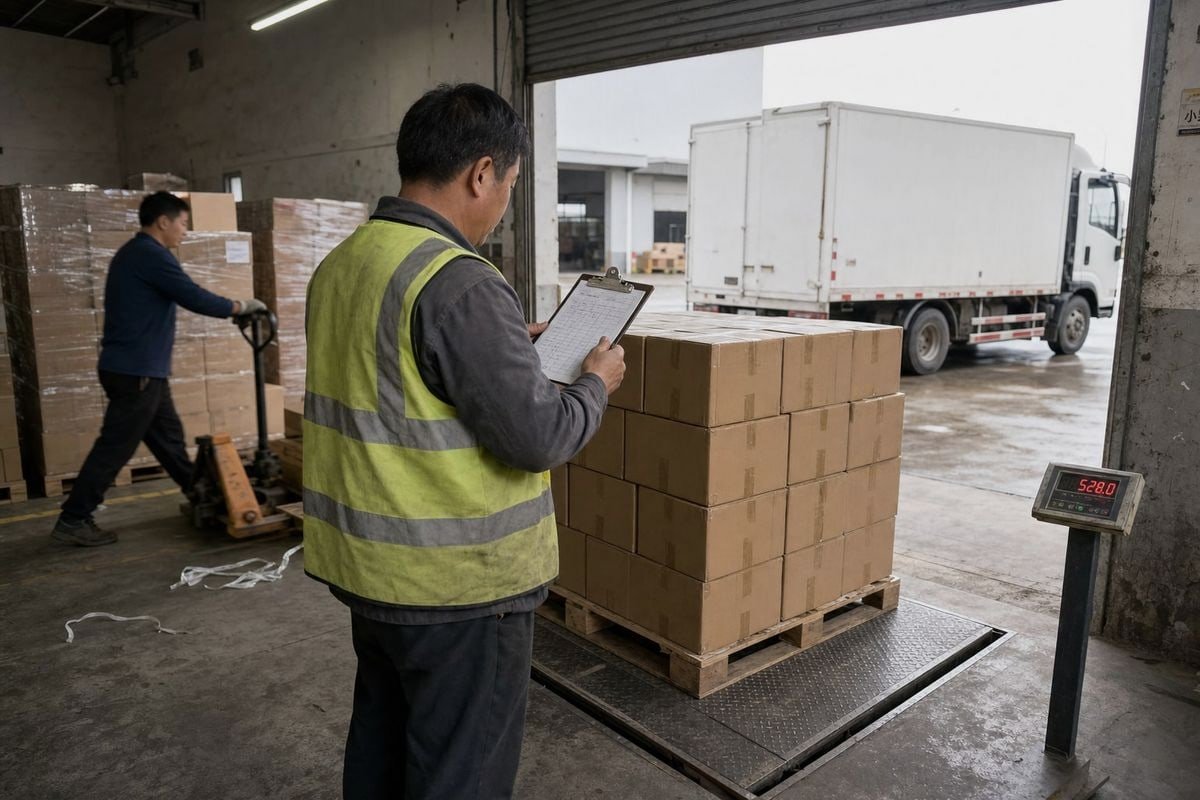
The quoted factory price is only the starting point. Because we ship from Ningbo to markets like the US, Germany, and Australia every month, we build landed-cost sheets with our buyers before they place trial orders. The logic is simple, but skipping any line item distorts your comparison.
The Landed Cost Stack
Work through these five layers in order:
- FOB or EXW product price. The base quote per bag or per kilogram.
- Freight cost. Sea freight charges by volume or gross weight. Pine cones are bulky and light, so they often ship volumetric 1. Packaging shape matters as much as weight.
- Duties and import taxes. These vary by market and HS classification 2. Confirm before quoting your retail price.
- Insurance and handling. Small per-shipment costs that still shift the per-unit math.
- Compliance and labeling. Warning labels, barcodes, and test reports. We provide تقارير SGS/Intertek 3 و وثائق CE 4 as standard, which saves buyers separate testing fees at destination.
| طبقة التكلفة | Example Impact on a Bulk Order | إجراءات المشتري |
|---|---|---|
| Packaging weight | Adds 10–20% gross weight | Request net vs gross specs |
| Carton dimensions | Drives volumetric freight | Ask for palletization plan |
| Duties/taxes | يختلف حسب السوق | Verify HS code early |
| Compliance docs | Avoids re-testing fees | Source from certified factory |
| Seasonal freight | Q4 rates spike | Book off-peak when possible |
Here is the buyer objection worth resolving: "The cheaper factory quote will still win after shipping." Often it does not. A slightly higher فوب 5 price from a factory with dense, well-designed cartons and complete compliance paperwork frequently lands cheaper — and clears customs faster — than a bargain quote with bulky packaging and missing test reports. Divide your full landed total by net usable kilograms. That single number is your honest comparison.
Does Pine Cone Size and Density Affect My Cost-Effectiveness Calculations Across Different Suppliers?
Grading cones is one of the least glamorous steps on our production line, but it is the one that keeps piece counts honest from batch to batch — and it directly affects your math.
Yes, significantly. Larger, denser cones weigh more per piece, so a supplier using big cones delivers fewer pieces per kilogram but longer burn times each. Always normalize quotes by cone species, size grade, and average piece weight before comparing cost-effectiveness across suppliers.
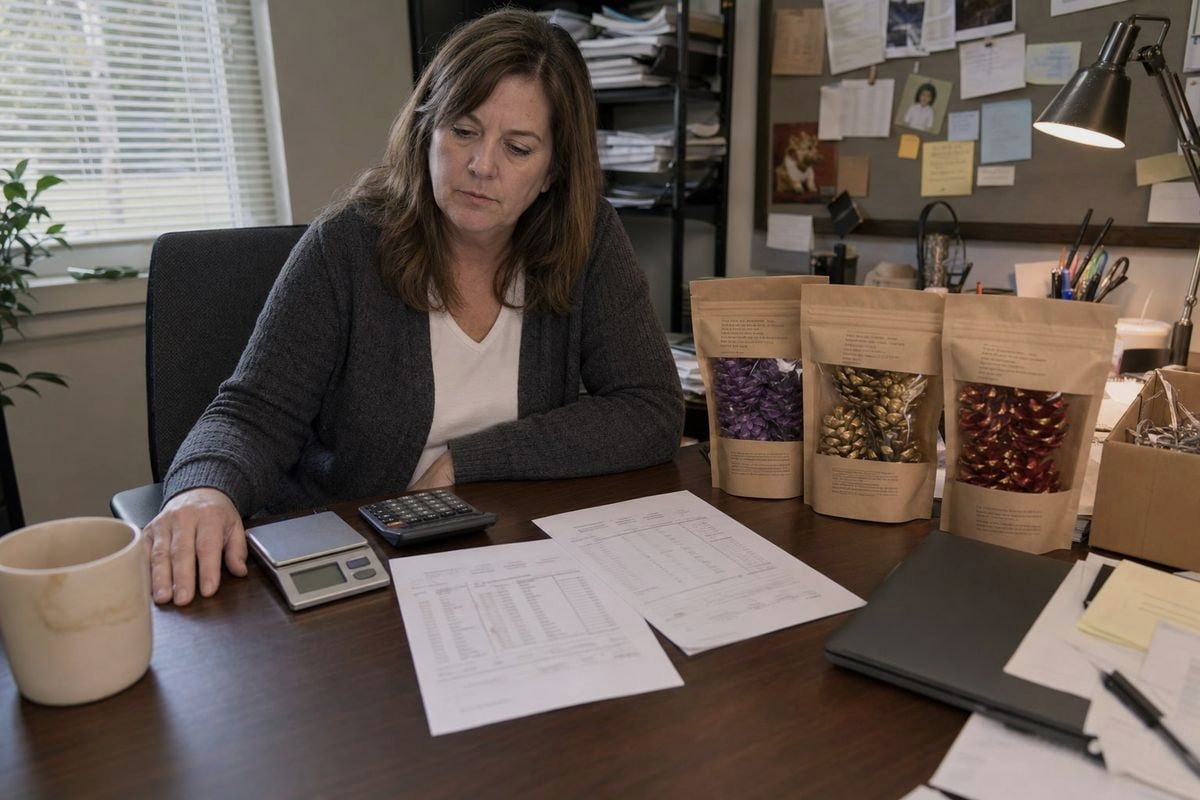
Species and grading create real variance. A large cone from a fir species weighs several times more than a small alder cone. If Supplier A quotes 40 cones per kilogram and Supplier B quotes 18, that gap alone tells you nothing about value. It tells you about cone size.
Why Density Changes the Math
Denser cones hold more woody material. More material means longer burn time and, when the color treatment is applied consistently, a longer color effect per cone. Biomass 6 research has measured pine and spruce cones at gross calorific values 7 of roughly 19–20 MJ/kg, which confirms cones can be meaningfully compared by weight in energy terms. But here is the key framing: colored fireplace cones are decorative fire accessories, not fuel. You are paying for the chemical treatment and the visual effect, not heat output. One economic analysis even found that buying cones purely for energy value was uneconomical at typical purchase prices. So judge value by treated weight and effect duration, not calorific theory.
How We Keep Grading Consistent
At our factory, size grading happens before the color treatment stage. This matters for two reasons. First, treatment coverage per cone stays uniform, so the flame effect is consistent. Second, the piece count per bag stays within a tight tolerance, so the count printed on your private-label packaging stays accurate across production runs. Our batch-to-batch quality control exists precisely so that the sample you approve reflects the container you receive months later. When you audit suppliers, ask three questions: What species do you use? What size grade goes into this SKU? What is the average piece weight tolerance? Any factory with genuine manufacturing depth answers all three without hesitation.
How Can I Use Burn Time and Flame Duration to Judge Whether a Higher Piece Count Is Actually a Better Value?
A UK fireplace distributor once told me his customers judged the product in the first ninety seconds of flame color. That conversation changed how we spec burn time on every OEM order since.
Divide total package price by total minutes of colored flame (cone count × average burn time per cone) to get cost per minute of color effect. A pack with fewer, larger cones often beats a higher piece count if each cone burns longer and more vividly.
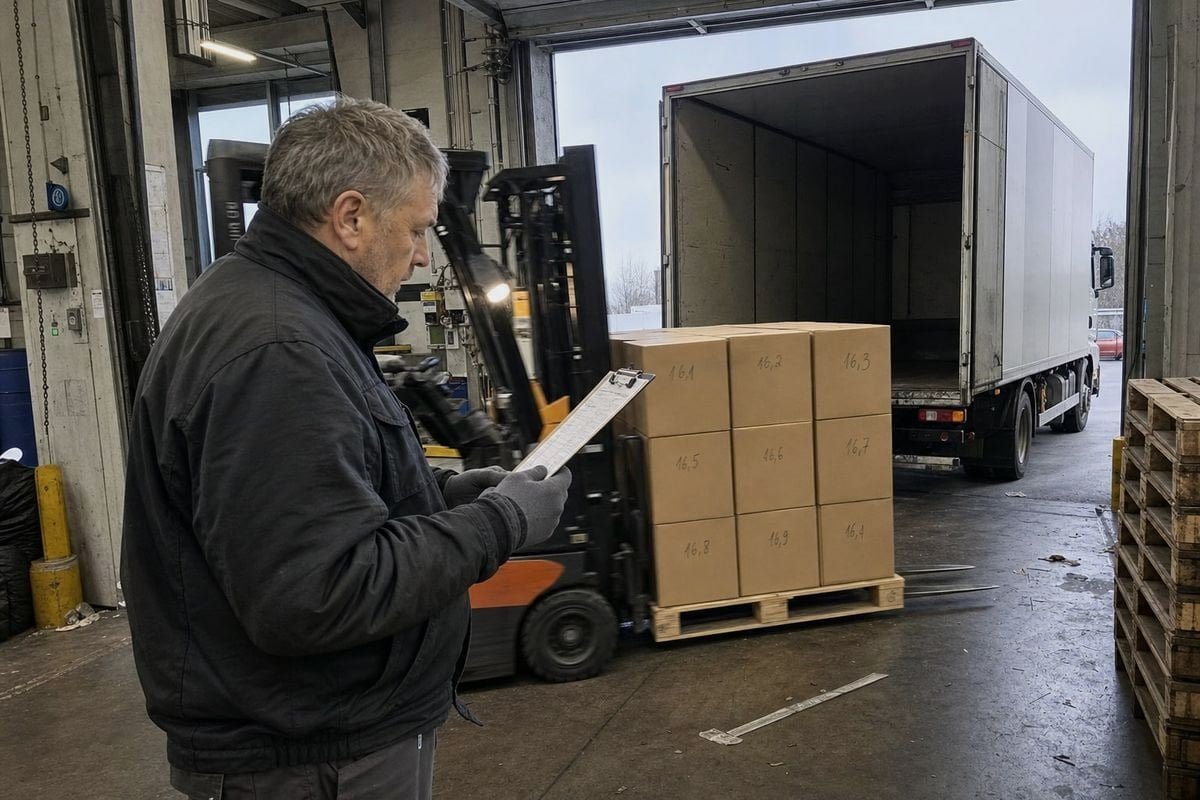
Burn time is where piece count either proves its worth or falls apart. Most colored pine cones produce roughly 5–15 minutes of visible colored flame per cone. That is a wide range. Twenty short-burning cones can deliver less total color time than twelve long-burning ones — at a higher price.
The Cost-Per-Minute Model
Here is a worked comparison using the kind of numbers we see in real sourcing decisions:
| عامل | Pack A (High Count) | Pack B (Lower Count) |
|---|---|---|
| السعر | $12.00 | $12.00 |
| عدد الأقماع | 30 | 15 |
| Burn time per cone | 5 min | 12 min |
| Total color minutes | 150 min | 180 min |
| Cost per minute | $0.080 | $0.067 |
| Cost per fire (3 cones) | $1.20 | $2.40 |
Pack A looks cheaper per piece. Pack B is cheaper per minute of effect. Which wins depends on the end user. A household burning 3–6 cones per session, five times a season, cares about cost per fire and how impressive each fire looks. This is why we let OEM buyers customize burn time on our color-flame pinecones — the right spec depends on their retail positioning, not on a universal ideal.
Two Value Factors Beyond the Stopwatch
First, color intensity. A cheap cone may burn fast with weak, washed-out color. Rate vibrancy alongside duration when you sample. Second, hidden costs. Some colored cones leave ash and residue that can clog gas fireplace components, so sellers rightly warn against gas fireplace use. Our products use eco-friendly formulations with no harmful chemicals, but compatibility guidance still belongs on every label — a cone that damages equipment is never cost-effective, whatever its unit price. Also factor in shelf life: chemical coatings can degrade over 12–18 months, and seasonal pricing can add 15–25% in Q4, so off-season bulk buying of fresh stock improves your real per-use cost.
خاتمة
Comparing quotes on price alone leads to costly mistakes. Confusing formats, hidden freight, and inconsistent cone sizes quietly erode margins. The fix is a disciplined worksheet: total price, net weight, cone count, price per kilogram, price per piece, and cost per fire session — adjusted for burn time, color intensity, landed cost, and fireplace



 English
  Spanish
  German
  French
  Arabic
  Portuguese
انضم إلى المحادثة