






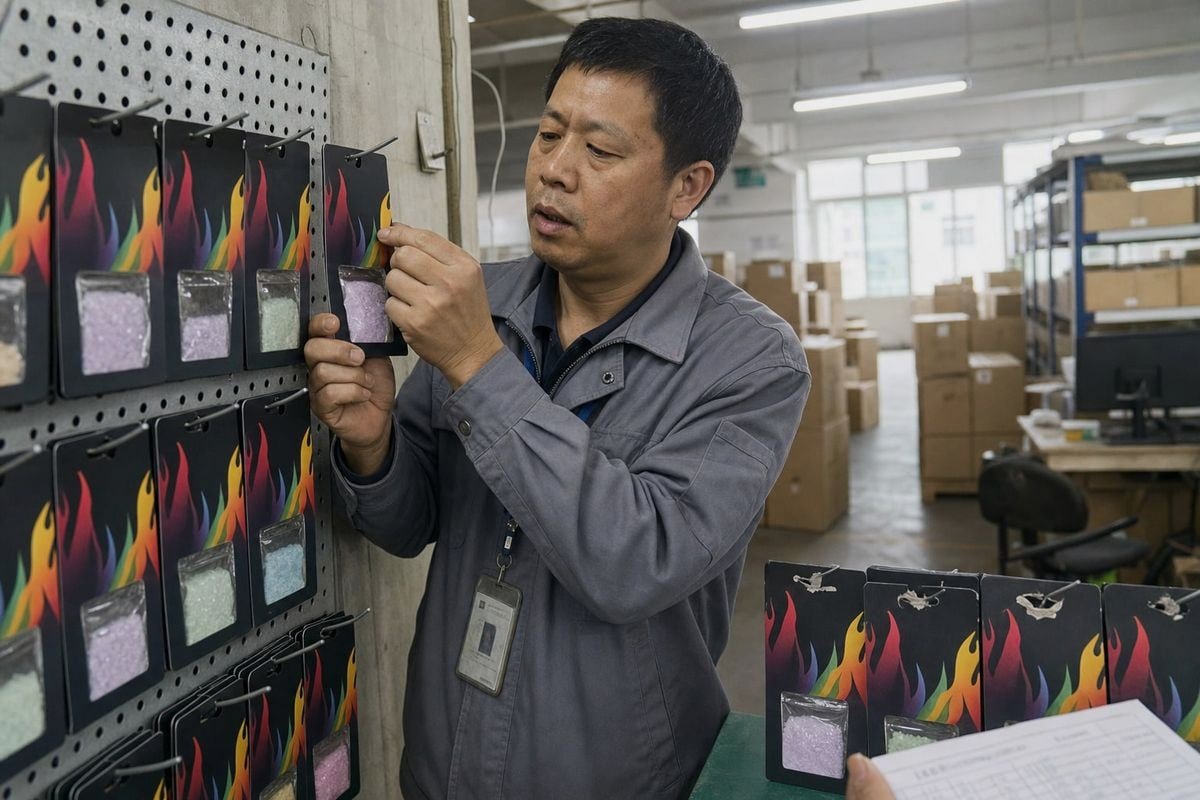
Hanging card packaging fails more often than buyers expect. On our Ningbo production line, we have seen torn hang holes turn great Magic Fire Powder launches into retailer chargebacks and lost shelf space.
Hanging card packaging for Magic Fire Powder withstands retail handling when you specify tear-resistant cardstock of 300–400 gsm, reinforce the Euro slot with laminated patches, keep the hole 10–15 mm from the top edge, validate with cycle and weight load testing, and confirm retailer hook fit before mass production.
That answer covers the essentials. But each element deserves a closer look. Below, I walk through materials, testing, certifications, and customization step by step.
What Packaging Materials Should I Specify for Durable Hanging Card Displays?
During a QC review last year, we pulled a batch of header cards that curled after two humid days in our warehouse. The board was fine on paper. The coating was not. That lesson shaped how we spec materials today.
Specify SBS cardstock at 300–400 gsm (roughly 18–24pt) with a scuff-resistant aqueous or UV coating, a laminated Euro slot reinforcement patch, and a puncture-resistant poly-laminate inner pouch with a moisture barrier to keep hygroscopic flame-color powder dry and the card rigid on shelf.

Material choice is a chain. If any link is weak, the whole hanging card fails. Let me break down each layer, because a purchasing manager needs numbers, not adjectives.
Board Weight and Stiffness
Cardstock weight 1, measured in gsm, drives puncture resistance and stiffness. Industry guidance points to 250–350 gsm for most hanging displays. For our Magic Fire packets, we push toward 300–400 gsm because a filled foil pouch adds swing weight, and customers handle novelty products roughly at point-of-purchase merchandising displays 2. Yes, heavier board costs more per unit. But a torn card that drops product on a store floor costs far more in returns and lost reorders. That is the real trade-off to weigh, and we always present both quotes to buyers.
| Board Weight | الأفضل لـ | مستوى الخطر |
|---|---|---|
| 250–300 gsm | Very light sachets under 100 g | Acceptable for short campaigns |
| 300–350 gsm | Standard Magic Fire packets | Low risk, good balance |
| 350–400 gsm | Heavier or multi-packet cards | Lowest risk, higher cost |
The Inner Pouch Matters Too
The card is only half the system. Our color-flame powder ships in glossy foil pouches with heat-sealed edges. We specify heavy-duty poly-laminate films 3 so the fine crystalline powder stays contained even if the outer package drops. An anti-static treated inner film also matters. Without it, powder migrates into the seal area, creating weak points that fail during handling. Moisture barrier protection is non-negotiable, since flame-color salts are hygroscopic and clump in humid retail environments.
Coatings and Surface Protection
A scuff-resistant coating protects branding and chemical safety labeling 4 from abrasion during high-frequency restocking. We have found matte lamination hides shelf wear better, while UV gloss makes the rainbow flame graphics pop harder under store lighting.
How Can I Test Hanging Card Strength Before Placing a Bulk Order?
One German distributor once asked us to hang a sample card on his own pegboard hook and pull it off fifty times before he would sign the PO. He was right to ask. We now run that exact cycle test on every new packaging design before it leaves our factory.
Test hanging card strength by running simulated hook insertion and removal cycles, a static weight load test on the Euro slot, transit vibration and drop tests, and a heat-seal adhesive pull test. Accept the design only if there is no tear growth, hole elongation, or seal failure.

Testing before scale-up is cheap. Testing after 50,000 units are printed is a disaster. Here is the practical validation sequence we recommend to every buyer, whether they test at our facility or in their own office.
A Four-Stage Test Sequence
- Hook fit and cycle test. Hang the card on the actual retailer pegboard hooks, or matching gauge samples. Insert and remove it 50–100 times. Check for hole wear, panel curl, and hook binding.
- Static weight load testing. Hang the filled card and add weight to simulate stacked or bumped conditions. Published data shows an unreinforced 350 gsm panel can elongate under a 3 kg static load within 48 hours. Reinforced designs should show no measurable elongation.
- Transit simulation. قم بتشغيل vibration testing and conveyor-style drop tests on the packed shipping carton. A shake test also confirms the pouches do not shift and stress the card during transport.
- Seal and bond tests. Pull-test the heat-seal adhesive strength between the header card and pouch, because customers perform their own aggressive pull-tests in stores.
A Simple Pass/Fail Acceptance Checklist
| نقطة التحقق | Pass Criteria |
|---|---|
| Hang hole | No tear growth or elongation after cycling |
| Hook fit | No binding; card hangs square and stable |
| Pouch seal | No powder leakage after drops |
| Card panel | No curl, dog-earing, or delamination |
| Product position | No content shift inside the pouch |
We photograph and document every result. In our experience exporting to 30+ countries, buyers who receive a test report with their samples reorder with far more confidence.
What Certifications Confirm My Magic Fire Powder Packaging Meets Retail Safety Standards?
Compliance questions come first in almost every inquiry we receive from US and European buyers. Before they ask about price or MOQ, purchasing managers ask for our test reports. After 17 years supplying fire-themed products, we consider that the correct order of priorities.
Retail safety compliance for Magic Fire Powder packaging is confirmed through SGS or Intertek product test reports, CE marking for the European market, ISO 9001 quality management certification, BSCI social compliance audits, plus correct hazard labeling, tamper-evident seals, and child-safety review per destination-market regulations.
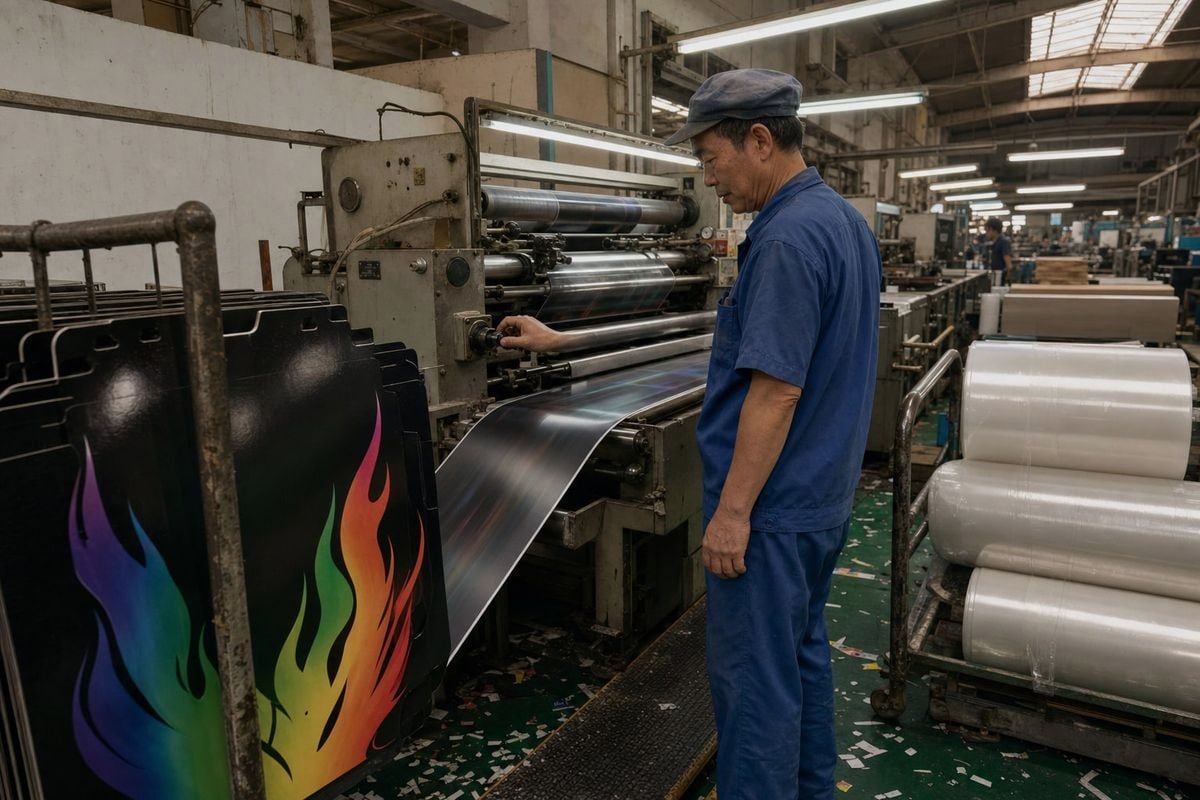
A hanging card can be structurally perfect and still get rejected at goods-in. Retail buyers evaluate documentation as strictly as they evaluate the physical package. Here is how the pieces fit together for a flame-color product.
Factory-Level Certifications
ISO 9001 5 confirms the factory runs a documented quality system, which is what keeps batch-to-batch consistency real rather than promised. تدقيق BSCI 6 confirm social compliance, which large retail sourcing channels increasingly require before onboarding any supplier. Our factory holds both, and we share audit reports during supplier qualification, not after.
Product-Level Testing
SGS and Intertek reports verify the product itself. For color-flame powders, that means composition screening, heavy-metal limits, and confirmation that the formula contains no harmful chemicals. علامة CE 7 supports European market access. We keep current reports on file for every SKU, because a report from three years ago rarely satisfies a category manager today.
Packaging-Level Compliance
The packaging carries its own obligations:
- Chemical safety labeling with correct warning symbols, instructional text, and any required cautionary statements in the destination language.
- Tamper-evident seals on the pouch, so retailers and customers can see the product has not been opened.
- Transport classification review, because some markets restrict how pyrotechnic-style powders ship, even eco-friendly ones.
- Retailer-specific rules, since some chains impose their own labeling, barcode, and blister pack integrity requirements beyond the legal minimum.
My honest advice: confirm the destination country's rules before finalizing artwork. Reprinting cards is annoying. Relabeling a container at a bonded warehouse is expensive.
How Do I Work with My Manufacturer to Customize Hanging Cards for My Retail Shelves?
A Canadian camping brand recently sent us photos of their retailer's fixture wall before we started their OEM project. That single email saved two revision rounds, because their pegboard hooks used a thicker gauge than the Euro slot standard we would have assumed.
Work with your manufacturer by sharing exact retailer hook dimensions and planogram specs upfront, approving a dieline with correct Euro slot geometry, reviewing physical pre-production samples on real hooks, agreeing on tolerances of ±0.5 mm, and locking artwork, labeling, and barcodes before mass production.

Customization succeeds when both sides treat the hang hole as an engineering spec, not an artwork detail. Here is the collaboration process we run for private-label Magic Fire projects, and the dimensions that matter most.
Design From the Hook Backward
The hang hole is the weakest point, so we design from the hook backward. Standard hole sizes simplify production, but retailer-specific hook geometry often requires custom tolerances. Small dimensional mismatches cause more retail failures than gross material weakness does.
| Design Parameter | Recommended Spec |
|---|---|
| Top edge to hole center | 10–15 mm |
| Hole edge to any score line | Minimum 8 mm clearance |
| Hole diameter for 5 mm hook | 6.5 mm |
| Hole tolerance | ±0.5 mm |
| Euro slot reinforcement zone | Extends at least 15 mm radially from hole center |
Reinforcement and Load Anchoring
For filled pouches above roughly 200–300 g, or any product facing frequent handling, we add Euro slot reinforcement as standard. Options include integrated PET film patches, double-ply folds, or plastic grommets. A stress-relief radius at the slot corners redistributes tension and stops vertical tears from starting. For heavier configurations, we can add a locking-tab mechanical anchor that carries the pouch weight structurally, reducing reliance on adhesive bond strength alone.
The Collaboration Workflow
Our OEM process runs in five steps: share fixture specs and target retail environment; approve the dieline and material spec; review printed pre-production samples hung on real retail pegboard hooks; run the joint test checklist; then release mass production. Balance and presentation matter too. We align the pouch's center of gravity directly beneath the hang hole so the card hangs square, which reduces uneven stress and keeps the shelf facing clean. Barcodes, warning labels, and display boxes are all customized in the same round, so your product arrives genuinely shelf-ready.
خاتمة
Durable hanging card packaging is engineering first, merchandising second. Specify strong materials, reinforce the Euro slot, test before scale-up, verify certifications, and partner closely with your factory.
ملاحظات ختامية
1. Explains the measurement of paper density (gsm) used to determine cardstock durability and stiffness. ↩︎
2. Defines the retail environment where hanging cards are handled by customers and subjected to physical stress. ↩︎
3. Authoritative Wikipedia entry explaining the lamination process used to create multi-layer packaging films. ↩︎
4. Federal standards for hazard communication and labeling of chemical products to ensure user safety. ↩︎
5. Stable, authoritative Wikipedia reference for the ISO 9001 quality management standard. ↩︎
6. Industry standard for social compliance and ethical sourcing required by major global retailers. ↩︎
7. Official European Commission page explaining the certification required for products sold within the EEA. ↩︎



 English
  Spanish
  German
  French
  Arabic
  Portuguese
انضم إلى المحادثة