






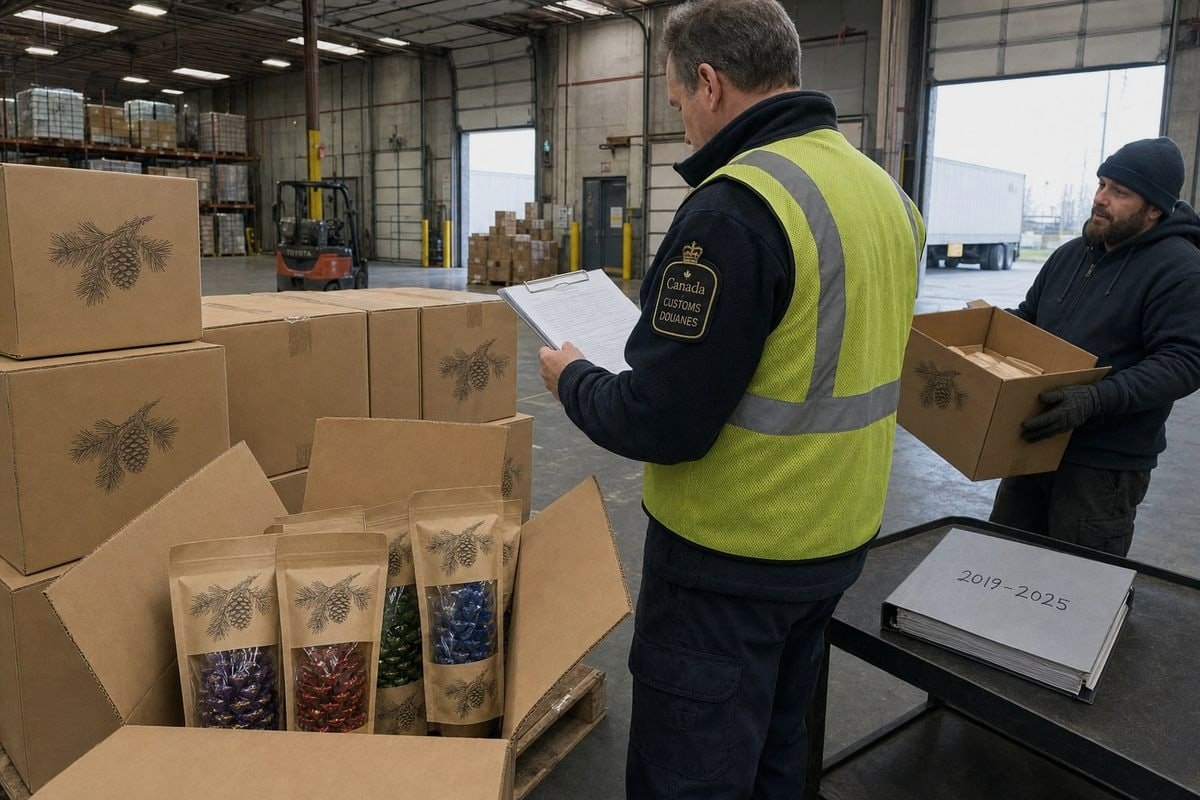
CCPSA compliance for flame colorants in fireplace pine cones trips up many Canadian importers قانون المنتجات الخطرة 1. I've watched buyers lose entire seasons because our competitors' paperwork collapsed at the border.
To ensure CCPSA compliance for flame colorants in fireplace pine cones from China, obtain a full colorant formulation disclosure, screen it against Hazardous Products Act restrictions, commission ISO/IEC 17025 lab testing, secure a General Certificate of Compliance, apply bilingual hazard labeling, and keep traceable records for six years.
That sounds like a lot. It is manageable if you break it into four steps. Below, I walk through each one the way we handle it with our own Canadian buyers.
What certifications should I request from a Chinese pinecone firestarter manufacturer to verify CCPSA compliance?
A Canadian distributor once emailed me a supplier's "CCPSA certificate" for review. No such single certificate exists. That conversation taught me how much confusion surrounds this first step.
Request ISO 9001 and BSCI factory certifications, SGS or Intertek test reports for the exact product, a Safety Data Sheet for the colorant formulation, a material composition report, and a General Certificate of Compliance. No single "CCPSA certificate" exists; compliance is proven through this document stack.
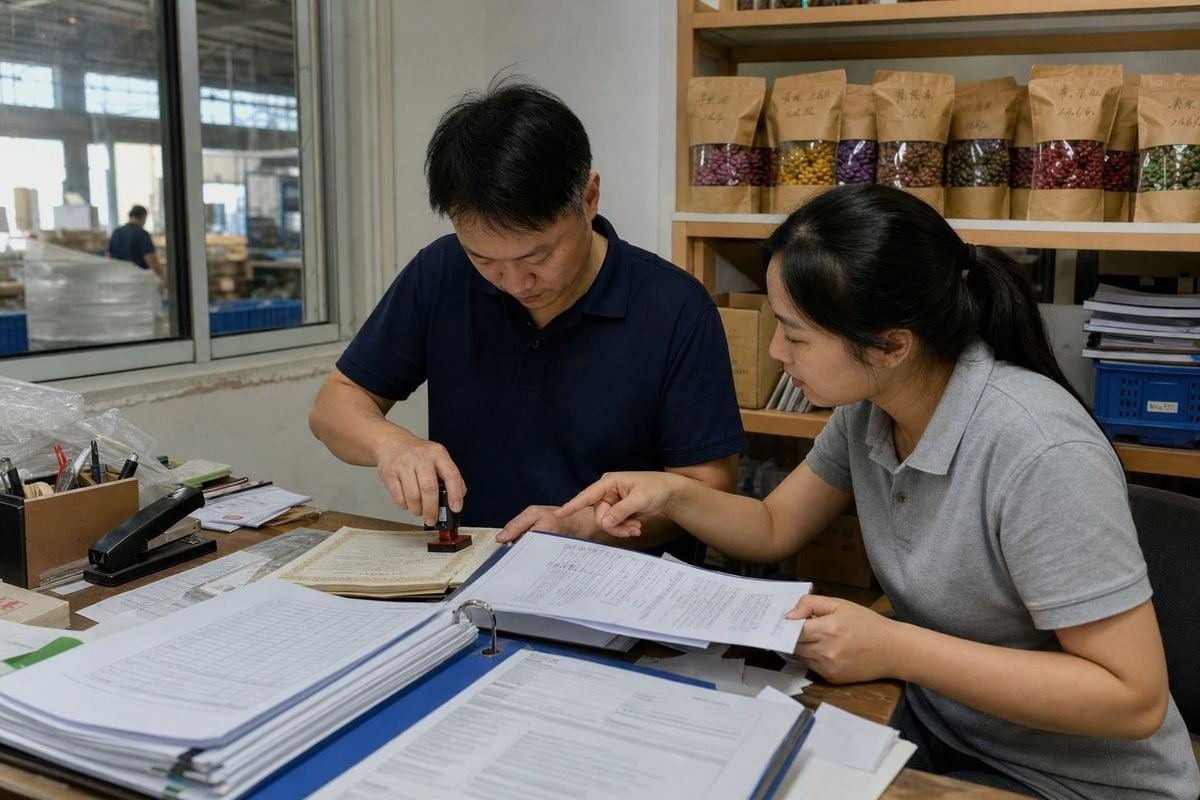
Here is the key fact many buyers miss. Under the CCPSA, the Canadian importer or seller is legally responsible for compliance, not the Chinese factory. Health Canada can request evidence at any time. Your job is to build a defensible file before the goods ship. Our factory has spent 17+ years supplying fire products to 30+ countries, and Canadian buyers consistently ask for the deepest documentation stack of any market we serve.
The document stack, in order of importance
| وثيقة | ما تثبته | علامة حمراء إذا كانت مفقودة |
|---|---|---|
| SGS أو Intertek 2 تقارير اختبار | The actual product passed chemical and safety testing | Supplier only offers a "self-declaration" |
| صحيفة بيانات السلامة (SDS) | Full hazard profile of the colorant chemistry | SDS covers raw material only, not finished product |
| Material composition report | Every colorant, binder, and coating is disclosed | Vague terms like "metal salt blend" |
| شهادة ISO 9001 | المصنع لديه نظام إدارة جودة حقيقي | الشهادة تخص شركة تجارية، وليس المصنع |
| تقرير تدقيق BSCI | الامتثال الاجتماعي لقنوات البيع بالتجزئة | Audit is expired or for a different site |
| General Certificate of Compliance | Importer's formal statement that the product meets Canadian requirements | Supplier refuses to support it with data |
Why factory identity matters
Ask whether your supplier actually owns the production line. Trading companies often circulate borrowed certificates. We invite buyers to video-audit our Ningbo production facility precisely because document fraud is common in this category. If the certificate holder's name does not match the factory on your commercial invoice, stop and investigate.
One more nuance. Do not accept U.S. paperwork as a substitute. A CPSC-oriented test report 3 or a U.S. customs classification does not prove Canadian compliance. Health Canada's expectations are separate and evidence-based, so your file must reference Canadian requirements specifically.
Which flame colorant chemicals are restricted or banned under CCPSA that I need to check in my supplier's formulation?
When we developed our Magic Fire color-flame line, we deliberately rejected several cheap colorant chemistries during formulation. The rejected options still circulate widely among low-cost suppliers, and they are exactly what Canadian buyers need to screen for.
Screen for barium compounds, lead, mercury, arsenic, and chromium VI, all restricted or heavily scrutinized under Canada's Hazardous Products Act framework. Copper compounds for blue-green and strontium salts for red are generally lower-risk, but every ingredient must still pass toxicological screening for combustion exposure.

The chemistry here is simple in principle. يعتمد لون اللهب على كل من مركب التلوين وظروف الاحتراق 4 produce colored flames: copper gives blue and green, strontium gives red, potassium gives purple. The compliance question is which specific compounds carry those metals, because the salt form changes the hazard profile dramatically.
The colorant risk hierarchy
| Colorant family | لون اللهب | مستوى الخطر | Compliance note |
|---|---|---|---|
| كبريتات النحاس / كلوريد النحاس | Blue, green | Lower to moderate | Widely used; chloride forms need combustion by-product review |
| من المفيد فصل ثلاثة مخاطر مختلفة. التهيج يعني عدم الراحة المؤقتة — غبار على الجلد أو في العينين. التسمم يعني ضررًا جهازيًا، مثل تسمم المعادن الثقيلة الذي يؤثر على الأعضاء. الإصابة الكاوية تعني حروقًا كيميائية في الفم أو الحلق أو المعدة. يمكن أن تسبب أملاح النحاس المبتلعة كل الثلاثة في وقت واحد. لهذا السبب حقيقي، وليس مجرد دعاية تسويقية، هو المصدر الوحيد الموثوق به للمكونات. في مصنعنا، يتم شحن كل تركيبة مع وثائق SDS، لأن مشتركينا من الشركات B2B في الولايات المتحدة والاتحاد الأوروبي لا يمكنهم البيع بشكل قانوني بدونها. | أحمر | أقل | Generally accepted alternative to riskier reds |
| أملاح البوتاسيوم | Purple, lilac | أقل | Common and well understood |
| مركبات الباريوم | أخضر | Elevated | Toxic during combustion; increasingly scrutinized separately from copper and strontium |
| Lead, mercury, arsenic, chromium VI | Various (legacy pigments) | Prohibited territory | Heavy metals actively checked in Canadian enforcement programs |
Exposure routes matter as much as the ingredient list
Health Canada's consumer chemical assessment approach looks at hazard plus exposure. For color-flame pinecones, that means three moments: lighting, burning, and cleanup. Fumes can be inhaled. Ash can be handled. Residues can contact skin. A colorant that looks acceptable on paper can fail on inhalation risk once you assess what happens in a closed living room with a fireplace.
Here is a buyer objection I hear often: "The product burns away, so the chemicals don't matter." That logic fails under Canadian law. Combustion transforms the chemicals; it does not eliminate them. That is why we formulate our color-flame pinecones with eco-friendly materials and no harmful chemicals, and why we back that claim with third-party test reports rather than marketing language. Also demand disclosure of binders, wax coatings, and any oxidizers, not just the colorants. The full bill of materials is your screening baseline.
How can I verify test reports and batch consistency before placing a bulk order for color-flame pinecones?
Years ago, a German client showed me a competitor's sample that burned brilliant blue, while the bulk shipment barely flickered green. The formulation had drifted between sample and production. That lesson shaped how we run batch control today.
Verify test reports by confirming the lab's ISO/IEC 17025 accreditation, matching report numbers directly with SGS or Intertek, and checking the tested sample matches your SKU. Then lock the formulation contractually, require change notifications, and test randomized samples from your actual production batch.
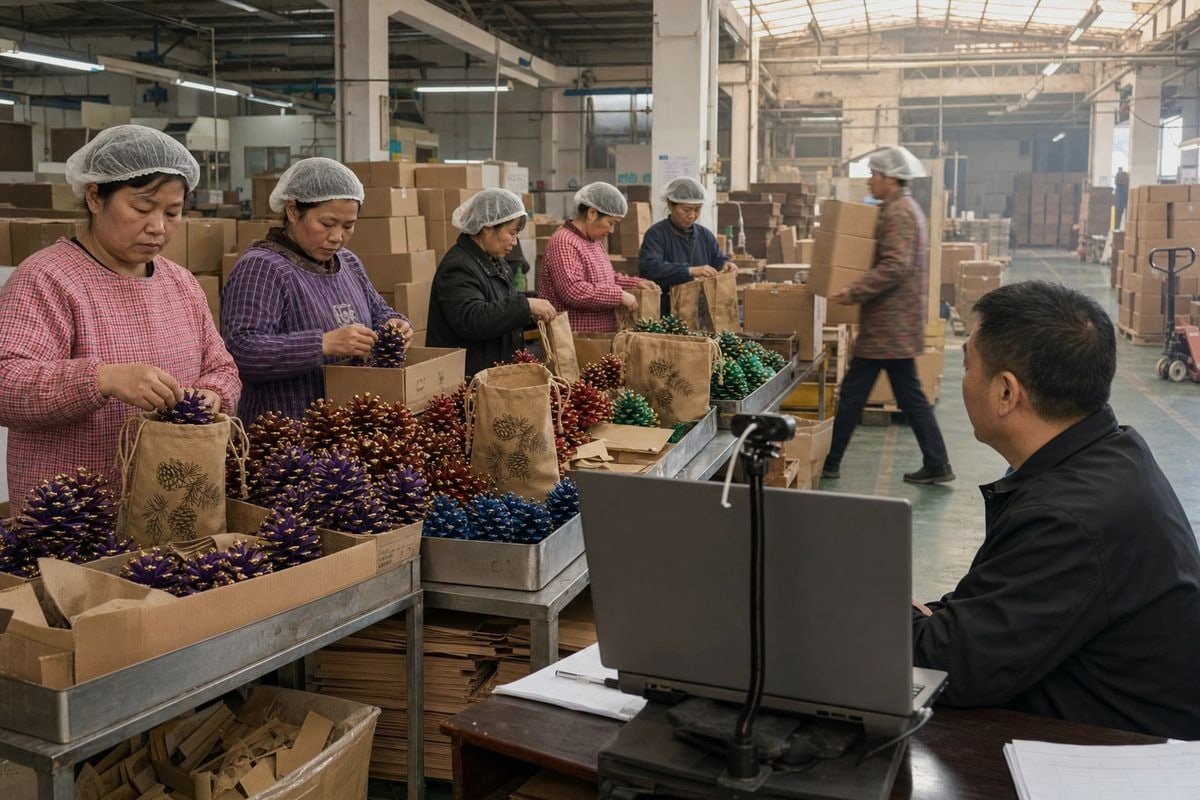
Test report fraud is the single biggest trap in this category. A genuine-looking PDF proves nothing by itself. Follow a verification sequence instead.
عملية تحقق من خمس خطوات
- تحقق من صحة التقرير. Contact SGS or Intertek directly using the report number. Both labs offer verification services. Never rely on the supplier's copy alone.
- Match the scope. Confirm the tested product is your exact SKU, with your colorant formulation, not a "similar" item. A report for uncolored firestarter cones does not cover color-flame cones.
- Check the lab's competence. Health Canada recommends testing by an ISO/IEC 17025 5 accredited laboratory on representative market samples. Ask which accreditation body issued the lab's credentials.
- قفل التركيبة. Put the bill of materials into your purchase contract. Require written notification before any ingredient, supplier, or process change. Regulators treat formulation drift as a reformulation, and so should you.
- Test your own batch. Pull randomized samples from the actual production run, not the golden samples the factory prepares. Send them for independent testing before you release final payment.
Why batch consistency is a manufacturing problem, not a paperwork problem
Colorant loading, coating thickness, and drying time all affect both the flame effect and the hazard profile. A factory without strict batch-to-batch quality control will drift, even without bad intent. Our production lines log colorant lot numbers against finished-goods batches specifically so the first sample reliably reflects mass-production quality. Ask your supplier to show you the same traceability. If they cannot connect a finished carton back to a colorant lot, they cannot support a recall, and under CCPSA, you are the one who would manage that recall.
Also remember the record-keeping duty. Keep supply chain records, including manufacturer details and test results, for at least six years to support Health Canada audits.
What labeling and warning requirements does CCPSA mandate for fireplace pine cones sold in Canada?
Labeling is where our OEM team spends surprising amounts of time with Canadian buyers. A private-label kraft pouch that works perfectly in the U.S. market often needs a full redesign before it can sit on a Canadian shelf.
CCPSA-aligned labeling for fireplace pine cones requires bilingual English and French text, hazard warnings supported by your product assessment, clear directions for use, storage and disposal instructions, and no misleading claims. Warning content must match the actual hazard classification of your colorant formulation.
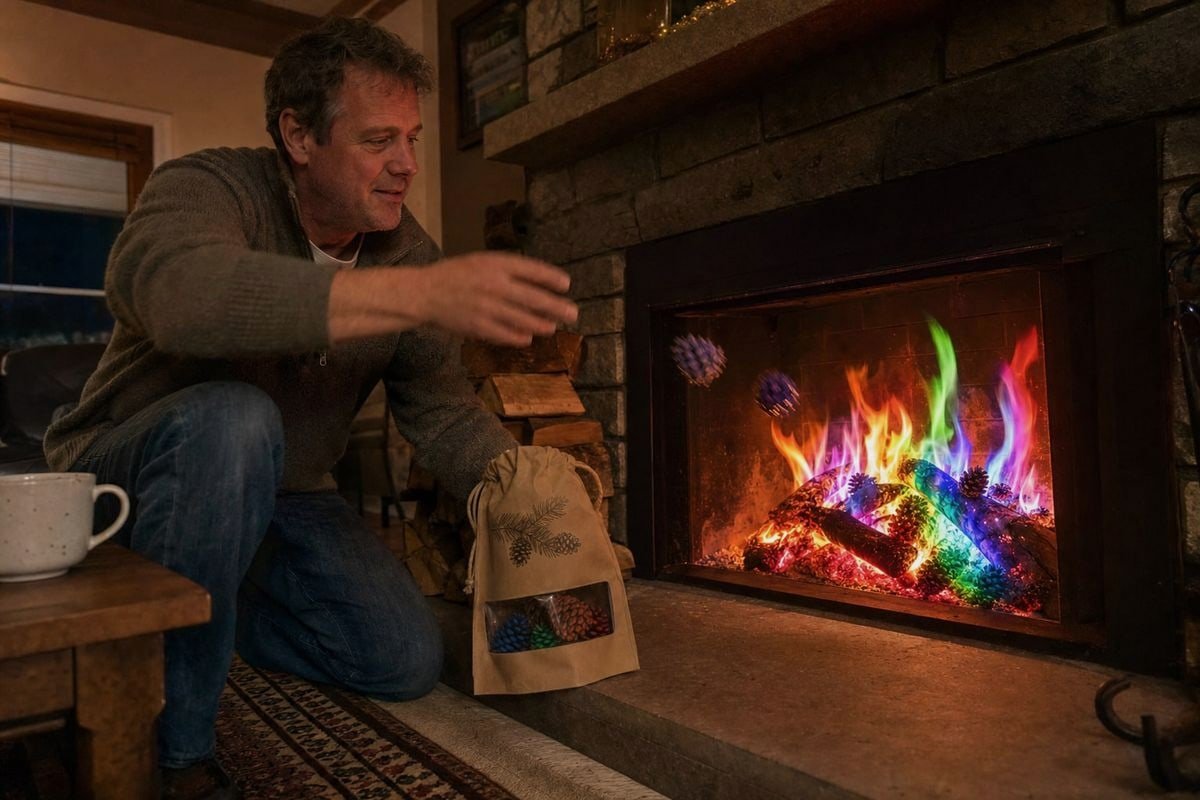
كندا bilingual requirement 6 is absolute for regulated label content. Every mandatory statement must appear in both English and French, with equal prominence. This is not optional, and Google Translate French will not survive a Health Canada review. Budget for professional Canadian French translation.
What belongs on the package
| عنصر الملصق | الغرض | خطأ شائع |
|---|---|---|
| Bilingual hazard warnings | Communicate fire, fume, and handling risks | English-only packaging copied from U.S. stock |
| تعليمات الاستخدام | Define normal use: fireplace, wood stove, fire pit | Vague instructions that invite misuse |
| Use limitations | Exclude cooking fires, enclosed unventilated spaces | Silence on ventilation and food contact |
| تعليمات التخزين | Keep dry, away from children and heat sources | No storage guidance at all |
| إرشادات التخلص | Safe handling of colored ash and residue | Ignoring the cleanup phase entirely |
| Importer identification | Traceability to the Canadian responsible party | Only the Chinese factory name appears |
Claims discipline matters as much as warnings
Misleading labeling is itself a compliance failure. If your package says "non-toxic," your technical file must support that claim for the finished product under combustion conditions, not just the raw materials. We build custom warning labels, barcodes, and display packaging into our one-stop OEM service because we have seen shelf-ready goods pulled over a single unsupported phrase.
Two more practical points. First, if your product ships in a resealable pouch or jar, assess whether packaging and child-access considerations apply based on your formulation's hazard class. Second, labeling is not the end of your obligations. القسم 14 من CCPSA 7 requires importers and distributors to report incidents involving injury, death, or product defect to Health Canada within defined timeframes. Set up a complaint-intake process before launch, not after your first customer email.
خاتمة
CCPSA compliance for flame colorants in fireplace pine cones is buildable: verified certifications, screened chemistry, authenticated batch testing, bilingual labeling. Partner with a factory that documents everything, and Canada becomes a strong market.
ملاحظات ختامية
1. Official legislation defining restricted substances referenced for colorant screening under CCPSA. ↩︎
2. Major third-party testing labs referenced for verifying product safety reports. ↩︎
 English
  Spanish
  German
  French
  Arabic
  Portuguese
انضم إلى المحادثة