






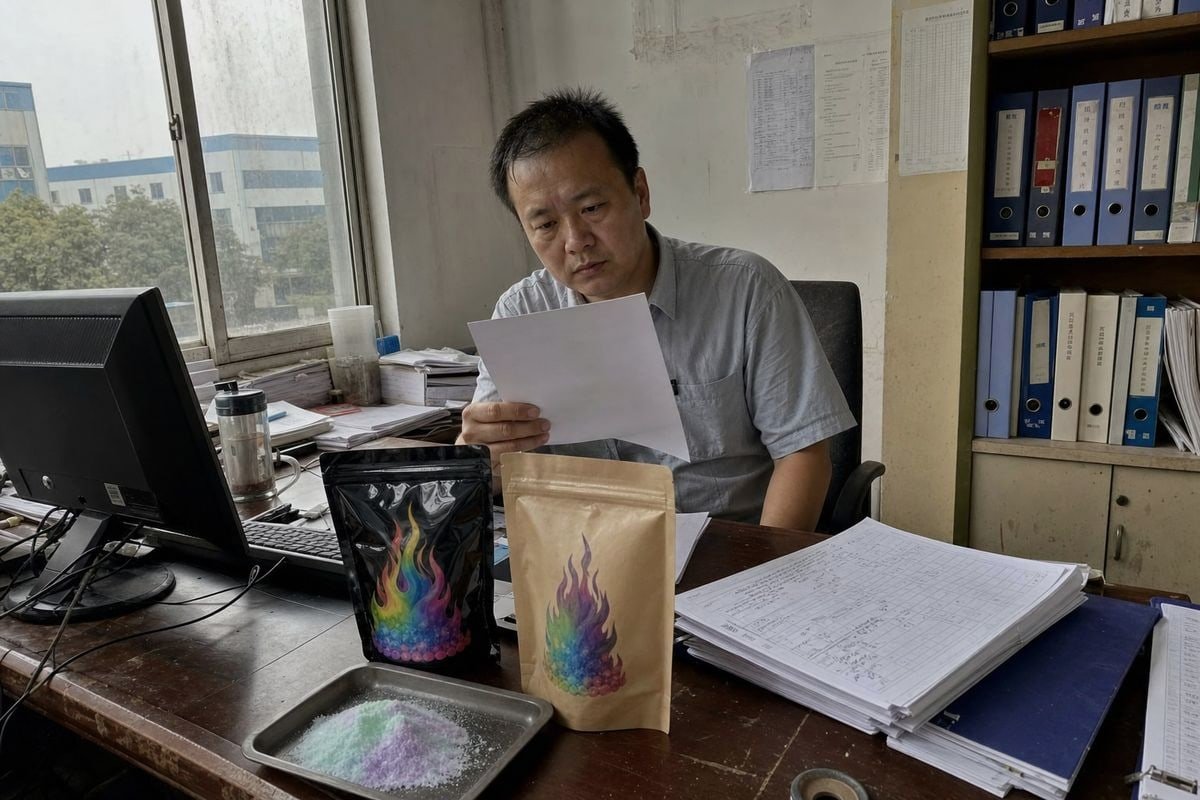
تحديد فئة الخطر CCCR لمسحوق Magic Fire يربك العديد من المستوردين الكنديين. لقد شاهدت مشترين يفقدون شحنات كاملة عند الجمارك، وقد ساعد مصنعنا العديد منهم على استعادتها.
لتحديد فئة الخطر CCCR لمسحوق Magic Fire، احصل على صحيفة بيانات السلامة الكاملة والإفصاح عن المكونات، وصنف المنتج مقابل معايير القابلية للاشتعال والسمية والتآكل الخاصة بـ CCCR باستخدام بيانات الاختبار، ثم قم بتطبيق عناصر الملصقات الإلزامية ثنائية اللغة الإنجليزية والفرنسية إذا كانت أي فئة خطر تنطبق.
هذا هو الإصدار المختصر. التفاصيل مهمة، لأن الاسم التجاري "Magic Fire" لا يخبر المنظمين شيئًا. دعني أرشدك خلال كل خطوة بالطريقة التي أشرحها لمشترينا الكنديين.
ما هي فئة الخطر CCCR التي تندرج تحتها مسحوق Magic Fire الملون باللهب فعليًا؟
أرسل لي موزع كندي ذات مرة رسالة بريد إلكتروني في حالة ذعر. طلب وسيطه الجمركي فئة خطر المنتج CCCR، ولم يذكر المورد السابق هذا المصطلح قط. لقد قمنا بحلها معًا.
مسحوق لهب الألوان Magic Fire ليس له فئة خطر CCCR تلقائية. يعتمد التصنيف على التركيب ونتائج الاختبار. النتائج النموذجية هي غير خطرة، أو مادة صلبة قابلة للاشتعال، أو مهيجة. قد تؤدي المساحيق التي تحتوي على أملاح معدنية مثل مركبات النحاس إلى تفعيل معايير السمية، لذلك يجب تقييم كل تركيبة بشكل فردي مقابل جداول CCCR.

أهم شيء أقوله للمشترين هو هذا: "Magic Fire" هو اسم تسويقي، وليس فئة تنظيمية. يمكن لمنتجين بنفس التعبئة والتغليف أن يقعا في فئات خطر مختلفة تمامًا. قد يكون أحدها مجرد مزيج من الأملاح المعدنية بدون تصنيف على الإطلاق. قد يحتوي الآخر على مؤكسدات تدفعه نحو بضائع خطرة 1 الإقليم. يجعل إطار عمل CCCR الشخص المسؤول - عادةً المستورد - يحدد فئة الخطر باستخدام بيانات حقيقية، وليس كلمة المورد.
فروع التصنيف المحتملة
في أكثر من سبعة عشر عامًا من تصنيع منتجات اللهب الملون في Liuyang و Ningbo، رأينا أربع نتائج واقعية لهذا النوع من المنتجات:
| فرع التصنيف | المحفز | الآثار الضمنية النموذجية |
|---|---|---|
| غير خطير بموجب CCCR | لا يوجد مكون يفي بحدود CCCR | لا يلزم وجود ملصق CCCR، ولكن لا يزال الإثبات مطلوبًا |
| صلب قابل للاشتعال | تم استيفاء معايير اختبار معدل الاحتراق | رمز القابلية للاشتعال، التحذيرات،, نص ثنائي اللغة 2 |
| مهيج / سام | أملاح معدنية فوق حدود التركيز | رمز الخطر، بيانات الإسعافات الأولية، تغليف محتمل مقاوم للأطفال |
| متفجر / ألعاب نارية | سلوك يشبه مسحوق الوميض | يقع خارج قواعد المواد الكيميائية الاستهلاكية تمامًا |
تم تصميم عبوات Magic Fire الخاصة بنا من مواد صديقة للبيئة خصيصًا لتجنب الفرع الأخير. هذا اختيار تصميم متعمد، وليس حظًا. أملاح تلوين اللهب مثل مركبات النحاس 3 يمكن أن تؤدي بشكل مستقل إلى تصنيفات مهيجة أو سامة حتى عندما يحترق المسحوق نفسه بهدوء. لذلك يجب على المصنف التحقق من كل مكون مقابل حدود التركيز في جداول CCCR، وليس فقط سلوك احتراق المزيج النهائي.
لماذا قاعدة الفئات المتعددة مهمة
إليك تفصيل يغفل عنه العديد من المستوردين. إذا وقع المسحوق في أكثر من فئة خطر واحدة - على سبيل المثال، قابل للاشتعال ومهيج - يجب أن يعرض الحاوية المعلومات المطلوبة لكل فئة قابلة للتطبيق. لا يمكنك اختيار "الأسوأ" والتوقف عند هذا الحد. عندما نقوم بإعداد حزم الامتثال للمشترين الكنديين، نقوم بتعيين كل مكون لكل نقطة نهاية خطر بشكل منفصل، ثم نبني الملصق من اتحاد جميع المتطلبات المعمول بها.
كيف يمكنني الحصول على ملصقات ثنائية اللغة متوافقة لشحنات مسحوق نار السحر الخاصة بي؟
تصميم الملصقات هو المكان الذي يقضي فيه فريق تصنيع المعدات الأصلية لدينا وقتًا مدهشًا. بالنسبة لطلب واحد موجه إلى كيبيك، قمنا بتعديل النص الفرنسي ثلاث مرات قبل أن يوافق مستشار الشؤون التنظيمية للمشتري. لقد أثمر هذا الجهد عند الحدود.
تتطلب الملصقات ثنائية اللغة المتوافقة لمسحوق Magic Fire جميع عناصر CCCR الإلزامية - رمز الخطر، والكلمة الإشارية، وبيان الخطر الأساسي، وبيانات التحذير، وتعليمات الإسعافات الأولية - مطبوعة باللغتين الإنجليزية والفرنسية، مع اتباع التنسيق الدقيق وحجم الرمز وقواعد الموضع المحددة في جداول CCCR.

الملصقات ثنائية اللغة في كندا هي مطلب قانوني للمواد الكيميائية الاستهلاكية المنظمة، وليست مجاملة. أثير هذا مبكرًا مع كل مشترٍ كندي جديد، لأن البعض يفترض أن الفرنسية مطلوبة فقط لكيبيك، أو فقط للمنتجات "السامة". لا شيء من هذا صحيح. إذا كان المنتج مشمولاً بـ نظام المواد الكيميائية الاستهلاكية 4, ، يجب أن تظهر معلومات الخطر المطلوبة بكلتا اللغتين الرسميتين، ويغطي CCCR مخاطر القابلية للاشتعال والتآكل، وليس فقط السمية.
ما يجب أن يظهر على الحقيبة
سير عملنا القياسي لطلب علامة تجارية خاصة كندية يبدو كالتالي:
- تأكيد التصنيف النهائي لـ CCCR من ملف الامتثال.
- استخراج العبارات الإلزامية الدقيقة لكل فئة خطر قابلة للتطبيق.
- الترجمة باستخدام المصطلحات الرسمية للمخاطر الخاصة بـ Health Canada، وليس مترجمًا عامًا أبدًا. الترجمات غير المتسقة هي سبب شائع لـ احتجازات الجمارك 5 على البضائع المصدرة من الصين.
- بناء تصميم يحترم أحجام الرموز المحددة، وارتفاعات الخطوط، وقواعد التنسيب من جداول CCCR. التحذيرات العامة مثل "تحذير: قابل للاشتعال" ليست كافية.
- إرسال مسودات الطباعة إلى المشتري، وعندما يستخدمون واحدًا، إلى مراجعهم التنظيمية.
- أرشفة التصميم المعتمد مع سجلات الدُفعات، بحيث يمكن مطابقة الملصق مع بيانات الاختبار أثناء أي فحص.
أكياس صغيرة، قيود كبيرة
عبوات Magic Fire الخاصة بنا مدمجة - وهذا جزء من جاذبيتها للبيع بالتجزئة. لكن الأكياس الرقيقة الصغيرة تخلق ضغطًا حقيقيًا في التصميم عندما تحتاج إلى نص ثنائي اللغة بأحجام دنيا إلزامية. نحل هذه المشكلة بثلاث طرق: طبقات ملصقات قابلة للتقشير، معلومات الخطر مطبوعة على صندوق العرض مع حد أدنى متوافق على الحقيبة، وأحجام أكياس أكبر قليلاً للسوق الكندي. نظرًا لأننا ندير خطوط الإنتاج الخاصة بنا بدلاً من السمسرة عبر التجار، يمكننا تعديل أبعاد الحقيبة ومواصفات الجرعة لسوق واحد دون إزعاج برنامج التعبئة والتغليف العالمي للمشتري.
| تنسيق العبوة | نهج الملصقات ثنائية اللغة | الأفضل لـ |
|---|---|---|
| كيس رقائق فردي | ملصق تقشير ممتد أو كيس مكبر | البيع بالتجزئة الاندفاعي، متاجر التخييم |
| كيس كرافت قائم | طباعة ثنائية اللغة كاملة على اللوحة الخلفية | عبوات بيع بالتجزئة متعددة الاستخدامات |
| صندوق عرض + أكياس | نص كامل على الصندوق، عناصر أساسية على الأكياس | سلاسل تحسين المنزل |
ما هي تقارير الاختبار والشهادات التي يجب أن يقدمها المورد الصيني الخاص بي للامتثال لـ CCCR؟
غالبًا ما يطلب منا المشترون "الشهادة" - مفردة - كما لو كانت ورقة واحدة تغطي كل شيء. أفهم الدافع، لكن الامتثال الكندي مبني على مجموعة من المستندات، وأفضل أن أضع التوقعات بصدق مقدمًا.
يجب على المورد الصيني الخاص بك تقديم صحيفة بيانات سلامة كاملة مع الكشف الكامل عن المكونات، وتقارير اختبار من طرف ثالث من مختبرات مثل SGS أو Intertek تغطي قابلية الاشتعال ومحتوى المعادن الثقيلة، وشهادات جودة المصنع مثل ISO 9001، وسجلات تتبع الدُفعات التي تربط كل شحنة بالتركيبة المختبرة.

الاتجاه بين الجهات التنظيمية والمستوردين الجادين واضح: التصنيف هو التزام مدفوع بالبيانات. يجعل نهج وزارة الصحة الكندية الشخص المسؤول جمع الأدلة وتحليلها مقابل المعايير وتوثيق النتيجة. لا قيمة لتأكيد المورد الشفهي بأن المنتج "غير خطير" عند الحدود. أقول هذا بصفتي شخصًا يمتلك مصنعه شهادات ISO 9001 و BSCI و CE و SGS / Intertek - نحن نتعامل مع هذه الأوراق كشرط صارم لأن مشترين لا يمكنهم العمل بدونها.
قائمة التحقق من المستندات
| وثيقة | ما يجب أن يظهره | فجوة شائعة في الملفات المصدرة من الصين |
|---|---|---|
| صحيفة بيانات السلامة | التركيب الكامل، تحديد المخاطر في القسم 2 | إدخالات غامضة "لمزيج خاص"، ترجمة سيئة |
| تقرير اختبار طرف ثالث | سلوك الاحتراق، المعادن الثقيلة، نقاط النهاية الخطرة ذات الصلة | التقرير يغطي تركيبة مختلفة عن الدفعة المشحونة |
| الكشف عن التركيب | النسب المئوية الدقيقة لجميع أملاح تلوين اللهب | تم حذف النحاس أو أملاح المعادن الأخرى كـ "سر تجاري" |
| شهادات المصنع | أنظمة الجودة ISO 9001، BSCI أو ما يعادلها | شهادات منتهية الصلاحية أو صادرة لشركة تجارية |
| سجلات الدُفعات | الرابط بين العينة المختبرة والبضائع المشحونة | لا يوجد ترميز دفعات على الإطلاق |
راقب جودة ترجمة SDS
مشكلة متكررة واحدة تستحق ذكرها. غالبًا ما تصل وثائق SDS من الموردين الصينيين بترجمات إنجليزية غير متسقة، وتتسبب هذه التناقضات في احتجاز الجمارك. يمكن أن يشير مصطلح مترجم بشكل فضفاض إلى فئة خطر مختلفة عن البيانات التي تدعمها. عندما نقوم بإعداد ملفات التصدير، يقوم موظفو الامتثال لدينا بالتحقق من المصطلحات مقابل مفردات المخاطر الكندية الرسمية قبل شحن أي شيء. تذكر أيضًا أن تصنيف WHMIS / GHS على SDS ليس مطابقًا لتصنيف CCCR - يمكن أن يحمل منتج واحد التزامات مختلفة بموجب أطر عمل كندية مختلفة، ويجب أن تتناول ملفاتك كلاهما حيثما كان ذلك مناسبًا.
ماذا يحدث إذا فشلت شحنة مسحوق النار السحري الخاصة بي في تلبية متطلبات وضع العلامات CCCR؟
أغلى درس شاهدت مشترًا يتعلمه على الإطلاق تضمن حاوية تم احتجازها في فانكوفر لأسابيع. مسحوقه كان جيدًا. ملصقاته كانت باللغة الإنجليزية فقط. إعادة الملصقات في مستودع مجمرك كلف أكثر من البضائع.
يمكن احتجاز شحنة غير متوافقة من قبل وكالة خدمات الحدود الكندية (CBSA) عند الحدود، أو رفض دخولها، أو إصدار أمر بإعادة تسميتها على نفقة المستورد. يمكن لوزارة الصحة الكندية أيضًا المطالبة بسحب المنتجات التي تم بيعها بالفعل، وإصدار إشعارات عدم الامتثال، ومتابعة العقوبات، مع تحمل المستورد - وليس المورد الصيني - المسؤولية القانونية.

المستورد المسجل يتحمل المسؤولية. هذه هي الحقيقة الهيكلية التي أتأكد من أن كل مشترٍ كندي يفهمها قبل أن نؤكد الطلب. موردك في الصين خارج نطاق وصول وزارة الصحة الكندية المباشر؛ أنت لست كذلك. يجب على المستوردين الاحتفاظ بتقارير الاختبار ووثائق السلامة وإثبات الملصقات لفحصها من قبل وزارة الصحة الكندية أو CBSA، وتؤدي الثغرات في هذا الملف إلى تحويل فحص روتيني إلى احتجاز.
تتالي الفشل
نادراً ما يتوقف عدم الامتثال عند تكلفة واحدة. في تجربتي، يتتالي:
- احتجاز الحدود 6 يؤخر إطلاق البيع بالتجزئة الخاص بك ويربط النقد في مخزون عالق.
- تكاليف إعادة الملصقات في المستودعات المجمركة عدة أضعاف ما كانت ستكلفه الطباعة الصحيحة في المصنع.
- تقوم المتاجر بإلغاء القائمة، ويختفي وضع الرف الذي تم الفوز به على مدى أشهر من المفاوضات.
- يؤدي استدعاء الوحدات المباعة بالفعل إلى الإضرار بعلاقة العلامة التجارية إلى ما هو أبعد من SKU واحد.
- يتم تمييز سجل امتثال المستورد، مما يدعو إلى تدقيق أدق للشحنات المستقبلية.
نقطتان فشل تم تجاهلهما
بالإضافة إلى تنسيق الملصق، هناك قضيتان تفاجئان حتى المستوردين الحذرين. أولاً، تداخل الولاية القضائية: قد تقع المساحيق التي تحتوي على محتوى مؤكسد كبير أيضًا ضمن لوائح نقل البضائع الخطرة أو ال قانون المتفجرات 7. يمكن نقل الألعاب النارية الترفيهية بموجب أقسام المتفجرات مثل 1.1 أو 1.3 أو 1.4، ويمكن تنظيم الشحنة للنقل حتى لو كان ملصق المستهلك الخاص بها متواضعًا - أو العكس. تحقق من كلا النظامين بشكل منفصل. ثانيًا، الإخطار قبل التسويق: قد تتطلب بعض منتجات المستهلك الكيميائية الخطرة المصنفة حديثًا إخطارًا رسميًا لوزارة الصحة الكندية قبل البيع الأول. غالبًا ما يتجاهل المشترون الذين يركزون فقط على تنسيق الملصقات هذه الخطوة. نحن نضع علامة على كلا البندين في مراجعة الامتثال التي نجريها مع كل عميل كندي لأول مرة، لأن إصلاحها قبل الإبحار يكلف لا شيء تقريبًا.
خاتمة
صنف بالبيانات، وليس بأسماء العلامات التجارية. اطلب الإفصاح الكامل عن SDS وتقارير الاختبار من طرف ثالث وملصقات متوافقة مع CCCR ثنائية اللغة قبل الشحن. الشراكة مع مصنع معتمد وذو خبرة يجعل الامتثال الكندي قابلاً للتنبؤ به بدلاً من كونه مؤلمًا.
ملاحظات ختامية
يشرح سياق تصنيف المواد الخطرة الأوسع المشار إليه عند مناقشة محتوى المؤكسد. ↩︎
خلفية عن الإطار القانوني ثنائي اللغة في كندا الذي يتطلب وضع العلامات باللغتين الإنجليزية والفرنسية. ↩︎
خلفية عن النحاس، وهو ملح معدني يستخدم كملون لهب يمكن أن يؤدي إلى تصنيف السمية. ↩︎
روابط إلى نص اللوائح الرسمية لـ CCCR التي تحكم التزامات وضع العلامات ثنائية اللغة. ↩︎
CBSA هي سلطة الحدود المسؤولة عن احتجاز الشحنات غير المتوافقة عند الاستيراد. ↩︎
صفحة الاستيراد الخاصة بـ CBSA تشرح إجراءات الإنفاذ مثل الاحتجاز للشحنات غير المتوافقة. ↩︎
التشريعات الفيدرالية الرسمية التي تحكم المواد النارية والمتفجرة في كندا. ↩︎
 English
  Spanish
  German
  French
  Arabic
  Portuguese
انضم إلى المحادثة