






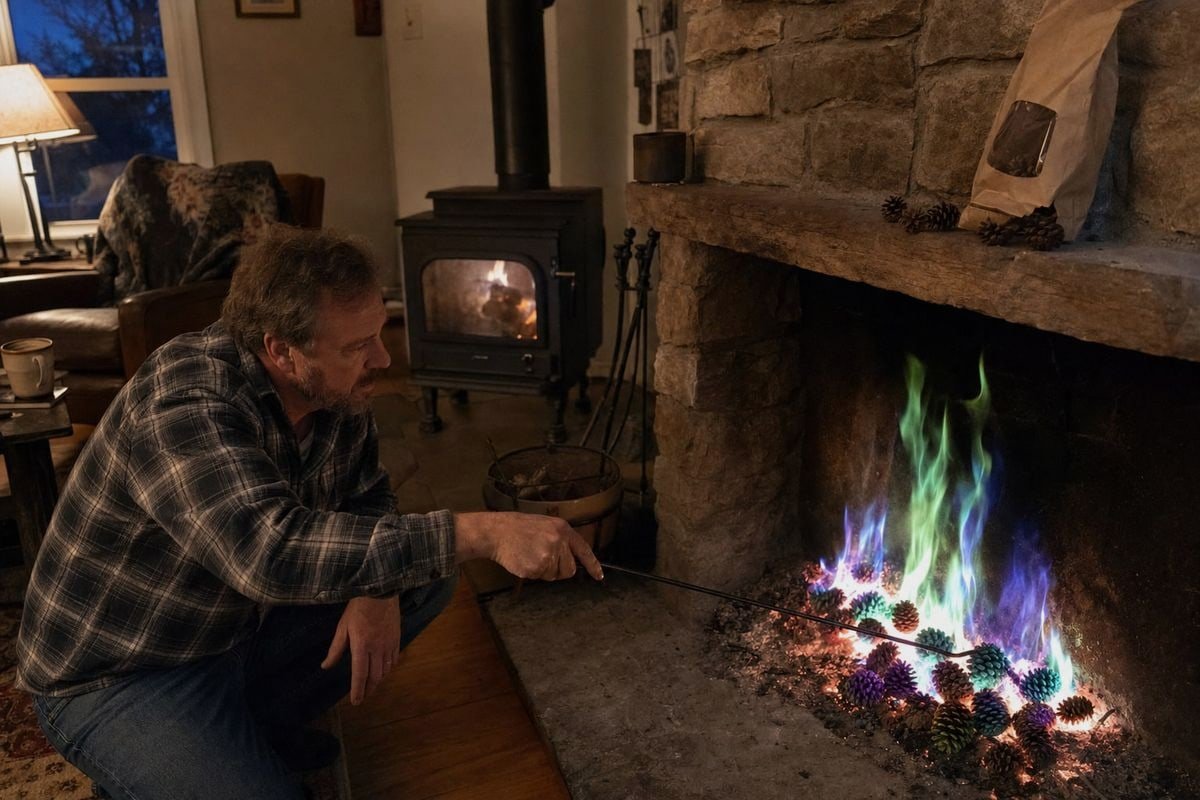
Colored pine cones behave very differently in wood stoves versus open fireplaces, and I learned this the hard way when our early test batches left residue on stove glass in our Ningbo lab heavy-metal-free colorants 1. Buyers who ignore this difference face returns, complaints, and even warranty disputes with stove brands. That is exactly why we spent years reformulating our color-flame pinecones for both environments.
Colored pine cones perform best in open fireplaces, where ventilation is strong, flames are fully visible, and color effects last 5–10 minutes per cone. In enclosed wood stoves, they still work but concentrate vapors, may coat glass, and can affect catalytic components, so certified formulations matter.
The details matter a lot here, especially if you sell to both fireplace and stove owners. Let me break down what I have learned from testing, certification, and export experience.
What Safety Certifications Should I Check Before Using Colored Pine Cones in Enclosed Wood Stoves?
A German distributor once returned our very first quotation with a single question: where are your SGS reports? That moment reshaped how our factory approaches compliance for enclosed stove use.
Before using colored pine cones in enclosed wood stoves, check for CE marking, SGS or Intertek combustion and emission test reports, ISO 9001 factory certification, and heavy-metal-free formulation documentation. These confirm the product releases no harmful fumes in low-ventilation, sealed combustion chambers.

Enclosed wood stoves are the toughest environment for any color-flame product. A stove is a sealed or semi-sealed chamber. Vapors concentrate inside it instead of dispersing up an open flue. Cheap colored cones treated with unverified chemical mixes can leave chloride residue on glass doors, corrode metal flue liners, and even coat the catalyst in catalytic stoves 2. That last problem is serious. A damaged catalyst reduces combustion efficiency and can void the stove maker's warranty. No distributor wants that phone call.
So the certification stack is not paperwork for its own sake. Each document answers a specific stove-related risk.
The Certification Checklist We Recommend
| الشهادة / التقرير | ما يثبته | Why It Matters for Stoves |
|---|---|---|
| علامة CE | مطابقة السلامة للاتحاد الأوروبي | Legal requirement for EU retail shelves |
| تقرير اختبار SGS / Intertek | Emission and heavy-metal testing | Confirms fumes are safe in sealed chambers |
| ISO 9001 | Factory quality management | Batch-to-batch chemical consistency |
| BSCI | تدقيق الإنتاج الأخلاقي | مطلوب من قبل قنوات التوريد الكبيرة للبيع بالتجزئة |
| MSDS / formulation sheet | الكشف عن المكونات | Lets stove brands assess catalyst compatibility |
In our experience exporting to the US, Germany, and the UK, buyers now ask for the full set before sampling. We keep current تقارير SGS و Intertek 3 on file for our color-flame pinecones precisely because enclosed stove use is the scenario regulators worry about most. المواقد المعتمدة من وكالة حماية البيئة 4 use secondary combustion tubes, and unverified residues can interfere with that process over time. Documented, eco-friendly formulations avoid that risk. Ask for the reports first, samples second. A supplier who hesitates on either is telling you something.
How Do I Ensure Consistent Flame Color Performance Across Different Fireplace Types for My Customers?
The trade-off we weigh most often in production is color intensity versus burn duration. Push the colorant load too high, and the cone burns out fast in a hot stove. Too low, and open-fireplace users see weak color.
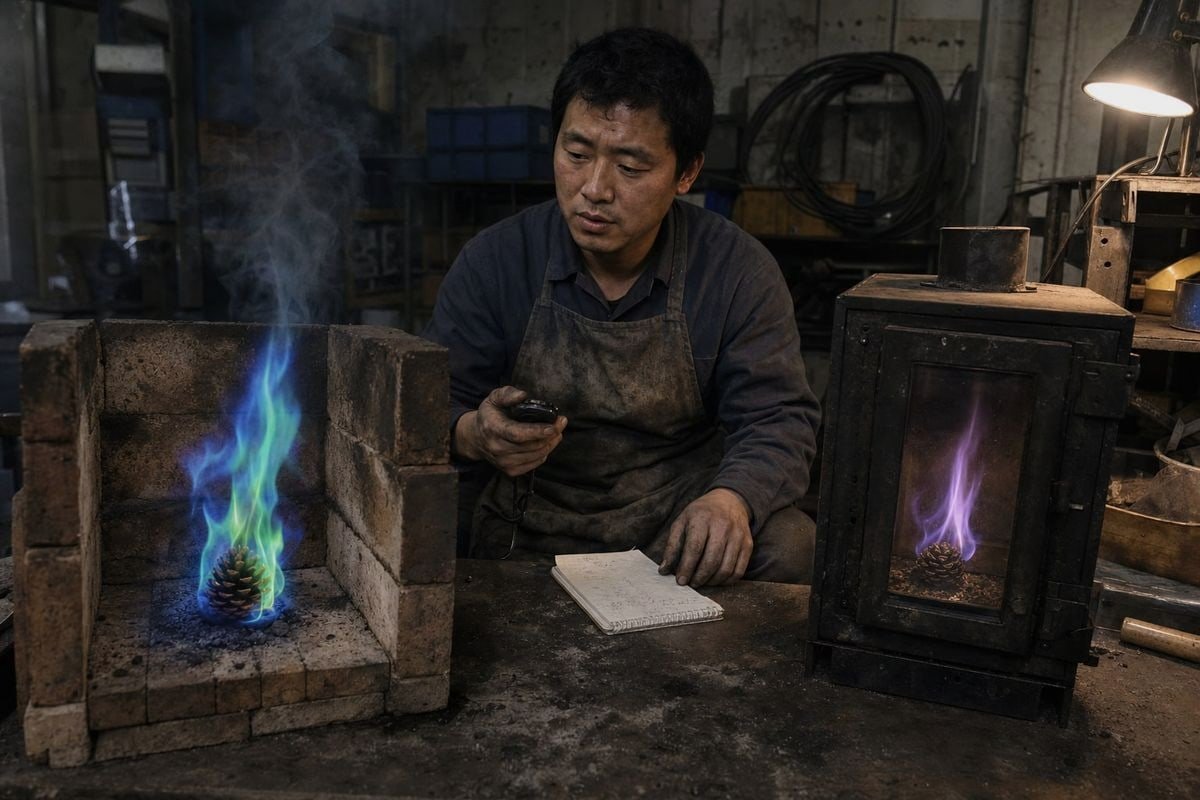
Consistent flame color across fireplace types comes from strict batch-to-batch colorant dosing, uniform cone size and dryness, and testing in both high-heat stove and open-hearth conditions. Reliable manufacturers calibrate formulations so color lasts 5–10 minutes per cone in either setting.

Here is the physics your customers never see. A wood stove holds a controlled, consistently high temperature. That heat vaporizes colorant compounds faster, so vivid color can burn out sooner. An open fireplace runs at fluctuating, lower average temperatures, which often stretches the color effect but loses heat up the flue. The same cone behaves differently in each. If your batches vary on top of that, customer reviews will punish you.
The Variables That Actually Control Color Consistency
- Colorant dosing precision. Our production line weighs colorant per cone within tight tolerances. A ten percent swing in dosing is visible to the naked eye as a weaker or shorter color effect.
- Cone dryness. Dry, fully opened cones ignite cleanly and carry color well. Wet or green cones smoke, mute the color, and add creosote risk 5. We kiln-condition every batch before treatment.
- Cone size grading. A fist-sized cone and a small cone absorb different colorant amounts. We grade cones before treatment so each unit performs alike.
- Dual-environment testing. We burn samples from every batch in both a sealed stove and an open hearth mock-up. First samples must reliably reflect mass production, or repeat orders never come.
One practical note from a Canadian buyer we work with: they instruct end users to place one cone on established embers, not into a roaring flame. This simple usage guidance evens out perceived performance across stove types more than any formulation tweak. We now print that guidance on the packaging we produce for them.
Can I Source Colored Pine Cones That Meet Ventilation and Emission Standards for Both Stoves and Open Hearths?
A lesson from seventeen-plus years in fire products: the market splits products into stove-safe and fireplace-only far too casually. Real dual-environment compliance is achievable, but only with the right formulation from the start.
Yes. Colored pine cones formulated with eco-friendly, heavy-metal-free colorants and verified by SGS or Intertek emission testing can meet standards for both enclosed stoves and open hearths. The key is documented low-emission combustion that stays safe even in poorly ventilated chambers.

Let me address the objection I hear from experienced buyers first. They point out, correctly, that traditional colored cones use metal salt compounds 6, that stoves concentrate those vapors, and that chloride residues can accelerate corrosion on metal flue liners. Masonry chimneys on open fireplaces tolerate mild deposits far better. All true for legacy formulations. But that is precisely the problem a modern, compliance-first formulation solves. When we developed our current Magic Fire and pinecone line, the design brief was simple: no harmful chemicals, and emissions safe enough for a sealed stove, not just an open hearth with a strong chimney draft.
How the Two Environments Compare
| عامل | مدفأة مفتوحة | Enclosed Wood Stove |
|---|---|---|
| تهوية | Strong chimney draft disperses fumes fast | Sealed chamber concentrates vapors |
| Visual effect | Full flame bed visible, most vivid display | Partial view through glass window |
| خطر البقايا | Masonry tolerates mild deposits | Glass fogging, liner and catalyst exposure |
| مدة اللون | Longer at fluctuating temperatures | Shorter in consistent high heat |
| Emission standard needed | Baseline fume safety | Low-emission, residue-safe formulation |
The sourcing takeaway is straightforward. Ask suppliers two direct questions. First, is the formulation free of harmful heavy metals, with test reports to prove it? Second, has it been burn-tested in an enclosed chamber, not just an open pit? A one-size-fits-all answer without documents is a red flag. Also confirm the supplier controls cone dryness, because even a perfectly formulated cone burned wet will smoke and add creosote. Sourcing one certified product for both markets simplifies your SKU list, your labeling, and your liability exposure.
What MOQ and Customization Options Are Available If I Want to Private-Label Colored Pine Cones for Multiple Markets?
A Dutch importer recently asked us for three packaging formats in one order: burlap sacks for fireplace retailers, kraft stand-up pouches for camping stores, and a display box for a garden-center chain. Our answer was yes to all three, from one production run.
Private-label colored pine cones typically start at flexible trial-order MOQs, with full customization of cone colors, burn time, packaging format, branding, warning labels, and barcodes. One-stop OEM/ODM factories can produce burlap sacks, kraft pouches, jars, and retail display boxes from a single run.
Multi-market private labeling lives or dies on two things: packaging flexibility and compliance labeling. The product inside can be identical, but a US big-box shelf, a German outdoor retailer, and a UK gift trader each demand different formats, languages, and warnings. This is where a true factory beats a trading company. We control the line, so we can switch packaging formats mid-run without re-quoting the whole project.
Customization Options We Run for Export Buyers
| منطقة التخصيص | خيارات نموذجية |
|---|---|
| Cone finish | Natural treated, painted decorative colors, gold-tipped accents |
| تأثير اللهب | Blue-green standard, multicolor blends, adjusted color duration |
| التعبئة والتغليف | Burlap drawstring sack, kraft resealable pouch, plastic jar, custom box |
| جاهزية البيع بالتجزئة | Display packaging, shelf-ready cartons, hang tags |
| طباعة الامتثال | Multi-language warning labels, barcodes, CE marks |
| الخدمات اللوجستية | Optimized carton sizing, mixed-SKU containers, port-specific documentation |
A Realistic Path for a Trial Order
- Share your target market and retail channel, so we match packaging and labeling rules.
- Approve pre-production samples, which reflect mass-production quality because the same line and QC process makes both.
- Start with a flexible trial MOQ to test sell-through before committing to volume.
- Scale with locked formulations, so batch two matches batch one exactly.
One warning from experience: some suppliers quote a low MOQ 7, then quietly change colorant sourcing at volume to protect margin. Insist on a locked formulation clause and batch QC records. Our repeat buyers in Poland and Australia audit exactly this, and it is why they stay.
خاتمة
Colored pine cones shine in open fireplaces and work in stoves only with certified, low-emission formulations. Source dual-environment compliance, demand test reports, and lock your formulation before scaling.
ملاحظات ختامية
1. Supports emission and heavy-metal safety claims for enclosed stove combustion products. ↩︎
2. Background on catalytic combustors clarifies why residue coating harms stove efficiency. ↩︎
3. SGS is a globally recognized testing and certification body cited for emission verification. ↩︎
4. EPA's Burn Wise program defines emission standards for certified wood stoves referenced in article. ↩︎
5. EPA documentation on creosote explains the fire-safety hazard mentioned for wet cones. ↩︎
6. Background on metal salts producing colored flames used in pine cone treatments. ↩︎
7. Alibaba is a standard reference for manufacturing MOQ and private-label sourcing practices. ↩︎



 English
  Spanish
  German
  French
  Arabic
  Portuguese
انضم إلى المحادثة