







Colored fireplace pine cones sell fast, but I still see distributors sign suppliers without asking what those cones release indoors. On our production line, that question decides every formula we approve.
Colored fireplace pine cones affect indoor air quality mainly through their chemical coatings, not the cone itself. Poorly formulated cones can release heavy metal emissions, smoke, and volatile organic compounds, so indoor use requires a working chimney, strong draft, and cones made with certified, non-toxic colorants.
The risk is real, but it is manageable. It comes down to ingredients, ventilation, supplier verification, and documentation. I will walk through each one below, in that order.
What Ingredients Should I Look for to Ensure My Colored Fireplace Pine Cones Are Safe for Indoor Use?
A few years back, our lab rejected a colorant blend that produced a beautiful deep red flame. The test report flagged residue levels we would not accept. That decision shaped our whole ingredient policy.
Look for cones colored with food-grade or low-toxicity metal salts, free of copper sulfate excess, lead, arsenic, and chromium. Safe products use natural pine cones, refined wax binders, and eco-friendly colorants verified by SGS or Intertek test reports, with no added synthetic fragrance oils.

The color effect in these products comes from mineral salts, not the pine cone. When heated, certain salts emit light at specific wavelengths. That is basic flame chemistry. The problem is that not all salts behave the same way once they become airborne particles in your living room.
الكيمياء وراء الألوان
Different compounds produce different flame colors. Some are far safer for indoor combustion than others. Here is how I explain it to buyers evaluating their first order:
| لون اللهب | Common Compound | Indoor Safety Notes |
|---|---|---|
| اضطراب في المعدة، اضطراب في الكهارل بجرعات عالية | كبريتات النحاس 1 or copper chloride | Acceptable in controlled doses; excess creates harsh smoke |
| أحمر | كلوريد السترونشيوم 2 | Widely used; low toxicity at proper concentrations |
| بنفسجي | أملاح البوتاسيوم | Generally low risk when refined |
| Yellow-orange | مركبات الصوديوم | Very low risk; naturally present in wood ash |
| أخضر | Boron compounds (borax) | Low risk; can even reduce تراكم الكريوزوت 3 |
At our factory in Ningbo, we formulate strictly within the safe end of this table. We cap copper sulfate concentrations well below the levels found in cheap novelty products, and we never use lead, arsenic, barium, or chromium compounds, even though some produce vivid colors at lower cost.
Ingredients to Refuse Outright
Reject any supplier who cannot rule out heavy metal contaminants in writing. Also avoid cones with added synthetic fragrance. Scented coatings release مركبات عضوية متطايرة 4 even before burning, and heat accelerates that off-gassing. A fireplace cone does not need perfume. It needs a clean, verifiable colorant formula and nothing else.
One more practical point: no colored cone, however safe, should be used for cooking. The coatings make the fire unsuitable for roasting marshmallows or hot dogs, and your product labeling should say so clearly.
Do I Need Extra Ventilation When Selling Color-Flame Pine Cones for Indoor Fireplaces?
Every trade-off in this product category runs through ventilation. When we develop a new color-flame pinecone batch, we always weigh flame vividness against smoke output, because buyers must give honest guidance to end users.
Yes, you should advise customers to treat color-flame pine cones as a combustion source. Indoor use requires a functioning chimney with strong draft, fully open dampers, and post-burn airing. Properly certified cones need no special systems beyond normal wood-fire ventilation practices.
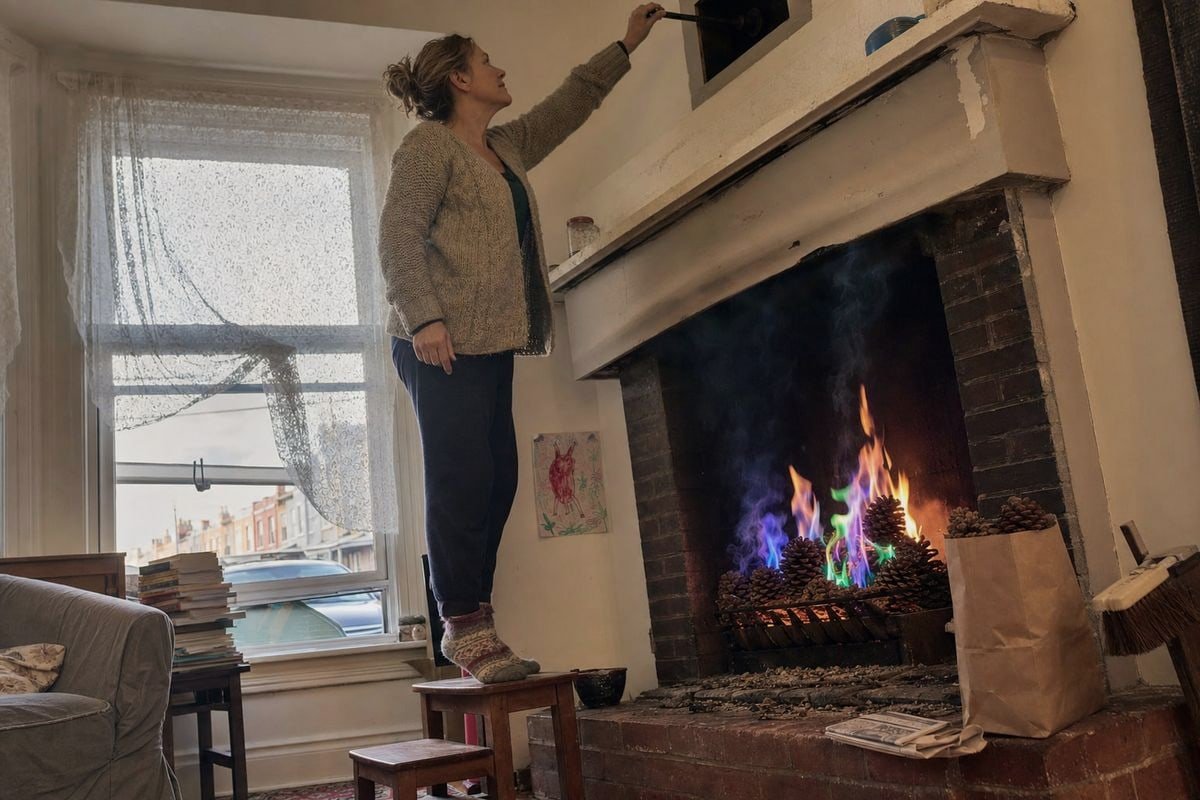
Any wood fire indoors adds particulate matter PM2.5 5 and combustion gases to the air. Colored pine cones add a small mineral component on top of that baseline. Good chimney ventilation removes both. Poor ventilation traps both. So the honest answer is that ventilation needs depend far more on the fireplace than on the cone.
What Adequate Ventilation Actually Looks Like
Here is the guidance we print on our export packaging and recommend our distributors pass along:
- Confirm chimney draft before lighting. A weak draft lets smoke and toxic combustion byproducts drift back into the room.
- Keep dampers fully open for the entire burn, not just at ignition.
- Never use color cones in unvented or gas fireplaces. Ash and residue can clog gas burner systems, and unvented burning sends everything into the breathing zone.
- Air the room afterward when outdoor air is clean, to flush residual smoke and volatile organic compounds.
- Run HEPA or MERV 13+ filtration in homes that burn wood frequently.
Room Size and Occupant Sensitivity Matter
A single cone in a large living room with a strong flue is a low-exposure scenario. A handful of cones in a small, tightly sealed room is not. People with asthma or chemical sensitivity feel respiratory irritation at lower exposure levels, so your marketing should never claim the product is universally irritation-free. In our experience exporting to Germany and the UK, distributors who include clear ventilation instructions see fewer complaints and stronger repeat orders. Honest guidance is a commercial asset, not a liability.
One nuance worth knowing: fine mineral particles are hygroscopic. In humid indoor air they absorb moisture and can deposit more readily in the airways. This is another reason draft and airflow matter more than any single ingredient tweak.
How Can I Verify That My Supplier's Pine Cones Meet Indoor Air Safety Certifications?
A purchasing manager from the Netherlands once asked me to walk him through our test reports line by line before placing a trial order. I respected that. It is exactly how this category should be bought.
Verify certification by requesting current SGS or Intertek test reports, CE documentation, and ISO 9001 factory certification, then confirming report numbers directly with the issuing lab. Reports should cover heavy metal content, combustion emissions, and match the exact product batch you are buying.
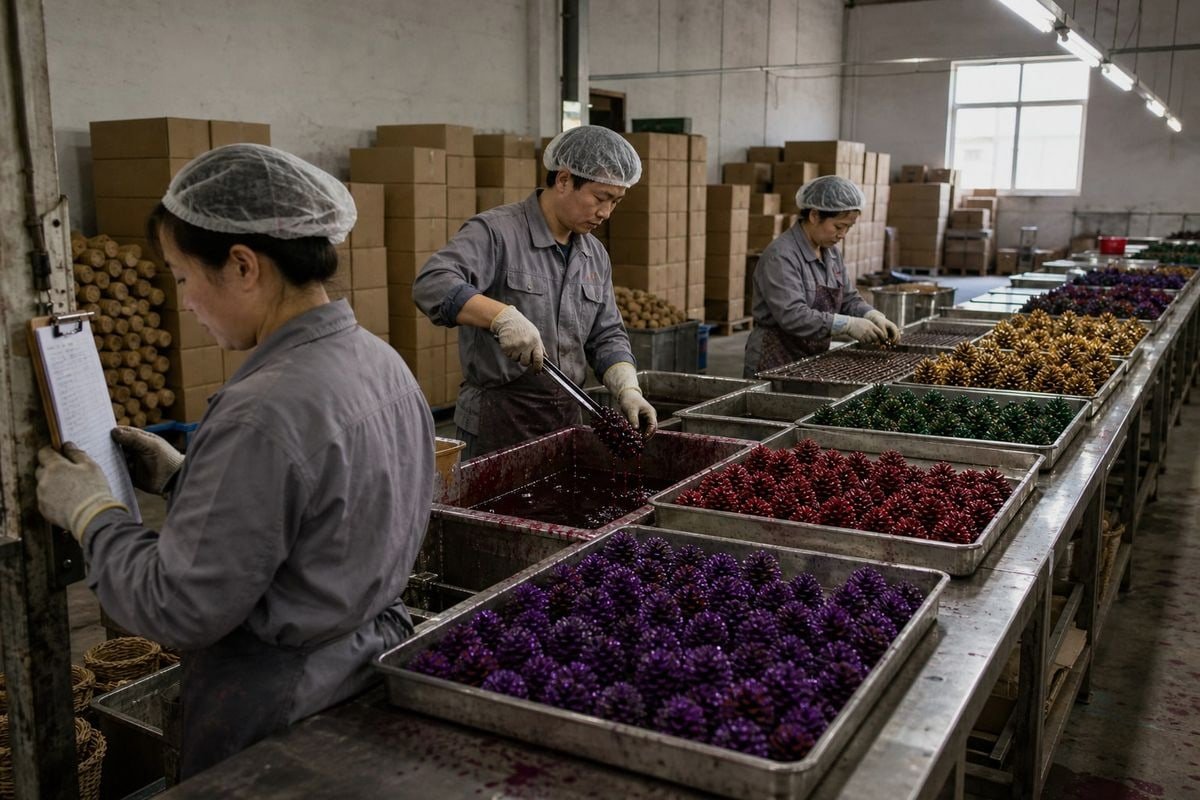
Verification is where many importers get burned, sometimes literally in reputation terms. A supplier can email you a PDF certificate in minutes. Whether that certificate is current, authentic, and relevant to your actual product is a different question. After 17+ years serving buyers across 30+ countries, I can tell you the gap between claimed compliance and proven compliance is the single biggest risk in this category.
تحقق من رقم التقرير مع المختبر مباشرة.
| خطوة التحقق | ما يجب التحقق منه | علامة حمراء |
|---|---|---|
| Test report authenticity | Confirm the report number with SGS or Intertek directly | Supplier refuses or delays |
| Report scope | Heavy metal emissions, combustion residue, colorant composition | Report covers packaging only |
| Report date | Issued within the last 12–24 months | Reports older than 3 years |
| Batch matching | Report references the same formula you will receive | Generic reports with no product spec |
| شهادة المصنع | ISO 9001 6 and BSCI audits in the supplier's own name | Certificates held by a trading company |
| Sample testing | Independent lab test on your pre-shipment sample | Supplier discourages third-party testing |
مصنع مقابل شركة تجارية
This distinction matters more than most buyers realize. A real factory controls its colorant sourcing and can hold batch-to-batch consistency, so the sample you approve reflects mass production. A trading company often cannot tell you which workshop made which batch, which means the tested formula and the shipped formula may differ. We run production in Ningbo with full traceability from raw colorant to sealed pouch precisely because European retail buyers audit for this. If your supplier cannot show you where and how the cones are treated, the certificates on their wall prove very little.
What Documentation Should I Request to Reassure My Customers About Indoor Air Quality Concerns?
Early in our export history, we learned a hard lesson: one US client lost a retail listing simply because the paperwork arrived incomplete. Since then, we prepare full documentation packs before any shipment leaves.
Request a Safety Data Sheet, third-party heavy metal and emissions test reports, CE conformity documents, ingredient disclosure, usage and warning labels, and batch traceability records. Together these let you answer any retailer or consumer question about indoor air safety with evidence.
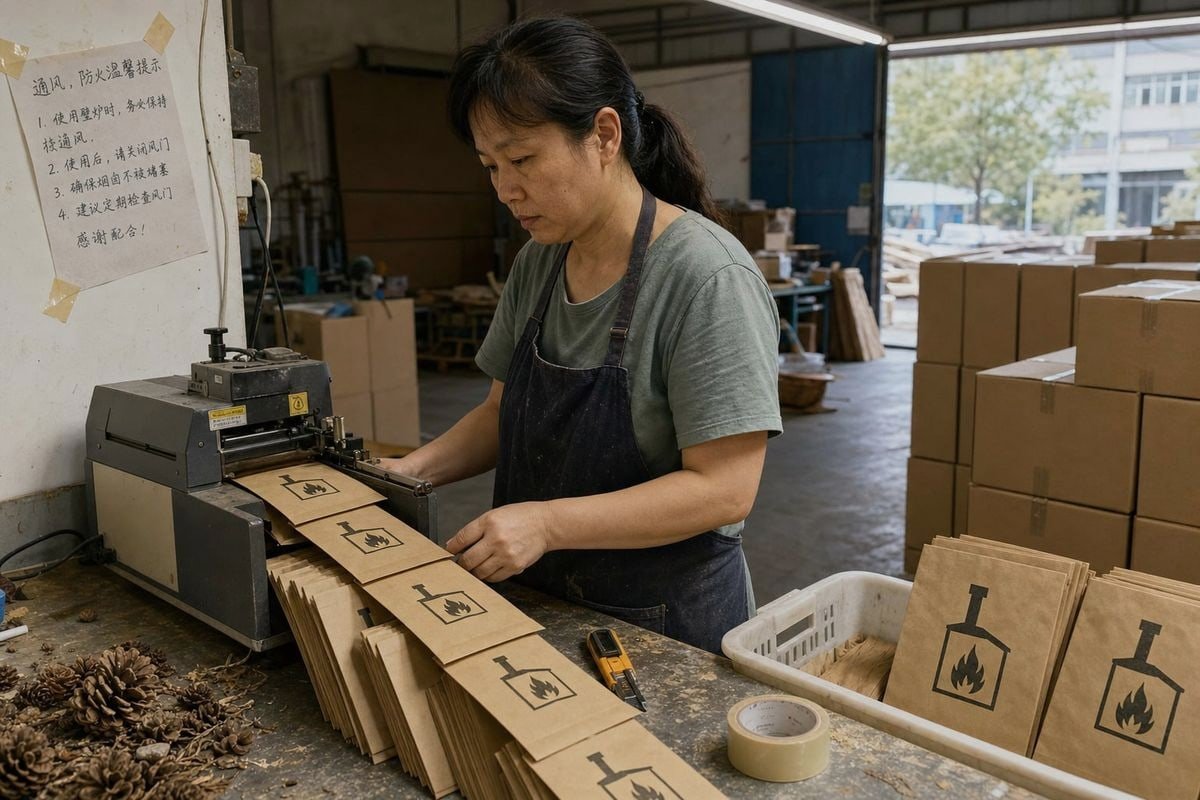
Documentation is not bureaucracy. It is your answer script when a customer emails asking whether your fire colorant packets or colored cones are safe around children, pets, or someone with asthma. If you can reply with specifics from a صحيفة بيانات السلامة 7 instead of vague reassurance, you keep the sale and the trust.
The Core Documentation Pack
| وثيقة | ما يثبته | من يطلبها |
|---|---|---|
| صحيفة بيانات السلامة (SDS) | Composition, hazards, handling, first-aid steps | Retailers, insurers, customs |
| Heavy metal test report | No lead, arsenic, chromium, or excess copper | Retail compliance teams |
| Emissions or combustion test | Smoke and residue behavior within limits | EU buyers, cautious distributors |
| CE conformity documentation | المنتج يلبي متطلبات سوق الاتحاد الأوروبي | European importers |
| Ingredient disclosure statement | Exact colorant salts used, such as strontium chloride | End consumers, review sites |
| Batch traceability record | Shipped goods match tested goods | Auditors, large retail chains |
| Warning and usage labels | Not for cooking; wood fireplaces only; ensure draft | Regulators, liability lawyers |
Turning Paperwork into Marketing
The smartest distributors we work with convert this documentation into consumer-facing confidence. They print short safety summaries on the pouch, add QR codes linking to test results, and state plainly that the cones avoid toxic compounds and will not accelerate creosote buildup beyond normal wood burning. Through our OEM service, we build these وسجلات التبخير لمعظم أسواق الوجهة. يضيف الصنوبر الملون طبقة أخرى: اختبار سلامة الملونات،, barcodes, and compliance text into private-label packaging from the first sample. When your packaging answers the indoor air question before the customer asks it, returns drop and reviews improve. Documentation, presented well, is the cheapest marketing you will ever buy.
خاتمة
Colored fireplace pine cones are safe to sell indoors when ingredients are verified, ventilation guidance is clear, certifications are authentic, and documentation is complete. Choose a certified factory partner, and the air quality question becomes your selling point.
ملاحظات ختامية
1. Wikipedia background on the chemical compound used as a colorant. ↩︎
2. Wikipedia reference explaining the compound responsible for red flame color. ↩︎
3. Wikipedia background on creosote, mentioned regarding chimney safety concerns. ↩︎
4. EPA reference explaining VOC sources and indoor air quality effects. ↩︎
5. EPA source defining PM2.5 particulate matter and its health impact. ↩︎
6. Authoritative Wikipedia entry detailing the ISO 9001 quality management standard. ↩︎
7. Official OSHA landing page for Hazard Communication and Safety Data Sheet standards. ↩︎



 English
  Spanish
  German
  French
  Arabic
  Portuguese
انضم إلى المحادثة