







Clearing old Magic Fire powder packaging is a real headache. On our production line, we have watched buyers freeze new orders because obsolete pouches still clogged their warehouse.
To clear old Magic Fire powder packaging without delaying the new rollout, classify all old stock on day one, sell it through tiered discounts and bundles, coordinate supplier production against your depletion forecast, use compliant interim labels where allowed, and plan lead times so new pouches arrive as old units run out.
That sounds simple. But each step hides traps. Below, I break down the four questions buyers ask us most often during a packaging cutover.
What steps can I take to sell through old Magic Fire packaging before switching to the new version?
A German distributor once asked me to hold a finished new-design order for six weeks. Why? Three pallets of old pouches were still sitting in his warehouse, untouched.
Sell through old Magic Fire packaging by triaging inventory first, then running a tiered discount schedule, bundling old packets with fire starters, moving stock to high-traffic retail zones, and reallocating units to your fastest-selling regions before the new version's hard launch date.

The fastest rollout is not the one that dumps old stock immediately. It is the one that sorts old packaging correctly on day one. In our experience shipping Magic Fire packets to 30+ countries, buyers who skip the triage step always pay for it later, either in wasted product or in compliance risk.
Start with inventory triage
Separate your stock into four groups: sealed sellable units, opened-but-empty packaging, packaging with residue, and damaged units. Only the first group belongs in your inventory liquidation plan. The rest should be quarantined so they cannot re-enter fulfillment. Do not assume "empty means safe." Confirm each pouch is residue-free before it goes into ordinary waste, and route anything questionable through your local waste rules. Local regulations always override generic packaging guidance.
Run a structured sell-through plan
Once sellable stock is isolated, work through a warehouse clearance schedule 1. A tiered discount pricing strategy works better than one deep cut, because it protects margin early and accelerates only when the deadline nears.
| Timeline before hard launch | الإجراء | خصم نموذجي |
|---|---|---|
| 8–12 weeks out | Promotional bundling with fire starters or pinecones | 0–10% (bundle value) |
| 4–8 weeks out | First markdown, move to checkout aisles and endcaps | 20–30% |
| Final 14 days | Deep clearance, free bonus units in large online orders | 50%+ |
Bundling matters more than discounting. Pairing old Magic Fire packets with high-margin wood firestarters lifts average order value while clearing units. Some buyers also frame the old design as a "Limited Original Edition" on social channels. That collector angle moves novelty stock surprisingly fast. Finally, shift stagnant stock from slow regions to markets where campfire season is peaking. Localized reallocation clears units without touching your price at all.
How do I coordinate my supplier's production schedule so new packaging arrives without creating stock gaps?
There is a trade-off we weigh with every OEM client: ship the new design early and risk market cannibalization, or ship late and risk empty shelves. Neither extreme works.
Coordinate by sharing your sell-through forecast with your supplier, agreeing on a target depletion date, scheduling new production to land two to three weeks before that date, and using a channel-by-channel roll-through so new stock only enters a channel once old stock there is gone.
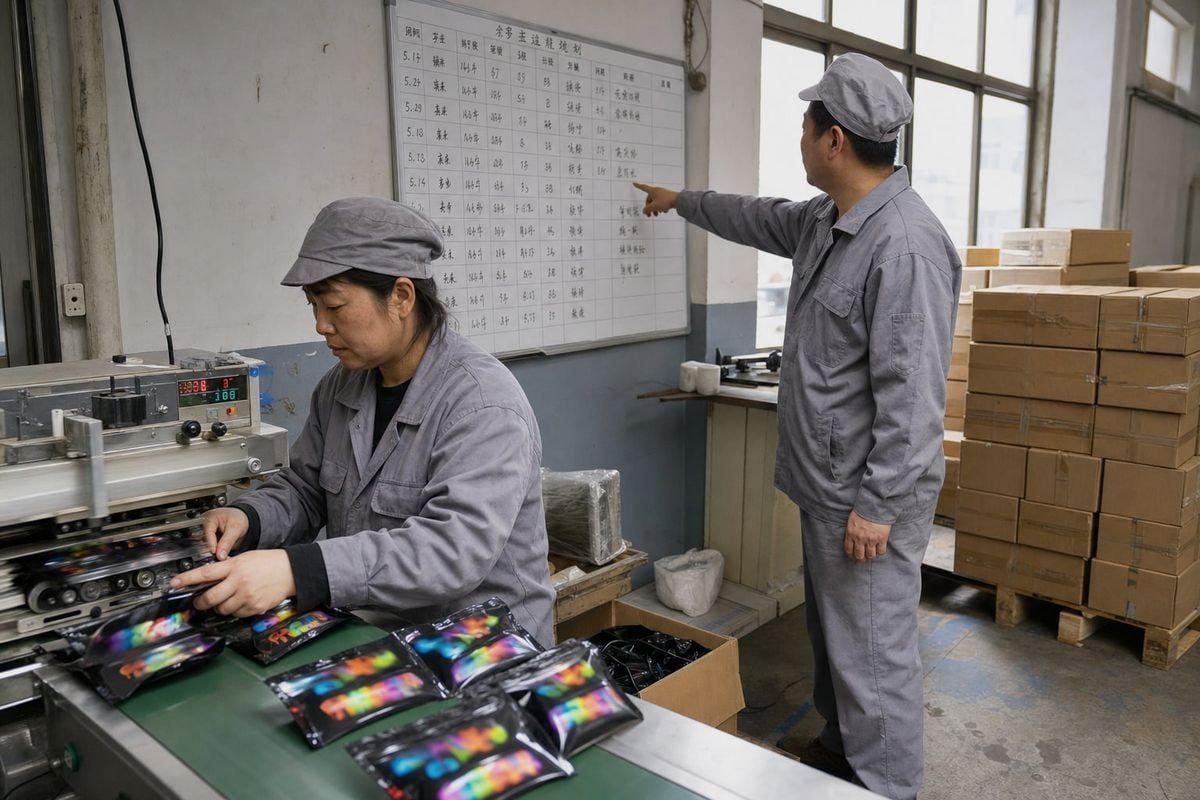
Good coordination is really a تحسين سلسلة التوريد 2 exercise, not a purchasing task. At our Ningbo facility, we ask buyers for three data points before we lock a production slot: current old-stock units on hand, weekly sell-through velocity per channel, and the compliance deadline (if any) forcing the change. From those three numbers, we can back-calculate a production and shipping date that lands new pouches just as old ones run out.
Use the roll-through model
The roll-through model means you do not switch all channels at once. Each retail or e-commerce channel gets the new version only after its own old stock is fully depleted. This prevents two versions competing on the same shelf, which confuses shoppers and cannibalizes your own sales. It also simplifies shelf space management for your retail partners, because no store ever holds duplicate facings of the same SKU.
Build a shared cutover calendar
A simple shared calendar keeps both sides honest. Here is the framework we use with repeat buyers:
| معلم | المالك | المحفز |
|---|---|---|
| Depletion forecast confirmed | المشتري | Monthly sales data reviewed |
| New packaging artwork approved | كلاهما | Pre-production sample signed off |
| Mass production starts | المورد | Forecast locked, deposit paid |
| Goods depart factory | المورد | QC and SGS batch report cleared |
| New stock arrives at warehouse | المشتري | 2–3 weeks before depletion date |
| Channel-by-channel switch | المشتري | Old stock hits zero per channel |
One more point from experience. Ask your supplier to hold flexibility on the final production week. If your sell-through runs slower than forecast, a factory with real manufacturing depth can shift your slot by one or two weeks. A trading company reselling someone else's capacity usually cannot.
Can I use interim labels or stickers to update compliance information on existing packaging while I transition?
A UK importer once called us in a panic. New warning-text rules had landed mid-transition, and he had eleven thousand old-design pouches already customs-cleared.
Yes, interim stickers can legally update compliance information on existing packaging in most markets, provided the sticker is permanent, legible, covers the outdated text completely, and meets the same durability and language requirements as printed labeling. Always confirm with your market's specific regulation first.

Interim labeling is one of the most useful bridge tools in any SKU transition strategy. It lets you keep selling compliant product while the fully redesigned packaging is still in production. But it only works if you treat the sticker with the same seriousness as printed artwork.
When stickers work and when they do not
Stickers are appropriate for updating warning text, adding a new importer address, correcting a barcode 3, or adding a required language. They are not appropriate when the regulation demands the information be printed directly on the primary packaging, or when the underlying issue is the product itself rather than the label. In our CE and SGS testing work, we have seen both cases, so check the specific rule before you print a single roll.
Practical sticker requirements
Follow these rules and most inspectors will accept the interim fix:
- Use permanent adhesive rated for the pouch material. Glossy foil pouches like our Magic Fire packets shed cheap adhesives quickly.
- Cover the outdated information completely. Partial coverage reads as tampering.
- Match the mandated font size and contrast for warnings in your market.
- Keep batch traceability. Log which lots received stickers and when.
- Never place a sticker over a heat seal 4, which can compromise the pouch.
One smart bonus move: some of our clients add a "Sneak Peek" QR code sticker at the same time, linking old packets to a preview of the new version. The compliance fix and the marketing bridge ride on the same label run, which turns leftover stock into a lead-generation tool instead of a liability.
What lead time should I plan with my manufacturer to avoid holding excess inventory of the outdated design?
Lesson learned the hard way: years ago, a Canadian buyer ordered twelve months of old-design stock right before approving a redesign. We now flag that risk on every new product introduction call.
Plan a total lead time of 60 to 90 days for custom-printed pouch packaging: roughly 10–15 days for artwork and sampling, 25–35 days for production, and 30–40 days for ocean freight. Then cap your final old-design order at your confirmed depletion forecast, never beyond it.

Lead time planning is where product lifecycle management 5 becomes concrete. The goal is simple: your last old-design unit should sell just as your first new-design carton lands. Getting there means working backward from your launch date and being honest about every stage's duration.
Typical lead-time breakdown
Here is the schedule we quote for a custom Magic Fire packaging run from our Ningbo production base:
| المدة النموذجية | المدة | مصادر الأكواز الخام |
|---|---|---|
| Artwork finalization and approval | 5-7 أيام | Includes warning labels, barcodes, language versions |
| عينة ما قبل الإنتاج | 5-8 أيام | Sample reflects mass-production quality |
| الإنتاج الضخم | 25-35 يومًا | Depends on order volume and pouch format |
| QC and اختبار طرف ثالث 6 | 3-5 أيام | SGS/Intertek batch reports where required |
| الشحن البحري 7 to US/EU | 30-40 يومًا | Air freight cuts this to about a week at higher cost |
How to size your final old-design order
The single biggest cause of excess outdated inventory is over-ordering the old design "to be safe." Instead, order only what your sell-through data supports through the cutover date, plus a small buffer of two to three weeks. If demand surprises you, a short air-freight top-up of the new design is cheaper than liquidating a pallet of obsolete pouches at 50% off. Also negotiate flexible MOQs for the first new-design run. A trial-sized first order lets you validate the new artwork at retail before committing to full container volumes. Suppliers with genuine factory capacity can accommodate this. Ask directly before you sign.
خاتمة
Old Magic Fire powder packaging does not have to stall your launch. Classify stock on day one, liquidate in tiers, coordinate lead times, and label smartly. We help buyers do exactly that.
ملاحظات ختامية
1. Investopedia defines inventory liquidation, directly relevant to the clearance strategy described. ↩︎
2. Provides background on the logistics discipline underlying supplier coordination and depletion forecasting. ↩︎
3. Background reference for the packaging compliance element mentioned in artwork finalization. ↩︎
4. Explains the packaging technology referenced regarding sticker placement risks. ↩︎
5. Explains the broader concept referenced when planning packaging transitions and lead times. ↩︎
6. SGS is the named testing authority mentioned for compliance batch verification. ↩︎
7. WTO covers international trade logistics relevant to freight timing in lead-time planning. ↩︎



 English
  Spanish
  German
  French
  Arabic
  Portuguese
انضم إلى المحادثة