







FBA inventory age cost quietly destroys margins on slow-moving stock. I have watched buyers of our Magic Fire packets lose their freight savings to Amazon's surcharge ladder more than once.
To calculate FBA inventory age cost, multiply your product's cubic feet by Amazon's aged inventory surcharge rate for each age bucket, starting at 181 days. Then compare sea freight savings against the surcharge risk created by 30–40 day transit lead times versus 5–8 days by air.
The math sounds simple. The decision is not. Let me walk you through how we help our B2B buyers run this calculation before every Magic Fire Powder order.
What factors should I include when calculating true FBA inventory age cost for Magic Fire Powder shipments?
A purchasing manager in Texas once told me his freight quote looked perfect—until Amazon's fee report arrived. Our team now reviews landed cost analysis with buyers before we even confirm packaging specs.
True FBA inventory age cost includes the aged inventory surcharge from day 181, standard monthly storage fees, hazmat storage premiums, inbound placement fees, and disposal or removal costs. Amazon calculates age from the fulfillment-center receipt date using FIFO, charged per cubic foot monthly.

Amazon starts the aging clock when units are received at a fulfillment center, not when your shipment leaves Ningbo. That distinction matters. A customs delay or a slow receiving appointment eats into your sellable window before a single unit is listed. Amazon also applies first-in, first-out logic 1 across its network, so older stock is consumed first regardless of which carton actually ships out.
The current U.S. surcharge ladder
The aged inventory surcharge stacks on top of standard monthly storage fees. Here are the publicly posted U.S. rates, which Amazon can revise, so always verify before ordering:
| Inventory age | Surcharge per cubic foot per month |
|---|---|
| 0–180 days | $0 |
| 181–210 days | $0.50 |
| 211–240 days | $1.40 |
| 241–270 days | $3.00 |
| 271–330 days | $5.00 |
| 331–365 days | $6.00 |
| 365+ days | $6.90 |
Why Magic Fire Powder needs extra line items
Color-flame powder can fall under تصنيف البضائع الخطرة 2 depending on formulation and market. In our experience exporting to the US and EU, hazmat-flagged inventory carries a storage premium and sits under separate, tighter FBA storage limits. Peak-season storage rates for hazmat items also surge in Q4. And there is a hidden exit cost: aged hazmat stock may need specialized disposal rather than a cheap removal order. Your worksheet should include product cubic feet per unit, projected sell-through rate, expected leftover units past 180 days, and those hazmat premiums. Skip any one of these and your carrying cost of inventory will be understated. This is also why we supply full تقارير اختبار SGS/Intertek 3 with our Magic Fire packets—correct classification directly changes your fee exposure.
How do sea freight lead times affect my long-term storage fee risk compared to air freight?
Lead time variability is the trade-off I weigh most often when quoting logistics for our color-flame packets. A four-week ocean window forces bigger buffers, and bigger buffers age faster.
Sea freight's 30–40 day transit lead times force sellers to order larger buffers earlier, so more units sit in FBA longer and cross the 181-day threshold. Air freight's 5–8 day transit shrinks buffers, cutting long-term storage fees and aged inventory surcharge exposure.
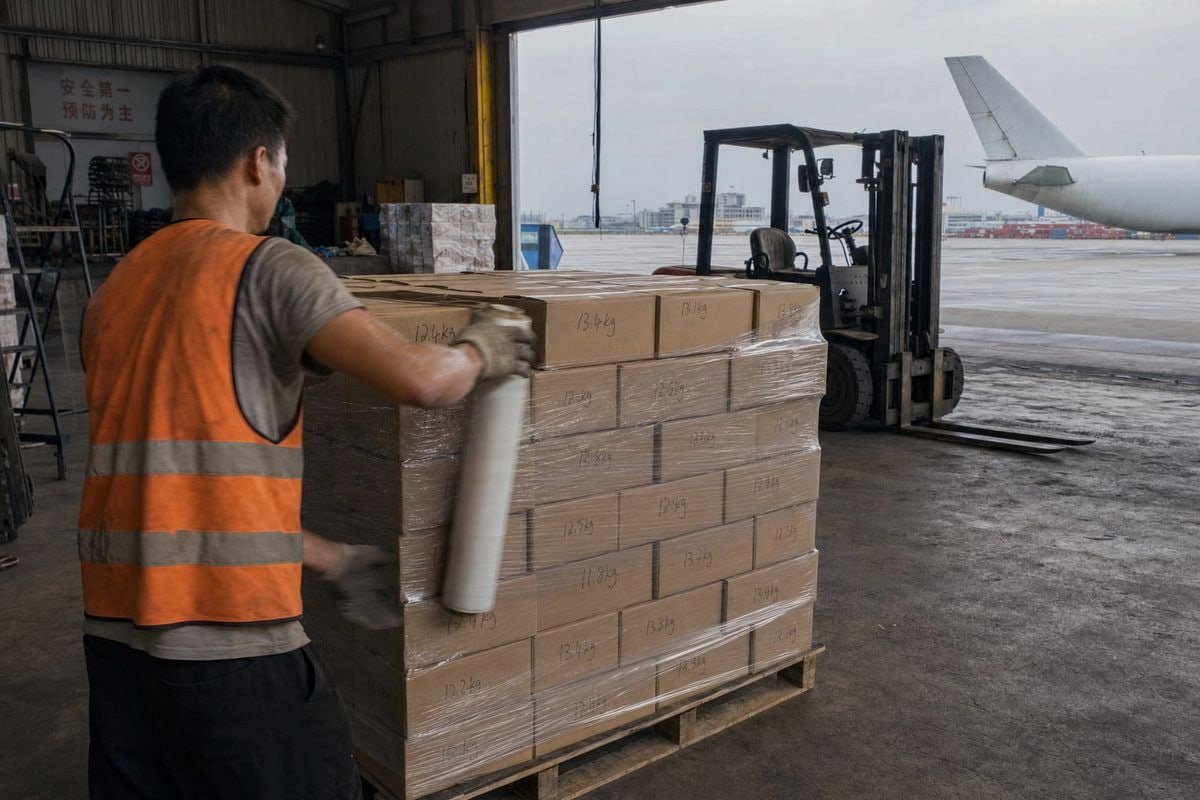
Here is the mechanism in plain terms. With sea freight, you must forecast demand roughly two months out—production time plus ocean transit plus port and receiving delays. To avoid stockouts, you pad the order. That padding is exactly the inventory most likely to still be sitting in FBA on day 181. Air freight compresses that forecast horizon to under two weeks, so you order closer to real demand and carry less risk.
A side-by-side comparison
| عامل | شحن بحري | شحن جوي |
|---|---|---|
| Transit lead time | 30-40 يومًا | 5–8 days |
| Freight cost per unit | Baseline (70–80% cheaper) | 3–5x higher |
| Required inventory buffer | كبيرة | صغيرة |
| Aged surcharge risk | عالي | منخفض |
| Forecast error exposure | عالي | منخفض |
| Q4 hazmat storage exposure | عالي | Manageable |
The density factor works in your favor
There is a nuance for powder products. Air freight bills on the higher of actual weight or الوزن الحجمي 4. Our Magic Fire sachets are dense and compact, so they often bill on actual weight rather than volume—unlike bulky, "fluffy" goods that get punished by dimensional pricing. But density cuts both ways. Mineral powder is heavy per cubic foot, so a large air shipment still gets expensive fast. That is the density trap: air works well for small, urgent quantities of powder, and poorly for bulk replenishment. Meanwhile, a compact sachet also occupies little cubic footage in FBA, which softens the surcharge if some stock does age. Your Inventory Performance Index benefits either way when excess aged stock stays low, which protects your future FBA storage limits.
Can I reduce aged inventory surcharges by choosing air freight for smaller trial orders from Sunrich?
One of our German distributors tested exactly this last season. He air-shipped a compact trial order of Magic Fire packets, validated demand in six weeks, then switched to ocean replenishment.
Yes. Air-shipping a small trial order gets stock selling within days, validates your sell-through rate before committing to bulk quantities, and keeps unsold volume tiny. Even if trial units age, the low cubic footage makes any aged inventory surcharge negligible compared to a stranded sea container.
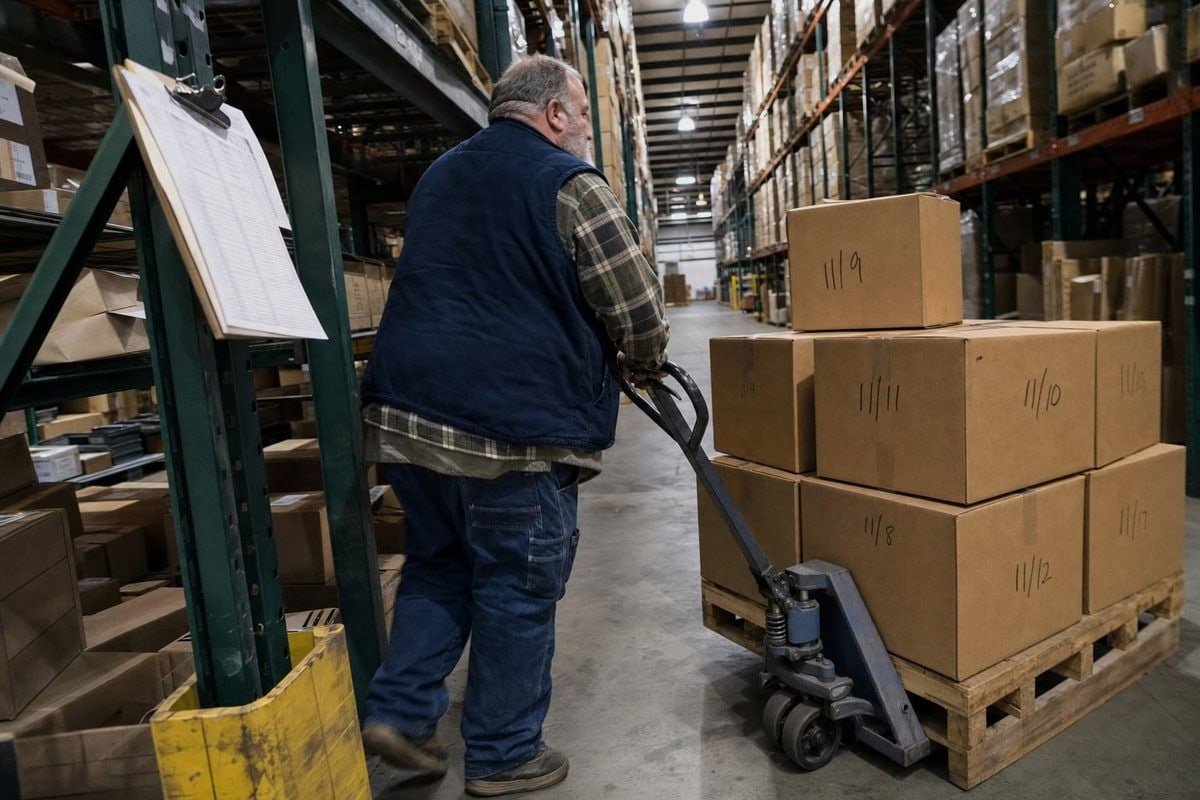
The logic behind trial orders is risk containment. The aged inventory surcharge scales with cubic feet. A 300-unit trial of foil sachets might occupy only a few cubic feet in total. Even in the worst case—every unit crossing 271 days at $5.00 per cubic foot—your monthly penalty stays trivial. A full ocean shipment that misses the sales forecast is a different story entirely.
How the trial-then-scale sequence works
- Place a small MOQ trial order and ship it by air. Stock is live in FBA within roughly two weeks of production.
- Measure real sell-through rate over 60–90 days, not projected sell-through.
- Use that data to size your first sea shipment so it sells within 150 days of receipt, leaving a safety margin before day 181.
- Time the ocean order so it lands as trial stock runs down, avoiding both stockouts and the low-inventory-level fee.
What we do on the factory side
We keep trial MOQs deliberately flexible for exactly this reason, and we have done so across 30+ export markets over 17+ years. A first sample from our line reflects mass-production quality because our batch-to-batch QC is strict, so the trial data you gather actually predicts full-scale performance. We also structure sachets to stay under limited-quantity weight thresholds where the formulation allows, which can reduce hazmat surcharges on the air leg under IATA rules. One caution from experience: verify hazmat shipping regulations 5 for the air route early. Air carriers apply stricter dangerous-goods rules than ocean carriers, and paperwork gaps delay trials far more often than production does.
What MOQ and packaging strategy helps me balance shipping cost against FBA storage fees over time?
Packaging design is where our OEM/ODM work directly moves your fee math. When we develop a private-label sachet, we optimize cube first, because Amazon charges by cubic foot, not by charm.
Order an MOQ your sales can clear within 150 days of FBA receipt, use compact single-use sachets to minimize cubic feet, keep sachets under limited-quantity thresholds to lower hazmat costs, and run a hybrid model: air for launches and top-ups, sea for planned replenishment.

Cubic footage drives three separate costs: monthly storage, the aged inventory surcharge, and part of your freight bill. So the cheapest long-term packaging is the densest compliant packaging. Our flat foil pouches store far more efficiently than jars, and display boxes can be shipped flat-packed for assembly at your 3PL. Small design choices compound over months of storage.
Matching MOQ to your sell-through window
| Monthly sell-through | Suggested order coverage | Recommended freight mode |
|---|---|---|
| Under 500 units | 3–4 months of stock | Air, or LCL sea if margin is thin |
| 500–2,000 وحدة | 4 months of stock | Sea baseline, air top-ups |
| 2,000+ units | 4–5 months of stock | Sea, with staggered shipments |
The 150-day target is not arbitrary. It leaves a 30-day cushion before the 181-day surcharge trigger, absorbing customs delays and soft sales weeks. Staggered sea shipments—two smaller containers a month apart instead of one large one—also reset the aging clock on the second batch and smooth your carrying cost of inventory.
The hybrid model most buyers land on
Some buyers push back: why not just always use sea, since it is cheapest per unit? Because the mode-split approach beats both pure strategies. Ship roughly 20% by air to launch or bridge gaps, and 80% by sea for planned replenishment. You protect sales velocity, avoid the low-inventory-level fee, and keep aged volume near zero. We support this by aligning production batches to your split schedule, printing warning labels and barcodes shelf-ready, and consolidating shipments from our Ningbo facility. Compliance documentation—علامة CE 6, SGS/Intertek reports, BSCI and ISO 9001 7 audits—travels with every shipment, which prevents the customs holds that silently burn your 180 fee-free days.
خاتمة
Freight rates are visible; aging fees are not. That gap wrecks margins on slow shipments. Calculate cubic feet at risk, target 150-day sell-through, and split modes deliberately.
Sea freight wins on rate. Air freight wins on time. The real answer for Magic Fire Powder is a landed cost analysis that prices both—then a hybrid plan sized to your actual sell-through rate. Our team runs this exercise with every new buyer, because a compliant, well-planned shipment is worth more than the cheapest one. If you want help modeling your own numbers before your next order, we are glad to share our worksheet.
ملاحظات ختامية
1. Explains the FIFO inventory method Amazon uses to age stock across fulfillment centers. ↩︎
2. IATA regulates dangerous goods classification for air-shipped hazmat products like flame powder. ↩︎
3. SGS is the authoritative testing body providing the compliance reports mentioned in the article. ↩︎
4. Defines the volumetric billing concept that affects air freight cost for powder shipments. ↩︎
5. US regulator page covering hazmat shipping rules relevant to color-flame powder exports. ↩︎
6. EU official source explaining the CE marking compliance requirement mentioned for shipments. ↩︎
7. Official ISO standard referenced as part of the compliance documentation accompanying shipments. ↩︎



 English
  Spanish
  German
  French
  Arabic
  Portuguese
انضم إلى المحادثة