







Wood fire starter complaints can sink a retail program 1 fast. On our production line, I have seen how one bad batch triggers returns, bad reviews, and lost shelf space. The fix starts at sourcing, not at customer service.
To avoid common wood fire starter complaints, require verified safety certifications, test burn time and moisture resistance on real samples, audit smoke and odor output, demand crush-proof packaging, and choose a factory with batch-to-batch quality control and clear, responsive communication before mass production.
Most complaints trace back to a few sourcing decisions. Let me walk you through each one, in the order a smart buyer should check them.
What Certifications Should I Require to Avoid Safety Complaints About My Wood Fire Starters?
A few years back, a European buyer came to us after his previous shipment was held at customs over missing تقارير اختبار 2. That single delay cost him an entire winter season. Since then, I always tell buyers: paperwork first, price second.
Require ISO 9001 for factory quality systems, BSCI for ethical audits, CE marking for European market access, and third-party SGS or Intertek test reports covering flammability, composition, and heavy metals. Also ask about FSC certified wood sourcing if your brand makes eco-friendly claims.

Certifications are not decoration. They are your legal shield and your complaint filter. In our 17-plus years exporting fire-starting goods to 30-plus countries, I have never seen a well-documented product generate a safety recall. I have seen plenty of undocumented ones cause chaos.
Why Each Certificate Matters to You
Each document protects you against a different type of complaint. A buyer in Germany faces different regulatory pressure than one in Texas, but the core stack stays the same.
| شهادة | ما يثبته | Complaint It Prevents |
|---|---|---|
| ISO 9001 3 | المصنع يدير نظام جودة موثق | Inconsistent batches, random defects |
| BSCI | الامتثال الأخلاقي للعمالة والامتثال الاجتماعي | Brand reputation damage, retailer delisting |
| علامة CE | الامتثال للبيع الأوروبي | Customs holds, market bans in the EU |
| تقارير SGS / Intertek | Independent lab-verified safety data | Toxicity claims, chemical-odor accusations |
| خشب معتمد من مجلس رعاية الغابات (FSC) | مصدر الغابات المسؤول | Greenwashing accusations on eco claims |
Ask for the Actual Documents
Here is the trap. Many wholesale firelighter suppliers claim certification but cannot produce current paperwork. So ask for the certificate number, the issue date, and the scope. Then verify it with the issuing body. It takes ten minutes. We hand over our ISO 9001, BSCI, CE, and SGS/Intertek files before a buyer even asks, because serious purchasing managers treat compliance as a hard requirement, not a nice-to-have. If a supplier hesitates on documents, that hesitation predicts how they will handle a quality dispute later. Also check that test reports match the exact product you are buying. A report for a wax torch does not cover a wood wool firelighter puck. Scope mismatches are a common shortcut, and customs officers catch them more often than buyers expect.
How Can I Ensure Consistent Burn Time and Quality Across Every Batch I Order?
The hardest trade-off I weigh every week is wax ratio versus cost. Add more paraffin and burn time consistency improves, but unit cost rises. Cut the wax and you get the number-one complaint in reviews: it lights, then dies before the kindling catches.
Ensure consistency by locking a written specification for burn time, wax-to-fiber ratio, weight, and moisture content, then requiring the supplier to run batch-level QC testing against that spec. Reliable factories test ignition and burn duration on random samples from every production run.
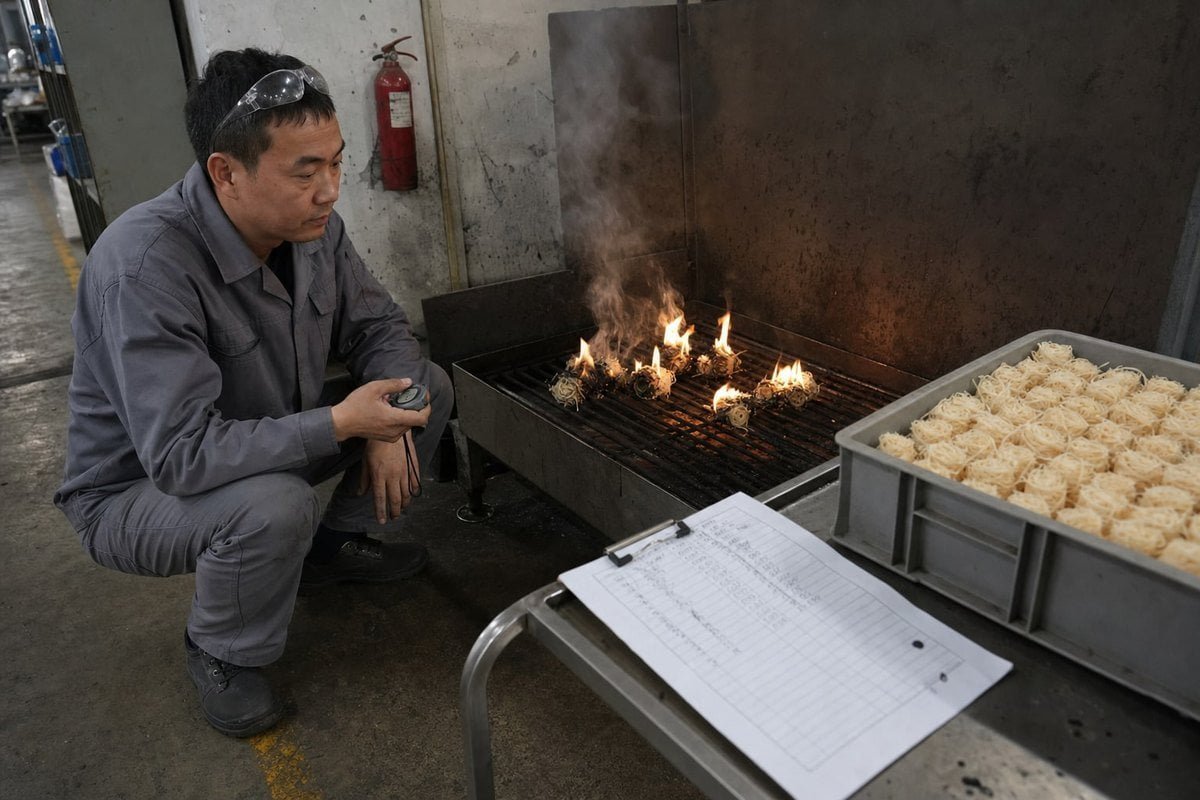
Consistency is a process problem, not a luck problem. Our factory in Ningbo runs the same burn-test protocol on every batch of wax-dipped wood rolls. We pull random pucks, ignite them, and time the burn against the agreed spec. If a batch drifts, it does not ship. That discipline is why our first sample reliably reflects mass-production quality, which is the whole point of sampling.
المتغيرات التي تنحرف بين الدفعات
Four inputs control burn performance. If any one drifts, your customers will notice before you do.
| متغير | Target Range to Specify | Complaint If It Drifts |
|---|---|---|
| محتوى الرطوبة 4 | Below 20 percent, ideally lower | Smoldering, excess smoke, failed ignition |
| نسبة الشمع إلى الألياف | Fixed percentage, e.g., 50/50 | Short burn time or greasy residue |
| وزن الوحدة | Tight tolerance per piece | Weak flames, inconsistent packs |
| كثافة الألياف | Uniform winding of wood wool | Fast flare-up with no sustained heat |
Put the Spec in Writing
Never rely on "same as last time." Write the spec into your purchase order: minimum burn time 5 of 10 to 15 minutes, maximum moisture content, unit weight tolerance, and composition percentages. Then ask how the factory verifies each point. A supplier with genuine manufacturing depth will describe their sampling plan without hesitation. One buyer of ours in Canada goes further. He asks for a short burn-test video from each production run before shipment. We happily send it, because filming a two-minute test is cheaper than handling a container-load dispute. That kind of transparency is what separates a manufacturing partner from a trading company reselling whatever is available that month. It also supports soot and smoke reduction goals, since stable wax ratios burn cleaner.
What Should I Check in a Sample Order Before Committing to Mass Production?
One American distributor once told me he approved a sample after simply lighting it on his desk. The bulk order later failed in humid Florida warehouses. His sample test missed the one condition his market actually faced. I never forgot that conversation.
Check five things in a sample: full burn duration under a stopwatch, ignition after humid storage, smoke and odor output indoors, packaging survival in a drop and crush test, and consistency across at least ten units. Test in conditions matching your real market, not ideal lab conditions.

A sample order is your cheapest insurance policy. Treat it like an audit, not a formality. When we prepare samples of our wood firestarters, we assume the buyer will stress-test them, because the good buyers always do.
Run This Seven-Step Sample Test
- قم بتوقيت الاحتراق الكامل. Light one unit and measure until the flame dies. Compare against the promised spec, not against your impression.
- Simulate humidity. Leave several units unpacked in a damp room for a week, then ignite them. Moisture content creeping upward is the silent killer of fire starters in coastal and rainy markets.
- Test with real fuel. Use actual hardwood kindling, not paper. A starter that only lights paper will collect one-star reviews. Compare performance against resin-rich fatwood if that is your benchmark category.
- Smell the smoke. Burn one indoors in a fireplace setting. Strong chemical odor kills repeat purchases, especially for grill and cooking users who want chemical-free ignition.
- Check residue. Look for dripping wax, heavy soot, or dark smoke. Clean-burning claims must survive a visual test.
- Abuse the packaging. Drop the box, stack weight on it, shake it. Crushed pucks and wood dust in the bag are avoidable complaints.
- Compare ten units. Weigh and measure them. Wide variation in a small sample predicts wider variation at scale.
Also test how the sample matches your end channel. Fireplace owners, campers, and BBQ users each punish different weaknesses. A single product rarely satisfies all three without tuning size, density, or wax ratio, which is where OEM flexibility earns its keep.
How Do I Choose a Supplier Who Communicates Clearly and Meets My Lead Time Expectations?
Last autumn, a UK buyer emailed us in a panic. His previous supplier had gone silent three weeks before his seasonal shipping deadline. We took over the order, but the lesson stuck with me: communication failures cause more losses than product failures.
Choose a supplier who responds within one business day in clear English, provides a written production timeline with milestones, sends photo or video updates during production, offers flexible MOQs for trial orders, and has a track record of on-time seasonal shipments to your region.
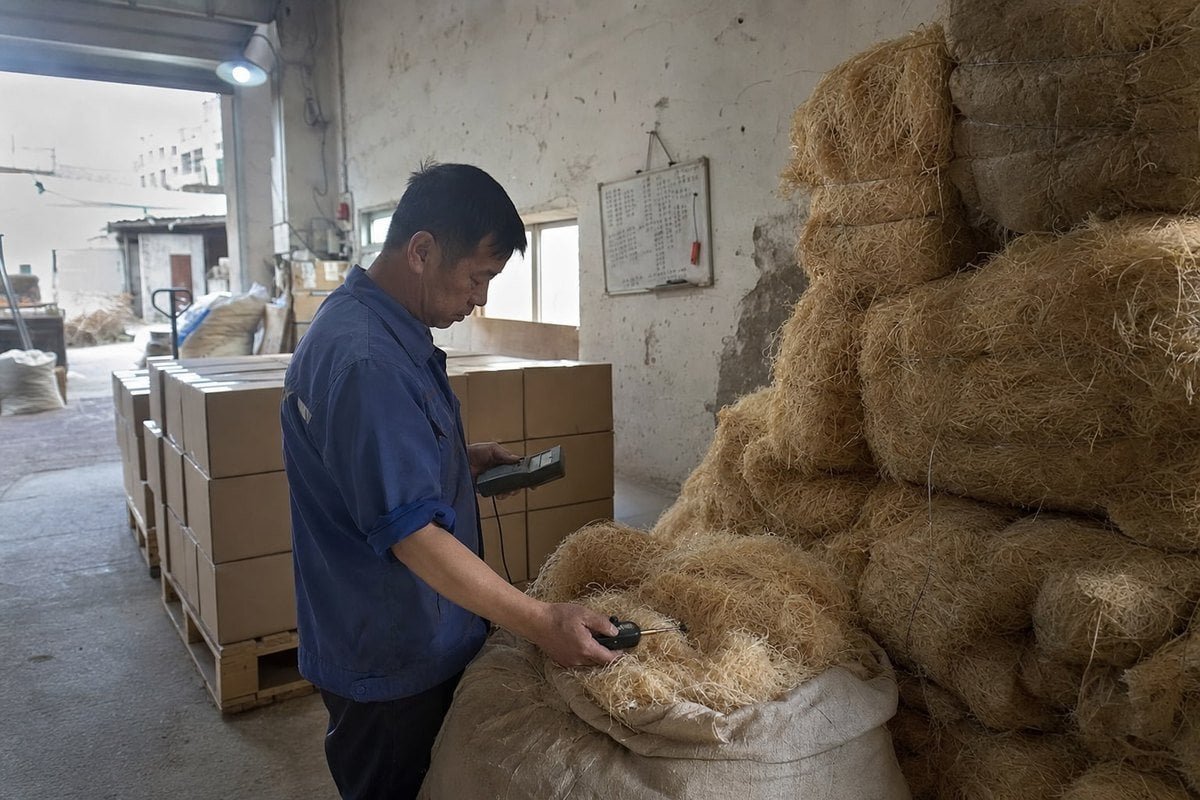
Fire starters are a seasonal business. Miss the October shelf date in the US or Germany, and you carry inventory until next winter. So supplier reliability is not a soft factor. It is a financial one.
Signals to Read Before You Commit
You can predict communication quality before signing anything. Watch how the supplier behaves during the quoting stage, when they are trying hardest to impress you.
| إشارة | علامة جيدة | علامة تحذير |
|---|---|---|
| سرعة الاستجابة | Replies within 24 hours with specifics | Vague answers days later |
| أسئلة فنية | Explains wax ratios, moisture control, materials | Deflects to "best quality, best price" |
| هوية المصنع | Shows production lines, welcomes audits | Dodges video calls and factory visits |
| وقت التسليم | Gives dated milestones in writing | Says "about 30 days" with no plan |
| الطلبات التجريبية | Offers reasonable MOQs to start small | Pushes full containers immediately |
Plan Lead Times Around Your Season
Work backward from your shelf date. Add production time, pre-shipment inspection, الشحن البحري 6, customs clearance, and a buffer for peak-season port congestion. In our experience exporting to the US, Germany, and Australia, buyers who confirm orders by early summer never face winter stockouts. Buyers who wait until September gamble with airfreight costs. A true one-stop partner also compresses your timeline on the علامة تجارية خاصة 7 packaging side. We handle custom boxes, display packaging, warning labels, and barcodes in-house, so buyers avoid coordinating three vendors for one shelf-ready product. Ask any candidate supplier whether they do the same, or whether "OEM" just means sticking your logo on a stock box.
خاتمة
Avoid wood fire starter complaints by sourcing on proof, not promises: verified certifications, written specs, stress-tested samples, and a responsive factory partner. Get these four right, and reviews take care of themselves.
ملاحظات ختامية
1. Wikipedia entry defining the retail industry and its operational structures. ↩︎
2. Intertek is a global leader in providing authoritative safety and quality test reports for consumer products. ↩︎
3. Official ISO page for the quality management standard required for factory certification. ↩︎
4. ScienceDirect overview of moisture content, a critical factor in wood fuel performance. ↩︎
5. Wikipedia page explaining fire testing protocols used to determine material performance. ↩︎
6. Wikipedia overview of merchant shipping and ocean freight logistics for international trade. ↩︎
7. Provides a clear, accessible definition of private labeling and its role in retail branding. ↩︎


 English
  Spanish
  German
  French
  Arabic
  Portuguese
انضم إلى المحادثة