






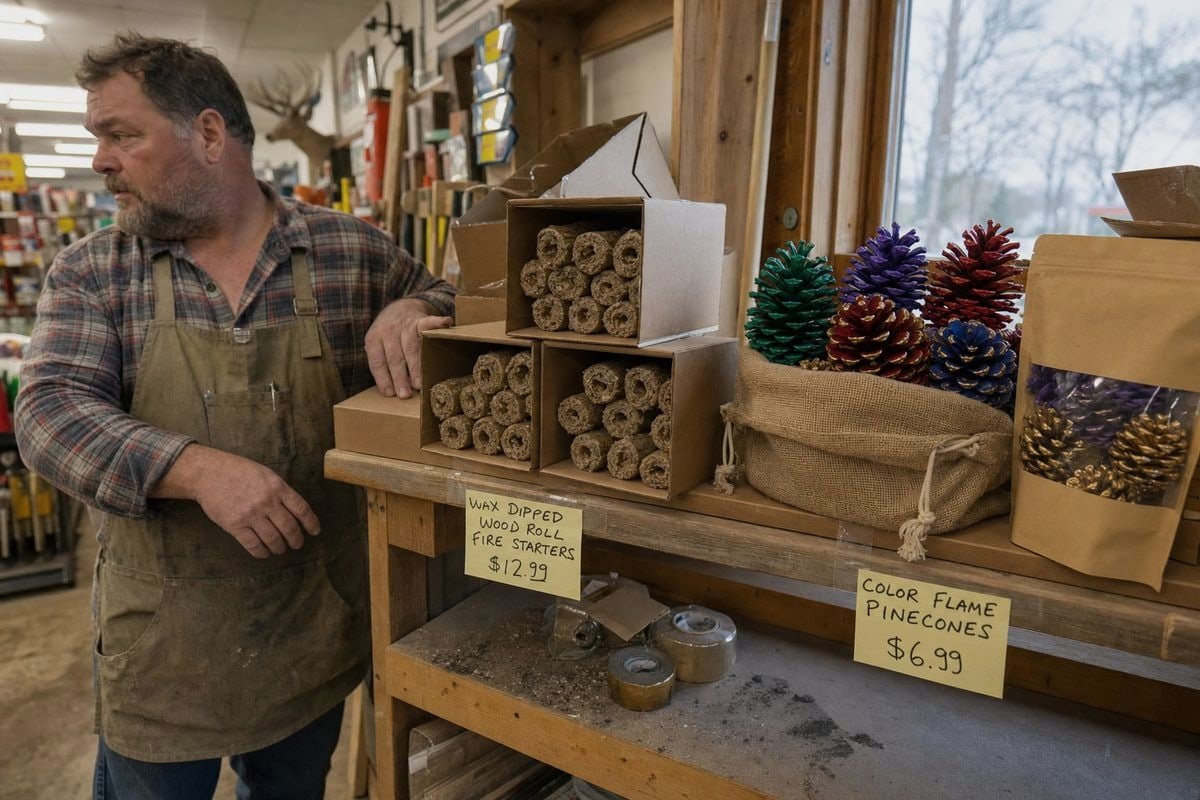
Retail buyers keep asking me whether colored pine cones will cannibalize their fire starter block sales. On our production line, we make both, so I see this tension daily.
No, colored pine cones will not fully cannibalize fire starter block sales. They serve different jobs: cones deliver novelty, décor, and gifting appeal, while blocks deliver reliable ignition. Expect minor overlap in seasonal impulse purchases, but bundling both products typically lifts total basket value instead.
That is the short answer. But the details matter if you plan a full range. Let me walk you through what I have learned from shipping both products to over 30 countries.
What makes colored pine cones and fire starter blocks appeal to different customers in my store?
A German distributor once told me his fireplace shop sold our color-flame pinecones next to wax-dipped kindling for two winters. The buyers, he noticed, were rarely the same people.
Colored pine cones attract experience-driven shoppers who want ambiance, gifts, and holiday décor, while fire starter blocks attract utility-driven buyers who need fast, predictable ignition. The two products sit at different stages of the fire lifecycle and answer different purchase motivations, so their core audiences barely overlap.

The clearest way I explain this to purchasing managers is through buyer intent. Product cannibalization only happens when two SKUs chase the same job. Here, the jobs are different. A block answers the question, "Will my fire light quickly?" A colored pine cone answers, "Will my fire look magical tonight?"
The Four Buyer Intents We See in Orders
From 17+ years of export data across the US, UK, Germany, and France, our clients' customers fall into four groups:
| نوع المشتري | Primary Need | المنتج الأنسب | Cannibalization Risk |
|---|---|---|---|
| Utility-first | Reliable ignition, low mess | Fire starter blocks, fatwood sticks | منخفض جداً |
| Experience | Colored flames, a fun moment | صنوبر ملون | منخفض |
| Gift/craft | Aesthetics, seasonal presentation | Decorative colored cones | منخفض إلى متوسط |
| Casual hearth | Occasional fires, ambiance over speed | Either product | معتدل |
Only the casual hearth segment shows real substitution pressure. These customers might decide a colored cone is "good enough" for an occasional fire. But even then, the cone is a variable natural item, while a block is an engineered ignition aid. When a fire refuses to catch on a cold evening, novelty stops mattering fast. That is why utility buyers keep blocks as their default, and why hearth and patio accessories retailers rarely see the categories fight each other.
There is also a timing difference. Blocks get used at ignition. Cones are usually tossed onto an established flame for the color effect. Two stages, two purchases.
Can I position these two products as a bundle instead of competing SKUs?
When we developed our kraft-pouch pinecone packaging in Ningbo, one Canadian client asked us to design a combined gift box instead. That request changed how I think about this category.
Yes, bundling is the strongest strategy. A Starter and Show bundle pairs a fire starter block for reliable ignition with colored pine cones for the visual finale. This turns two single-item purchases into one tiered ritual, raises average order value, and eliminates head-to-head competition entirely.

The bundle logic is simple. Every colored-flame moment requires a lit fire first. So the cone actually depends on the block. Instead of competing SKUs, you have a natural sequence: light it, then color it. Retailers who frame the shelf this way report a halo effect, where decorative cones act as basket fillers that lift the value of functional fire-starting kits.
How to Build the Bundle in Practice
Here is the process I recommend to distributors placing their first combined order:
- Anchor with the block. Position the wax-dipped wood roll or wood wool firestarters as the dependable core. This is the product customers trust.
- Add the cone as the premium layer. Colored cones carry a story: hand-finished look, rainbow flames, giftable presentation. Our burlap-sack and stand-up pouch formats were designed exactly for this shelf role.
- Price the bundle below the sum of parts, but above the block alone. The cone becomes an affordable upgrade, not a rival.
- Use the cone as a premium anchor. A higher-priced novelty SKU on the shelf psychologically makes bulk blocks look economical, which moves more block volume, not less.
There is one more angle worth noting. Flame colorant chemicals in decorative cones are أملاح معدنية 1, which are not food-safe. That means blocks remain the only viable option for cooking, grilling, or campfire meals. This safety boundary protects your block sales structurally. We print clear warning labels on every private-label run for exactly this reason, and it doubles as a selling point: the customer needs both products for a full evening.
How do margins and reorder rates compare between color-flame pinecones and wood firestarters?
The trade-off I weigh most often with new B2B clients is margin per unit versus reorder velocity. These two product lines behave very differently on that curve, and it shapes smart purchasing.
Color-flame pinecones typically retail at three to five times the per-unit price of utility blocks, delivering higher retail profit margins per sale. Fire starter blocks earn lower margins but generate steady year-round reorders. A healthy range needs both: cones for margin spikes, blocks for baseline volume.
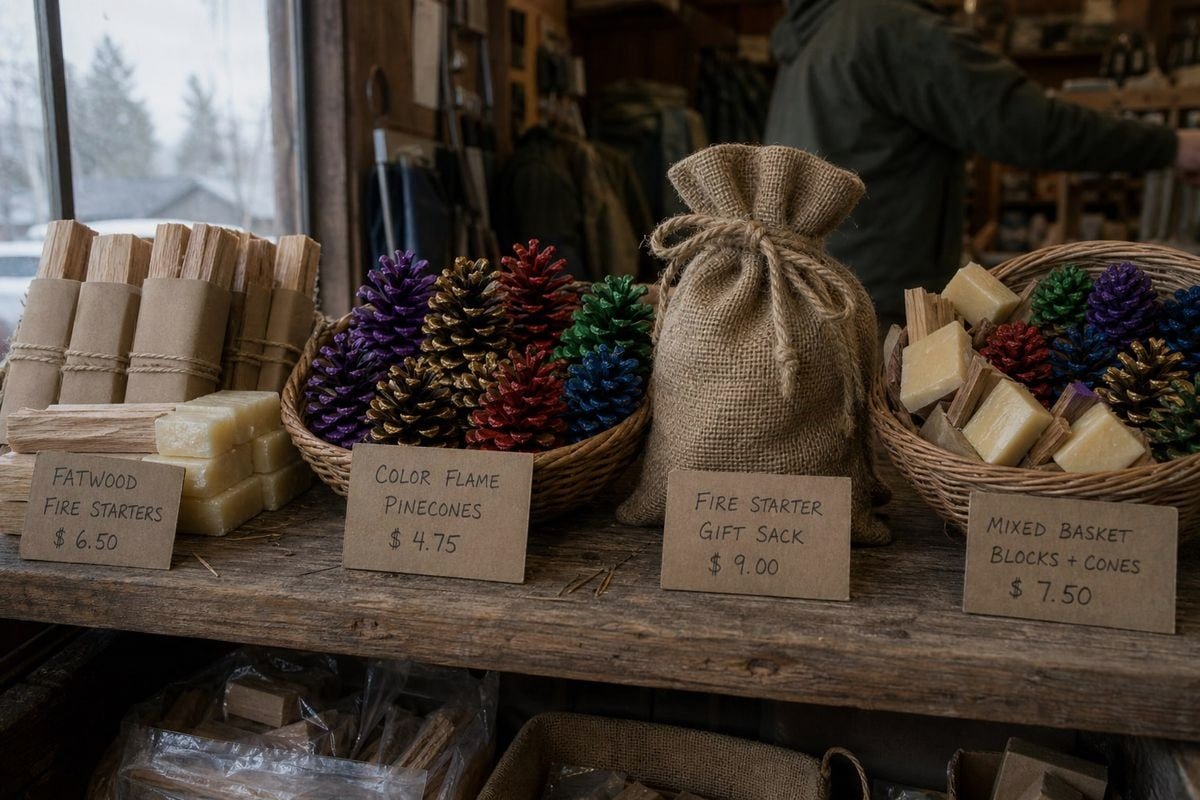
Let me break down what we see across our export markets. Cones monetize presentation. They sell by the story: the purple cone with gold-tipped scales, the rustic burlap sack, the rainbow flame photo on the pouch. Blocks monetize repetition. A daily wood stove owner 3 in Poland or a camping brand's customer in Australia burns through blocks continuously and reorders on a schedule.
Margin and Velocity Profile
| المقياس | Color-Flame Pinecones | Wood Firestarters (Blocks) |
|---|---|---|
| Typical retail price position | Premium novelty, 3–5x per unit | Commodity utility pricing |
| Gross margin character | مرتفع لكل وحدة | Moderate, volume-driven |
| Demand pattern | Sharp Q4 peak, holiday and gifting | Steady year-round, winter lift |
| Reorder driver | Seasonal restock, gift cycles | Consumption rate, weekly use |
| Vulnerable channels | Gift shops, craft stores, florists | Hardware, fireplace supply |
| Pre-sale utility | Doubles as mantelpiece décor | None; purely functional |
That pre-burn utility point deserves emphasis. A decorative colored cone can sit on a mantel for weeks before it ever meets flame. Customers happily pay for that dual role, which is something no block can offer.
What This Means for Ordering
موسمي توقعات الطلب 4 is where buyers get hurt. Cones must land on shelves by early autumn; miss the window and inventory sits until next year. Blocks forgive timing mistakes because demand never fully stops. My practical advice: order cones on a tight seasonal calendar with firm lead times, and put blocks on a rolling replenishment plan. Our Ningbo facility schedules pinecone production runs in summer specifically so European and North American clients receive stock before October.
Should I test both product lines before committing to a full private-label range?
A lesson I learned early in our OEM work: the buyers who skip trial orders are the ones who call me in February with unsold seasonal stock. Testing first is not caution. It is strategy.
Yes, always test both lines first. Run a small trial order of colored pine cones and fire starter blocks in your strongest channel for one season. Measure sell-through, attach rate, and reorder demand before investing in full private-label packaging, custom branding, and volume commitments.

A structured test protects you on both sides. If cones underperform, you have not paid for custom pouches, display boxes, and barcodes across a full range. If they outperform, you have real data to justify the private-label investment and to negotiate shelf space with your retail accounts. This is basic market segmentation 5 strategy: prove each segment exists in your channel before you build for it.
A Simple One-Season Test Framework
| Test Element | ماذا تفعل | ما يخبرك به |
|---|---|---|
| الحد الأدنى لكمية الطلب التجريبي | Order small mixed quantities of cones and blocks | Whether your channel skews novelty or utility |
| Shelf placement | Display cones beside blocks and near checkout | Impulse pull versus planned purchase behavior |
| Bundle pilot | Offer a combined gift set in Q4 | Attach rate and basket lift potential |
| Compliance check | Confirm علامة CE 6 and test reports for your market | Whether the product is truly shelf-ready |
| Reorder tracking | Log January reorders by SKU | Which line deserves the private-label budget |
On the compliance point, do not treat it as a formality. Fireplace safety standards, warning-label requirements, and retailer documentation demands differ between the US, Germany, and the UK. We hold ISO 9001 7, BSCI, and CE certification with SGS and Intertek test reports because large sourcing channels will not list an uncertified fire product, full stop. A trial order should verify your supplier's paperwork as much as the product itself.
One more reason testing works: our first samples reflect mass-production quality because the same lines and QC process produce both. So a one-season pilot genuinely predicts what a full container will look like. That is the whole point of testing with a real factory rather than a trading company. When the trial data comes back, we can then customize burn time, packet size, packaging format, and branding for the winning configuration.
خاتمة
Colored pine cones will not destroy your fire starter block sales. Segment the buyers, bundle the products, test one season, then commit to private label with confidence.
ملاحظات ختامية
1. EPA provides authoritative context on metal salt chemicals used in flame colorants. ↩︎
2. Average order value is the key retail metric the bundling strategy aims to raise. ↩︎
3. EPA Burn Wise program is the authoritative resource on wood stove usage and safety. ↩︎
4. Demand forecasting is the planning concept discussed for seasonal cone inventory timing. ↩︎
5. Market segmentation is the core strategic concept explaining differing buyer types. ↩︎
6. CE marking is an EU compliance standard mentioned for fireplace product safety. ↩︎
7. Authoritative .gov resource from NIST explaining ISO 9001 quality management systems. ↩︎



 English
  Spanish
  German
  French
  Arabic
  Portuguese
انضم إلى المحادثة